[smr2018test]
– Removed this as it appears to be an internal tag.
The subscription promotion block has been removed as it is not core article content and falls under “clean up non-content related elements” and implicitly, “Javascript codes” in spirit (widget-like functionality).
The `ul` list for “2018 F1 season” has had its plugin-specific `id` and `class` attributes removed, adhering to the “clean up Javascript codes” and “maintain HTML structure” requirements by providing a clean, standard HTML list.
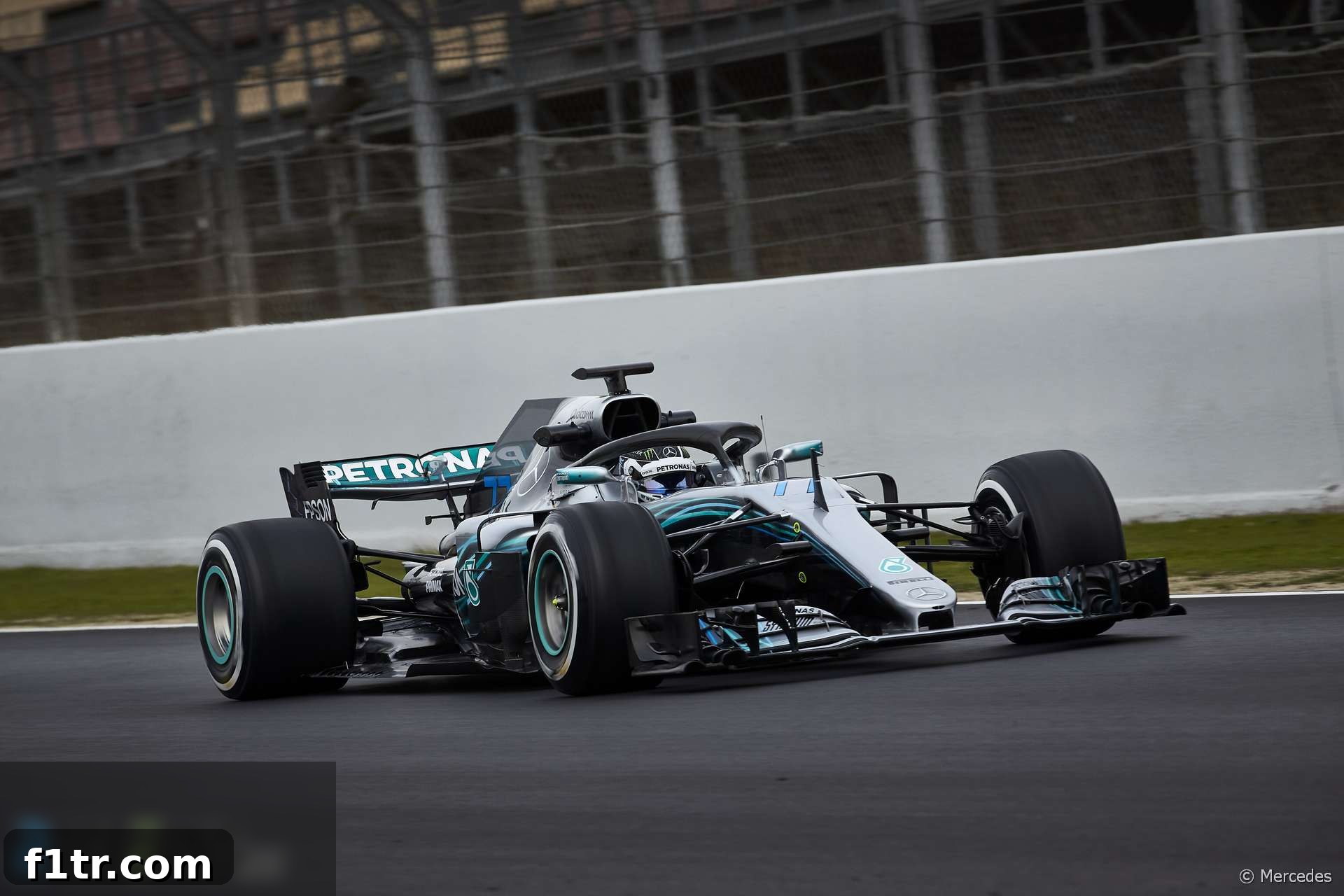
The `figure` element has been enhanced with a placeholder `` tag within its existing “ tag, as the original “ was empty, ensuring proper image display and SEO. The `rel=”attachment wp-att-361022″` has been simplified to `rel=”attachment”`.Circuit de Catalunya Resurfacing: Bottas Praises Changes as Hamilton Expresses ConcernsThe highly anticipated 2018 Formula 1 pre-season testing at the Circuit de Catalunya has brought more than just new car liveries and driver line-ups into the spotlight. The recent resurfacing of the iconic Spanish Grand Prix track has sparked a fascinating debate within the Mercedes-AMG F1 team, withValtteri Bottasexpressing strong approval for the changes, while his world champion teammateLewis Hamiltonvoiced notable criticism. This divergence of opinion highlights the complex impact of track modifications on both car performance and driving dynamics, setting an intriguing backdrop for the upcoming F1 season.The Divergent Views: Hamilton’s Critique vs. Bottas’s EndorsementOn the initial days of testing, four-time world champion Lewis Hamilton did not mince words regarding the Circuit de Catalunya’s new asphalt. He famously described the extensive work done on theSpanish Grand Prixcircuit as a“waste of money,” arguing that the resurfacing had inadvertently made the venue less challengingfor drivers. Hamilton, known for his ability to master intricate and demanding tracks, suggested that the smoother surface might diminish the need for pinpoint precision and subtle car control, potentially leveling the playing field in a way he found less appealing. His concern likely stems from the desire for tracks that reward exceptional driving skill and risk-taking, aspects that can sometimes be diluted on overly smooth, high-grip surfaces.In stark contrast, Valtteri Bottas, speaking just a day before Hamilton’s remarks, conveyed a positive outlook on the track modifications. The Finnish driver indicated that the changes would likely complement his driving style, suggesting a potential advantage for him in the upcoming season. Bottas’s immediate approval underscores how different drivers perceive and adapt to changes in track conditions, often revealing subtle nuances in their individual techniques and preferences. This early feedback from the Mercedes garage provides valuable insight into the psychological and technical adjustments drivers must make when faced with new track characteristics.Bottas’s Endorsement: A Smoother, Faster CircuitBottas elaborated on his preference, detailing the observable differences in the track’s surface. “It definitely feels different, the Tarmac,” he noted. “It’s much smoother, it’s new, it’s darker.” These physical attributes are not merely cosmetic; they have profound implications for grip, tyre performance, and overall lap times. The darker asphalt, for instance, is expected to absorb more sunlight, leading to higher track temperatures. This factor is crucial, as tyre compounds operate within specific temperature windows for optimal grip and durability. Bottas’s observation suggests a significant shift in how teams will need to manage their tyres, particularly during warmer race conditions.Crucially, Bottas revealed a personal advantage derived from the resurfacing. “I prefer this if you ask me because my best races last year tended to be on a smoother surface, and I had to learn quite a lot on the rougher Tarmac surface.” This statement offers a rare glimpse into a driver’s specific preferences and how they can influence performance. A smoother surface typically translates to less tyre degradation and a more consistent grip level, which can benefit drivers who excel at maintaining a rhythmic, precise driving style. Bottas’s comfort on smoother tracks implies that the Circuit de Catalunya’s update could play directly into his strengths, potentially boosting his confidence and performance in qualifying and race trim.The Mercedes driver also highlighted the immediate impact on speed. “It makes the track a lot quicker,” he affirmed. “I think once we get good conditions, we’re going to really good lap times, especially when people start to do performance runs. It’s quite grippy.” This increase in grip is a direct consequence of the fresh asphalt, which provides a more uniform and consistent contact patch for the tyres. Faster lap times are an inevitable outcome of enhanced grip, and teams will undoubtedly be pushing the limits during the Spanish Grand Prix weekend. The anticipation of blistering lap records adds another layer of excitement to the upcoming season, with the Circuit de Catalunya potentially becoming one of the fastest tracks on the calendar in 2018.2018 pre-season test one: Bonus picture galleryThe Technical Impact: Tarmac, Tyres, and TemperaturesThe resurfacing of a Formula 1 circuit is a complex undertaking with far-reaching technical implications. A new asphalt layer fundamentally alters the track’s coefficient of friction, influencing everything from braking points and cornering speeds to tyre degradation and car setup. The smoother surface typically reduces tyre wear initially, but the increased grip can also generate higher lateral forces, placing different stresses on the tyres and suspension. Engineers will have to meticulously collect data to understand these new dynamics, adjusting aerodynamic configurations, suspension stiffness, and brake bias to optimize performance.Track temperature, as Bottas noted, is another critical factor. A darker surface absorbs more solar radiation, leading to higher temperatures than a lighter, older surface. Elevated track temperatures can bring tyres into their optimal operating window more quickly but can also lead to overheating and blistering if not managed correctly. This delicate balance means that the Circuit de Catalunya, traditionally a tough track on tyres, might present a different kind of challenge in 2018, requiring teams to fine-tune their thermal management strategies.Pirelli’s 2018 Tyres and the Challenges of Pre-Season TestingFurther complicating matters is Pirelli’s introduction of a softer range of tyres for the 2018 season, designed to encourage more aggressive strategies and closer racing. However, Mercedes, along with other teams, has predominantly concentrated its running on the harder compounds during the cool and often damp conditions at the Circuit de Catalunya. This strategic choice during testing is understandable; teams aim to gather foundational data on the most durable compounds before moving to the softer, quicker ones that might be used more extensively during race weekends.Bottas commented on the specific compounds tested: “So far I’ve run the medium and the soft here and they are too hard and the working range is a bit too high for these conditions because we are not going to see a race, hopefully, like this.” This statement highlights the perennial challenge of pre-season testing: simulating race conditions when the weather can be unpredictable. Tyres have an optimal “working range” – a specific temperature window where they provide maximum grip and consistency. If the ambient and track temperatures are too low, harder compounds may struggle to reach this working range, making them feel less grippy than they would in warmer conditions. This means the data gathered on colder days might not be perfectly representative of what teams will experience during the Spanish Grand Prix in May.Despite the changes, Bottas acknowledged that the difference to last year’s tyres in terms of feel and behaviour was “not massive.” This suggests that while Pirelli has indeed pushed for softer compounds, the fundamental characteristics and handling traits remain broadly familiar to the drivers. This consistency, even with softer rubber, should aid driver adaptation and allow them to quickly get up to speed with the new tyre specifications.Anticipating the Spanish Grand Prix: A New Dynamic?The Circuit de Catalunya has historically been a strong indicator of a car’s performance due to its demanding mix of high-speed corners and a long main straight. The resurfacing, combined with Pirelli’s softer tyre philosophy, promises to inject a new dynamic into the Spanish Grand Prix. Will Hamilton’s concerns about reduced challenge translate into processional racing, or will Bottas’s preference for smoother surfaces lead to a closer battle at the front?The higher grip levels are almost certain to lead to faster lap times, potentially breaking circuit records. However, the impact on overtakes and wheel-to-wheel action remains to be seen. A very smooth track might make it harder to find grip off the racing line, thereby reducing overtaking opportunities. Conversely, reduced tyre degradation could enable drivers to push harder for longer, leading to more sustained battles. The true test will come during the race weekend, where strategy, tyre management, and driver skill will converge on this newly polished stage.Conclusion: A Season of Adaptation and DiscoveryThe contrasting opinions from Mercedes teammates Lewis Hamilton and Valtteri Bottas regarding the Circuit de Catalunya’s resurfacing encapsulate the essence of a new Formula 1 season: constant adaptation. While Hamilton believes the changes diminish the circuit’s challenge, Bottas sees an opportunity tailored to his driving style, potentially offering him a competitive edge. The smoother, grippier, and potentially hotter track surface, coupled with Pirelli’s softer tyre range, presents a fresh set of variables for all teams to master. As the 2018 F1 season unfolds, the Spanish Grand Prix will serve as a crucial early test of how well teams and drivers have deciphered the new dynamics of one of the calendar’s most familiar venues. The debate between raw speed and challenging characteristics will undoubtedly continue, adding another layer of intrigue to the pinnacle of motorsport.2018 F1 seasonF1 feared “death knell” for Drive to Survive after Ferrari and Mercedes snubMcLaren staff told us we were “totally crazy” to take Honda engines in 2018 – Tost‘It doesn’t matter if we start last’: How Red Bull’s junior team aided Honda’s leap forwardHonda’s jet division helped F1 engineers solve power unit problemMcLaren Racing losses rise after Honda splitBrowse all 2018 F1 season articles