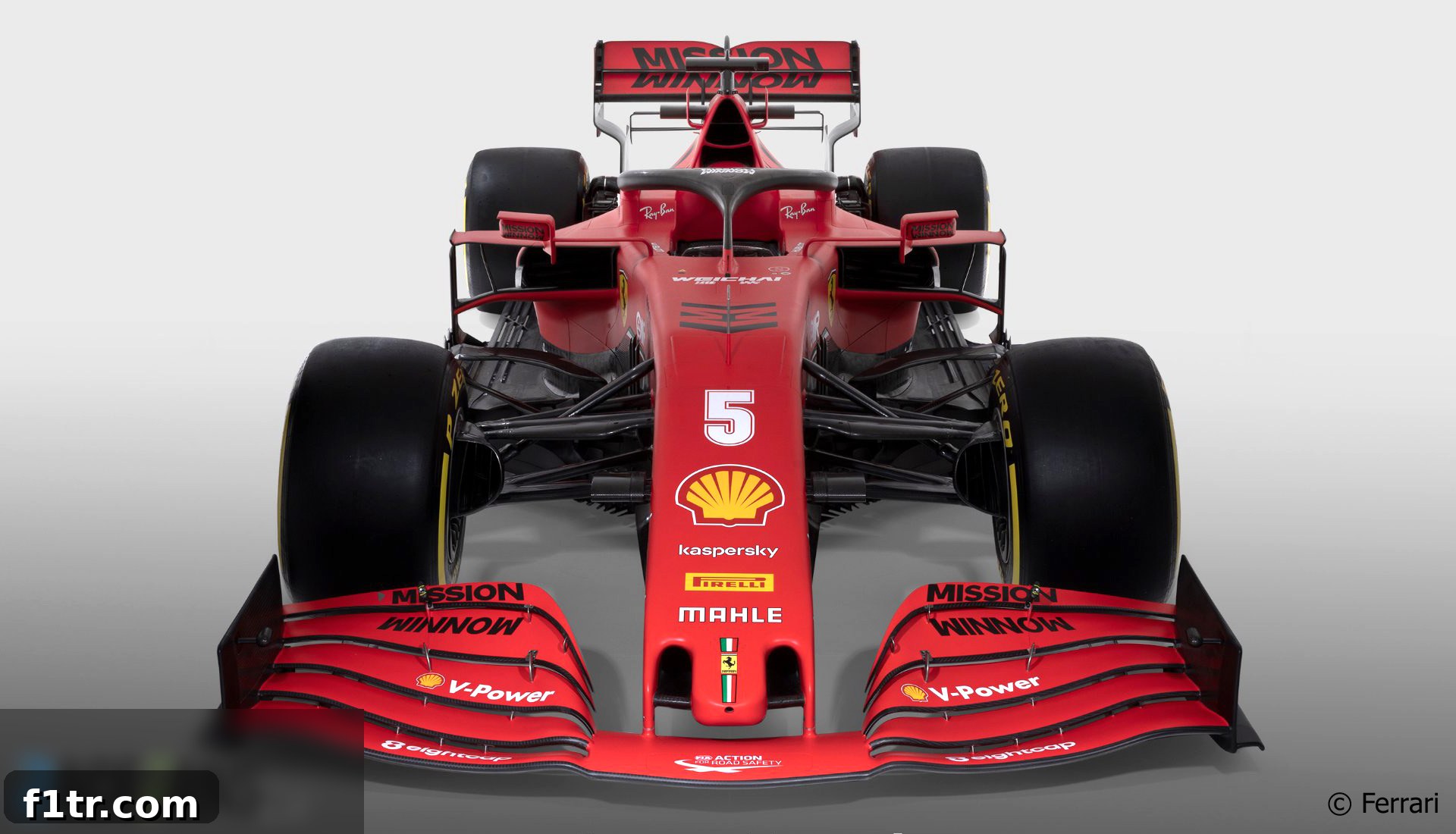
Maranello’s iconic Scuderia Ferrari launched its challenger for the 2020 F1 season, the SF1000, amidst a palpable sense of anticipation and high expectations. Team Principal Mattia Binotto revealed that the team had adopted “extreme concepts” in the new car, signaling an aggressive and uncompromising approach to reclaim championship glory and overcome the performance deficits of previous years.
Despite relatively stable technical regulations heading into the off-season, Ferrari’s primary objective was crystal clear: significantly boost the car’s downforce generation. This area was widely recognized as a critical weakness in its predecessor, the SF90. While the SF90 proved formidable on straight lines, it often struggled in high-speed corners and through complex sections of circuits compared to its main rivals, particularly Mercedes, whose cars demonstrated superior cornering grip and overall balance.
The Evolution of Extreme: Building on the SF90 Foundation
“The regulations have remained stable so it’s difficult really to transform completely the car,” Binotto explained during the elaborate presentation of the new SF1000, which took place at the iconic Reggio Emilia Romolo Valli Municipal Theatre. He acknowledged the car’s lineage, stating, “The starting point of that car is the one of last year, the SF90.” This foundation, however, was merely a springboard for a radical internal overhaul, designed to maximize every performance aspect within the confines of the existing rulebook.
The phrase “extreme concepts” underscores Ferrari’s determination to push the boundaries of design and engineering. This wasn’t merely an iterative update; it was a systematic re-evaluation of every component and every aerodynamic surface to extract maximum efficiency and overall performance. Binotto elaborated on this philosophy, emphasizing the team’s relentless pursuit of aerodynamic supremacy:
“But certainly we have been extreme on all the concepts as much as we could. We developed the car, tried to look for the maximum aero performance as first trying to maximise the downforce level.”
This commitment to maximizing downforce dictated a comprehensive redesign of the car’s core architecture. Downforce, the aerodynamic force that pushes the car downwards, is paramount in Formula 1. It significantly increases tire grip, allowing for higher cornering speeds and improved stability. Without sufficient downforce, even the most powerful engine struggles to translate raw power into competitive lap times, especially on technically demanding or twisty circuits where cornering prowess is king.
Aerodynamic Ingenuity: The Art of Tight Packaging and Streamlined Design
To achieve their ambitious aerodynamic targets, Ferrari meticulously re-engineered the car’s internal layout. Binotto highlighted the holistic approach, indicating that no part of the car was overlooked in this quest for optimization:
“So the entire car, the monocoque, the power unit layout, the gearbox, has been really packaged in a way to have a very narrow and slim body shape. I think that’s quite visible on it.”
This ‘tight packaging’ is a hallmark of modern F1 car design, where every millimeter counts. By compacting the internal components – including the chassis (monocoque), the complex hybrid power unit, and the sophisticated gearbox – engineers can create a more streamlined and aerodynamically efficient outer bodywork. A narrower and slimmer body allows for cleaner, undisturbed airflow over and around the car, particularly towards the crucial rear diffuser. The diffuser, a key aerodynamic device, is critical for generating ground effect downforce by accelerating airflow underneath the car, creating a low-pressure zone. This reduced drag profile also helps maintain a competitive edge on straights, mitigating the trade-off usually associated with high-downforce setups.
Achieving such tight integration presents immense engineering challenges. It demands innovative and highly efficient cooling solutions to manage the extreme temperatures generated by the power unit, brakes, and other systems, all while maintaining structural integrity and ensuring accessibility for maintenance during race weekends. Ferrari’s pursuit of such a sculpted, minimal body further speaks to their confidence in these internal design advancements and their ability to overcome the inherent compromises in packaging.
Enhanced Suspension for Unparalleled Adaptability and Driver Comfort
Beyond aerodynamics, Ferrari also focused intensely on crucial mechanical elements, particularly revising the design of its suspension system. This alteration aimed to provide drivers with a significantly greater range of set-up options, a vital capability for optimizing performance across the diverse calendar of Formula 1 circuits and adapting to ever-changing track conditions.
“The suspension has been designed to have greater flexibility when being on the race track for the set-up,” Binotto confirmed. “I think obviously trying to adapt the set-up to whatever best suits the two drivers whatever the circuit.”
In Formula 1, suspension design is a delicate yet critical balance between maximizing mechanical grip, ensuring aerodynamic stability, and optimizing tire management. Greater flexibility in suspension setup means engineers can fine-tune parameters such as ride height, camber, toe, and anti-roll bar stiffness with more precision than ever before. This adaptability is invaluable, allowing the team to tailor the car’s characteristics to specific track layouts – from the bumpy, high-downforce demands of unforgiving street circuits like Monaco to the smooth, high-speed sweeps of classic tracks like Silverstone, or the unique challenges of circuits demanding optimal tire preservation over long stints.
This emphasis on adaptability not only caters to the varying demands of different circuits but also allows for finer adjustments to suit the individual driving styles of Ferrari’s two highly talented drivers for 2020, Charles Leclerc and Sebastian Vettel. Providing a car that can be precisely tuned to each driver’s preferences, enhancing their comfort and confidence behind the wheel, is paramount for extracting the absolute maximum performance, fostering confidence, and ultimately shaving crucial tenths off lap times. Such flexibility can be the difference between a podium finish and missing out on valuable points.
Power Unit Innovation and Weight Reduction: A Dual Focus on Performance and Regulation Compliance
While the SF1000 might bear a superficial resemblance to its predecessor, the SF90, Binotto was emphatic about the profound differences “under the skin.” A significant portion of this unseen transformation centered on the highly complex power unit and an unrelenting focus on weight reduction across the entire vehicle.
“We put a lot of effort to keep the weight down,” Binotto stated. “We’ve worked a lot on the power unit, not only for packaging, but we worked on each single component, try obviously to improve the performance but to cope as well with changing technical regulations where the oil consumption will be reduced by 50%.”
The power unit, a marvel of hybrid engineering, received extensive attention. “Working on each single component” implies a meticulous approach to improvements in combustion efficiency, turbocharger design, the sophisticated energy recovery systems (MGU-H and MGU-K), and internal friction reduction. This detailed work seeks not only raw power gains but also enhanced reliability and efficiency – critical factors over a long and demanding F1 season. Furthermore, the significant reduction in permissible oil consumption, mandated by evolving FIA technical regulations, required sophisticated redesigns of lubrication systems and internal engine components. This regulatory change aimed to curb the practice of burning oil for performance advantages, demanding that teams find efficiency and power gains through legitimate and sustainable engineering means.
Concurrently, weight reduction is a perpetual arms race in Formula 1. Every single gram shed allows for more strategic placement of ballast, enabling optimal weight distribution that significantly influences handling, tire wear, and overall balance. Ferrari’s commitment to keeping the weight down involves extensive use of advanced composites like carbon fiber, lightweight alloys, and optimized component designs across the entire car, from the chassis to the smallest nuts and bolts. The lighter the car can be engineered while meeting minimum weight requirements, the more flexibility the team has to distribute weight strategically for optimal performance on specific tracks and under varying conditions, allowing for fine-tuning that can make all the difference in a competitive field.
The SF1000: A Deceptive Evolution Hiding Radical Innovation
Binotto’s concluding remarks during the launch event encapsulated the essence of the SF1000’s design philosophy and the depth of its underlying innovation:
“So it may look very similar to last year but believe me it’s completely different to the one of last year and a lot of concepts are very extreme on that car.”
This statement highlights a common characteristic in Formula 1 car development, especially under periods of stable regulations. Visually, a new car might share a strong aesthetic resemblance with its predecessor due to the continuity of core dimensions, safety structures, and certain fundamental aerodynamic principles. However, beneath this familiar surface, every component, every airflow path, and every mechanical interaction has likely been refined, re-optimized, or even completely redesigned. The “extreme concepts” Binotto referred to might manifest in subtle yet highly effective aerodynamic devices, internal structural changes for weight and rigidity, or novel cooling layouts that aren’t immediately apparent to the casual observer but collectively yield significant performance gains and strategic advantages.
The SF1000, named to commemorate Ferrari’s remarkable 1000th Grand Prix start in Formula 1, was thus a testament to the team’s unwavering commitment to relentless innovation and their deep-seated desire for success. It represented a calculated gamble, pushing the envelope in every conceivable area to transform what might appear as a mere evolution into a truly revolutionary step. The ultimate challenge for Ferrari was to harness these extreme concepts into a reliable, consistent, and championship-winning package, capable of competing head-to-head against formidable rivals like Mercedes-AMG Petronas F1 Team and Aston Martin Red Bull Racing.
The 2020 F1 season, despite its unprecedented challenges, promised to be a fascinating chapter in Ferrari’s storied history, with the SF1000 poised to demonstrate whether its underlying radicalism and aggressive design philosophy could translate into on-track success and bring the coveted constructors’ and drivers’ titles back to Maranello. The pursuit of maximum downforce, combined with intricate mechanical and power unit refinements, formed the bedrock of Ferrari’s ambitious strategy for this milestone season, aiming for nothing less than championship contention.