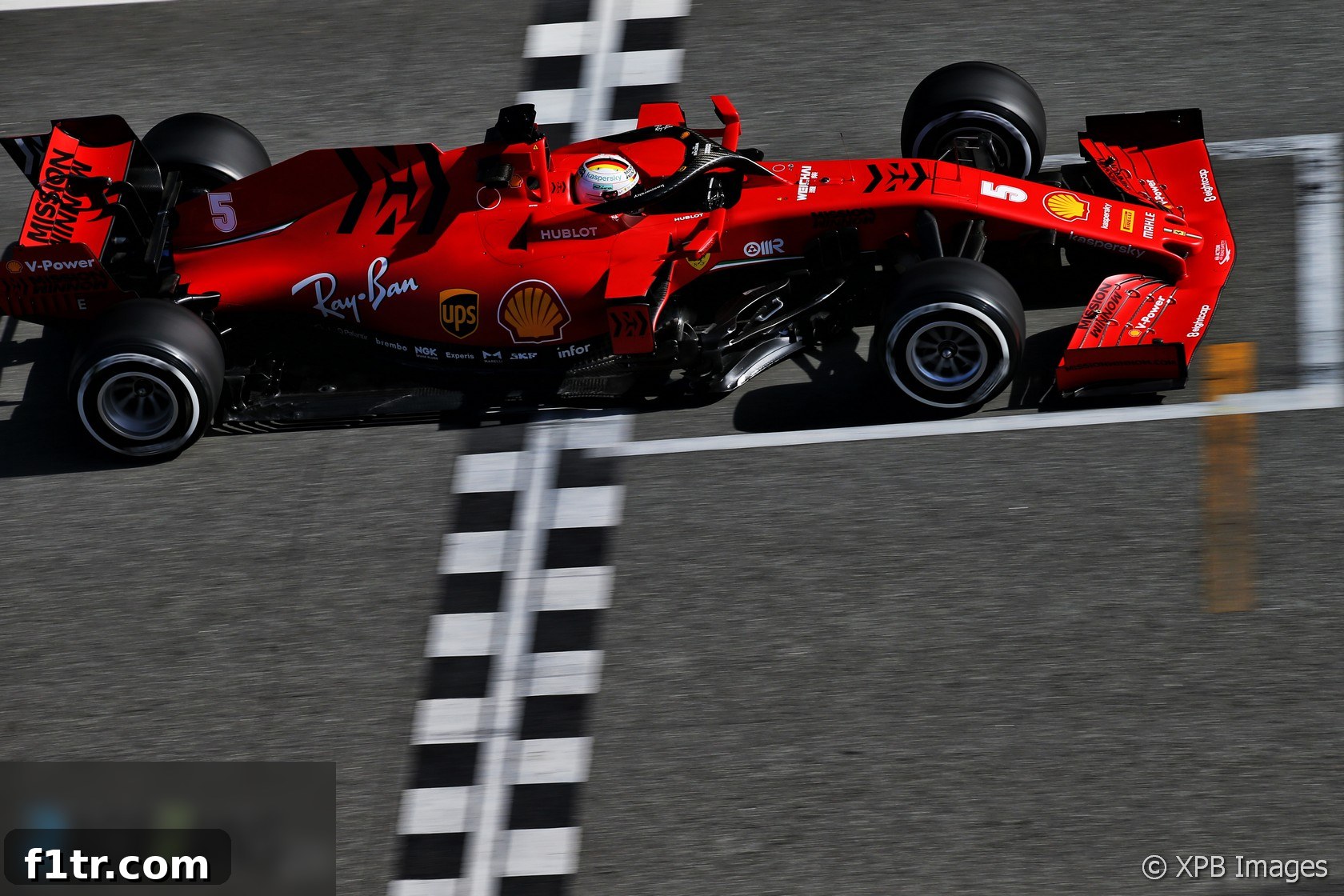
As the Formula 1 pre-season testing concluded, attention quickly turned to the revelations emerging from the paddock, particularly concerning Scuderia Ferrari. Team principal Mattia Binotto offered candid insights into the challenges faced by the Italian outfit, revealing that their power unit had not demonstrated the expected strength compared to the previous year. This admission, coupled with a deliberate focus on reliability during development, suggested a nuanced approach to the new season. Furthermore, Binotto highlighted that increased aerodynamic drag was significantly impacting the team’s straight-line speed, creating a dual challenge for Ferrari as they geared up for the championship. These early assessments painted a complex picture for the Tifosi, raising questions about Ferrari’s immediate competitiveness in what promised to be another thrilling season of Formula 1.
Insights from the Paddock: Ferrari’s Performance Assessment
During the crucial pre-season testing phase, Ferrari team principal Mattia Binotto addressed pressing questions regarding the SF1000’s performance, specifically the noticeable reduction in straight-line speed. When pressed to attribute this to either engine performance or aerodynamic drag, Binotto provided a detailed and frank analysis, acknowledging a combination of factors at play. His remarks offered a rare glimpse into the team’s strategic priorities and developmental hurdles.
“I think it’s a combination of the two,” Binotto stated, elaborating on the dual nature of Ferrari’s performance deficit. “I think in terms of overall performance on the power, on the engine, we are not as strong as we were last year. As I said, we focused on reliability, and [that’s] somehow compromising eventually the performance.” This confession underscored the delicate balance F1 teams must strike between raw power and dependable operation, especially in the early stages of a new car’s life cycle. The emphasis on reliability often means dialing back absolute performance potential to ensure components can withstand the rigors of a full race distance, a critical aspect that can pay dividends over a long season.
Binotto continued, shifting focus to the aerodynamic side of the equation: “But the drag is significantly affecting the speed. I think when looking for better speed, you need to look both at the drag and the power of the engine itself. So we will work on both items for the future, no doubt.” The impact of aerodynamic drag on straight-line speed cannot be overstated in modern Formula 1. Excessive drag can neutralize even a powerful engine, making overtakes difficult and lap times slower on circuits with long straights. Ferrari’s admission of higher drag suggests potential compromises in their aerodynamic package, perhaps in pursuit of higher downforce in other areas, or simply an area that requires further optimization.
Providing a roadmap for future improvements, Binotto added: “Drag is the one we may address earlier compared to the power unit. The power unit you need to wait at least for the second unit.” This distinction highlights the differing developmental timelines for engine and aero components. Aerodynamic issues, often stemming from wing designs, floor geometry, or bodywork, can typically be refined and updated more rapidly through wind tunnel testing and CFD simulations, leading to quicker trackside adjustments. Engine development, by contrast, is a more protracted process, often involving significant redesigns and requiring homologation, meaning substantial upgrades might only appear with new engine units later in the season. This strategic prioritization reveals Ferrari’s immediate plan to tackle the more accessible performance gains first, aiming to unlock the SF1000’s potential as the season progresses. The insights from Binotto painted a realistic picture for Ferrari, signaling a season of concerted effort to claw back performance.
Quotes: Dieter Rencken
Advert | Become a RaceFans supporter andgo ad-free
Social Media Pulse: F1 and Global Events
The digital landscape of social media often provides an immediate snapshot of the mood and key discussions within the Formula 1 community and beyond. During this period, notable posts from platforms like Instagram and Twitter reflected a spectrum of topics, from personal precautions against emerging global health crises to historical racing moments and critical observations about the sport’s navigation of challenging times.
An Instagram post captured widespread attention, showcasing the lighter side and personal experiences of individuals connected to the sport: View on Instagram. These snippets often humanize the personalities involved in F1, offering fans a unique perspective away from the track.
The growing global concern over the #Coronavirus (COVID-19) was a dominant theme, even impacting the personal routines of F1’s biggest stars. A tweet from Keith Collantine (@keithcollantine) on March 8, 2020, highlighted this with a picture of @LewisHamilton taking necessary precautions during a flight, demonstrating how quickly the pandemic began to influence daily life, even for elite athletes. This post resonated with many, signaling the beginning of a new era where health and safety protocols would become paramount in global travel and competitive sport. The image of a revered champion like Hamilton taking such measures underscored the seriousness of the situation long before its full impact was realized by the general public.
|@LewisHamilton taking #Coronavirus precautions on his flight. pic.twitter.com/JhV5bsNNTn
— Keith Collantine (@keithcollantine) March 8, 2020
Adding a touch of nostalgic thrill, Marc Gené shared his exhilarating experience of driving the iconic F2003-GA at @RoadAtlanta. This post, from March 8, 2020, celebrated the legacy of Ferrari’s racing heritage and the unique opportunity provided by programs like @FerrariRaces #F1Clienti, where owners and enthusiasts can experience legendary Formula 1 machinery on track. His description of Road Atlanta as “one of the most spectacular tracks in the world with one of the fastest F1s” perfectly captured the essence of high-performance driving and the enduring appeal of classic F1 cars. Such events are vital for preserving motorsport history and connecting fans with the sport’s glorious past.
Driving the F2003-GA in @RoadAtlanta is an amazing feeling. Una de las pistas más espectaculares del mundo con uno de los F1 más rápidos @FerrariRaces #F1Clienti pic.twitter.com/5eIS5RdSEz
— Marc Gené (@marc_gene) March 8, 2020
However, the overarching theme of global health concerns resurfaced with critical commentary regarding large gatherings. A tweet from DHH Racing (@dhhracing) on March 8, 2020, sharply questioned the rationale behind Formula 1’s initial approach to upcoming races amidst widespread cancellations of other major events. The post highlighted that “Much of Europe has banned gatherings above 1,000 people. 16 million are quarantined in Italy. Baselworld and Geneva auto show canceled.” In stark contrast, it concluded with a sarcastic “But sure, let’s get 100,000 together alongside teams pulling crew from all over Europe 👌.” This sentiment captured the growing unease and criticism directed at the motorsport industry, particularly Formula 1, for seemingly underestimating the burgeoning COVID-19 pandemic. The tweet reflected public concern over the potential health risks for spectators, team personnel, and local communities, pressuring F1 to reconsider its calendar in the face of an unprecedented global crisis. This kind of public scrutiny ultimately played a significant role in the subsequent decisions to postpone and cancel various Grand Prix events.
Much of Europe has banned gatherings above 1,000 people. 16 million are quarantined in Italy. Baselworld and Geneva auto show canceled. But sure, let’s get 100,000 together alongside teams pulling crew from all over Europe 👌
— DHH Racing (@dhhracing) March 8, 2020
- For a comprehensive list of official F1 accounts and key personalities, consult our F1 Twitter Directory to stay updated with the latest from the world of motorsport.
Further Reading: Motorsport Headlines and Industry Challenges
Beyond the immediate F1 paddock discussions and social media chatter, the broader motorsport world was grappling with significant developments, ranging from the logistical nightmares posed by a global pandemic to structural challenges within established racing series. Here’s a roundup of other compelling links of interest:
Advert | Become a Supporter & go ad-free
F1 chiefs on edge as coronavirus hangs over races in Asia, Middle East (The Age)
This report from The Age provided a sobering look at the mounting anxieties within Formula 1 leadership concerning the viability of early-season races, particularly those scheduled for Asia and the Middle East. The article highlighted the delicate situation surrounding the Australian Grand Prix, noting that “A handful of staff from the race teams are in Australia already – with no problems – but activity at Albert Park will intensify from early next week as team officials, marketing, media and sponsorship executives all arrive and converge on the pit lane complex which is their home virtually 24 hours a day until the race is run and won next Sunday. Cars and freight will arrive at Avalon on Sunday evening.” This detailed account underscored the immense logistical undertaking of staging a Formula 1 race and the precarious position teams and organizers found themselves in as the pandemic’s threat escalated. The arrival of critical freight and personnel just days before the event illustrated the last-minute nature of decisions being made, and the sheer scale of the operation that would be disrupted if races were cancelled or postponed. The report effectively captured the tension and uncertainty that gripped the F1 community as the Australian season opener loomed.
Troubled DTM ‘didn’t really evolve’, says Mortara (Motorsport)
Away from the F1 circus, the German Touring Car Masters (DTM) series faced its own existential crisis. A candid interview with Edoardo Mortara on Motorsport.com painted a grim picture for the championship’s future, particularly in light of Audi’s impending withdrawal. Mortara, a seasoned competitor in the series, lamented that DTM “didn’t really evolve” over the years, suggesting a lack of adaptation to changing motorsport landscapes and fan expectations. His stark warning, “If you have Audi leaving, I think it’s going to be a big problem for DTM. Not sure that it’s going to survive if they leave,” encapsulated the profound concern within the paddock. Manufacturer support is the lifeblood of many top-tier motorsport championships, and the departure of a major player like Audi, especially after Mercedes-Benz had already exited, left a gaping void. This situation highlighted the broader fragility of motorsport categories heavily reliant on OEM investment and the constant pressure to innovate and attract new participants to ensure long-term viability. The DTM’s struggles served as a cautionary tale for other series facing similar challenges in an increasingly competitive and cost-conscious sporting world.
We always endeavour to credit original sources and welcome contributions from our readers. If you have a compelling tip for a link to feature in an upcoming RaceFans round-up, please send it in via our contact form.
Advert | Become a RaceFans supporter andgo ad-free
Fan Perspective: The Bahrain Grand Prix and Public Relations
The decision to hold the Bahrain Grand Prix behind closed doors, without spectators, was one of the early and most controversial responses to the escalating COVID-19 crisis within Formula 1. This unprecedented move sparked considerable debate among fans and pundits alike, raising questions about the motivations behind such a drastic measure. Was it a practical necessity for public health, or were other factors at play?
A insightful comment from reader @Nerrticus captured a widely discussed perspective, suggesting that for the organizers and government, the decision was “Easy… since to them the race is all about public relations more than paid attendance.” This viewpoint emphasized the strategic importance of the Grand Prix as a global showcase for Bahrain, rather than solely a revenue-generating event through ticket sales. The comment further elaborated on this by stating, “The last thing they wanted said on the news was ‘first Bahrain Grand Prix cancelled since the civil uprising and protests of 2011’.” This highlighted the historical context and the political sensitivities surrounding major international events in Bahrain. Avoiding a cancellation at all costs, even if it meant foregoing live spectators, was perceived by some as a calculated move to maintain a positive international image and demonstrate stability, preventing any negative parallels with past social unrest. The fan’s perspective offered a critical look at the complex interplay between sports, politics, and national image in the era of a global pandemic, revealing that decisions in Formula 1 often extend far beyond pure sporting considerations.
Easy decision for the organisers/government to make since to them the race is all about public relations more than paid attendance.
The last thing they wanted said on the news was ‘first Bahrain Grand Prix cancelled since the civil uprising and protests of 2011’.
@Nerrticus
Celebrating Milestones: Happy Birthday to Our Motorsport Community
We extend our warmest wishes to members of our dedicated motorsport community celebrating their birthdays! A very happy birthday goes out to Alpinestar, Venturi Effect, Cdmracing, and Guillaume Blanchet. We appreciate your passion and continued engagement with the world of racing.
If you’d like to receive a birthday shout-out on our platform and be celebrated by fellow enthusiasts, simply let us know your birth date via our contact form or by adding your details to our comprehensive list here.
On This Day in F1 History
- Today marks the 35th birthday of Pastor Maldonado, a driver who left an indelible mark on Formula 1. Maldonado competed for five seasons, showcasing flashes of raw speed and unforgettable moments. His career highlight undoubtedly remains his stunning victory at the 2012 Spanish Grand Prix with Williams, a triumph that was both unexpected and immensely popular, reminding fans of the unpredictable thrill that F1 can deliver.