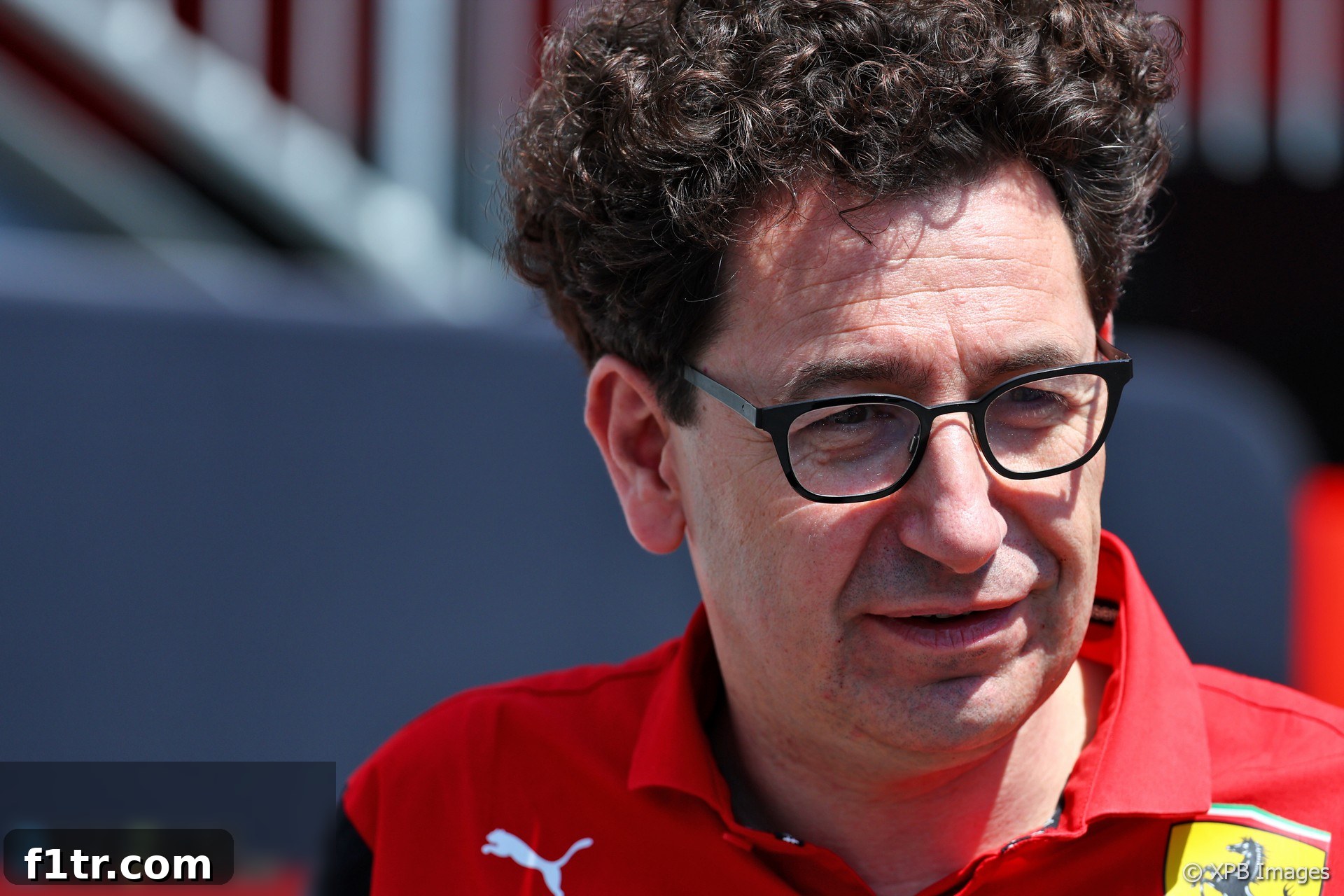
Ferrari’s Baku Nightmare: Binotto Defends Strategy Amidst Devastating Reliability Failures
The Azerbaijan Grand Prix proved to be a weekend of utter heartbreak and frustration for Scuderia Ferrari, as both Charles Leclerc and Carlos Sainz Jnr retired from the race with mechanical issues. The double DNF, particularly Leclerc’s retirement from a commanding lead, dealt a severe blow to the team’s championship aspirations. In the aftermath of the Baku debacle, team principal Mattia Binotto found himself defending the team’s strategic calls, which he described as “very, very sharp,” even as the reliability of their power units and components came under intense scrutiny.
Leclerc’s unceremonious exit from the race lead, due to a power unit problem, marked a crushing blow for the Monegasque driver and the Tifosi. This incident echoed his earlier retirement from the Spanish Grand Prix while leading, painting a grim picture of recurring reliability woes. Adding to Ferrari’s misery, Carlos Sainz Jnr had already been forced to pull over earlier in the race with a suspected hydraulic fault, completing a disastrous double retirement for the Maranello-based squad. The ripple effect extended to Ferrari’s customer teams as well, with Guanyu Zhou’s Alfa Romeo and Kevin Magnussen’s Haas also retiring from the race, underscoring a potential systemic issue with the Ferrari-powered cars.
Unraveling the Mystery: Distinct Failures and the Road to Maranello
When pressed on whether these recent failures were attributable to previously known problems, Mattia Binotto offered a firm denial. “Honestly, not,” he stated, indicating that the team was grappling with new or unfamiliar technical challenges. He emphasized the distinct nature of the issues affecting each Ferrari car in Baku, suggesting that there wasn’t a single underlying cause.
“We still need to analyse and understand,” Binotto explained, detailing the immediate steps Ferrari would take. “But I think if you look at the two [Ferrari] cars, certainly different problems. We had a hydraulic problem for Carlos first. Where it was coming from now we’ll look at the hydraulic system and hopefully we will identify it.” The hydraulic system, a complex network of components crucial for functions like steering, braking, and gearbox operation, is a frequent culprit in F1 mechanical failures, and its diagnosis can be intricate.
Leclerc’s retirement presented a more visually dramatic and arguably more concerning issue. “On Charles, a different one. Certainly engine-related, I think that’s quite obvious by the smoke,” Binotto confirmed. The sight of smoke billowing from the rear of an F1 car is almost always indicative of a critical engine component failure. Whether this particular engine failure was linked to previous power unit issues Leclerc faced in Spain, or if it represents an entirely new fault, remains to be determined. “Is it something we had in the past? I don’t think so, but maybe yes, we need to look as well at what happened to our customer teams,” Binotto mused, highlighting the shared responsibility and concern across the Ferrari engine family.
The process for diagnosing such complex technical failures is meticulous and time-consuming. “Again I don’t think that with the telemetry data we can have a clear answer of the problem. Components will be sent back to Maranello as usual, we need to disassemble, try to understand and to fix them as soon as possible,” Binotto elaborated. This forensic investigation in Maranello will involve stripping down the damaged power units and hydraulic systems piece by piece to identify the exact point of failure, a crucial step for implementing effective and lasting solutions before the next round of races.
Strategy Under Scrutiny: A Sharp Pit Wall in Baku
Despite the crushing reliability issues, Mattia Binotto was keen to highlight the positive aspects of Ferrari’s performance in Baku, specifically praising the strategic acumen displayed by the pit wall. Ferrari’s strategy had come under intense criticism just two weeks prior at the Monaco Grand Prix, where questionable decisions cost Leclerc a potential victory. In Baku, however, Binotto felt the team had redeemed itself strategically.
Leclerc had held a comfortable 12-second lead over eventual race winner Max Verstappen when his power unit problem struck. This substantial advantage was partly built on a timely and well-executed strategy call during a Virtual Safety Car (VSC) period. Ferrari seized the opportunity to pit Leclerc for hard tyres, a move that paid dividends immediately by creating a significant gap to his rivals.
“In general, the strategy, I think that the team has been very reactive at the time of the Virtual Safety Car, for Charles’ team, because he was already very close to the pit entry. We have been very, very sharp,” Binotto affirmed. This proactive decision-making contrasted sharply with the more hesitant or suboptimal calls made in Monaco, suggesting that the team had learned valuable lessons and refined its processes.
However, the pit stop itself wasn’t entirely flawless. Binotto acknowledged a minor hiccup: “The pit stop itself went very well,” he clarified in response to a question from RaceFans. “The tyres were fitted very, very soon on the car, we had the green light because the entire system works well. But both the front and the rear jack I see went up, for whatever reason. I don’t know if they were linked, if the rear was the consequence of the front or vice-versa. It’s something which we need to look at, I have no answer yet.” While this issue didn’t significantly impact Leclerc’s immediate position, it highlights the constant pursuit of perfection in Formula 1, where every millisecond and every component can be critical.
The Hypothetical Victory: Leclerc’s Dominance Before Disaster
Max Verstappen, despite benefiting from Leclerc’s retirement to claim victory, later suggested that he believed Red Bull would have been able to catch and pass the Ferrari driver regardless. This added a layer of ‘what if’ to the narrative, prompting Binotto to firmly stand by Ferrari’s strong position prior to the mechanical failure.
“Obviously it was still a very long race, you need to manage the tyres to the end,” Binotto conceded, acknowledging the strategic demands of Baku’s high-speed, high-degradation circuit. However, he quickly countered Verstappen’s assertion: “The tyre degradation of the hard for what we saw was very little. We will look at all the numbers and I’m pretty sure everybody will have a forecast as to how the race would have finished. But we felt very strong, certainly, in the lead with a strong tyre and Charles was very happy with the car behaviour.”
Binotto’s confidence stemmed from Leclerc’s exceptional pace and the F1-75’s performance on the hard compound tyres. Leclerc had expertly managed his tyres and maintained a robust lead, demonstrating both his driving prowess and the car’s inherent speed. The team genuinely believed they were on course for a comfortable and well-deserved victory, making the sudden retirement all the more devastating.
Championship Implications: A Growing Divide
The consequences of Ferrari’s reliability woes in Baku extend far beyond a single race weekend. The double DNF allowed Red Bull to significantly extend their lead in both the Drivers’ and Constructors’ Championships. Max Verstappen now enjoys a substantial points advantage over Charles Leclerc, who has seen his title challenge severely hampered by mechanical failures that were beyond his control.
This escalating pattern of unreliability casts a long shadow over Ferrari’s championship aspirations. While the F1-75 has often demonstrated superior qualifying pace and strong race performance, these mechanical vulnerabilities are proving to be their Achilles’ heel. The pressure on Ferrari to swiftly identify and rectify these issues is immense. Failure to do so could see their early-season momentum completely evaporate, leaving them to watch Red Bull cruise to both championships.
For Charles Leclerc, the mental toll of losing two potential race victories from a leading position due to technical failures must be immense. Maintaining morale and focus amidst such setbacks will be a significant challenge for the young Monegasque driver. Similarly, Carlos Sainz Jnr’s run of bad luck, including his own retirement in Baku, has prevented him from building consistent momentum.
The Road Ahead: Urgency and Resolution
Ferrari now faces a critical period of intense investigation and development at their Maranello factory. The urgency to resolve these fundamental reliability issues is paramount. The 2022 F1 season is a relentless marathon, and any further mechanical setbacks could prove fatal to their championship hopes. The team’s engineers will be working tirelessly to understand the root causes of the power unit and hydraulic failures, not only for the factory team but also for their customer outfits.
The coming races will be a true test of Ferrari’s resilience and their ability to overcome adversity. While their strategic calls in Baku were commendable, and their car undeniably fast, sustained success in Formula 1 ultimately hinges on a delicate balance of performance and bulletproof reliability. The Tifosi, and indeed the entire F1 paddock, will be watching closely to see if Ferrari can overcome its current technical challenges and reignite its championship fight.
2022 Azerbaijan Grand Prix Related Articles
- FIA should black-flag cars if their porpoising endangers drivers’ safety – Horner
- Transcript: Why Norris reluctantly complied with McLaren’s Baku team orders
- Montreal is “going to hurt” in stiff 2022 cars say drivers hoping for bouncing fix
- Leclerc was heading to a ‘comfortable win’ before retirement – Ferrari
- F1 should penalise those who ‘obviously’ slow on purpose in qualifying – Norris
Browse all 2022 Azerbaijan Grand Prix articles