Bahrain Grand Prix Embraces F1’s Middle Eastern Expansion and Unwavering Safety Commitment
The promoter of the Bahrain Grand Prix has expressed unwavering confidence and enthusiasm regarding the future of Formula 1 in the Middle East, particularly with the upcoming inclusion of the Saudi Arabian Grand Prix. Far from seeing the new regional event as a competitor, the Bahrain International Circuit (BIC) views it as a valuable synergy that strengthens the sport’s footprint in a strategically vital part of the world. This forward-looking perspective highlights a mature understanding of market dynamics and a long-term commitment to motorsport development.
Synergy, Not Competition: F1’s Flourishing Presence in the Middle East
The 2021 F1 calendar is set to welcome the inaugural Saudi Arabian Grand Prix, a significant addition that marks Formula 1’s continued strategic expansion. However, for Sheikh Salman bin Isa Al Khalifa, Chief Executive of the Bahrain International Circuit, this development is a cause for optimism, not concern. In an exclusive interview, Al Khalifa articulated how Bahrain has historically viewed regional growth as a positive indicator of their own success and the broader appeal of motorsport.
“When we first embarked on this journey in 2004, our primary goal was to cultivate a vibrant culture of motorsport, particularly Formula 1, within Bahrain,” explained Al Khalifa. “While the region had a history of rallying, our focus was squarely on establishing circuit racing and building a sustainable model around it. We felt immense pride when Abu Dhabi joined the F1 calendar, as it clearly demonstrated that we were on the correct path and that the Middle East was becoming a credible destination for top-tier racing.”
Bahrain, a smaller nation, has successfully leveraged Formula 1 to elevate its global profile. The addition of Saudi Arabia brings a different, yet equally compelling, dynamic. With a population exceeding 30 million, and notably a very young demographic, Saudi Arabia represents a colossal untapped market for motorsport. Al Khalifa emphasized this potential: “For the Kingdom of Saudi Arabia, it represents a vast market that we believe is ripe for awakening to motorsport. Its substantial and youthful population offers incredible opportunities for engagement and growth within the sport.”
The strategic placement and timing of the two races are key factors in preventing any potential conflict. Al Khalifa highlighted the “many benefits” the Saudi Arabian race could bring to Bahrain’s round of the world championship. Crucially, the geographical distance between the host cities – Jeddah or Riyadh being quite distinct from Sakhir – coupled with the significant six-month interval between their scheduled events, ensures that each Grand Prix operates within its own unique sphere and audience.
“Geographically, Jeddah or Riyadh is quite a distance from Bahrain,” Al Khalifa noted. “Based on our experience with the Bahrain race in April and Abu Dhabi’s season finale in November, there’s such a long season that by the time Abu Dhabi arrives, the specifics of the Bahrain race have somewhat faded from immediate memory. Therefore, with the Saudi race scheduled for November, we anticipate it won’t significantly alter our event’s dynamics or appeal.” This temporal separation allows both events to thrive without direct competition for attendance or media attention.
The Bahrain Grand Prix also boasts a distinct market identity. In normal, non-pandemic affected years, the event primarily draws its spectators from within the kingdom and neighboring regions. “Our market is inherently different, and our race is fundamentally a race for Bahrain,” explained Al Khalifa. “If you observe the crowds, approximately 70% of attendees are local individuals. It is, by design, tailored for our local market. While we certainly benefit from international exposure and welcome global visitors, the core essence of our race remains family-orientated and deeply rooted in the local community.” This unique focus further distinguishes the Bahrain GP, ensuring its continued success amidst regional expansion.
Navigating the Pandemic: Bahrain’s Pivotal Role in the 2020 F1 Calendar
The unprecedented challenges of the global pandemic in 2020 thrust Bahrain into a critical role for the Formula 1 season. Following the initial postponement of its traditional race, the Bahrain International Circuit stepped up to host not one, but two rounds of the championship – a testament to its reliability and the strong relationship it maintains with Formula 1 management.
“Formula 1 approached us with the request to host a second race here when they were meticulously working to rebuild their calendar,” Al Khalifa recalled. “I believe they accomplished an extraordinary feat. When they started in June, most of us were cautiously optimistic about achieving perhaps 12 or 14 races. To conclude the season with a remarkable 17 events was a significant challenge that they met with great success.” This flexibility and willingness to adapt from circuits like Bahrain were instrumental in saving the 2020 season.
Adding another layer of innovation, Bahrain utilized different circuit variations for each of its two races. The second event, known as the Sakhir Grand Prix, took place on the shorter, faster ‘Outer’ Circuit. This imaginative approach was initiated at F1’s instigation, according to Al Khalifa, demonstrating the sport’s proactive efforts to create compelling and varied racing experiences amidst exceptional circumstances.
The short, 3.5-kilometer Outer Circuit, while officially featuring 11 corners, is characterized by only four significant braking zones. This simplicity led some observers to liken it to an “oval” track, a rarity in Formula 1. However, Al Khalifa robustly defended the circuit’s unique character: “To us, it’s far from an oval. As demonstrated during practice sessions, it incorporates quite a challenging chicane that the drivers navigate. This section, along with the high-speed nature, makes it a truly unique challenge.” The Sakhir Outer Circuit had never before hosted a race of any kind until the Formula 2 round immediately preceding the F1 Grand Prix, underscoring the novelty and experimental nature of the event.
Implementing the Outer Circuit for a Formula 1 race required specific upgrades, particularly concerning its nighttime presentation. “In terms of the track layout itself, nothing fundamental changed,” Al Khalifa clarified. “However, regarding the lighting infrastructure, we had to undertake a significant upgrade to meet Formula 1’s exacting standards.” This crucial enhancement ensured that the circuit’s floodlights provided sufficient illumination for high-definition television broadcasts, vital for a sport that relies heavily on global viewership. “This race was their race, and they were bringing everything, so whatever was required of us, we collaborated closely with them to achieve it,” he added, highlighting the partnership.
These significant costs were borne by the circuit at a time when traditional revenue streams were severely curtailed. Both races were held behind closed doors, without spectators, due to ongoing pandemic restrictions. Despite the immediate financial implications, Al Khalifa emphasized that maintaining robust ties with Formula 1 and ensuring Bahrain’s continued presence on the calendar superseded short-term commercial considerations. “We have always maintained that our involvement in this sport is for the long haul, and we have assiduously built that enduring relationship,” he stated.
“Especially in these extraordinary times, with everything unfolding globally, I don’t believe it’s appropriate to focus solely on the overall expenditure within the kingdom,” Al Khalifa continued. “Considering the extensive measures we implemented for COVID-19 safety protocols and all the necessary setups, the primary objective was to successfully navigate this challenging year. We will naturally review our financial position at the year’s end, but the decisions made were never solely driven by commercial gain.” This commitment underscores Bahrain’s strategic long-term vision for its role in global motorsport.
Unwavering Commitment to Safety: Lessons from Grosjean’s Horrific Crash
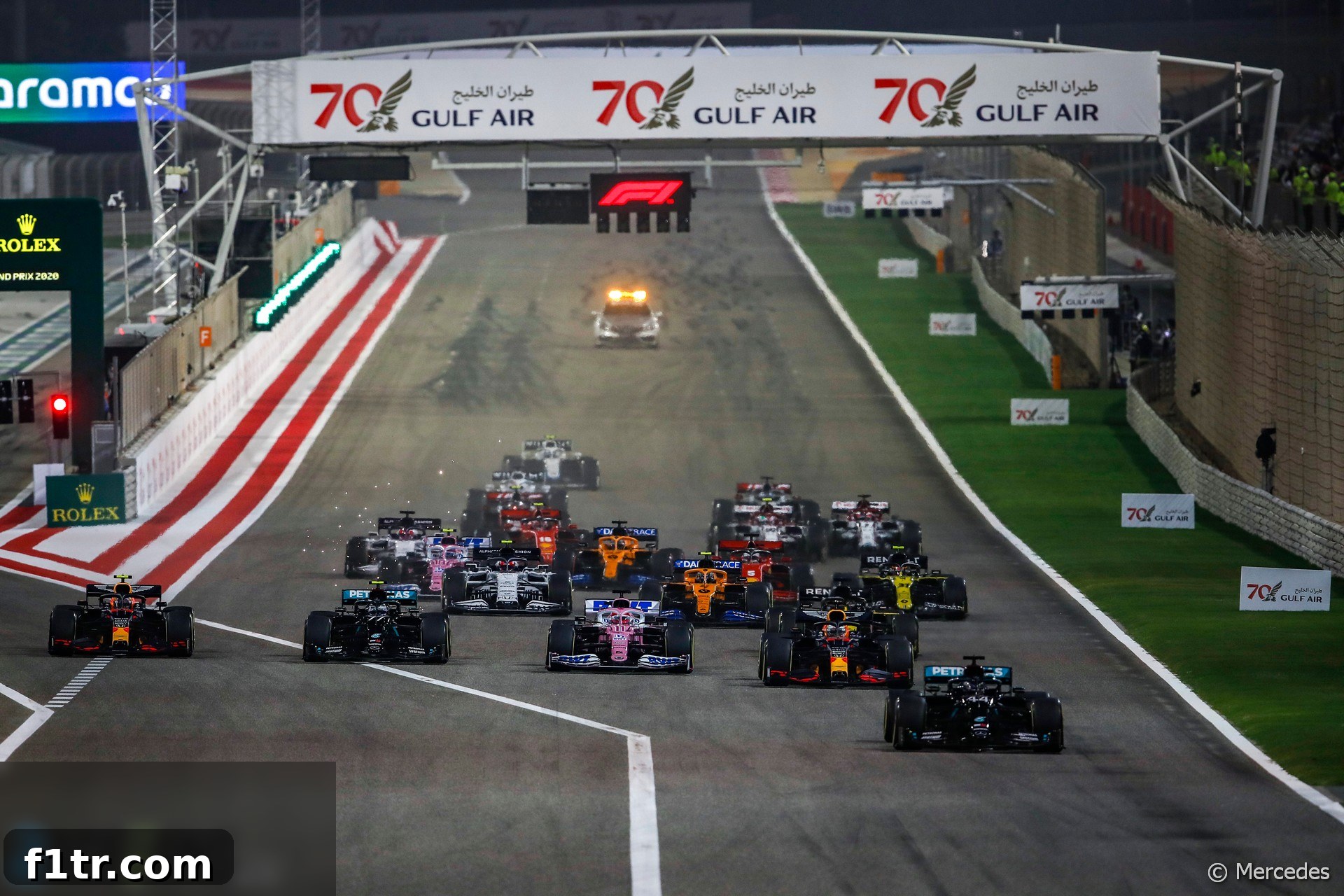
Romain Grosjean’s terrifying crash at the start of the Bahrain Grand Prix cast an intense spotlight on Formula 1 safety, prompting immediate scrutiny and action. The horrifying incident, which saw Grosjean’s car split in two and erupt into flames, necessitated prompt changes at the circuit. Further modifications are anticipated before the world championship returns for the 2021 F1 season in March, reflecting an ongoing commitment to driver safety.
Reflecting on the near-catastrophe, Al Khalifa expressed profound relief: “First and foremost, I am incredibly relieved that he was able to walk away from that, especially considering the visual evidence of the crash. Personally, I found myself trying to recall the last time such an accident occurred, perhaps back in the seventies, with Niki Lauda’s fiery crash coming to mind. We were all immensely pleased to see him emerge largely unscathed.” The incident served as a stark reminder of the inherent dangers of motorsport, even with modern safety advancements.
The extensive damage inflicted by Grosjean’s accident presented an immediate and significant challenge to the continuation of the race weekend. The barrier where he impacted was severely compromised, requiring substantial and rapid repair work to allow the Grand Prix to resume. This monumental effort showcased the rapid response capabilities of the circuit and the collaborative spirit with the FIA.
“We collaborated very closely with the FIA and the race director to determine the safest and most efficient way to resume the race,” Al Khalifa explained. “We were fortunate to have readily available FIA-approved concrete barrier blocks, which allowed us to quickly implement the necessary repairs and proceed with the event.” Following the initial repairs, further assessments were made. “The very next day, they reverted to the FIA-certified layout, and subsequently, the race director requested additional adjustments. As a circuit, our role is to follow their directives and work hand-in-hand with them to implement whatever changes they deem necessary for optimal safety.”
Al Khalifa confirmed that the circuit would “wait and allow everything to unfold and see what the FIA would like to modify” following the comprehensive investigation into Grosjean’s crash. The findings and recommendations from this critical inquiry are expected by the end of next month, and will undoubtedly inform future safety enhancements not only at Bahrain but potentially across the entire F1 calendar. This ongoing dialogue and commitment to continuous improvement are hallmarks of Formula 1’s approach to safety.
The Unsung Heroes: Bahrain’s Dedicated Marshals
Amidst the drama and concern surrounding Romain Grosjean’s crash, widespread praise was rightly directed at the circuit’s safety marshals for their swift, decisive, and professional actions in aiding his rescue. These unsung heroes played a crucial role in ensuring Grosjean’s survival, extinguishing the fire and assisting him to safety with remarkable speed and efficiency. Their efforts underscored the vital importance of highly trained personnel at every Grand Prix.
The Bahrain International Circuit takes immense pride in its local marshaling crews, a tradition that dates back to its inaugural race. “We have never had to import marshals,” Al Khalifa proudly stated. “In our first year, the Confederation of Australian Motor Clubs (CAMS) provided the initial training for our volunteers. However, ever since then, we have been incredibly proud of our Bahraini marshals who have diligently officiated every single race held at our circuit.” This commitment to local talent not only fosters community involvement but also builds a deep well of experienced personnel.
The expertise of Bahrain’s marshals extends beyond their home circuit. Their professionalism and skill have been recognized internationally, leading them to support other major motorsport events. Al Khalifa further elaborated on their impressive resume: “They also had the distinguished opportunity to run the Formula 1 race in India during its seasons from 2011 to 2013, and they have also played a crucial role in marshalling the race in Baku.” This international experience speaks volumes about the high standards of training and dedication within the Bahraini marshaling corps.
In a poignant moment following his discharge from hospital, Romain Grosjean returned to the Bahrain International Circuit on Thursday. He personally met with and thanked Bahrain’s marshals and safety team, offering a heartfelt expression of gratitude for their life-saving actions. This gesture served as a powerful testament to the indispensable role these dedicated individuals play in the safety and success of Formula 1, embodying the spirit of heroism and professionalism that underpins the sport.
Join the RaceFans Supporters Drive!
If you’ve enjoyed RaceFans’ motor sport coverage during 2020, please take a moment to find out more about our Supporter Drive.
We’re aiming to welcome 3,000 new Supporters to help fund RaceFans so we can continue to produce quality, original, independent motorsport coverage. Here’s what we’re asking for and why – and how you can sign up:
- Join the RaceFans Supporters Drive!
2020 Sakhir Grand Prix Related Articles
- Leclerc will choose his fights better to avoid more “silly” first-lap crashes
- 2020 Bahrain and Sakhir Grand Prix Star Performers
- Sakhir performance risked making me look a fool, admits Bottas
- Perez makes his case for 2021 chance with masterful recovery drive for first win
- Perez breaks Webber’s record with 190-race wait for first win
Browse all 2020 Sakhir Grand Prix articles