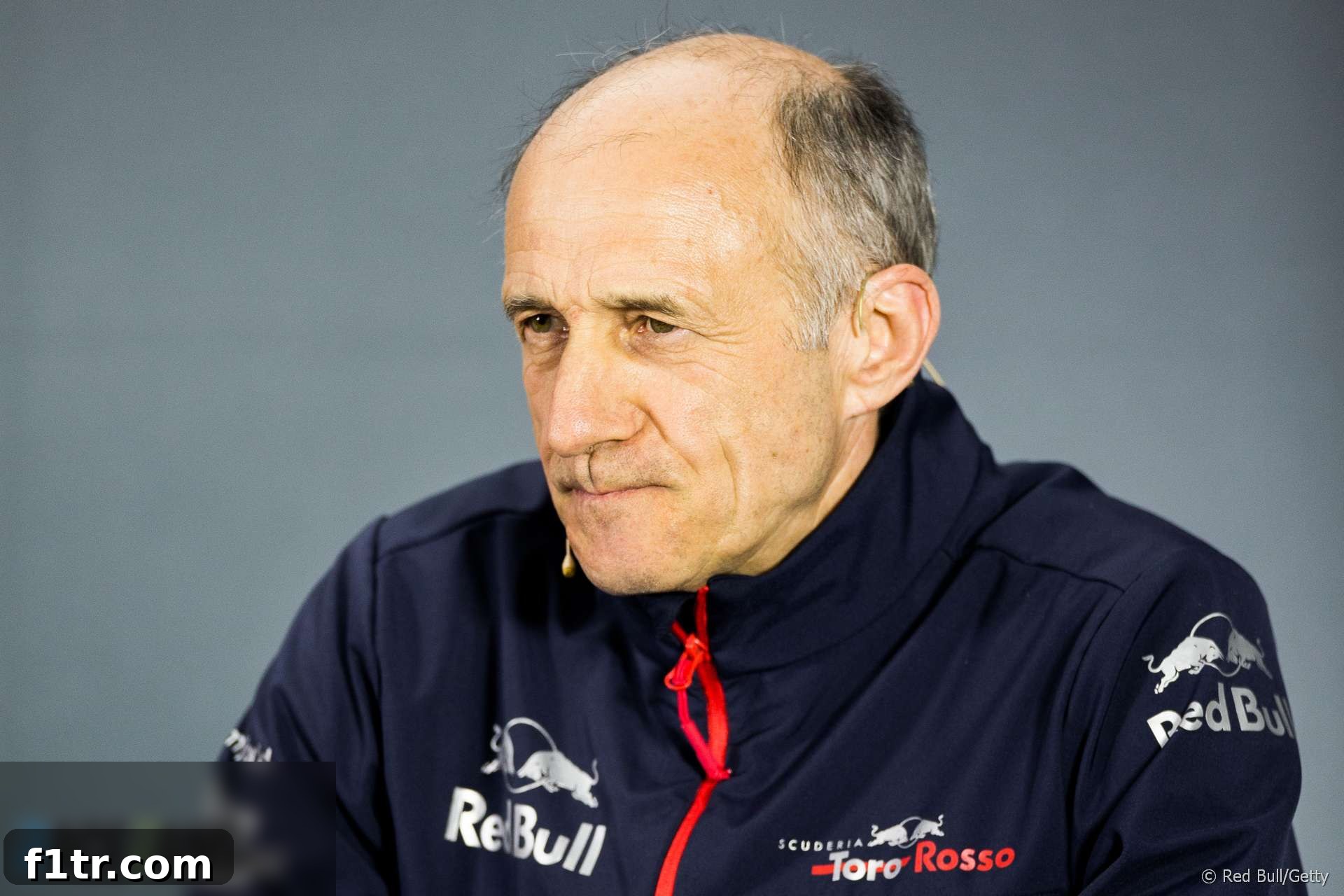
The exhilarating world of Formula 1, while primarily focused on speed, competition, and technological prowess, frequently finds itself entangled in complex ethical and geopolitical debates. A particularly notable instance of this occurred when Toro Rosso team principal Franz Tost vehemently dismissed calls from human rights groups. These organizations had urged the FIA, motorsport’s global governing body, and Formula 1 management to demand that the Bahrain government release protesters who had voiced strong criticism against the Grand Prix.
Advert | Become a Supporter & go ad-free
Bahrain Grand Prix: Franz Tost Firm on F1’s Apology, Ignoring Human Rights Pleas
The controversy gained significant traction following a formal communication from sixteen prominent human rights organizations. This coalition addressed a comprehensive letter to Jean Todt, the then-president of the FIA, and Sacha Woodward-Hill, Formula 1’s general counsel. Their urgent appeal implored the leaders of motorsport to publicly advocate for the immediate release of Najah Yusuf and other detainees. Yusuf’s case, in particular, became a symbol of the broader issues at play, drawing international attention to the alleged repression of dissent in Bahrain during the time of the high-profile sporting event.
The Allegations: Najah Yusuf’s Case and Broader Human Rights Concerns
Najah Yusuf’s plight became a central narrative in the human rights groups’ campaign. Her arrest stemmed from a social media post where she articulated a scathing critique of the Bahrain Grand Prix. In her post, Yusuf contended that the race was “nothing more than a way for the al-Khalifa family to whitewash their criminal record and gross human rights violations.” This statement directly challenged the narrative often associated with hosting such global events, where host nations frequently aim to project an image of modernity, stability, and international standing.
The severity of Yusuf’s situation was underscored by her deeply disturbing allegations. A mother of four, she claimed to have endured torture and sexual assault during her detention, accusations that sparked outrage and condemnation from human rights advocates worldwide. While the Bahraini government consistently denied these grave allegations, the letter from the human rights organizations explicitly stated that Yusuf’s public criticism of the race was cited as evidence in her prosecution. This detail was presented as direct proof that freedom of speech was being suppressed in the context of the Grand Prix, making Formula 1 an unwitting participant in a human rights struggle.
Furthermore, the letter from the human rights groups extended beyond individual cases, painting a grim picture of systemic abuses. It highlighted a concerning pattern: a “spike in human rights abuses occur each year around the time of the race.” This recurring trend, they argued, indicated a deliberate crackdown on dissent coinciding with the global spotlight on Bahrain. The groups also directly accused Formula 1 of failing to adhere to the principles outlined in its own human rights statement, which had been adopted in 2015. This policy was intended to guide the sport’s operations globally, ensuring respect for human rights, yet critics felt it was being disregarded in favor of commercial expediency.
Franz Tost’s Unwavering Stance: Sport as an Apolitical Entity
The platform for Franz Tost’s controversial remarks was the official FIA press conference, convened at the Bahrain International Circuit. Among the four Formula 1 team principals in attendance, Tost was the only one to engage with the sensitive topic when pressed for his views. His response was unambiguous, drawing a clear line in the sand between sport and politics. “It’s quite easy,” he stated, articulating his position with directness. “We are here for a sport event, not for a political event.”
Tost’s argument was predicated on the belief that Formula 1’s role is purely to provide sporting entertainment, thereby making it unsuitable for involvement in complex political matters. He expressed a degree of disbelief regarding the ongoing political “turmoil,” suggesting it was not representative of the broader reality in Bahrain. “First of all, I was surprised that there are still some political turmoil which I don’t think is the reality,” he noted. He further elaborated, “I think that the reality is just that a few people want to create troubles and Formula One is here to make sport, to entertain the people.”
For Tost, the responsibility for addressing political questions rests squarely with the local populace and their government, not with an international sporting organization. “We should not be involved in any political questions,” he firmly declared. “This, people should do, who are here, who are living here. The government, whoever, that’s their job, not our job.” This perspective advocates for Formula 1 to maintain a strictly neutral, apolitical stance, insulating itself from controversies that might overshadow its core mission of motorsport competition and global entertainment. His comments contrasted sharply with the silence of the other team principals, highlighting the divergent approaches within the sport towards such sensitive issues.
The Broader Debate: Can Formula 1 Truly Be Apolitical?
Franz Tost’s comments reignited a perennial and often passionate debate within international sports: whether major global events can, or should, remain entirely apolitical, especially when hosted in countries facing significant human rights scrutiny or political instability. Advocates for the “sport is separate” viewpoint contend that involving sports in political disputes undermines its universal appeal, fostering unnecessary divisions and distracting from the purity of athletic competition. They argue that teams and athletes are primarily present to showcase their skills, not to engage in political activism or commentary.
However, critics of this strictly apolitical stance argue that such a position is increasingly untenable in a globally interconnected and ethically conscious world. They maintain that by hosting high-profile events like the Bahrain Grand Prix in nations with documented human rights concerns, Formula 1 inherently becomes intertwined with the political realities of the host country. In doing so, the sport risks being perceived as lending legitimacy to regimes, potentially engaging in “sportswashing”—a term used to describe a country’s attempt to improve its international reputation by hosting major sporting events, thereby distracting from its human rights record. Given that substantial financial investment for these events often originates from state entities, the lines between sport and politics become further blurred and difficult to ignore.
The FIA and Formula 1, as leading global sporting entities, are under immense pressure to navigate this complex ethical terrain. While fostering commercial interests and maintaining strong relationships with host nations are vital for the sport’s economic sustainability, there is also a growing global expectation from fans, sponsors, and the wider public for organizations to demonstrate robust ethical leadership and uphold their stated values. Formula 1’s own 2015 human rights statement was a direct response to these evolving expectations, yet the practical challenge lies in its consistent and meaningful application, especially when confronted with severe and specific allegations like those surrounding Najah Yusuf and the broader pattern of abuses.
This dilemma is not merely academic; it carries tangible implications for F1’s global brand image, its relationships with international partners, and its appeal to an increasingly socially aware demographic of fans. Remaining silent or adopting an exclusively apolitical stance, in the eyes of some, can be interpreted as complicity. Conversely, taking a strong ethical stand could jeopardize lucrative commercial agreements and strain relationships with powerful stakeholders. This enduring tension between commercial imperatives and ethical responsibilities continues to shape much of Formula 1’s global operations, making the “sport vs. politics” debate a recurring and defining feature of its annual calendar.
FIA and F1’s Responsibility: Balancing Ethics with Commercial Interests
The direct appeals from human rights groups to FIA President Jean Todt and F1 General Counsel Sacha Woodward-Hill highlight the conviction that these organizations possess significant moral and economic leverage. As the regulators and promoters of a premier global sport, they command considerable influence. The power to grant or revoke hosting rights, or even to issue strong public statements, could potentially exert substantial pressure on host governments to address documented human rights concerns.
Formula 1’s commitment to respecting internationally recognized human rights, articulated in its 2015 policy, theoretically provides a robust framework for addressing issues like those raised in Bahrain. This policy should, in principle, guide the sport’s decisions and actions across all its operations. However, the true efficacy and integrity of such a policy are ultimately tested by its enforcement and the organization’s willingness to act decisively when faced with credible allegations of violations. Critics argue that a policy without proactive implementation and accountability risks being perceived as merely a performative gesture, designed to assuage public concern without leading to any tangible, positive change.
The situation surrounding the Bahrain Grand Prix serves as a critical case study of the intricate ethical landscape that Formula 1 must navigate. The challenge of balancing the commercial imperative to expand into lucrative new markets and maintain strong relationships with host nations against the moral obligation to uphold fundamental human rights principles is a continuous and delicate tightrope walk. The decisions made—or consciously avoided—by F1 and the FIA in such circumstances carry far-reaching implications, not only for the sport’s immediate reputation but also for its long-term legacy and its perceived role as a responsible global entity in an increasingly complex world. These ethical considerations will undoubtedly remain at the forefront as Formula 1 continues to evolve and expand its global footprint.
Advert | Become a RaceFans supporter andgo ad-free
Conclusion: The Enduring Conundrum of Sport and Conscience
The starkly contrasting perspectives articulated by Franz Tost and the human rights organizations illuminate an enduring and profound challenge that confronts Formula 1 and other major global sporting events. While Tost firmly advocated for the sport to remain disengaged from political complexities, focusing exclusively on its entertainment and competitive essence, human rights advocates argued passionately for a more engaged and ethically responsible approach, particularly when confronted with grave allegations of human rights abuses. The specific and deeply troubling case of Najah Yusuf, alongside the broader pattern of alleged abuses surrounding the Bahrain Grand Prix, stands as a stark and sobering illustration of the difficult moral and operational choices facing international sporting bodies.
Ultimately, the fundamental debate over whether Formula 1 should function as an apolitical spectacle or serve as a platform for actively promoting human rights remains largely unresolved. This ongoing tension compels the sport to continuously re-evaluate its core values, its societal responsibilities, and the profound impact of its global presence on the host nations it visits. As Formula 1 charts its course for future expansion and innovation, these intricate ethical considerations will undeniably persist, profoundly shaping its identity and leaving an indelible legacy that extends far beyond the confines of the racetrack.
Related Articles: Revisiting the 2019 F1 Season and Key Debates
- Esteban Ocon on the Emotional Toll of the 2019 Melbourne Grand Prix
- McLaren Racing’s Financial Landscape: Reduced Losses in 2019
- Daniil Kvyat Reflects on His Memorable 2019 Hockenheim Podium
- FIA’s New Fuel Flow Meter: Addressing Concerns from the 2019 Season
- Dive Into the Most Dramatic Moments of ‘Drive to Survive’ Season Two (Feat. 2019 F1)
Browse all 2019 F1 season articles