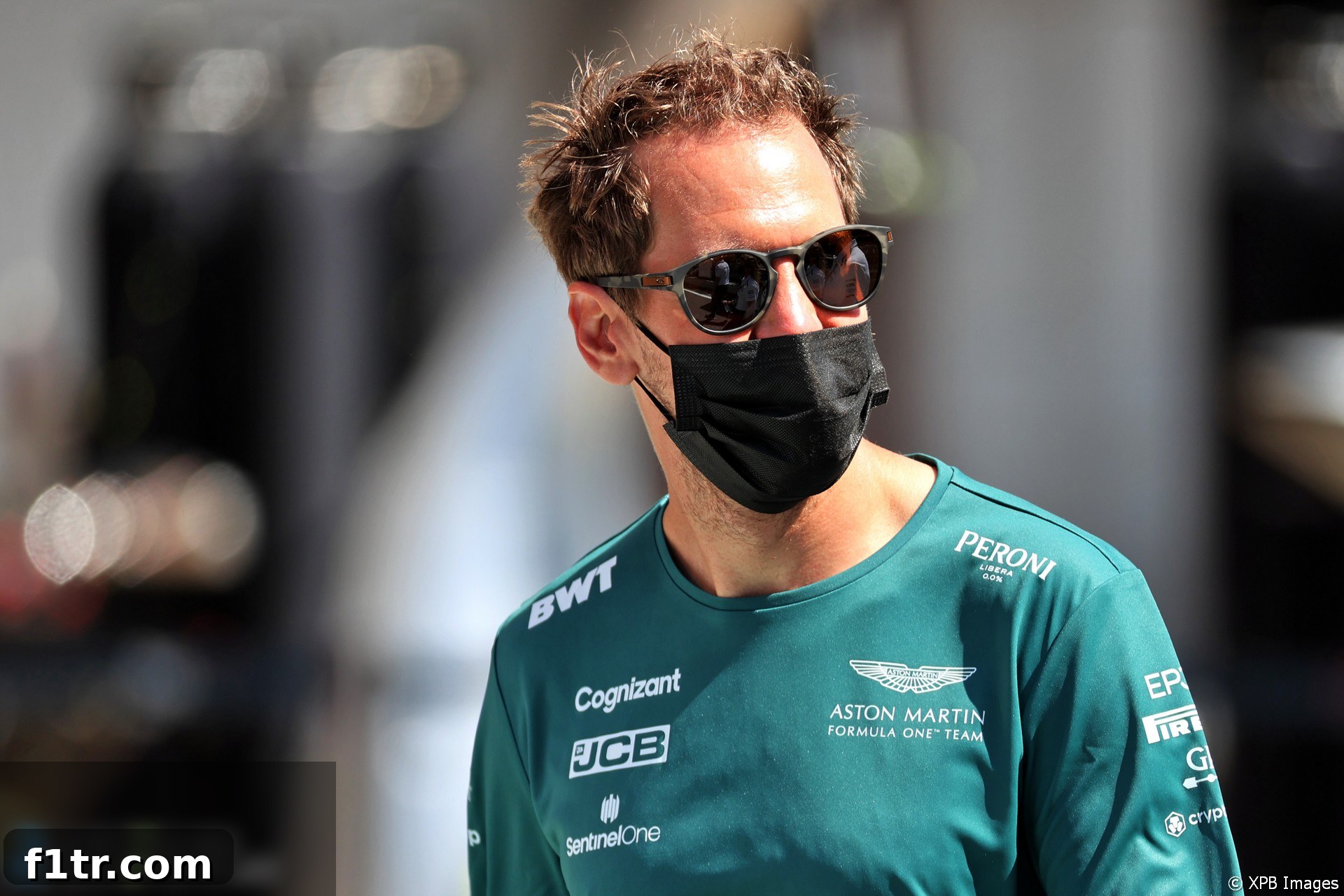
In the high-stakes world of Formula 1, where expectations often precede reality, the Aston Martin F1 Team’s return to the grid in 2021 was met with immense anticipation. Spearheaded by four-time world champion Sebastian Vettel and backed by Canadian billionaire Lawrence Stroll, the Silverstone-based squad aimed to build on its predecessor Racing Point’s impressive 2020 campaign. However, the initial races of the 2021 season have painted a challenging picture, with the team finding itself slower than initially projected. Despite this unexpected hurdle, Sebastian Vettel has voiced unwavering confidence in the team’s long-term potential and its ability to overcome current performance deficits, highlighting a resilient spirit within the Aston Martin camp.
Sebastian Vettel’s Candid Assessment of Aston Martin’s 2021 Performance
Reflecting on Aston Martin’s start to the 2021 season, Sebastian Vettel offered a frank assessment, acknowledging that the team’s on-track performance has not met the ambitious targets set prior to the championship. “It’s not a secret that we expected to be stronger this year,” Vettel stated in a recent press conference, his words echoing the sentiment of many within the paddock who had pegged Aston Martin as a strong midfield contender, potentially challenging for podiums. However, the reality has been a struggle to consistently break into the top ten, a stark contrast to the team’s aspirations.
The German driver, who joined Aston Martin after a challenging tenure at Ferrari, emphasized that while the current pace is disappointing, the team’s morale remains high. “So it is what it is, yet I think we can grow as a team,” he added, pointing to a collective determination to dissect and resolve the issues at hand. This perspective underscores Vettel’s leadership and experience, understanding that Formula 1 is not just about immediate results, but also about continuous development and fostering a positive working environment. He highlighted that the team is meticulously scrutinizing “a lot of small things” that can be improved, suggesting a systematic approach to unlocking more performance from the AMR21 chassis.
Vettel’s personal satisfaction with his new team, despite the performance woes, further illustrates the strong bond being forged within Aston Martin. “The spirit is great,” he affirmed. “So I’m very happy where I am, despite obviously the performance not being where we all wanted it to be. I think we’ve accepted that and we try to do the best we can from there.” This acceptance, coupled with a proactive mindset, is crucial for a team facing early-season adversity, demonstrating maturity and a long-term vision that extends beyond immediate Grand Prix results.
The Impact of Aerodynamic Regulation Changes on the AMR21
A significant factor contributing to Aston Martin’s struggles in 2021, a sentiment shared by Sebastian Vettel and the team’s management, pertains to the aerodynamic regulation changes introduced during the off-season. These modifications, primarily focusing on cuts to the floor area in front of the rear wheels and revisions to the diffuser, were implemented to reduce downforce and slow down the cars, ostensibly for safety reasons related to Pirelli’s tyre compounds. However, their impact has been far from uniform across the grid.
Aston Martin’s 2021 challenger, the AMR21, is an evolution of its highly successful 2020 predecessor, which, under the Racing Point banner, secured four podium finishes, including a memorable victory at the Sakhir Grand Prix. That car, often dubbed the ‘Pink Mercedes’ due to its conceptual similarities to the championship-winning W11, utilized a low-rake aerodynamic philosophy. This design approach, also favored by Mercedes, sees the car running closer to the ground at the rear, generating significant downforce from the floor.
The new regulations, by design, disproportionately affected cars with this low-rake concept. The removal of floor material meant a substantial loss of crucial downforce, particularly at the rear, making the cars inherently less stable and more challenging to drive at the limit. Teams employing a high-rake philosophy, such as Red Bull and AlphaTauri, where the car runs with a greater nose-down attitude and higher rear ride height, seemed less impacted, and in some cases, even benefited relatively from the changes.
Sebastian Vettel articulated this disadvantage clearly: “If you are completely honest, our car is not quick enough. What we thought and we wanted, obviously, to be quicker. I think the rule changes obviously hurt us more than they probably did other people, but it is what it is so we’ve got to make the most out of it where we are.” This echoed earlier sentiments from the team’s management, who complained bitterly about the rule changes, feeling that they were unfairly targeted. Red Bull team principal Christian Horner, however, dismissed these complaints as “naive,” arguing that all teams had to adapt to the new technical directives.
The consequence for Aston Martin has been a significant dip in competitiveness. From collecting 195 points and finishing fourth in the Constructors’ Championship in 2020 (as Racing Point), the team has garnered a mere five points from the opening three races of the 2021 season, a clear indicator of the challenge posed by the regulatory shift. This points tally positions them much lower in the constructors’ standings, demanding a rapid development curve to regain lost ground.
Building for the Future: Team Development and Long-Term Vision
Despite the immediate performance concerns, Sebastian Vettel’s outlook remains firmly rooted in the team’s long-term vision and development capabilities. Lawrence Stroll’s investment in Aston Martin is not merely for a fleeting return to Formula 1; it’s a strategic move to establish the brand as a formidable force in the sport for years to come. This ambition is supported by significant infrastructure improvements and a growing technical team, signaling a commitment that goes beyond the current season’s difficulties.
The phrase “a lot of small things that we are looking at we can improve” from Vettel is indicative of the methodical approach Aston Martin is taking. In Formula 1, marginal gains often translate into substantial lap time improvements. This involves everything from optimizing car setup for specific tracks, refining pit stop procedures, enhancing driver feedback loops, and strategically introducing aerodynamic upgrades throughout the season. The team’s Mercedes power unit is a known quantity for its strength, so the focus will undoubtedly be on chassis and aerodynamic efficiency.
One of the critical balancing acts for any F1 team in 2021 is allocating resources between developing the current car and preparing for the radical new technical regulations arriving in 2022. With a comprehensive overhaul of car design on the horizon, many teams, including Aston Martin, will inevitably shift a significant portion of their focus to the 2022 project. This could mean that major breakthroughs for the AMR21 might be limited, as engineering talent and budgetary allocations transition to the future car. However, any lessons learned and developmental processes refined in 2021 will undoubtedly inform and benefit the 2022 car’s design.
Vettel’s presence is also a critical asset in this developmental phase. His vast experience across multiple championship-winning teams provides invaluable insights into car setup, race strategy, and engineering direction. His ability to articulate feedback precisely, combined with his relentless pursuit of perfection, can guide the team in navigating the current challenges and accelerating their learning curve. The synergy between driver and engineers will be paramount in extracting every ounce of performance from the AMR21, as well as in shaping the foundation for future Aston Martin challengers.
Conclusion: Resilience in the Face of Adversity
The 2021 Formula 1 season has presented Aston Martin with an unexpected trial, but Sebastian Vettel’s steadfast confidence underscores a profound belief in the team’s inherent strength and potential for growth. While the initial disappointment regarding car performance is palpable, the collective spirit and determination within the Silverstone garage remain undimmed. The challenges posed by the controversial aerodynamic rule changes have forced the team to recalibrate its approach, focusing on meticulous improvements and a long-term vision.
As Aston Martin continues its journey back to the pinnacle of motorsport, the path ahead demands resilience, strategic development, and unwavering commitment. Sebastian Vettel, a champion known for his tenacity, appears to be precisely the leader required to navigate these choppy waters. With a clear focus on understanding the car, optimizing performance, and preparing for future regulatory shifts, Aston Martin aims to translate its current learning experiences into future successes. The iconic British marque’s story in F1 is far from fully written, and with Vettel at the helm, the chapter of progress and potential is just beginning to unfold.
2021 Spanish Grand Prix
- Two reasons why Catalunya may not predict the championship – at least this year
- McLaren to keep “drip-feeding” updates onto 2021 car
- Working group tackling F1’s track limits problem
- ‘We’ll discuss what went wrong’: Hamilton and Verstappen team radio transcript analysis
- 2021 Spanish Grand Prix Star Performers
Browse all 2021 Spanish Grand Prix articles