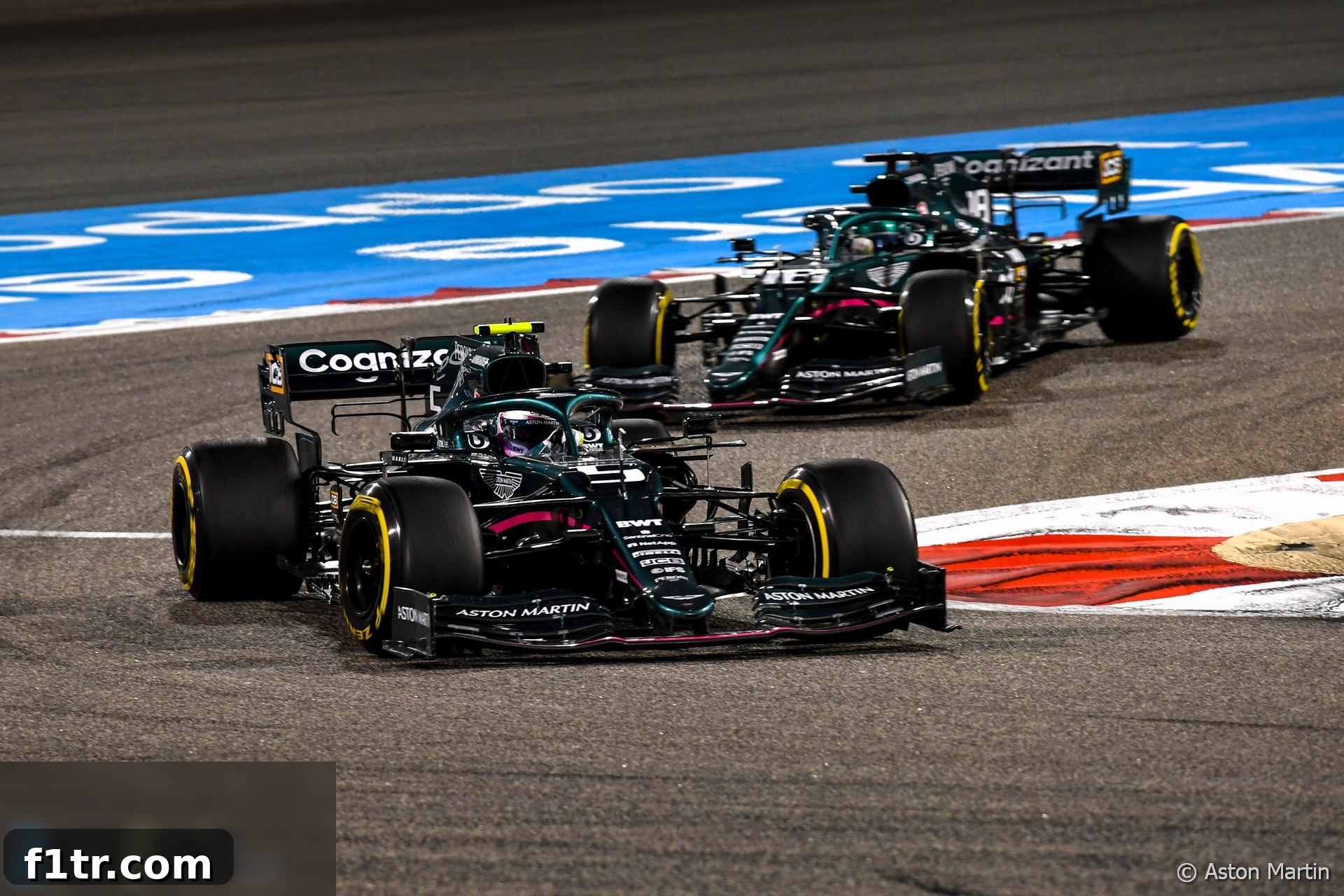
Aston Martin F1’s 2021 Season: Navigating the Aerodynamic Challenge and the Low-Rake Conundrum
The highly anticipated return of the Aston Martin name to Formula 1 in 2021 was met with a stark reality check during the season opener in Bahrain. After rebranding from Racing Point – a team that famously secured a victory in the penultimate race of 2020 – expectations were naturally high. However, the first Grand Prix yielded only a single point, signaling a more challenging start than many within the Silverstone-based outfit had anticipated. This immediate struggle prompted CEO Otmar Szafnauer to declare that the team would not concede to an uncompetitive season, vowing a relentless pursuit of performance improvement.
The Low-Rake Philosophy: A Double-Edged Sword in F1 Aerodynamics
At the heart of Aston Martin’s early-season struggles lay a fundamental design choice: the low-rake aerodynamic philosophy. This approach, also famously adopted by engine supplier Mercedes, involves running the rear of the car relatively close to the ground, maintaining a shallow angle between the car’s floor and the track surface. The primary advantage of a low-rake design is its ability to generate significant downforce from the underfloor diffuser, creating a powerful sealing effect that maximizes aerodynamic efficiency and stability. This concept relies on maintaining a very consistent airflow beneath the car, making it highly sensitive to external disruptions or changes in regulations.
In contrast, many rival teams, most notably Red Bull, employ a high-rake philosophy. This design elevates the rear of the car considerably, creating a larger volume under the floor. While this might seem less aerodynamically efficient at first glance, high-rake cars utilize complex floor and diffuser designs in conjunction with bodywork elements to manage airflow effectively, generating downforce through different mechanisms and often offering greater flexibility in handling varying track conditions and ride heights. The distinction between these two philosophies proved to be a pivotal factor in the performance disparity observed at the start of the 2021 season.
Unpacking the 2021 Regulation Changes: A Targeted Blow to Low-Rake Designs
The 2021 Formula 1 season introduced significant aerodynamic regulation changes, primarily focused on the rear of the car. These modifications, implemented for safety reasons to reduce overall downforce following increased car performance in previous years, specifically targeted areas like the rear floor, diffuser, and brake duct winglets. While intended to reduce downforce across the board, their impact was far from uniform, disproportionately affecting teams that adhered to the low-rake concept.
The revised rules mandated a triangular cut-out from the floor edge in front of the rear wheels, alongside a reduction in the height of the diffuser fences and changes to the rear brake duct winglets. For low-rake cars like the AMR21, which derive a substantial portion of their downforce from the interaction between the flat underfloor and the track, these seemingly minor changes proved catastrophic. By disrupting the crucial airflow along the floor’s edge and around the rear tyres, the regulations compromised the delicate aerodynamic seal, leading to a significant loss of rear downforce. This not only reduced overall grip but also severely impacted the car’s balance and stability, making it challenging for drivers to extract maximum performance.
Conversely, high-rake cars, with their inherently more open underfloor design and alternative methods of downforce generation, appeared to adapt more readily to the new regulations. While they too experienced a reduction in downforce, their design philosophy allowed them to recover much of the lost performance through subsequent development, leaving low-rake teams like Aston Martin and Mercedes playing catch-up from the outset.
The severity of this impact became strikingly clear to Aston Martin after qualifying in Bahrain. Otmar Szafnauer openly admitted that the team experienced a “rude awakening,” realizing through meticulous data analysis that the low-rake cars were indeed “hampered significantly more by the regulation change.” This revelation underscored the profound challenge they faced in a highly competitive sport where even minor aerodynamic tweaks can translate into significant lap time differences.
Otmar Szafnauer’s Resolute Stance: Commitment to Overcoming the Deficit
Despite the initial setback, Aston Martin CEO Otmar Szafnauer maintained a resolute and optimistic outlook, emphasizing the team’s unwavering commitment to overcoming their performance deficit. His public statements reflected a determined mindset, stressing that giving up on the season was simply not an option. “We haven’t given up on this year,” Szafnauer affirmed, highlighting the ongoing efforts within the team to address the underlying aerodynamic issues. This firm stance served as a clear message to fans, competitors, and the team members themselves: the fight for competitiveness was far from over.
Szafnauer detailed the methodical approach the team was taking to diagnose and rectify the issues. Engineers were tirelessly working in both the wind tunnel and through Computational Fluid Dynamics (CFD) simulations – critical tools in modern Formula 1 aerodynamic development. These sophisticated processes allow teams to test various design iterations and airflow patterns virtually, identifying areas for improvement before manufacturing physical components. “We have found things in the [wind] tunnel and in CFD,” he explained, indicating tangible progress was being made behind the scenes. The goal was clear: to “claw back the deficit that was imposed on us by the FIA through their regulation change based on safety.” This direct acknowledgment of the regulations’ impact underscored the targeted nature of their development efforts.
The Development Race: Wind Tunnel, CFD, and Upcoming Upgrades
The Formula 1 development cycle is a continuous race, and Aston Martin wasted no time in mobilizing its engineering resources to counteract the effects of the new regulations. The focus of their development was acutely on the rear of the car, specifically where the floor changes had had the most detrimental impact. Szafnauer pointed out, “The changes were all made around the rear of the floor around the tyre area so that’s where we have to start looking for more downforce.” This precise targeting of development meant concentrating on optimizing airflow around the rear wheels, redesigning elements of the floor, and refining the diffuser to recapture lost downforce.
The fruits of this intensive labor in the wind tunnel and CFD were expected to materialize into physical upgrades on the track “pretty soon.” These upgrades were not merely about adding raw downforce but also about improving the car’s overall balance. Szafnauer elaborated, “So it’ll be rear downforce that we’re looking to improve. And with that comes better balance of being able to dial in more front wing and the whole thing just takes off.” This statement highlights a fundamental principle of F1 aerodynamics: gaining downforce in one area allows for adjustments in others, such as adding front wing angle, which improves front-end grip and overall car stability, leading to a more harmonious and faster package. The team aimed to roll out these crucial updates over the “next few races,” signaling a phased but determined approach to recovery.
The expectation was that these iterative developments would not only enhance the AMR21’s raw pace but also make it more predictable and manageable for drivers Sebastian Vettel and Lance Stroll, allowing them to push closer to the car’s true potential. The team’s immediate future hinged on the effectiveness of these upgrades and their ability to quickly integrate them into the competitive environment of Grand Prix weekends.
Adding another layer of complexity to Aston Martin’s recovery efforts was a specific regulation born out of the COVID-19 pandemic. For the 2021 season, teams were required to homologate (freeze) their suspension designs. This unprecedented measure was introduced to cut costs in light of the global economic challenges. As Szafnauer explained, “[For] the first time ever that I can remember in my 24 years of the sport, we’ve had to homologate the suspension due to the Covid regulations.” This meant that unless a team specifically used their limited development “tokens” on suspension components, they were unable to make fundamental changes to their suspension geometry or kinematics. This restriction significantly hampered Aston Martin’s ability to explore alternative car setups or ride height strategies that might have mitigated the low-rake disadvantage. “You could only change it if you actually used your [development] tokens on suspension. So even if we wanted to run a 150mm rear ride height, we can’t,” Szafnauer lamented, illustrating a key limitation in their toolkit for quick fixes and fundamental changes. This meant their recovery had to focus almost exclusively on aerodynamic solutions within the existing chassis and suspension framework.
A Comparison with Rivals: High-Rake Teams Capitalize on the Shift
One of the most frustrating aspects for Aston Martin was observing how their rivals, particularly those employing a high-rake aerodynamic philosophy, appeared to navigate the new regulations with greater success. While all teams faced the challenge of reduced downforce, high-rake concepts, such as those used by Red Bull and McLaren, seemed to recover their lost performance more effectively, and in some cases, even gain relative ground. Szafnauer acknowledged this disparity, stating, “From talking to some of the other teams, they seem to have made up the entire deficit and we haven’t. And that’s just because of the different aero philosophy we run.”
This comparison underscored the profound and specific impact of the 2021 rules on low-rake cars. The inherent characteristics of their design meant they were more susceptible to the changes at the rear of the floor. This created a scenario where Aston Martin wasn’t just working to improve their own car but also fighting against a relative shift in the pecking order, making their task significantly more arduous. The challenge was not only to find absolute gains but also to close the growing gap to competitors who had either been less affected or quicker to adapt to the new aerodynamic landscape.
Beyond 2021: The Long-Term Vision and Brand Ambition
While the immediate focus was on salvaging the 2021 season, Aston Martin’s return to Formula 1 was part of a much larger, long-term strategic vision. The iconic British luxury brand’s re-entry into the pinnacle of motorsport represented a significant investment and a statement of intent. This commitment extended beyond the immediate on-track results, encompassing facility upgrades, recruitment of top talent, and a dedication to building a championship-contending team for the future. The challenges faced in 2021, while frustrating, were viewed within this broader context – an initial hurdle in a marathon journey. The experience gained in adapting to adverse regulatory changes and the intense development drive would undoubtedly contribute to the team’s engineering prowess and resilience in the years to come.
The 2021 season presented Aston Martin F1 with an unexpected uphill battle, largely due to the disproportionate impact of new aerodynamic regulations on their low-rake car concept. Despite a disappointing start, CEO Otmar Szafnauer and the entire team demonstrated an unwavering commitment to fighting back. Through intensive wind tunnel and CFD development, focused on clawing back crucial rear downforce, Aston Martin aimed to bring significant upgrades to the track. While hindered by suspension homologation rules, their resolve to overcome the imposed deficit and return to competitiveness remained absolute, promising a determined fight throughout the remainder of the season.
Advert | Become a RaceFans supporter andgo ad-free
Related Articles: 2021 F1 Season Insights
- Masi ‘basically gifted the championship’ to Verstappen says 2021 FIA steward Sullivan
- Las Vegas race backers looking to extend F1 deal beyond 2025
- Why Mercedes put ‘a reminder of joy and pain’ on display in their factory lobby
- Verdict on error in GT race suggests Mercedes would have lost 2021 Abu Dhabi GP appeal
- Title ‘stolen’ from Mercedes made us ‘underdogs people cheer for’ – Wolff
Browse all 2021 F1 season articles