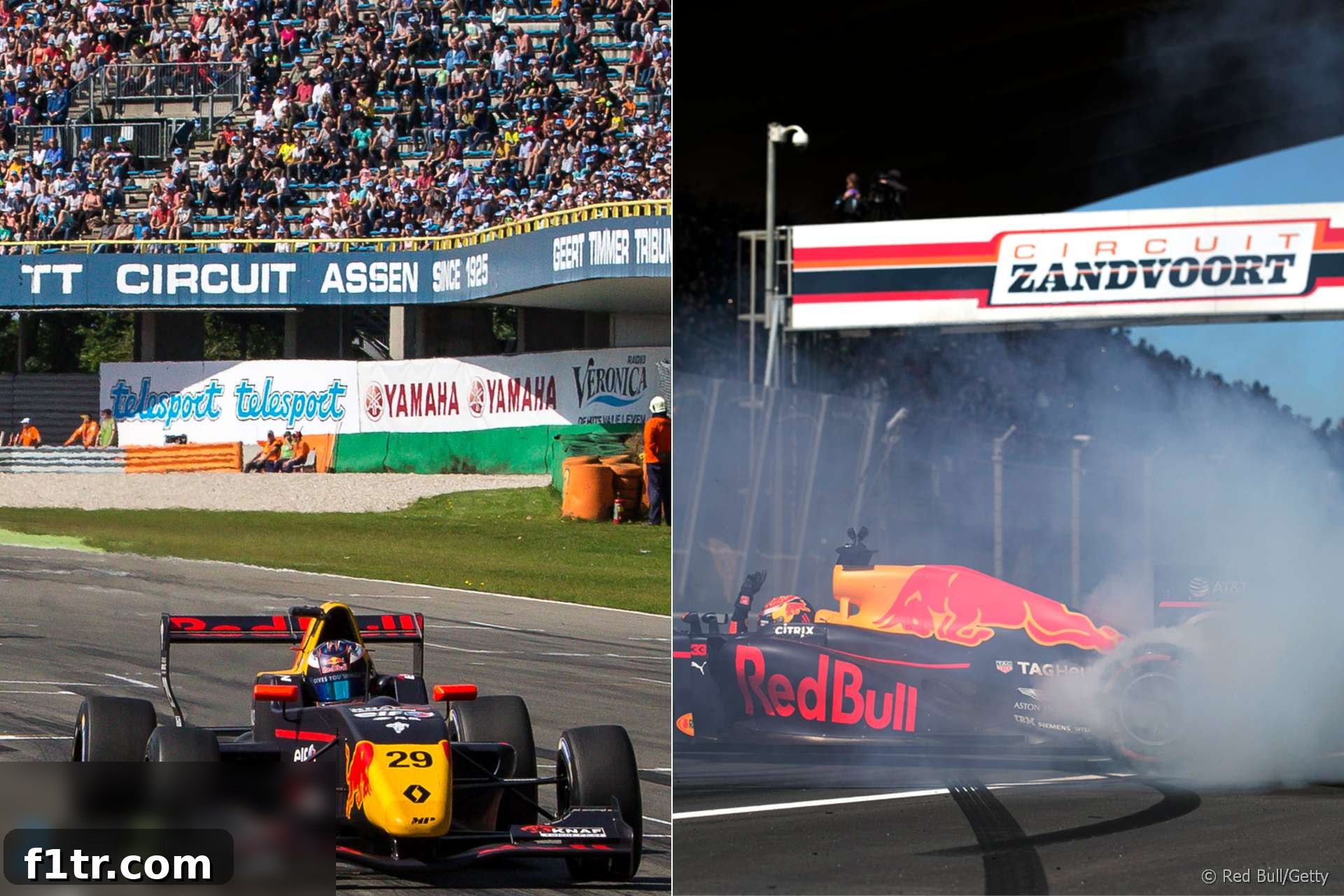
For over three decades, the roar of Formula 1 engines has been conspicuously absent from the Netherlands, ever since the iconic Niki Lauda clinched his final victory by a mere two-tenths of a second against his formidable teammate Alain Prost at Zandvoort in 1985. This long hiatus has left a significant void in the hearts of Dutch motorsport enthusiasts, despite the country continuing to produce talented F1 drivers. However, the meteoric rise and captivating appeal of Max Verstappen have ignited a fervent passion for Formula 1 across a nation with a deep-seated motor racing heritage. The ‘Verstappen effect’ has become an undeniable force, transforming nearby European race circuits into seas of orange as legions of fans flock to support their young star. Recognising this colossal surge in popularity, Liberty Media, Formula 1’s commercial rights holder, has become increasingly eager to re-establish a presence in the Netherlands and capitalise on the unparalleled hype surrounding Verstappen.
The Max Verstappen Phenomenon and F1’s Reawakening in the Netherlands
The Netherlands boasts a rich and storied history in motorsport, but the advent of Max Verstappen has elevated its standing on the global stage to unprecedented levels. Since his spectacular debut, Verstappen has not only garnered immense individual success but has also catalysed a national obsession with Formula 1. The “Orange Army,” as his fanbase is affectionately known, travels in astounding numbers, turning Grand Prix events in countries like Belgium, Austria, and Germany into vibrant Dutch festivals. This extraordinary display of national pride and unwavering support has made the prospect of a Dutch Grand Prix more tantalising than ever for Formula 1 organisers. Liberty Media sees the potential for a sell-out event that would not only generate substantial revenue but also expand F1’s global footprint and engagement. Initial considerations for a dramatic street race in the bustling city of Rotterdam ultimately proved unfeasible, leading the focus to shift towards two well-established circuits, each with its distinct character and legacy: Zandvoort, the traditional home of the Dutch Grand Prix, and Assen, a venue synonymous with elite motorcycle racing.
A Glimpse into the Past: Zandvoort’s F1 Legacy
The Circuit Zandvoort holds a revered place in Formula 1 history, having hosted the Dutch Grand Prix intermittently from 1952 until its last event in 1985. Nestled amidst the sand dunes of the North Sea coast, Zandvoort was renowned for its challenging, flowing layout and its often unpredictable weather conditions. Over the decades, it bore witness to some of the sport’s most memorable moments and fierce battles. Legendary drivers like Jim Clark, Jackie Stewart, James Hunt, and Niki Lauda all tasted victory on its hallowed tarmac, contributing to its reputation as a true driver’s circuit. The track’s natural elevation changes, high-speed corners like the famous Scheivlak, and the unforgiving nature of its run-off areas made it a formidable test of skill and bravery. Its “old-school” charm, where drivers wrestled with their machinery through sweeping bends and tight chicanes, contrasted sharply with many modern, purpose-built circuits. The final Formula 1 race in 1985, a dramatic showdown between Lauda and Prost, perfectly encapsulated the circuit’s thrilling essence, leaving a lasting impression and a yearning for its return.
The Contenders: Zandvoort and Assen
With the aspiration to bring Formula 1 back to the Netherlands, the debate over which circuit is best suited for a modern Grand Prix has intensified. Both Zandvoort and Assen present compelling cases, yet each comes with its own set of advantages and challenges. The decision hinges not only on track layout and safety standards but also on infrastructure, accessibility, commercial viability, and the overall fan experience. The choice between these two iconic Dutch venues represents a critical juncture for the future of Formula 1 in the Netherlands, as organisers weigh the nostalgia and history of Zandvoort against the modern amenities and potential of Assen.
TT Circuit Assen: The Motorcycle Mecca’s F1 Ambition
The TT Circuit Assen, located in the province of Drenthe, is globally celebrated as the “Cathedral of Speed” for motorcycle racing. Since its inception in 1955, it has been an integral part of the MotoGP calendar, boasting a reputation for challenging, high-speed corners and a passionate atmosphere. For millions of motorsport fans, particularly those devoted to two-wheeled racing, the name Assen is synonymous with legendary battles and breathtaking overtakes. However, the prospect of Formula 1 cars racing at Assen, a circuit primarily designed for bikes, sparks a fascinating debate.
In 2006, the circuit underwent a significant transformation, which saw its original 7.5-kilometre layout trimmed to a still substantial 4.5 kilometres to accommodate the construction of an amusement park at its northern end. Despite this change, Assen maintained its characteristic flowing design and technical prowess. Intriguingly, it has hosted high-end single-seater categories in the past, including the now-defunct Champ Car series and Superleague Formula, demonstrating its capability to handle powerful, open-wheel machinery. According to FIA track inspector Charlie Whiting in 2018, Assen was arguably closer to being F1-ready than Zandvoort. Whiting noted that only “a few small changes to the barriers and kerbs” would be needed to bring the circuit up to Formula 1 standards. He remarked, “Of the two at present I would say Assen would need very little work,” indicating its inherent suitability. This assessment provided a significant boost to Assen’s F1 aspirations.
However, the idea of Formula 1 taking over Assen is not universally welcomed, particularly by traditionalists who view it as a sacrosanct venue for motorbikes. Beyond matters of pride, there are genuine technical concerns. High-downforce F1 cars are notoriously sensitive to track surface imperfections. Critics worry that the bumps and undulations present on Assen’s surface, which are less impactful for motorcycles, could be aggravated by the immense downforce generated by F1 cars, potentially creating uncomfortable and unstable conditions, as seen at circuits like Silverstone and COTA in certain eras. Despite these concerns, Assen’s unique, sweeping layout, offering multiple overtaking opportunities and high-speed sections, could provide a thrilling spectacle unlike any other on the current F1 calendar, making it an intriguing, albeit unconventional, choice.
Circuit Zandvoort: The Historic Challenger
Circuit Zandvoort, the spiritual home of the Dutch Grand Prix, carries the weight of history and a deep emotional connection for many Dutch fans. After its last Formula 1 race in 1985, the circuit underwent significant redesigns, with its current layout largely introduced in 1995. This modernisation saw the track length slightly increase, incorporating a slower, more technical section through what was once the infield. This alteration was primarily driven by the need to mitigate noise complaints from residential estates that had expanded on the south side of the circuit, highlighting the challenges of urban encroachment on traditional race tracks. The redesign aimed to create a more compact and fan-friendly layout while preserving some of its original character.
Since its reconfiguration, Zandvoort has continued to host a diverse array of international motorsport events, including various GT races, the DTM (Deutsche Tourenwagen Masters), and Formula 3 championships. These events have consistently showcased the track’s challenging nature, particularly regarding overtaking opportunities. Recent F3 races, for instance, have demonstrated that Zandvoort can be a notoriously difficult circuit for passing, often leading to procession-like racing. However, this very characteristic, combined with its demanding layout and the unique, “old-school” feel of its run-off areas (or lack thereof in some sections), makes it a favourite among drivers and purists alike. Its undulating terrain, fast sweeps, and the famous ‘Tarzanbocht’ hairpin at the end of the main straight, a corner that allows for multiple racing lines, contribute to its enduring appeal. Formula 1 driver Esteban Ocon encapsulated this sentiment, calling it a “very cool layout it would be awesome to race there in Formula 1, mega-quick.” This enthusiasm from drivers speaks volumes about Zandvoort’s inherent qualities as a high-performance circuit.
Despite its rich history and popular appeal, Zandvoort faces significant hurdles in its bid to host a modern Formula 1 Grand Prix. One of the primary downsides is the limited space available within the infield for expanding crucial paddock facilities. Modern F1 demands extensive hospitality, team infrastructure, media centres, and fan zones, all of which require considerable space. Zandvoort’s compact design and surrounding natural landscape make substantial expansion a logistical and environmental challenge, potentially counting against it when trying to court Formula 1’s stringent requirements. Additionally, its coastal location can present unique logistical issues and weather unpredictability, further complicating its F1 ambitions.
Comparing the Two: A Decisive Look
When comparing Zandvoort and Assen as potential venues for the Dutch Grand Prix, several factors come into play. Assen’s primary advantage lies in its modern infrastructure and its perceived readiness for F1, as highlighted by Charlie Whiting. Its layout, while designed for motorbikes, offers wide, flowing sections and multiple potential overtaking zones, which could lead to exciting wheel-to-wheel action. The existing facilities are generally more spacious and adaptable for the vast logistical demands of Formula 1. However, its identity as a motorcycle circuit could be a hurdle for some, and the issue of track surface bumps for high-downforce F1 cars remains a genuine concern. Furthermore, its location is less romanticized than Zandvoort’s iconic coastal setting.
Zandvoort, on the other hand, boasts an undeniable historical connection to Formula 1 and a highly challenging, driver-favourite layout. Its natural amphitheatre-like setting amidst the dunes creates a unique and atmospheric fan experience. The circuit’s reputation for being difficult to overtake on could be both a blessing and a curse; while it makes racing challenging for drivers, it might lead to less action-packed races, which modern F1 aims to avoid. The most significant drawback for Zandvoort remains the limited space for paddock expansion and hospitality, a crucial requirement for Liberty Media’s vision of a holistic F1 event. Addressing noise complaints and environmental concerns in its sensitive coastal location also adds layers of complexity and cost.
The Commercial and Sporting Implications
The return of the Dutch Grand Prix is not just a sporting event; it’s a significant commercial opportunity for Formula 1. Liberty Media seeks venues that can deliver not only thrilling racing but also a comprehensive entertainment package for fans and lucrative sponsorship deals. Both Zandvoort and Assen have their strengths in this regard. Zandvoort’s proximity to major population centres and its historic allure could draw massive crowds, despite infrastructural limitations. Assen’s modern facilities and potentially better overtaking opportunities could offer a more consistent racing product and easier event management. The chosen circuit will ultimately need to demonstrate its ability to host an event that aligns with F1’s current brand, balancing tradition with modern demands for safety, accessibility, and fan engagement. The economic impact on the surrounding regions, including tourism and local business, will also be a major consideration.
The Road Ahead: What it Means for Formula 1
Bringing Formula 1 back to the Netherlands is a strategic move that reflects the sport’s growing global appeal and its responsiveness to passionate fan bases. The Max Verstappen phenomenon has created an unparalleled window of opportunity, and securing a Dutch Grand Prix would be a testament to his impact. The final decision between Zandvoort and Assen will be a complex one, weighing historical significance against modern practicality, driver preference against spectator experience, and financial viability against infrastructural constraints. Regardless of the choice, the return of a Dutch Grand Prix promises to be a spectacular addition to the Formula 1 calendar, reigniting a storied tradition and celebrating one of motorsport’s most dynamic fan bases.
My Perspective: Assen’s Distinct Advantage
From a purely racing perspective, Assen appears to be the more promising option. Its extensive makeover has brought it closer to the kind of track where modern F1 cars can truly thrive, offering potentially superior overtaking opportunities, particularly into Turn 1 and Turn 11. While Zandvoort offers undeniable nostalgia and a challenging layout, Assen’s design, influenced by its rich motorcycle racing background, creates a unique flow unlike any other circuit on the current F1 calendar. This inherent difference introduces an element of the unknown for both drivers and teams, which often translates into more unpredictable and therefore, more exciting racing for fans. Furthermore, the capacity for easier logistical management and infrastructure adaptation at Assen could make it a more sustainable long-term partner for Formula 1.
Your Perspective: Which track should host the Dutch Grand Prix?
The debate between Zandvoort and Assen is a passionate one, reflecting the diverse preferences within the motorsport community. Historically, the sentiment among fans has been divided. In a past survey involving 154 voters, the results showed a strong preference for Zandvoort, with 39% of the votes. Assen garnered significant support as well, with 34%, indicating a nearly even split between the two contenders. A smaller percentage of voters (19%) believed neither track was suitable, while 8% expressed no strong opinion. This poll highlights the deep connection fans have with Zandvoort’s legacy and the recognition of Assen’s potential.
What are your thoughts on which circuit is best suited to host the Formula 1 Dutch Grand Prix? Do you favour Zandvoort’s historic charm and challenging layout, or do you believe Assen’s modern amenities and potential for exciting racing make it the superior choice?
Further Reading and Debates
- What must Formula 1 fix with its new rules – and what should it leave unchanged?
- ADUO: Do F1 teams who fall behind deserve to get help to catch up?
- F1 is considering doubling its sprint races. Do you want more or fewer?
- Will this be a fight or a rout? 20 questions for the 2026 Formula 1 season
- Which Formula 1 team has the best-looking car – and the worst – for the 2026 season?
Browse all debates and polls