Carlos Sainz Jr. to Serve Five-Place Grid Penalty at Mexican Grand Prix Following Controversial US GP Collision
Formula 1 driver Carlos Sainz Jr. has been dealt a five-place grid penalty for the upcoming Mexican Grand Prix, a direct consequence of his involvement in a collision with Andrea Kimi Antonelli during the recent United States Grand Prix. The incident, which saw Sainz retire from the race and sparked significant debate, has drawn a definitive ruling from the race stewards, impacting his starting position at a crucial phase of the championship.
The United States Grand Prix Incident: A Close Call at Turn 15
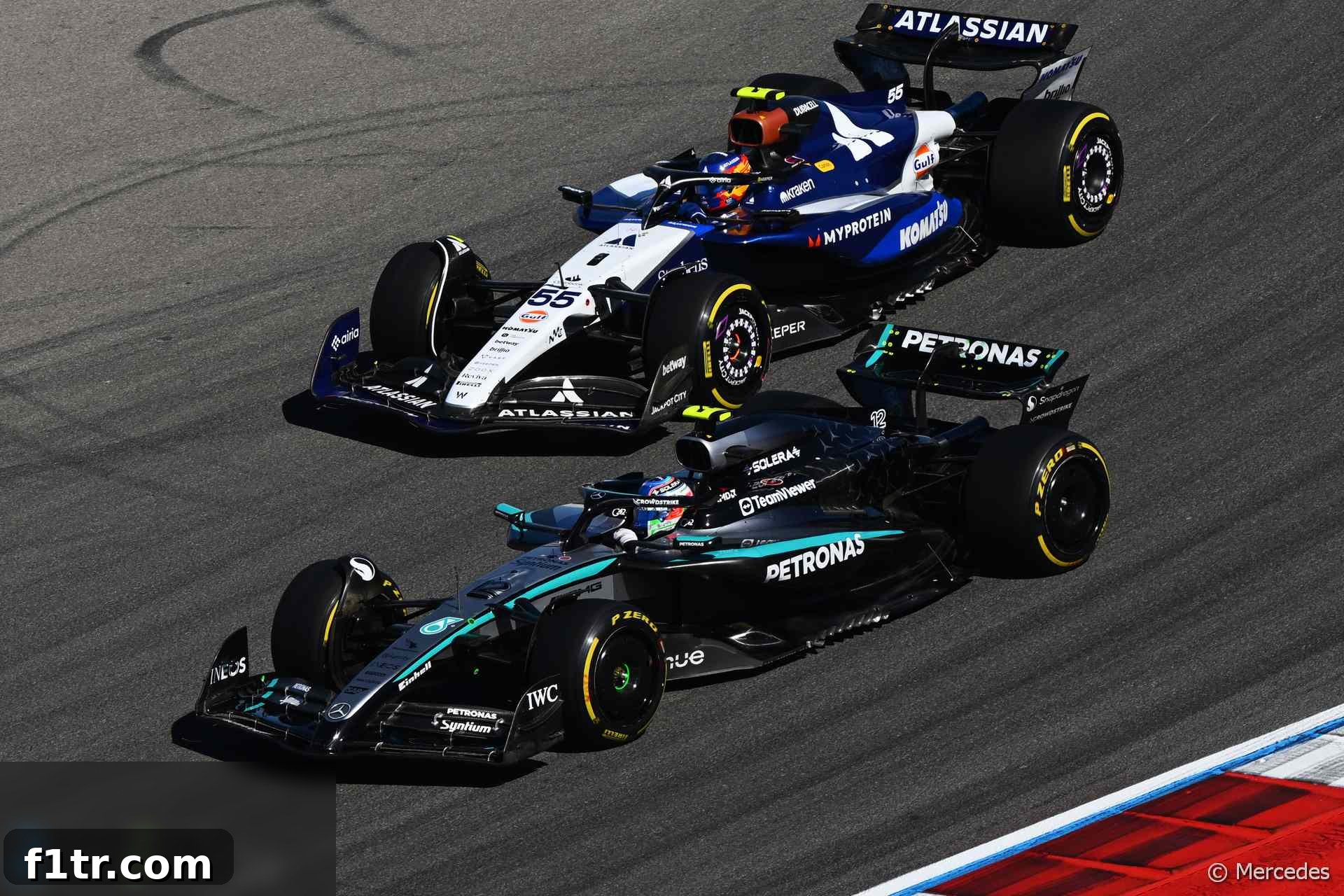
The pivotal moment occurred at Turn 15 of the Circuit of the Americas (COTA) during what was an intense United States Grand Prix. Sainz, driving for Ferrari, was in pursuit of the Williams of Andrea Kimi Antonelli. In an attempt to overtake, Sainz made a move that unfortunately resulted in contact between the two cars. The impact sent Antonelli’s Williams into a spin, while Sainz’s Ferrari sustained significant damage, forcing his immediate retirement from the race.
Despite the collision, Antonelli managed to recover and continued his race, ultimately crossing the finish line in 13th position. The differing outcomes for the two drivers immediately raised questions about culpability and potential repercussions, setting the stage for a thorough investigation by the FIA stewards.
Stewards’ Verdict: Sainz Deemed “Predominantly” Responsible
Following a detailed review of the incident, including telemetry data, onboard footage, and statements from both drivers, the stewards concluded that Carlos Sainz was “predominantly” responsible for the collision. Given that Sainz was unable to finish the race due to the damage incurred, the penalty for his actions will be applied at the next Grand Prix on the calendar – the Mexican Grand Prix.
The stewards’ report meticulously outlined their rationale, noting the submissions made by both drivers. Sainz, in his defense, articulated that he had anticipated Antonelli would provide him with sufficient racing room at the apex of Turn 15. He argued that Antonelli, the Williams driver, turned in earlier than expected, leading him to lock his brakes in a desperate, albeit ultimately unsuccessful, attempt to avert a collision. Sainz further suggested that Antonelli should have foreseen an overtaking attempt and thus left space to prevent contact.
However, the stewards’ analysis offered a contrasting view based on the established Formula 1 Driving Standards Guidelines. Their ruling specifically highlighted that “at no point prior to the apex was the front axle of car 55 [Sainz] alongside or ahead of the mirror of car 12 [Antonelli].” This crucial detail meant that, according to the guidelines, Sainz had not established a position that would grant him the right to be afforded space at the apex. The guidelines are stringent in defining when a driver earns the right to space, typically requiring a significant overlap or a car being substantially ahead to dictate the cornering line.
Drivers’ Perspectives: Differing Accounts of the Incident
Both drivers offered their insights into the Turn 15 clash, reflecting their differing perspectives on the sequence of events. Andrea Kimi Antonelli was vocal about his belief that Sainz approached the corner with excessive speed. Speaking to the official Formula 1 channel, Antonelli remarked, “I don’t think he was going to make the corner anyway.” He added that he made an effort to adjust his line to give Sainz a marginal amount of extra room, but despite his best intentions, he “ended up getting taken out.” Antonelli’s statement suggests a frustration with Sainz’s perceived over-optimism in attempting the overtake.
Carlos Sainz, meanwhile, contextualized the incident by recalling a successful overtake he had performed earlier in the same race and at the very same corner, against Oliver Bearman. He admitted that he was trying to replicate that maneuver against Antonelli. “It didn’t quite work out the same way that it did with Ollie,” Sainz conceded, reflecting on the failed attempt. He explained his thought process, stating, “I felt like at the time I was on a very good pace, had a very good feeling with the car and I felt like it was a good opportunity to make a move.”
However, the outcome with Antonelli diverged significantly. Sainz noted a difference in Antonelli’s defensive driving compared to Bearman’s approach. “Unfortunately with Kimi it didn’t work out in the same way. I felt that Kimi was quite a bit more aggressive than Ollie on the defence and on the turn-in to the corner and that kind of scared me at the moment which forced me to hit the brakes hard to avoid a collision.” Despite his attempt to avoid contact by braking hard, Sainz locked his wheels, leading to the unavoidable impact. He concluded, “In the end, it didn’t matter because I locked the brakes and I hit him and we caused an accident. But it looks a lot worse from the outside than what it felt from the inside.” This statement suggests that while he takes responsibility for the crash, he believes the dynamic of the moment was perhaps misjudged by external observers.
Implications for the Mexican Grand Prix
The five-place grid penalty is a significant blow for Carlos Sainz and Ferrari as they head into the Mexican Grand Prix. Starting five positions lower than his qualifying performance dictates will make his race considerably more challenging, especially on a circuit like the Autódromo Hermanos Rodríguez, known for its high altitude and unique aerodynamic demands. Overtaking can be tricky, and starting further back can expose a driver to more midfield battles and potential early-race incidents.
For Ferrari, this penalty could complicate their strategic objectives, particularly in the constructors’ championship battle. Every point is crucial, and a compromised starting position for one of their drivers adds pressure on the team to devise an impeccable race strategy. Sainz will need to execute a flawless qualifying session and then demonstrate exceptional race craft to recover positions and salvage a strong points finish in Mexico City.
The Broader Debate: Racing Incidents and Penalties in Formula 1
This incident and the subsequent penalty reignite the perpetual debate within Formula 1 regarding racing incidents and the application of penalties. What one driver perceives as aggressive defense, another might see as a necessary assertion of track position. The FIA’s Driving Standards Guidelines aim to provide a consistent framework, yet the subjective nature of racing often leads to varying interpretations among fans, pundits, and even drivers themselves.
Incidents like the Sainz-Antonelli collision highlight the fine line between assertive racing and dangerous driving. While stewards strive for impartiality and consistency, each incident presents a unique set of circumstances that require careful consideration. The challenge lies in balancing the desire for close, exciting racing with the imperative of driver safety and fair play.
Looking Ahead: Mexico City Beckons
As the Formula 1 circus moves to Mexico City, all eyes will be on Carlos Sainz Jr. and how he navigates the challenge presented by his grid penalty. The incident with Andrea Kimi Antonelli at COTA serves as a stark reminder of the intensity and unforgiving nature of top-tier motorsport, where split-second decisions can have significant ramifications. Sainz’s ability to overcome this setback will be a testament to his skill and resilience, making the Mexican Grand Prix an even more compelling event to watch.
Related Articles: 2025 United States Grand Prix
- Tsunoda apologised to Racing Bulls for “very unnecessary” comments on Lawson
- Sainz brands Mexican GP grid penalty “completely disproportionate”
- No more ‘repercussions’ for Norris: McLaren change stance after Austin collision
- Bearman feared he’d triggered ban with Antonelli incident in sprint race
- Every team except Sauber to run rookie driver during first practice in Mexico
Browse all 2025 United States Grand Prix articles