Formula 1’s Shifting Sands: Mercedes Challenged, Red Bull Rises in Bahrain
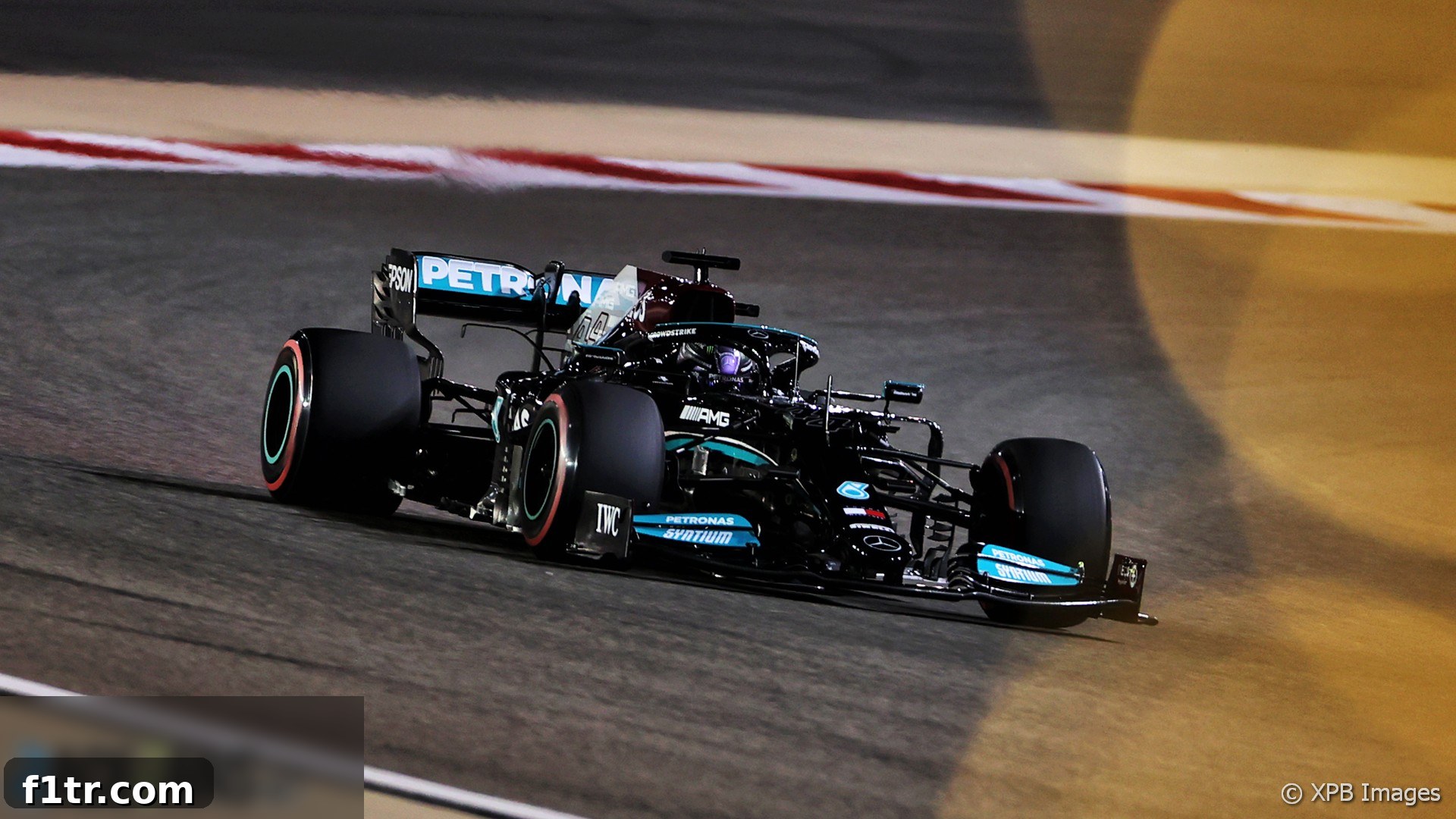
The dawn of the 2021 Formula 1 season brought with it a dramatic realignment of the grid, a testament to the powerful influence of regulatory changes. The scale of the challenge facing Mercedes-AMG Petronas, the sport’s dominant force for the preceding seven seasons, was starkly revealed during qualifying for the Bahrain Grand Prix. What was once an undisputed stronghold of speed for the Silver Arrows now presented an unprecedented hurdle, setting the stage for a championship battle unlike any seen in years.
Just four months prior, Lewis Hamilton had celebrated his 11th victory of the 2020 season at the very same Sakhir desert track, showcasing Mercedes’ unparalleled performance. Yet, the 2021 iteration of their car lapped over two seconds slower than its predecessor in the crucial qualifying session. This seismic shift wasn’t merely a blip; it signaled a fundamental change in the pecking order, with implications that would ripple throughout the entire season.
Regulatory Repercussions: The Downforce Dilemma
The core reason behind this dramatic performance swing lay in the new technical regulations introduced by Formula 1 for the 2021 season. Designed primarily to reduce overall downforce and subtly slow the cars down, these changes primarily targeted the rear floor area. Specifically, a triangular cut-out on the edge of the floor in front of the rear wheels, along with reductions to the diffuser strakes and rear brake duct winglets, collectively aimed to reduce aerodynamic efficiency. These modifications, enforced to manage costs and potentially improve racing, clearly had their intended effect.
With one notable exception – Scuderia Ferrari – virtually every car on the grid was at least a second slower than it had been in the corresponding 2020 Bahrain Grand Prix qualifying. This widespread reduction in pace underscored the potency of the regulatory adjustments, forcing teams to innovate rapidly to claw back lost performance. However, not all teams were affected equally, leading to significant fluctuations in the competitive landscape.
The Rake Concept: A Game-Changer in Aerodynamics
A central hypothesis regarding the differential impact of the new rules revolved around the car’s ‘rake’ concept – the angle at which the car sits relative to the ground, with the rear typically higher than the front. Teams generally adopt either a ‘low-rake’ or ‘high-rake’ aerodynamic philosophy. Mercedes and their power unit customer, Aston Martin, historically favoured a low-rake approach, where the car runs flatter to the ground, maximizing the floor’s interaction with the airflow and generating downforce across a larger surface area.
Conversely, teams like Red Bull Racing have long championed a ‘high-rake’ design, allowing for a steeper angle between the front and rear, which creates a more aggressive expansion of airflow under the car, essentially maximizing the performance of the diffuser at the rear. Suspicions that the 2021 changes to the rear of the car, particularly the floor cut-out, would disproportionately affect low-rake designs were quickly borne out by the performance swings. Both Mercedes and Aston Martin found themselves over two seconds per lap slower than they were in 2020 qualifying, a staggering deficit that highlighted the vulnerability of their aerodynamic philosophy under the new rules. The loss of precious floor area was simply more detrimental to a concept that relies heavily on a stable, expansive underfloor for its downforce generation.
Mercedes’ Unprecedented Challenge and Aston Martin’s Setback
For Mercedes, this two-second performance drop was an alarming indicator that their dominant streak was under severe threat. The W12, while still a potent machine, struggled to adapt its fundamental low-rake design to the reduced downforce environment. Lewis Hamilton, known for his ability to extract every ounce of performance from his machinery, found himself battling a car that was inherently less stable and more challenging to drive than its predecessors. The team’s engineering prowess, which had consistently allowed them to overcome regulatory hurdles in the past, was now facing its sternest test. The initial Bahrain qualifying session laid bare the urgent need for a significant aerodynamic recovery programme.
Aston Martin, having adopted Mercedes’ low-rake aerodynamic philosophy in 2020 (when they were Racing Point), found themselves in a similarly precarious position. After a promising 2020 season that saw them clinch a victory, hopes were high for their rebranded identity and the continued development of their package. However, the AMR21 also suffered a significant performance hit, mirroring Mercedes’ struggles. Drivers Sebastian Vettel and Lance Stroll were left grappling with a car that lacked the expected downforce, making it difficult to find the sweet spot and unlock its full potential. The dream of challenging at the front of the midfield, and perhaps even closer to the top teams, was immediately tempered by the harsh reality of the new regulations.
Ferrari’s Resurgence: A Beacon of Hope
Amidst the tales of struggle, one team offered a refreshing narrative of resurgence: Scuderia Ferrari. Their best lap time in Bahrain qualifying was a mere half-second off what they had achieved in 2020, making them easily the best-improving team on the grid. This significant gain served as a powerful indication that the storied Italian outfit had indeed made the promised advancements with their power unit, addressing the performance deficit that had plagued them in the prior season. Furthermore, aerodynamic refinements played a crucial role, with their design seemingly better equipped to manage the new floor regulations.
This remarkable turnaround placed Ferrari as the third-quickest team in qualifying, positioning them squarely within a formidable group of four teams all within a single second of the pace-setting Red Bull. For fans of the Prancing Horse, this was a potent symbol of renewed competitiveness, a stark contrast to their struggles in 2020. The combination of an improved power unit and a more efficient aerodynamic package provided Charles Leclerc and Carlos Sainz Jr. with a car capable of fighting for strong points finishes, injecting much-needed optimism back into Maranello.
Red Bull’s Ascendance: New Front-Runners
The most significant beneficiary of the new regulations, and the new benchmark for the 2021 season, was undoubtedly Red Bull Racing. Their long-standing commitment to a high-rake aerodynamic philosophy suddenly paid dividends. The rear floor cuts proved far less damaging to their design concept, which intrinsically generates significant downforce from the diffuser by managing a larger volume of expanding air under the car. This allowed them to retain more of their aerodynamic efficiency compared to their low-rake rivals.
With Max Verstappen behind the wheel, Red Bull emerged from Bahrain qualifying as the clear pace-setters, signaling their serious intent to challenge for the drivers’ and constructors’ championships. The picture was startlingly different from November 2020, when only Red Bull could stay within a second of Mercedes. Now, they were the team to beat, with several other teams within striking distance, promising a fiercely contested season.
The Midfield Scramble and Haas’s Plight
While the top three teams commanded much of the attention, the competitive landscape throughout the midfield also saw significant shifts. Only Haas, who made the strategic decision to use none of their development ‘tokens’ in producing their mildly revised VF-21 for 2021, experienced a greater slowdown than Mercedes and Aston Martin. With just one minor update planned for the season, rookie drivers Mick Schumacher and Nikita Mazepin were unfortunately set to spend much of the season battling at the back of the grid, a consequence of the team’s long-term focus on the radical 2022 regulations.
However, the rest of the midfield was tighter than ever. Teams like McLaren, Alpine, AlphaTauri, Alfa Romeo, and Williams all found themselves jostling for positions, with mere tenths of a second separating them. The regulatory changes had succeeded in compressing the field, making every qualifying lap and every race decision critical for securing championship points. This intense competition promised thrilling battles throughout the season, with any of these teams capable of breaking into the points on a given weekend.
A Season of Intrigue and Unpredictability
The 2021 Bahrain Grand Prix qualifying session did more than just set the grid for the season’s opening race; it redefined expectations and injected a fresh wave of excitement into Formula 1. The seismic shift in performance, particularly Mercedes’ unprecedented challenge and Red Bull’s ascendance, promised a championship fight that was far from a foregone conclusion. The return of Ferrari to competitiveness further enhanced the spectacle, creating a multi-team battle for podiums and victories.
The season was poised to be a thrilling narrative of engineering ingenuity, strategic masterstrokes, and raw driving talent. How would Mercedes respond to their rivals? Could Red Bull maintain their advantage? Would Ferrari continue their upward trajectory? These questions fueled anticipation for what would become one of the most memorable and hard-fought Formula 1 seasons in recent history. The Bahrain qualifying was not just an indicator of current performance; it was a potent preview of the captivating drama that lay ahead.
2021 Bahrain Grand Prix Related Articles
- Why one driver says there’s no easy solution to F1’s ‘messy’ track limits problem
- Verstappen: Lost win in Bahrain “is not going to matter” if we have fastest car
- The classic rivalry for ‘best of the rest’ and six more Imola talking points
- Ocon: We need to extract the maximum from the car to score points
- Vettel feeling “not at home in the car yet” after tough weekend
Browse all 2021 Bahrain Grand Prix articles