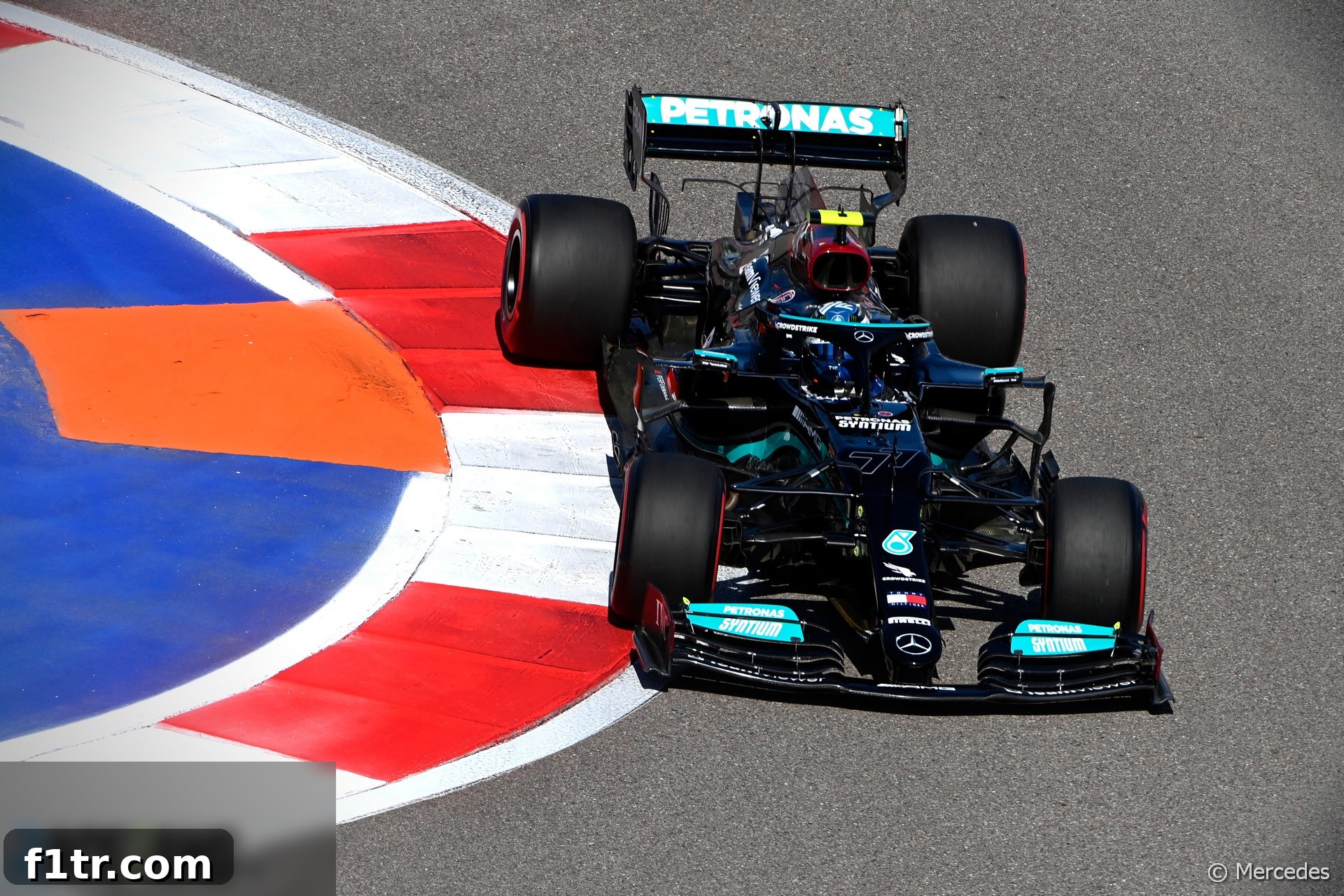
Valtteri Bottas Faces Strategic Grid Penalty at Russian Grand Prix After Power Unit Change
The 2021 Formula 1 season, a fiercely contested battleground for both the Drivers’ and Constructors’ Championships, saw another intriguing strategic development ahead of the Russian Grand Prix. Mercedes-AMG Petronas Formula One Team confirmed that driver Valtteri Bottas would incur a significant grid penalty, setting him back on the starting grid in Sochi. This decision marks the second consecutive race weekend where Mercedes has opted to change multiple power unit components in Bottas’s car, a move that is less about immediate performance and more about long-term strategic advantage in a high-stakes title fight.
For the Russian Grand Prix, Bottas’s W12 will be fitted with a brand-new engine (Internal Combustion Engine – ICE), turbocharger (TC), and Motor Generator Unit-Heat (MGU-H). These three components are critical elements of the modern F1 hybrid power unit, responsible for propulsion and energy recovery. Under the strict regulations set forth by the Fédération Internationale de l’Automobile (FIA), exceeding the pre-defined allocation of these components for the season automatically triggers grid penalties. Each new component introduced beyond the permitted limit results in a five-place grid penalty. Consequently, the replacement of three components amounts to a total of 15 grid places for Bottas.
It’s important to note the specifics of the penalty system: if a driver accumulates penalties totaling more than 15 grid places, they are automatically relegated to the very back of the grid. While Bottas’s penalty reached the 15-place threshold, it did not exceed it, meaning he would start from his qualifying position minus 15 places, rather than automatically from the last spot. This nuance became particularly relevant as other drivers, notably championship leader Max Verstappen, faced more substantial penalties that mandated a back-of-the-grid start.
Mercedes’ Calculated Gambit: Strengthening the Power Unit Pool
Mercedes’ rationale behind this recurring power unit change for Bottas was explicitly articulated as a “tactical opportunity to put another [power unit] in the pool with [Valtteri Bottas].” This statement reveals a calculated strategy aimed at bolstering their inventory of reliable, fresher power units for the remaining, crucial races of the 2021 season. Given that Bottas, while a key contributor to the Constructors’ Championship, was not a direct contender for the Drivers’ title, sacrificing a single race weekend by taking a grid penalty becomes a viable and often necessary decision for a team focused on overall championship success.
In the relentless pursuit of performance and reliability, Formula 1 teams operate under immense pressure to manage their power unit components efficiently. The complex hybrid engines are pushed to their absolute limits, making component wear and potential failures a constant concern. By introducing a new power unit into Bottas’s pool, Mercedes ensures they have a strong, less-worn engine available for his car in subsequent events. This strategic foresight can be invaluable, offering flexibility in deployment, mitigating the risk of mechanical DNFs (Did Not Finish), and potentially providing a performance edge in critical races where every horsepower counts. Such decisions underscore the intricate balance between immediate race results and the broader championship picture, especially when a team’s primary title contender, Lewis Hamilton, is embroiled in a tight battle.
A Shuffled Starting Grid: Implications for Verstappen and Others
Valtteri Bottas initially put in a strong performance during the qualifying session at the Sochi Autodrom, securing an impressive seventh position. However, his 15-place grid drop meant he would start 17th on the revised grid. This positioning placed him strategically just ahead of several other drivers who also faced penalties for power unit changes, including Nicholas Latifi and Charles Leclerc, both of whom opted for similar strategic component replacements.
Crucially, Bottas’s starting position also placed him ahead of his team mate’s fiercest championship rival, Max Verstappen. Verstappen’s own journey to the back of the grid was a more complex narrative, involving a combination of two distinct penalties. Firstly, the Red Bull Racing driver arrived in Sochi already carrying a three-place grid drop from the previous race at Monza, a consequence of his collision with Lewis Hamilton. Adding to this, Red Bull also made the strategic decision to fit a new power unit to Verstappen’s car, effectively committing him to start from the very back of the field due to the cumulative penalties exceeding the 15-place threshold.
Embracing the inevitability of a back-of-the-grid start, Verstappen’s approach to qualifying was entirely tactical. He deliberately chose not to set a representative lap time during the session. This decision allowed him to conserve fresh tire sets for the race, avoid unnecessary wear on components that were already facing penalties, and focus entirely on race strategy for an aggressive charge through the field. The grid reshuffle triggered by these multiple penalties had a significant ripple effect across the entire starting order. Drivers like Lance Stroll of Aston Martin were among the beneficiaries, being promoted to seventh place. Similarly, Verstappen’s Red Bull team mate, Sergio Perez, moved up to secure an eighth starting position on the fourth row of the grid. These shifts promised a dynamic and potentially unpredictable race, with key championship contenders starting out of their usual positions.
The High-Stakes Championship: Hamilton’s Advantage and Bottas’s Role
The 2021 Formula 1 season will forever be remembered for the epic and relentless championship battle between Lewis Hamilton and Max Verstappen. Entering the Russian Grand Prix, the intensity was palpable, with Hamilton trailing Verstappen by a mere five points in the Drivers’ Championship standings. Every race, every point, and every strategic move by either team carried immense weight and potential implications for the ultimate outcome of the season. Hamilton was set to start the Sochi race from a strong fourth position, providing him with an excellent platform to challenge for victory and gain crucial championship points.
Starting ahead of Hamilton were Lando Norris, Carlos Sainz Jnr, and George Russell – all formidable competitors capable of strong performances. The intriguing dynamic created by Bottas starting just ahead of Verstappen, despite both being at the rear of the grid, added another layer of strategic complexity for Mercedes. While Bottas’s primary objective would naturally be to carve his way through the field and score as many points as possible for the team, his presence could indirectly play a pivotal role in aiding Hamilton. Should Bottas make swift progress through the midfield, he could potentially act as a disruptive force for Verstappen, either by creating traffic, forcing the Dutchman to use more tire life in overtakes, or even serving as a strategic buffer should the race scenario unfold favorably for Mercedes. This potential for Bottas to influence Verstappen’s race, even from a penalised position, highlights the nuanced ‘wingman’ role within Formula 1 team strategy, especially when a championship is on the line.
Sochi Autodrom: A Circuit for Strategic Charges
The Sochi Autodrom, nestled within the Olympic Park, is known for its smooth asphalt, long straights, and a unique layout that can present both challenges and opportunities. Its lengthy main straight, leading into the infamous Turn 2 braking zone, is historically the prime overtaking spot on the circuit. This characteristic makes Sochi a fascinating venue for races where drivers are starting out of position and attempting to make their way through the field, a scenario perfectly embodied by both Bottas and Verstappen.
Historically, the circuit has been a stronghold for Mercedes, leveraging their engine power and efficient tire management capabilities. For drivers embarking on a charge from the back, like Bottas and Verstappen, the ability to manage tire degradation, execute precise and decisive overtakes, and navigate through the midfield traffic without incident will be paramount. The potential for a safety car period, which is not uncommon at Sochi due to its tight sections and close racing, could further shake up the race order, offering those starting further back an accelerated chance to close the gap to the leaders. Mercedes’ decision to equip Bottas with a fresh power unit can therefore be viewed as a calculated investment in ensuring he has maximum performance and reliability for his expected charge through the field, aiming to score valuable points for the Constructors’ Championship and potentially influence the outcome for Verstappen.
The Broader Implications of F1 Power Unit Regulations
The FIA’s elaborate regulations concerning power unit components are a cornerstone of modern Formula 1, designed with multiple objectives in mind: controlling spiraling costs, promoting reliability, and maintaining competitive balance across the grid. Typically, each driver is allocated a finite number of key power unit components for an entire season. This includes three Internal Combustion Engines (ICE), Turbochargers (TC), and Motor Generator Unit-Heat (MGU-H), along with two Motor Generator Unit-Kinetic (MGU-K), Energy Stores (ES), and Control Electronics (CE). Breaching these limits, as seen with Bottas and Verstappen, inevitably results in grid penalties – a strong deterrent mechanism that compels teams to meticulously plan and manage their component usage throughout the demanding race calendar.
The frequent occurrence of power unit penalties in the 2021 season, impacting a range of drivers from championship contenders like Verstappen to midfield runners like Bottas, Latifi, and Leclerc, vividly underscores the immense technical and operational pressures on modern F1 engines. The relentless pursuit of marginal gains in performance, combined with an increasingly packed and global racing schedule, pushes these highly sophisticated components to their absolute limits. For top-tier teams such as Mercedes and Red Bull, the decision-making process involves a delicate balance: weighing the risk of a premature retirement due to component failure against the strategic acceptance of a grid penalty. This calculated approach, exemplified by Mercedes’ move for Bottas, demonstrates a long-term strategic vision, prioritizing the optimization of resources for the ultimate prize over short-term gains in a single race.
In conclusion, Valtteri Bottas’s grid penalty at the Russian Grand Prix was far more than a routine consequence of component changes; it was a meticulously planned strategic maneuver by Mercedes. This move was primarily aimed at fortifying their power unit reserves for the critical final races of the season, ensuring Bottas has the best possible machinery to support the team’s championship aspirations. Simultaneously, it introduced a fascinating new dynamic to an already captivating championship fight between Lewis Hamilton and Max Verstappen. With both Bottas and Verstappen embarking on a charge from the rear, the race at Sochi promised an enthralling spectacle of overtakes, strategic gambits, and fierce competition, all with the ultimate goal of securing the coveted 2021 Formula 1 world titles.
Don’t miss anything new from RaceFans
Follow RaceFans on social media:
- Join RaceFans on Facebook
- Follow RaceFans on Twitter
- Get daily email updates from RaceFans