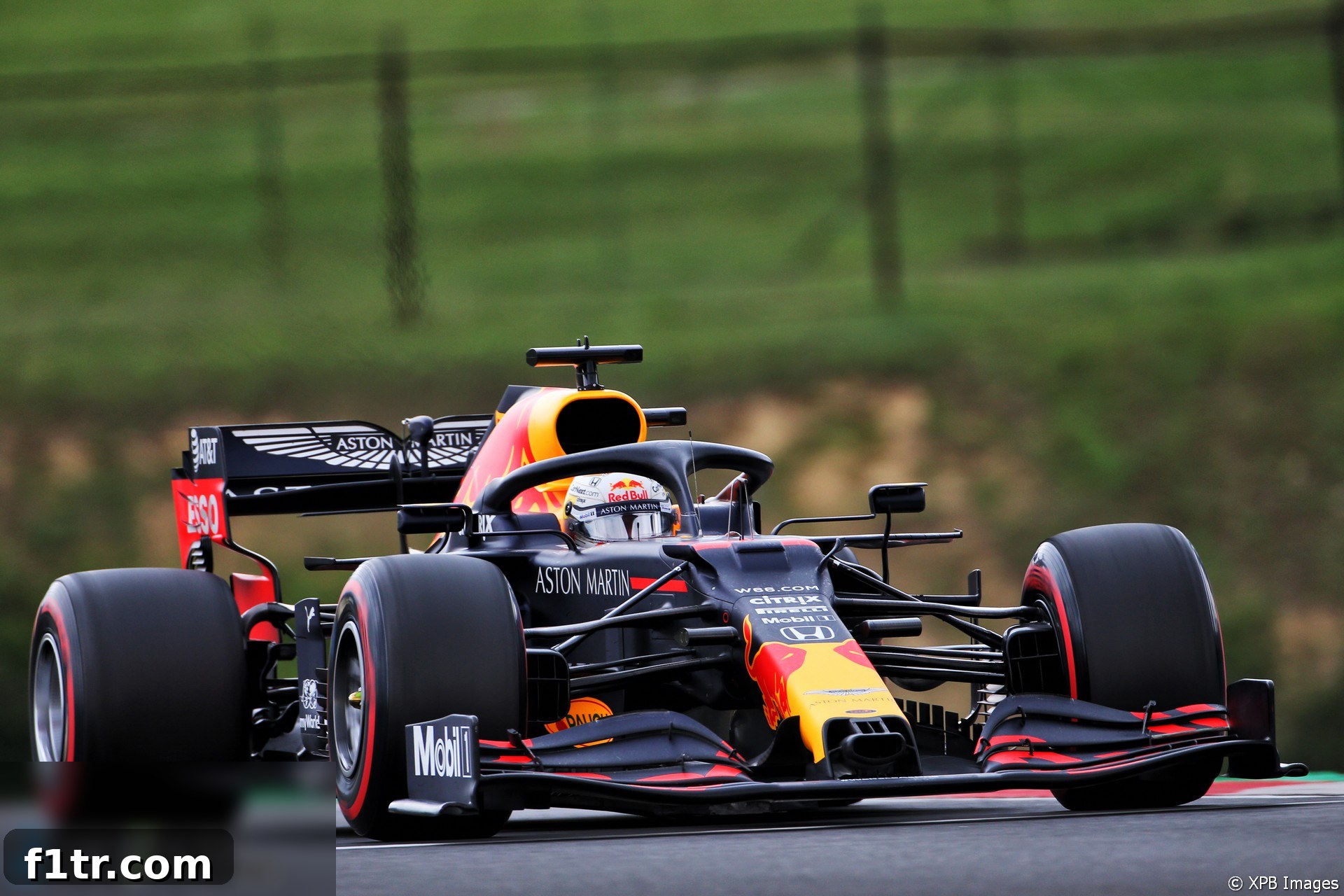
The qualifying session for the Hungarian Grand Prix delivered a stunning outcome that left even the dominant Mercedes drivers, Lewis Hamilton and Valtteri Bottas, in disbelief. Both admitted their profound surprise at the significant lack of competitiveness displayed by their Red Bull rivals, a team widely expected to challenge for pole position at the tight and twisty Hungaroring circuit.
Mercedes-AMG Petronas Motorsport secured a dominant front-row lockout, with Lewis Hamilton clinching pole position and Valtteri Bottas lining up alongside him in second. However, the true shockwave through the paddock came from the uncharacteristic struggles of Red Bull Racing. Max Verstappen, often Mercedes' closest competitor, could only manage a seventh-place start for Sunday's race, while his teammate Alexander Albon failed to even progress beyond the second qualifying session (Q2), marking a significant setback for the Milton Keynes-based squad.
Mercedes Drivers React: A Mix of Surprise and Skepticism
Speaking after the session, Valtteri Bottas, who delivered a strong performance to secure a front-row start, openly conveyed his bewilderment regarding Red Bull's pace. "It's very surprising," Bottas stated, reflecting on the team's performance. "For sure, I was expecting them to be maybe potentially closer here than in Austria. This is a track that, on paper, should have suited their car's characteristics more."
Bottas further elaborated on his lack of detailed insight into Red Bull's specific issues, yet the overall impression of their weekend performance left him puzzled. "Obviously, I don't know the details of how their session actually went – was it nice and clean, or were there other issues? But the whole weekend, too, they've not really been that close. So it's just surprising, obviously I don't know the details yet, but it's not what we anticipated." This sentiment underscored a broader feeling within the paddock that Red Bull's struggles were more than just a single untidy lap.
Lewis Hamilton, fresh from his record-extending pole position, echoed his teammate's astonishment. The reigning world champion had keenly anticipated a strong challenge from Red Bull at the Hungaroring, a circuit where Max Verstappen famously snatched pole position and led much of the race just last year. When informed of the substantial time gap between his pole lap and Verstappen's best effort, Hamilton's reaction was one of genuine disbelief.
"I didn't know that was the case, but that is a very big gap," Hamilton conceded, highlighting the 1.4-second difference. "I definitely wasn't expecting them to be as off as they have been this weekend. You saw the pace of them last year here, and they were incredibly strong." His reference to Red Bull's 2019 performance served to magnify the current contrast, painting a picture of an unexpected and dramatic shift in the competitive landscape.
The Hungaroring Paradox: Why Red Bull's Struggles Were Unexpected
The Hungaroring circuit is often described as "Monaco without the walls" due to its tight, twisty, and highly technical nature. It's a track that places a premium on mechanical grip, aerodynamic efficiency, and driver skill rather than outright engine power. Historically, this type of circuit has been Red Bull's forte. Their chassis, often lauded for its exceptional downforce and agile handling, is typically well-suited to such demanding corners and slow-speed sections. This is precisely why both Hamilton and Bottas had marked Red Bull as a formidable threat heading into the Hungarian Grand Prix weekend.
Hamilton specifically pointed to these characteristics when explaining his surprise: "This is not a power circuit; this is more about the car and the mechanical grip and aero package. I thought that they had a better package than, I guess, today's results showed." This observation cut to the core of the issue. If Red Bull's car excels in areas like mechanical grip and aerodynamics, then a circuit like Hungaroring should theoretically play to its strengths. Their inability to translate these supposed advantages into competitive lap times raised serious questions about their current car concept or setup.
"I don't know if they all had great laps or not," Hamilton mused, leaving room for the possibility of individual driver errors, "but still either way that's a big, big gap." The magnitude of the deficit suggested that the problems extended beyond isolated mistakes and pointed towards more fundamental issues with the Red Bull RB16 package.
Red Bull's Uncharacteristic Performance: Verstappen's P7 and Albon's Q2 Exit
For Max Verstappen, starting seventh on the grid is a rare occurrence and a significant blow to his hopes for a race victory, particularly at a circuit where overtaking is notoriously challenging. Last year, Verstappen was in a class of his own during qualifying here, demonstrating the full potential of his Red Bull car. His inability to find a rhythm or extract pace from the RB16 throughout the weekend, culminating in a 1.4-second gap to pole, was deeply concerning for the team.
Even more alarming was the performance of Alexander Albon. His failure to make it into the top 10 for Q3 underscored the team's struggles on both sides of the garage. While Albon has faced scrutiny for his performance relative to Verstappen, his Q2 exit at a track like the Hungaroring, where Red Bull should be strong, highlighted that the issues might be systemic rather than confined to one driver. It suggested that the team was genuinely struggling to get their car into the optimal operating window, particularly with the tyres, which are crucial for performance on this demanding track.
Implications for the Race and the Season
The qualifying results in Hungary paint a stark picture for the immediate race and potentially for the broader 2020 Formula 1 season. For Mercedes, a front-row lockout provides an ideal platform to control the race, especially given the difficulty of overtaking at the Hungaroring. A strong start could see them pull away quickly, further cementing their early championship advantage.
For Red Bull, the race will be an exercise in damage limitation. Starting from seventh and even further back, Verstappen will face an uphill battle to make significant progress through the field. Albon will have an even tougher task from outside the top 10. The team will need to rely on strategic brilliance, strong pit stops, and perhaps a dose of good fortune with safety cars or changing weather conditions to salvage a respectable points haul.
The unexpected performance gap at a track that historically favours Red Bull raises questions about the RB16's development trajectory and its adaptability to different circuit types. If they struggle at a high-downforce circuit like Hungaroring, which should suit their car's philosophy, it might suggest deeper issues with their aerodynamic package or mechanical balance that need urgent attention. Mercedes' consistent dominance, especially at varied circuits, underscores their formidable position and the challenge facing any team hoping to contend for the championship.
As the teams prepare for Sunday's race, the paddock remains abuzz with speculation. Can Red Bull unlock hidden pace overnight? Or will Mercedes continue its unchallenged march towards another dominant victory? One thing is certain: the Hungarian Grand Prix qualifying session provided a surprising twist, leaving everyone questioning the true pecking order of the 2020 Formula 1 season.
Related 2020 F1 Season Articles
- Grosjean to make F1 test return tomorrow for first time since Bahrain horror crash
- Pictures: Wrecked chassis from Grosjean’s Bahrain fireball crash to go on display
- Bottas vs Rosberg: Hamilton’s Mercedes team mates compared after 78 races each
- F1 revenues fell by $877 million in Covid-struck 2020 season
- Hamilton and Mercedes finally announce new deal for 2021 season
Browse all 2020 F1 season articles