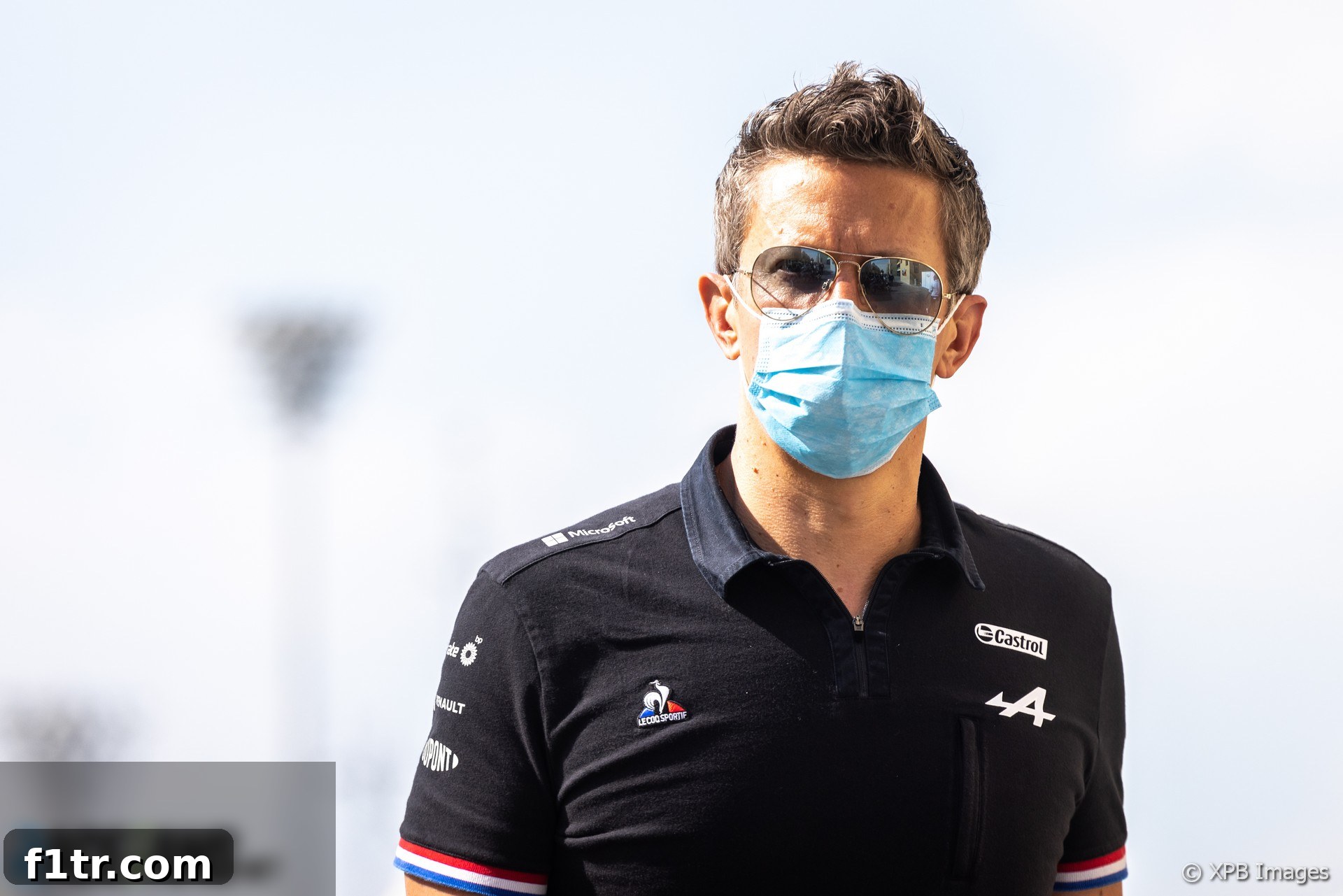
Marcin Budkowski Departs Alpine F1 Team Amidst Crucial 2022 Season Preparations
Alpine has officially confirmed the departure of its Executive Director, Marcin Budkowski, marking a significant leadership change for the French Formula 1 team as it prepares for the radically overhauled 2022 season. The announcement signals the end of Budkowski’s four-year tenure with the Enstone-based outfit, a period that saw the team transition from Renault to its current Alpine branding.
Advert | Become a Supporter & go ad-free
The mutual agreement to “end their collaboration,” as stated by the team, comes at a pivotal moment for Alpine, with new technical regulations set to reshape the F1 landscape. Laurent Rossi, CEO of Alpine, will temporarily oversee the F1 team’s management, ensuring continuity during this transitional phase.
Budkowski’s Journey: From FIA Controversy to Alpine’s Leadership
Marcin Budkowski’s association with the team began in 2018 when he joined as Executive Director for what was then the Renault F1 Team. His arrival was not without controversy, stemming from his previous role as the FIA’s Head of Technical Matters. Rivals expressed concerns that Budkowski, having recently worked with the sport’s governing body, possessed privileged information about their car designs and future plans, creating a stir within the paddock. Despite the initial backlash, Budkowski quickly integrated into the team, focusing on technical and operational aspects.
In January 2021, following the departure of former Team Principal Cyril Abiteboul, Budkowski assumed a more prominent role, taking charge of Alpine’s F1 operating company. This promotion placed him at the forefront of the team’s strategic and day-to-day operations, working closely with Laurent Rossi and Racing Director Davide Brivio (who himself later transitioned to a different role within Alpine Racing). During his time, Budkowski played a key role in steering the team through its rebranding to Alpine, a move designed to elevate the performance car marque and strengthen its connection to the Renault Group’s sporting heritage.
Reflecting on his departure, Budkowski expressed appreciation for his time with the team. “I truly enjoyed being part of the leadership team of Renault then Alpine F1 Team, working with such a talented and dedicated group of people,” Budkowski said in a statement. “I will be watching the team’s progress fondly in the seasons to come.” His words convey a sense of genuine connection to the team and its future prospects, even as he steps away from his direct involvement.
Laurent Rossi’s Interim Leadership and Alpine’s Ambitious Vision
With Budkowski’s exit, the immediate leadership void will be filled by Laurent Rossi, the CEO of Alpine. Rossi has been a driving force behind Alpine’s ambitious “100-race plan,” a strategic roadmap designed to transform the team into a consistent front-runner within the next five years. His temporary direct oversight underscores the critical importance of maintaining focus and momentum as the team enters a new era of Formula 1 regulations.
Rossi acknowledged Budkowski’s contributions, stating, “I would like to thank Marcin Budkowski for his commitment and contribution to the team’s results over the last four years.” He then reaffirmed Alpine’s unwavering dedication to performance: “The team is fully focused on getting the car ready for the first race in Bahrain and deliver a step beyond in performance.” This statement highlights the immediate priority: ensuring the A522 car is competitive from the outset of the 2022 season, especially given the monumental changes introduced by the new aerodynamic and technical rules.
Alpine’s long-term vision under Rossi involves not just winning races, but also establishing a sustainable and successful infrastructure. This includes optimizing operations at both its Enstone chassis factory and its Viry-Châtillon engine facility. The goal is to build a cohesive unit capable of challenging the established top teams, a challenge that requires stable and decisive leadership.
A Broader Context: F1’s Recent Leadership Shifts
Budkowski’s departure is not an isolated incident in the often-turbulent world of Formula 1 team management. His exit follows closely on the heels of Otmar Szafnauer’s departure as CEO and Team Principal of Aston Martin. Szafnauer, a respected figure in the paddock, had previously dismissed rumours connecting him with a possible move to Alpine, adding a layer of intrigue to the recent shake-ups.
The timing of these high-profile exits, particularly on the eve of a major regulatory overhaul, speaks volumes about the intense pressure and strategic recalibrations occurring across the sport. With the 2022 regulations representing the biggest change in F1 in decades, teams are making critical decisions about their leadership structures to best navigate the new era. Performance expectations are incredibly high, and the stakes for getting the new car concepts right are immense. This often leads to organizations reviewing their personnel and making changes where they believe a different approach or fresh perspective might yield better results.
The competitive nature of Formula 1 means that leadership roles are constantly under scrutiny. Teams are perpetually seeking the perfect blend of technical expertise, strategic vision, and motivational leadership to propel them towards championship success. These recent movements suggest a period of significant reshuffling as teams position themselves for the challenges and opportunities of the coming seasons.
Navigating the 2022 Regulations: Challenges and Opportunities for Alpine
The 2022 Formula 1 season introduces a sweeping set of new technical regulations, fundamentally altering car design with a focus on ground effect aerodynamics and standardized components. This reset represents both a colossal challenge and a significant opportunity for every team on the grid, including Alpine. A leadership change at such a critical juncture inevitably raises questions about its potential impact on car development and overall team cohesion.
With Budkowski, a seasoned engineer, no longer directly involved, the team will rely heavily on its existing technical department and the temporary guidance of Laurent Rossi. The ability to quickly adapt, innovate, and interpret the new rules will be paramount. Alpine’s goal to “deliver a step beyond in performance” is ambitious, especially considering the competitive strength of rivals and the uncertainty surrounding how each team will adapt to the new rules. A strong, unified vision from the top is essential to ensure that the extensive work done at both Enstone and Viry-Châtillon translates into on-track success.
The transition period demands exceptional communication and collaboration between different departments – from design and aerodynamics to engine development and race operations. Rossi’s leadership during this interim phase will be crucial in maintaining morale, ensuring strategic alignment, and driving the final preparations for pre-season testing and the inaugural race in Bahrain.
Looking Ahead: Alpine’s Path to F1 Success
Marcin Budkowski’s departure marks the end of an era for Alpine, but it also signals the beginning of a new chapter. The team now faces the task of identifying a permanent successor who can bring stability, vision, and sustained success to its Formula 1 program. The ideal candidate will possess a deep understanding of modern F1, strong leadership qualities, and the ability to inspire a dedicated workforce towards ambitious goals.
Alpine, with its rich heritage and the backing of the Renault Group, possesses the resources and ambition to compete at the highest level. The “100-race plan” is a testament to this long-term commitment. However, achieving this vision requires more than just investment; it demands strategic shrewdness, technical brilliance, and unwavering leadership. As the 2022 season draws near, all eyes will be on Alpine to see how it navigates this period of change and how effectively it can leverage the new regulations to propel itself up the F1 grid.
The foundation laid by previous leadership teams, including Budkowski’s contributions, will undoubtedly play a role in the team’s ongoing development. Yet, the future success of Alpine will now depend on its ability to evolve, adapt, and build a new leadership structure capable of delivering on its significant aspirations within the fiercely competitive world of Formula 1.
Advert | Become a RaceFans supporter andgo ad-free
More on the 2022 F1 season:
- Mercedes told me “you’re wrong” about 2022 car’s problems – Hamilton
- FIA confirms all 10 F1 teams complied with 2022 cost cap
- Steiner “not ashamed” of panning “slow” Schumacher in Drive to Survive
- Albon believes year out of F1 improved him as a driver
- Hamilton sees diversity gains in F1 years on from his ‘traumatising’ experience of racism
Browse all 2022 F1 season articles