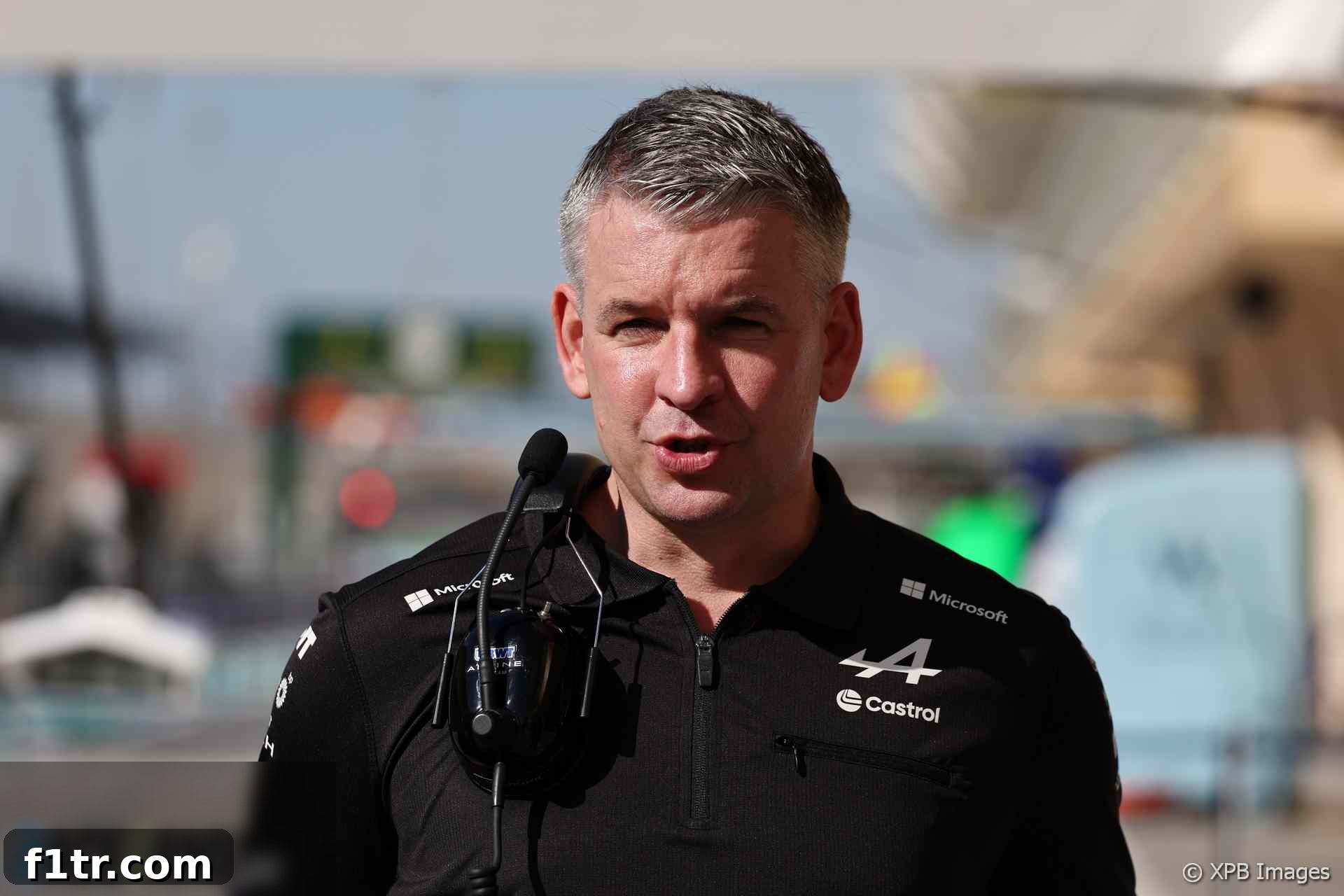
In a significant shake-up highlighting the intense pressures of top-tier motorsport, the Alpine F1 team has announced a major restructuring of its technical department. This pivotal decision comes on the heels of a deeply disappointing start to the 2024 Formula 1 season, signaling a proactive effort to reverse the team’s current trajectory and reignite its competitiveness on the grid. The changes underscore the unforgiving nature of Formula 1, where performance deficits quickly necessitate drastic action, especially for a manufacturer-backed outfit with championship aspirations.
The most immediate and impactful changes involve the departures of two highly placed technical figures: Matt Harman, who held the crucial role of Technical Director, and Dirk de Beer, the Head of Aerodynamics. Harman had only recently presented the team’s new A524 chassis, an innovative design intended to spearhead Alpine’s challenge in the new season. Their exits are a stark reflection of the team’s perceived underperformance and the urgent need for a fresh approach in its design and development philosophy.
Advert | Become a Supporter & go ad-free
A New Technical Dawn: Alpine’s Three-Pillar Structure
To fill the void and introduce a more streamlined and focused technical leadership, Alpine has implemented an entirely new organizational structure. This involves the creation of a three-pillared technical division, each led by a specialist director. These three new technical directors will report directly to Team Principal Bruno Famin, aiming to foster greater accountability and targeted expertise across the critical facets of car development.
The new leadership triumvirate comprises:
- Joe Burnell, appointed as Technical Director for Engineering, will oversee the fundamental design and structural integrity of the car.
- David Wheater, taking on the role of Technical Director for Aerodynamics, will be responsible for refining the car’s crucial interaction with airflow, a domain where incremental gains often translate to significant lap time improvements.
- Ciaron Pilbeam, stepping in as Technical Director for Performance, will focus on extracting the maximum potential from the car on track, working closely with the race operations team and drivers Esteban Ocon and Pierre Gasly.
This restructured approach is designed to enhance collaboration, improve efficiency, and accelerate the feedback loop between design, development, and on-track performance. By decentralizing technical responsibilities into specialized domains, Alpine hopes to achieve a more agile and responsive engineering culture, essential for rapid progress in the ever-evolving world of Formula 1.
Performance Under Scrutiny: A Troubling Start to 2024
The urgency of these technical changes was undeniably underscored by Alpine’s abysmal performance at the season-opening Bahrain Grand Prix last weekend. Both Alpine cars, driven by the highly regarded French duo of Esteban Ocon and Pierre Gasly, qualified on the very back row of the grid. This shocking result for a factory team highlighted significant inherent performance issues with the new A524 chassis, which appeared to be fundamentally off the pace of its rivals.
The race itself offered little reprieve, with Ocon and Gasly finishing 17th and 18th respectively. While two rival cars faced delays, preventing Alpine from occupying the absolute last positions, the overall picture remained grim. Such results are far removed from Alpine’s stated ambitions of challenging at the front and represent a stark regression from their competitive showings in previous seasons. The deficit in Bahrain was not merely a matter of setup or driver performance, but indicative of a deeper problem requiring immediate and comprehensive solutions from the technical team.
Bruno Famin’s Vision: Driving Competitiveness Through Change
Team Principal Bruno Famin articulated the rationale behind these sweeping changes with clear conviction. “We have decided to make these organisational changes as we can clearly see that we are not where we want nor need to be in terms of performance level,” Famin stated, emphasizing the critical need for improvement. “It is time to take another step in terms of organisation and people.” His words reflect a pragmatic assessment of the team’s current standing and a determination to instigate fundamental shifts rather than superficial adjustments.
Famin further elaborated on the expected benefits of the new structure: “The new three-pillared structure with three technical directors, each specialising in different areas, will bring better work and collaboration across our technical areas and contribute to delivering performance from the factories to the race track.” This vision underscores a belief that specialized leadership will enhance communication, prevent duplication of effort, and accelerate the integration of new ideas and solutions. He expressed full confidence in the newly appointed directors: “I trust fully in the abilities of Joe, David and Ciaron to work closely together in bringing the team the performance and improvements that it needs.” Famin also extended his gratitude to the departing Harman and de Beer, acknowledging their contributions and wishing them well in their future endeavors.
A Pattern of Departures: Alpine’s Recent Management Turnover
These latest technical departures are not isolated incidents but rather continue a trend of significant personnel turnover at Alpine over the past year. The team has witnessed a series of high-profile exits, impacting key leadership positions across various departments. Just last July, Bruno Famin himself stepped into the role of Team Principal, replacing Otmar Szafnauer. Around the same time, long-standing Sporting Director Alan Permane, a familiar face in the paddock, also chose to leave the Enstone-based squad. Chief Technical Officer Pat Fry also departed to join Williams, signaling a brain drain that could have significant long-term implications. As the 2023 season concluded, Racing Director Davide Brivio also moved on from the team. This extensive roster of departures, especially in leadership and technical roles, suggests a period of considerable instability and potentially differing visions within the team’s hierarchy.
Such a consistent loss of experienced and senior staff can be profoundly disruptive for a Formula 1 team. It impacts institutional knowledge, creates a need for new hires to integrate quickly, and can affect the continuity of car development philosophies. While some turnover is natural in any high-stakes environment, the sheer volume of changes at Alpine raises questions about the team’s internal cohesion and its ability to build a stable foundation for future success.
The Broader Context: Alpine’s F1 Journey and Ambitious Targets
Alpine’s official statement on the latest changes minced no words, attributing them to “a period of disappointing results in the FIA Formula 1 world championship.” The team acknowledged a clear decline, noting their drop “from finishing fourth in the 2022 Championship to sixth in 2023.” This regression is particularly concerning given Alpine’s ambitious targets to consistently challenge at the front of the grid and eventually compete for championships. Missing several key targets outlined in their strategic plan has triggered this decisive internal review and subsequent overhaul.
As a full factory team, with its own engine division in Viry-Châtillon and chassis operations in Enstone, Alpine (formerly Renault) carries the weight of a major automotive manufacturer’s pride and investment. The expectation is not merely to participate but to contend. The A524 chassis, designed under the previous technical leadership, now faces intense scrutiny. Its early struggles suggest fundamental issues that the new technical triumvirate must rapidly identify and rectify. The performance deficit extends beyond pure lap time, potentially encompassing areas like car balance, tire degradation, and overall driveability – factors that significantly impact a driver’s ability to extract maximum performance.
Advert | Become a RaceFans supporter andgo ad-free
Looking Ahead: Challenges and Opportunities for Enstone
The road ahead for Alpine is undoubtedly challenging. The new technical leadership faces the daunting task of improving the A524 in-season while simultaneously laying the groundwork for future car concepts. Formula 1 development cycles are long, and significant performance gains rarely happen overnight. The pressure will be immense for Joe Burnell, David Wheater, and Ciaron Pilbeam to demonstrate tangible progress quickly, both through upgrades to the current car and through strategic planning for the 2025 and 2026 regulations.
For drivers Esteban Ocon and Pierre Gasly, the changes present both a challenge and a potential opportunity. They will need to adapt to new technical directives and provide clear feedback to the new leadership. However, a revitalized technical direction could also unlock the car’s potential, allowing them to showcase their talents more effectively. Ultimately, the success of this restructuring will depend on the ability of the new team to work cohesively, innovate effectively, and translate their collective expertise into on-track performance. Alpine’s journey in the 2024 season and beyond will be a compelling narrative of resilience, adaptation, and the relentless pursuit of speed in the pinnacle of motorsport.
Formula 1 Insights
- “Overtaking is overtaking”: Domenicali denies F1’s yo-yo racing is “artificial”
- The crashes F1 is trying to prevent may be rare – but the danger is obvious
- F1 returning to India soon after 2027 sounds like wishful thinking
- Verstappen loathes F1’s new generation of cars – but what do his rivals reckon?
- The ‘throwback weekend’ is back in fashion. But it’s a flawed concept – especially for F1
Browse all Formula 1 articles