Fernando Alonso’s Candid Perspective on F1 Sprint Races: The Dominance of Car Performance
Fernando Alonso, the seasoned Alpine driver, offered a frank assessment of his experience in recent Formula 1 sprint races, particularly regarding his on-track battles. Alonso admitted that the enjoyment derived from dueling with other drivers was significantly diminished, primarily because competitors in demonstrably quicker cars could effortlessly overtake him. This candid revelation underscores a perennial debate within F1: the interplay between driver skill and the overwhelming advantage of superior machinery.
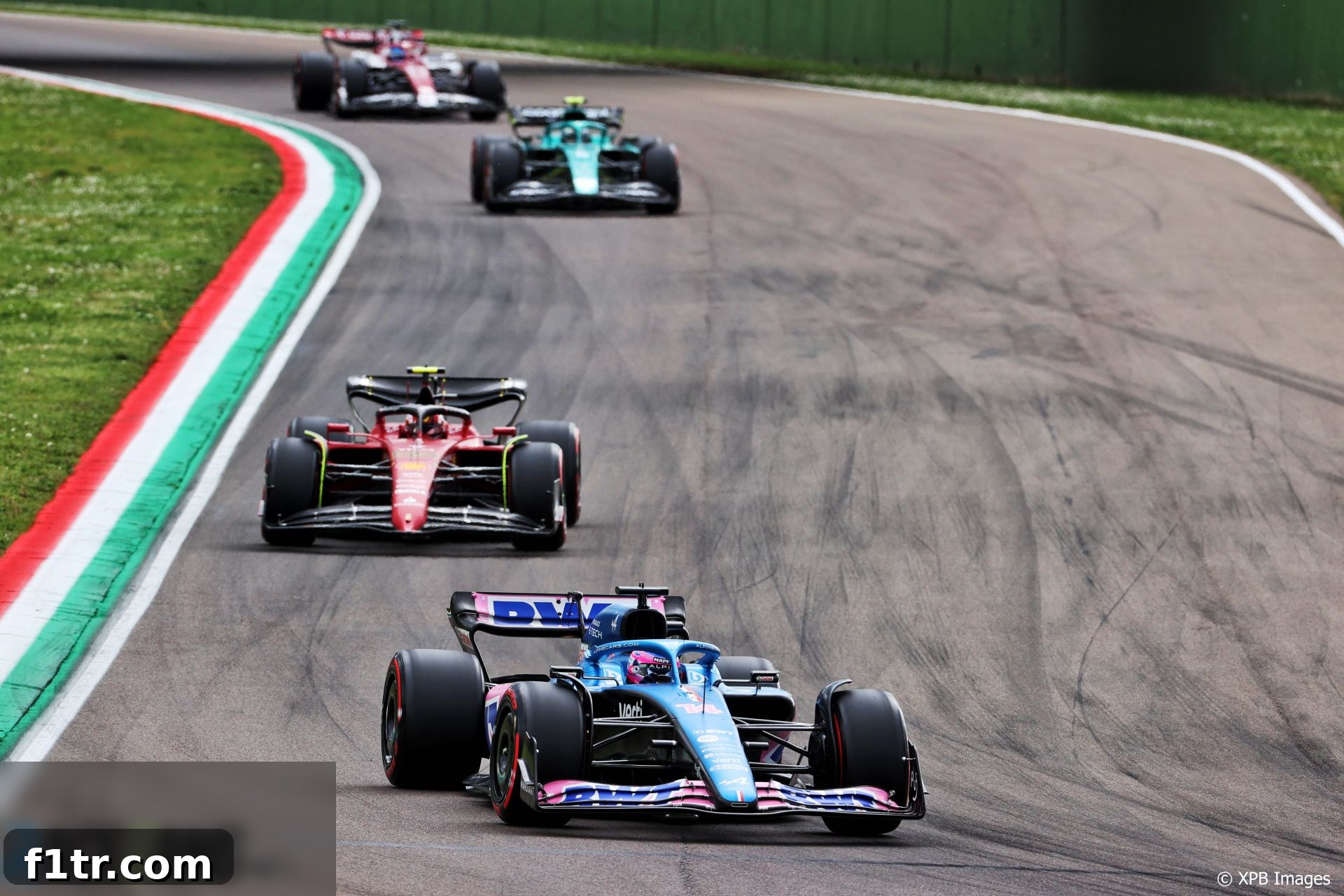
Starting from a promising fifth position on the grid, Alonso found himself struggling to maintain his ground throughout the sprint race. By the checkered flag, he had dropped to ninth place, having been passed by several rivals, including notable names like Carlos Sainz Jnr and Sergio Perez. For a driver of Alonso’s caliber, accustomed to fierce and sustained competition, being easily dispatched by faster cars clearly dampened the thrill of the race.
The Unyielding Reality of Car Advantage in F1 Battles
When questioned specifically about his skirmishes with Sainz during the sprint event, Alonso’s response was telling: “Not so much, I mean, there is no race at the moment there.” This statement speaks volumes about the frustration he felt. He elaborated by drawing parallels to past seasons, noting, “It’s like fighting with Lewis [Hamilton] last year or Max [Verstappen]. They start last and they finish on the podium still, so there is not much to fight.” This comparison highlights the core issue: when the performance gap between cars is substantial, even the most exceptional driving talent can do little to resist the inevitable.
Alonso’s admission, “I lost every battle that I was in,” perfectly encapsulates the challenging reality for drivers whose machinery lacks the ultimate pace. While a driver can extract every ounce of performance from their car, the sheer horsepower and aerodynamic efficiency of a faster rival’s vehicle often render defensive driving futile. This creates a scenario where the “battle” is less about wheel-to-wheel skill and more about delaying the inevitable pass, a dynamic that inherently diminishes the excitement for the driver involved.
Appreciating the Sprint Race Format: Action and Entertainment for Fans
Despite his personal frustration with the on-track fighting dynamics, Fernando Alonso remains a proponent of the sprint race format in broader terms, appreciating its contribution to the overall Grand Prix weekend. He emphasized the added value it brings, stating, “I do enjoy it, yesterday we had already some action with qualifying, today again. Free practice are definitely more boring than racing.” This sentiment resonates with many F1 fans and stakeholders who seek to maximize the spectacle of a race weekend.
Alonso firmly believes that sprint races enhance the fan experience. “I think the fans enjoyed today. If I was at home and I put the TV, I saw something better than a free practice or anything else. So I think that’s a positive thing,” he remarked. The format introduces an additional competitive session, transforming a typically quiet Saturday morning into an event with tangible stakes and potential drama. This shift from extended practice sessions to a mini-race provides more compelling viewing, undoubtedly catering to a global audience hungry for motorsport action.
Furthermore, Alonso acknowledged the unpredictable element that sprint races can inject into the weekend’s narrative. He pointed out the potential for dramatic shifts in fortune, commenting, “Tomorrow, maybe everything changes and people that recover a lot of places today, Perez or Sainz, they touch in the first corner and they are in the gravel and it’s a dramatic change. So I think it’s part of the show.” This adds an exciting layer of unpredictability, where even strong performances in the sprint don’t guarantee a smooth Sunday, keeping fans on the edge of their seats.
The Enduring Rule of Car Performance in Formula 1 History
While Friday’s qualifying session often produces a mixed-up and intriguing grid, the sprint race, with its shorter duration and full-throttle racing, frequently sees the quickest cars naturally gravitate towards the front-running positions. Alonso noted that this outcome is entirely consistent with the fundamental nature of Formula 1. “This is Formula 1, it has been like this always,” he commented, reflecting a deep understanding of the sport’s history and its inherent structure.
He drew upon a rich tapestry of F1 history to illustrate his point, reminding everyone that car performance has always been the ultimate arbiter of success. “When [Ayrton] Senna won the championships and the races, he had the fastest car. When I won the championship, I had the fastest car. Michael [Schumacher] had the fastest car and Lewis broke all the records in pole position because he had the fastest car and today he’s driving super-well and he’s P15. So this is Formula 1.” This powerful statement encapsulates decades of F1 wisdom: raw driver talent is essential, but it is ultimately maximized, or constrained, by the machinery at their disposal.
Alonso’s observations resonate particularly in an era of stringent technical regulations where car development is paramount. Even with driver skill remaining a critical component, the sophisticated aerodynamics, powerful engines, and intricate suspension systems of modern F1 cars dictate much of the competitive order. A driver can push the limits, but if their car is inherently slower by a few tenths per lap, even the most heroic defensive maneuvers will eventually yield to superior pace.
The Nuance of a Veteran’s Perspective on F1 Evolution
Fernando Alonso, with his extensive career spanning multiple eras of Formula 1, offers a unique and balanced perspective on the sport’s evolution, particularly with formats like the sprint race. His appreciation for the fan engagement aspects of the sprint weekend, contrasted with his personal frustration regarding the limitations imposed by car performance in direct battles, highlights the complex considerations at play in modern F1. The sport continuously strives to balance pure sporting competition with entertainment value, and the sprint race is a prime example of this ongoing effort.
For drivers like Alonso, who have tasted championship glory and fought countless battles at the pinnacle of motorsport, the joy of racing often lies in fair, close-quarters combat where driver skill can truly shine. When car performance disparities render these direct confrontations one-sided, it naturally diminishes the satisfaction. However, his veteran wisdom allows him to see beyond his immediate on-track experience and acknowledge the broader benefits for the sport’s audience and commercial appeal.
The Imola sprint race, while perhaps not the most personally enjoyable for Alonso from a battling perspective, served its purpose in setting the grid for the main Grand Prix and providing a spectacle for viewers. It reinforced the notion that in Formula 1, regardless of format innovations, the performance of the car remains an undeniable and often decisive factor in determining success and the nature of on-track competition. Alonso’s comments serve as a powerful reminder of this foundational truth, offering a dose of realism amid the excitement and drama of a Grand Prix weekend.
Related F1 Articles and Insights
- Understanding F1 Sprint Race Strategy: A Driver’s View
- The Impact of Car Development on Formula 1 Championship Battles
- Fernando Alonso: A Career Defined by Skill and Perseverance
- Exploring Fan Engagement in Modern Formula 1 Formats
- The Ever-Present Debate: Driver Skill vs. Car Performance in F1
Browse more articles from the 2022 Emilia-Romagna Grand Prix weekend