As the roar of engines fades from the Circuit of the Americas, the US Grand Prix weekend has once again delivered a thrilling blend of high-speed drama, unexpected turns, and critical insights into the Formula 1 season. From driver frustrations to strategic blunders and significant regulatory discussions, the Austin race weekend was packed with headlines. This comprehensive round-up dives deep into the key moments and major talking points, offering an enhanced perspective on the on-track action and off-track developments.
US Grand Prix Weekend Highlights
Alonso Struggles for Comfort Despite Strong Qualifying
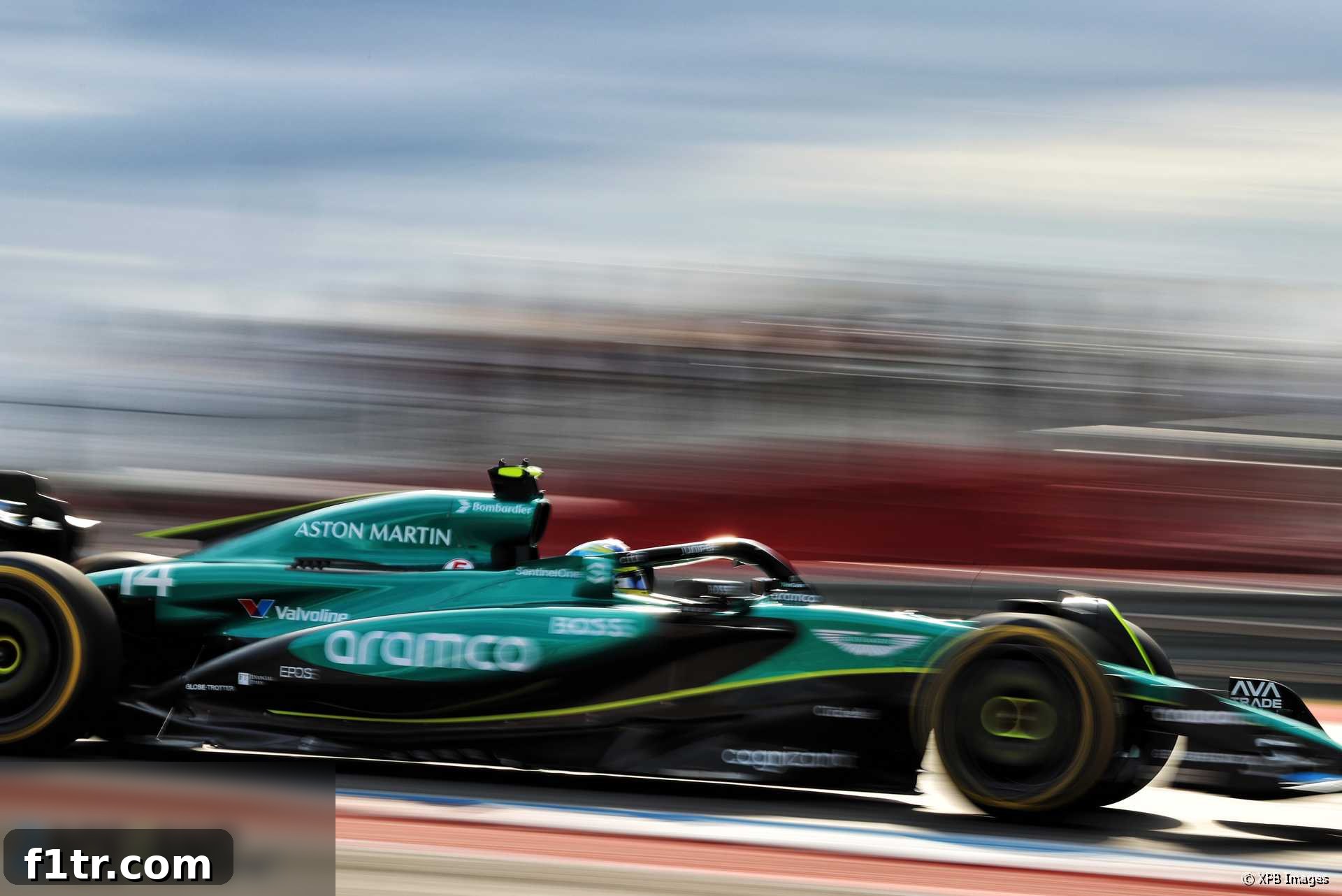
Despite securing a respectable eighth position on the grid for today’s US Grand Prix, two-time world champion Fernando Alonso openly admitted his ongoing struggles with the Aston Martin AMR24 in Austin. The Spanish veteran’s candid remarks highlighted a challenging weekend where comfort and confidence in the car remained elusive, even after a seemingly positive qualifying result.
“I think it’s a good result, for sure,” Alonso stated, reflecting on his P8. “However, it has been a tough weekend so far in terms of feeling the car.” His comments underscore the relentless pursuit of perfection in Formula 1, where even a strong grid position doesn’t guarantee complete satisfaction. Alonso revealed that the team had implemented significant set-up changes following both Friday’s FP1 session and the morning’s sprint race, indicating a continuous effort to optimize the car’s performance around the demanding Circuit of the Americas. This persistent experimentation suggests Aston Martin is still searching for the sweet spot, perhaps struggling with the unique characteristics of COTA, such as its varied corners and bumpy surface.
“We’re still experimenting a little bit, so I’m not in a happy place yet,” he confessed. This sentiment is telling, as Alonso is known for his exceptional ability to extract the maximum from any machinery, often exceeding its perceived capabilities. His discomfort, therefore, hints at underlying issues with the AMR24’s balance or responsiveness. Despite this, he remained optimistic about the race ahead. “But the result is good. Hopefully it allows us to score some points tomorrow. That’s the target.” For Aston Martin, consistently scoring points is crucial in their ongoing battle for position in the Constructors’ Championship, and Alonso’s ability to salvage a strong qualifying despite his unease bodes well for their ambitions.
Williams Hampered by Traffic in Q1 – Albon Explains
Alexander Albon offered a clear explanation for the disappointing Q1 exit of both himself and his Williams teammate Franco Colapinto, pointing to a critical sequencing error in the chaotic final moments of the session. The Anglo-Thai driver believes being out of sync with their rivals severely compromised their qualifying runs, especially at a track like COTA where clean air is paramount for performance.
“The biggest issue we faced was that I came out of the pit lane maybe a lap earlier than everyone else,” Albon explained to the official F1 channel. This timing mistake placed him directly into a congested field, creating a cascade of negative effects. “So when we started our push lap, about nine cars had just come out.” Navigating a circuit with numerous cars on out-laps or preparing for their own flying laps is a nightmare for any driver, particularly in the cut-throat environment of Q1 where every tenth of a second counts. Albon vividly described the challenge: “I was overtaking a car almost every corner, and there was a lot of dirty air, which makes a big difference here.”
Dirty air, the turbulent wake left by a preceding car, significantly reduces aerodynamic grip and downforce for the following vehicle. At a circuit like COTA, known for its high-speed esses and sweeping corners, this effect is amplified, making it incredibly difficult to achieve optimal lap times. For Williams, a team often battling at the fringes of the midfield, clean running is essential to maximize their package. This incident highlights the strategic complexities of Formula 1 qualifying and the thin margins separating success from early elimination. It’s a testament to how crucial track position and timing are, especially for teams striving to punch above their weight.
Alpine Fined for Unsafe Release Involving Gasly and Verstappen
Alpine Racing has been handed a €5,000 (£4,166) fine by the US Grand Prix stewards after an incident involving Pierre Gasly and Max Verstappen towards the end of Q3. The stewards deemed Gasly’s release from the pit lane to be dangerous, creating a potentially hazardous situation with the oncoming Red Bull of Verstappen.
According to the official stewards’ report, Verstappen was forced to take “significant evasive action” to avoid a collision. An unsafe release is a serious infringement of safety regulations, as it poses a risk not only to the drivers involved but also to pit lane personnel and other competitors. Such incidents often occur in the frantic final moments of qualifying sessions when teams are pushing to get their drivers out for a crucial last lap, leading to potential misjudgements. While the fine serves as a penalty for the team’s operational error, crucially, Gasly will retain his seventh place on the grid for today’s race. This means the team pays the financial penalty, but Gasly’s on-track performance remains valid, which is a relief for Alpine, as a grid penalty would have been a more severe consequence for their French driver.
Beyond the Track: F1 News & Debates
Formula 1 is a sport that constantly evolves, not just on the asphalt but also in its regulatory landscape and the passionate debates among its stakeholders. This section delves into some of the most compelling narratives emerging beyond the immediate race results, offering a glimpse into the strategic decisions, internal tensions, and philosophical discussions shaping the future of the sport.
Audi to be Granted Increased Budget Cap on Entering F1 (BBC)
In a significant development for the sport’s financial regulations, Formula 1 is reportedly set to adjust its budget cap from 2026 to account for the higher operational costs faced by teams based in countries with elevated salary levels. This strategic move, learned by BBC Sport, is primarily designed to facilitate Audi’s competitive entry into F1, which is slated for just over a year’s time. The adjustment implies that while Audi will operate with a higher headline budget-cap figure compared to some of its rivals, the FIA believes this change is essential to ensure a truly level financial playing field for all teams, taking into account their unique circumstances and geographical economic variations. For a new entrant like Audi, which faces the immense challenge of building an F1 team from the ground up, this flexibility in the budget cap could be a crucial factor in their ability to quickly become competitive. It acknowledges the substantial initial investment and ongoing operational expenses that differ significantly across global regions, aiming to prevent a disadvantage for new teams solely based on economic factors outside of their control. This decision reflects F1’s commitment to attracting major manufacturers and fostering a more diverse and competitive grid in the long term.
Toxic F1 Season as Red Bull ‘Cheat’ Row with McLaren Keeps Tit-for-Tat War Raging (Telegraph)
The 2024 Formula 1 season continues to simmer with underlying tensions, as a ‘cheat’ row between Red Bull and McLaren fuels an increasingly ‘toxic’ environment, as reported by the Telegraph. The latest point of contention revolves around Red Bull’s ‘bib device,’ a piece of engineering that has sparked speculation and accusations among rival teams. While the precise details of whether Red Bull’s device contravenes regulations may or may not be definitively established, the controversy itself highlights the intense, high-stakes nature of modern F1. The article suggests that much of this debate feels like “window dressing” for a deeper, more significant narrative: the relentless championship battle between Lando Norris and Max Verstappen. With Norris still trailing Verstappen by 52 points heading into the Austin weekend, the true measure of this rivalry’s intensity lies in closing that gap. Should Norris significantly reduce the deficit, the tension is predicted to escalate dramatically, potentially even straining the long-standing friendship between the two drivers. This underscores how the pursuit of championship glory can transform friendly competition into a cutthroat psychological battle, where every perceived advantage, however minor, is scrutinized and debated, contributing to a truly enthralling yet occasionally fraught season.
Brundle Wants F1 Ban That Would Hinder Hamilton and Verstappen (Mirror)
Veteran F1 commentator and former driver Martin Brundle has sparked a fascinating debate with his suggestion to ban blue flags, a move that would undoubtedly create significant new challenges for even the sport’s elite drivers, including Lewis Hamilton and Max Verstappen. Brundle argues that current blue flag regulations, which require slower cars to yield immediately to faster cars, have led to a “lost skill” among drivers: the art of managing and working through traffic. “I think we should ban blue flags,” Brundle stated. “I think drivers have lost the skills of working the traffic, managing the traffic as we used to have to do. I quite liked that!” He reminisced about a time when drivers had to intricately plan their overtakes on backmarkers, adding another layer of strategy and skill to races. He likened the current system to “everybody has to jump out of the way like school kids when the big boys come through in the fast cars.”
However, Brundle also acknowledged the significant aerodynamic changes in modern F1, which present a counter-argument to his proposal. “But the trouble is, with today’s aerodynamics, you might never get past the back-markers,” he admitted. The “dirty air” phenomenon makes it incredibly difficult for cars to follow closely, let alone overtake, which could lead to frustrating stalemates if backmarkers aren’t mandated to move aside. This creates a compelling dilemma: would restoring the “lost skill” of traffic management come at the cost of less on-track action among the leaders, potentially hindering the top drivers and impacting the spectacle? Brundle’s commentary highlights a perennial F1 debate about balancing historical racing purity with the realities of contemporary car design and the desire for continuous excitement.
Voices from the Grid: Social Media Reactions
The vibrant world of Formula 1 extends far beyond the track, with drivers, teams, and prominent personalities frequently sharing their raw emotions, candid thoughts, and behind-the-scenes glimpses on social media. The US Grand Prix weekend was no exception, as platforms like X (formerly Twitter) buzzed with immediate reactions to the on-track action and the unfolding narratives. Here’s a snapshot of some notable posts that captured the mood and key moments of the weekend:
“Probably my best lap ever in Qualifying.” 🤩
🤳 @LandoNorris #UnitedStatesGP 🇺🇸 pic.twitter.com/NsGQdDRYlr
— McLaren (@McLarenF1) October 20, 2024
A really difficult day for the Team. The work starts now to get us back on track tomorrow 👊 pic.twitter.com/lggnk2EUjj
— Mercedes-AMG PETRONAS F1 Team (@MercedesAMGF1) October 20, 2024
No progress in the sprint. Brakes on fire at the end 🔥 time to focus for the qualifying and the race 🇺🇸 pic.twitter.com/wnIMn8saZL
— Valtteri Bottas (@ValtteriBottas) October 19, 2024
If you think you’re having a bad day, at least you’re not @WSJ’s picture editor.
Yes, that’s an Alpine, not a McLaren, in the biggest photograph on the front page.#F1 #USGP #RaceFans pic.twitter.com/imIfAewn0B
— Keith Collantine (@keithcollantine) October 19, 2024
- Find more official F1 accounts to follow in the F1 Twitter Directory
Fan Insight: Reflecting on the Sprint Race
The sprint race format continues to be a hot topic among Formula 1 enthusiasts, often drawing mixed reactions. However, this weekend’s sprint event at COTA seemingly struck a chord with many, including avid fan Tommy C, who found it notably more engaging than previous iterations this season. His insightful reflections capture the dynamic nature of sprint races and the ongoing narrative of key drivers.
“As sprints go it was pretty reasonable. As usual, it kinda stalled out in the last five laps when you’d expect pitstops to be made. Interesting to see Ferrari’s advantage in that phase of the race. A shame for Lando Norris but this race was typical of his season: generally quick but quite scruffy. He can’t afford these little mistakes against Max Verstappen but they keep creeping in. I just hope McLaren maintains their momentum so Lando can come back stronger and more consistent next year.”
Tommy C
Tommy C’s assessment highlights a common critique of sprint races – their tendency to become processional in the latter stages due to the absence of mandatory pit stops, which can often inject strategic variation into longer races. Nevertheless, he noted the “pretty reasonable” entertainment value, a positive sign for a format that has often struggled to consistently deliver gripping action. His observation about Ferrari’s advantage towards the end of the sprint is particularly interesting, suggesting potential tire management prowess or superior performance in specific race conditions for the Scuderia.
Furthermore, Tommy C’s comments on Lando Norris encapsulate the British driver’s season perfectly. Describing Norris as “generally quick but quite scruffy” pinpoints the paradox of his performance: undeniable raw speed often undermined by small but critical errors. In a championship battle against a driver of Max Verstappen’s caliber, such “little mistakes” are indeed unaffordable, as Verstappen rarely falters. This sentiment reflects the immense pressure on Norris to refine his race craft and eliminate these inconsistencies if he is to mount a serious title challenge. The fan’s hope for McLaren to “maintain their momentum” is crucial, as a strong team performance is vital for Norris to build upon and return “stronger and more consistent next year,” underscoring the collective effort required in Formula 1.
Happy Birthday!
A very happy birthday to our dedicated readers: Danthorn, Shaggymike, F1Yankee, and The Abbinator! We hope you have a fantastic day celebrating.
On This Day in Motorsport History
- Exactly 40 years ago today, in 1984, the legendary Alain Prost secured pole position for what would become an iconic championship showdown against his McLaren teammate, Niki Lauda, at Estoril. That season remains one of Formula 1’s most memorable, with the title decided by a mere half-point in favor of Lauda, highlighting the incredible rivalry and competitive intensity within the same team.
Stay Connected with RaceFans
Don’t miss any of our RaceFans’ motorsport coverage! Get a daily update directly in your inbox and ensure you’re always up-to-date with the latest news, analyses, and insights from the world of Formula 1 and single-seater motorsport. Sign up for the free RaceFans email Newsletter here:
As the dust settles on the US Grand Prix weekend, the narratives woven around the Circuit of the Americas offer much more than just race results. They highlight the ongoing technical battles, the ever-present pressure on drivers, the critical strategic decisions made both on and off the track, and the fascinating political landscape of Formula 1. Each element contributes to a sport that remains as captivating and complex as ever, setting the stage for even more excitement as the season progresses.