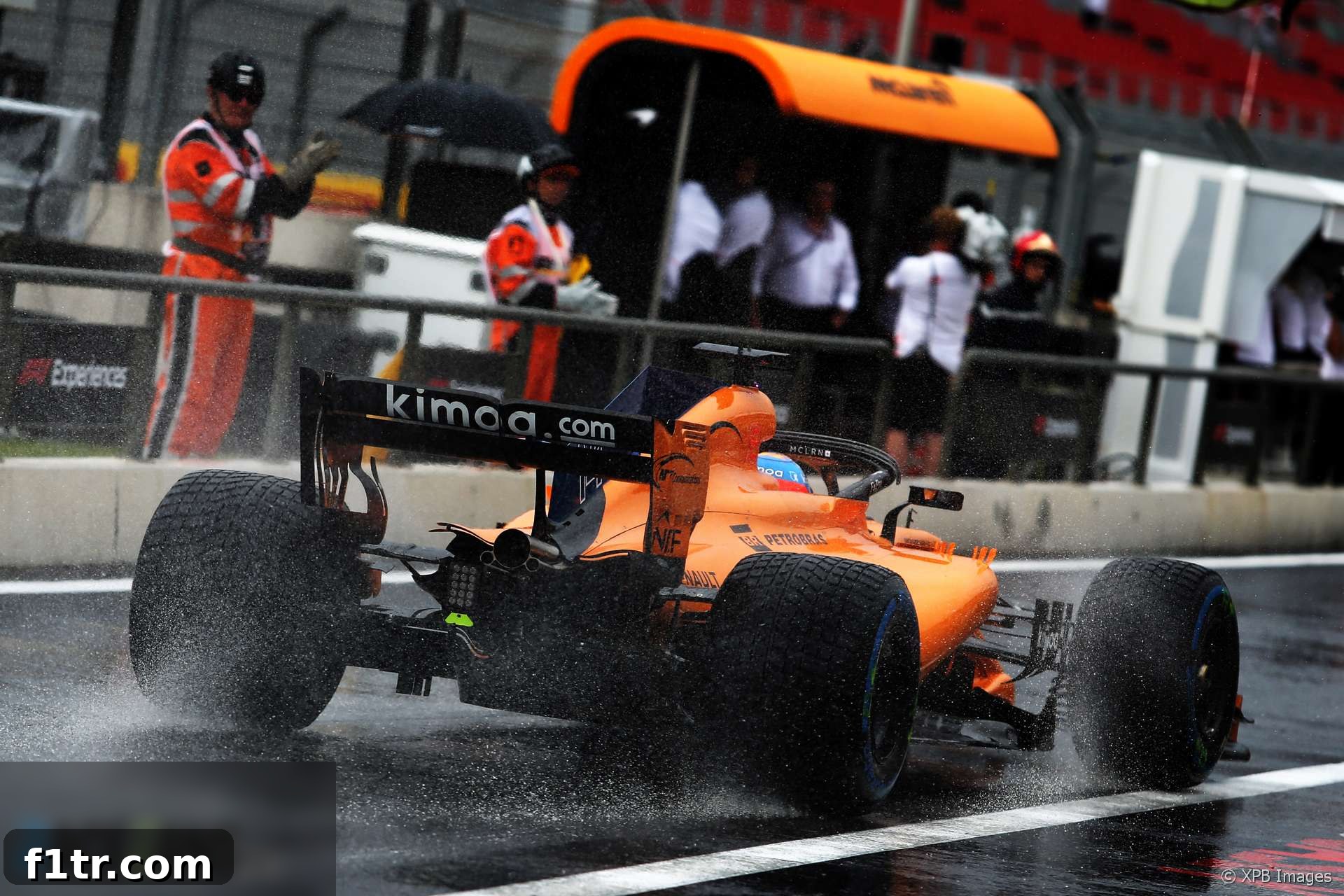
Fernando Alonso’s French Grand Prix Reflections: From Le Mans Triumph to F1’s Unforgiving Reality
In a sport where fortunes can turn on a dime, few drivers exemplify this dynamic as vividly as Fernando Alonso. Just one weekend after achieving a monumental victory at the iconic 24 Hours of Le Mans, adding another crown jewel to his illustrious Triple Crown pursuit, the Spanish maestro faced a stark contrast at the French Grand Prix. Despite finishing dead last, Alonso’s perspective remained remarkably pragmatic and, surprisingly, overwhelmingly positive. His reflections offered a rare glimpse into the mindset of a true racing champion grappling with the harsh realities of an uncompetitive Formula 1 season.
The juxtaposition couldn’t have been more pronounced. From the jubilation of an endurance racing triumph, showcasing masterful control and strategic brilliance, Alonso was plunged back into the challenging world of Formula 1 with McLaren, a team undergoing significant difficulties. While many might expect frustration or despondency, Alonso’s response was anything but. When asked if the stark difference between his WEC win and the French Grand Prix struggles was hard to stomach, he delivered a characteristically candid and insightful reply.
Embracing the Challenge: Alonso’s Unwavering Positive Outlook
Alonso’s perspective on finishing at the tail end of the French Grand Prix grid was refreshingly defiant. “No, I’d prefer to be here last and be on television,” he asserted, highlighting the sheer privilege of competing at the pinnacle of motorsport. This statement isn’t merely about media exposure; it underscores a profound appreciation for being among the elite.
He elaborated, “We are 20 drivers doing the best job in the world and we are not competitive today or all weekend but we are doing something, so. Yes, we are very, very bad but we are seventh in the world championship so something is happening.” This quote reveals the inherent paradox of an uncompetitive season for a world-class driver. While the immediate results might be disheartening, the broader context—being one of only twenty individuals to race in Formula 1—provides an overriding sense of gratitude. It speaks volumes about the mental fortitude required to navigate such a high-pressure environment, where individual talent often clashes with team machinery limitations.
Alonso’s positive mental attitude goes beyond mere lip service. He expressed genuine confusion when journalists assumed he would be feeling hard done by. “I’m surprised how negative you are,” he stated, emphasizing his unwavering belief in the unique opportunity he possesses. “Because as I say, we are the 20 top drivers in the world and the questions are how I manage to be positive, how I manage to smile, how I manage to breathe, to eat – I manage quite well, you know and I feel very privileged.” This powerful declaration not only puts his own struggles into perspective but also offers a subtle critique of the often-negative framing by media when discussing underperforming teams or drivers.
His ability to maintain such a high level of optimism and self-awareness in the face of adversity is a testament to his experience and character. It’s a crucial trait for any athlete at the top of their game, particularly in a sport as demanding and unforgiving as Formula 1, where every race presents a new challenge and every result is scrutinized intensely. For Alonso, even a last-place finish is an opportunity to learn, to compete, and to continue living out a dream shared by millions.
On-Track Frustrations: The Tumultuous French Grand Prix
Despite his philosophical outlook, the French Grand Prix was not without its moments of intense on-track frustration for Fernando Alonso. During the race, his radio communications painted a vivid picture of the difficulties he faced. At one point, a furious Alonso could be heard telling his engineer, with palpable exasperation, that he had “no brakes, no tyres” – a desperate plea highlighting the complete lack of grip and stopping power he was experiencing. Such a comment from a driver of Alonso’s caliber signifies a car that is fundamentally unbalanced and difficult, if not dangerous, to drive at competitive speeds. It also underscored the futility of his efforts to battle for points, running fruitlessly at the back of the grid.
The race itself began on a challenging note for the Spaniard and his McLaren team. “All the race we were on the back foot,” Alonso recounted. “From the start we had to avoid a lot of accidents.” This early chaos further complicated McLaren’s already difficult weekend, forcing evasive action that compromised their track position and race strategy from the outset. In Formula 1, recovering from an early setback is incredibly difficult, especially when the car lacks the raw pace to overtake.
Beyond the initial incidents, Alonso also voiced concerns about the conduct of other drivers on the circuit. He alleged that some competitors were “cutting the circuit to gain an advantage,” and crucially, that “nothing happened” in terms of penalties. In contrast, Alonso and McLaren, by sticking to the prescribed racing lines, found themselves disadvantaged. “We stayed on the circuit and came last,” he lamented, pointing to a perceived unfairness that added insult to injury during an already trying race. Such incidents can significantly impact race outcomes, and the lack of consistent enforcement can be a major source of frustration for drivers committed to fair play.
The French Grand Prix ultimately concluded in disappointment, not just in terms of position, but also due to a critical mechanical failure. “And after at the end we had a suspension problem and couldn’t even see the chequered flag,” Alonso revealed. A suspension problem, particularly in the latter stages of a race, can render a car undrivable, forcing retirement. Not seeing the chequered flag, even when running last, is a bitter pill for any racing driver, symbolizing a failure to complete the ultimate objective. It marked a definitive end to what Alonso succinctly described as “not a very competitive weekend for us.”
McLaren’s Mid-Season Hurdles: A Challenging Chapter
Fernando Alonso’s struggles at the French Grand Prix were not isolated incidents but rather symptomatic of McLaren’s challenging period in Formula 1. The 2018 season, following a highly publicized split from Honda engines and a new partnership with Renault, was hoped to mark a turning point. However, the initial optimism quickly gave way to the realization that the McLaren chassis itself had significant aerodynamic and handling deficiencies. Despite having one of the sport’s most experienced and talented drivers in Alonso, the team found it exceedingly difficult to consistently challenge for points, let alone podiums.
This era was particularly taxing for both the team and its drivers. For a champion like Alonso, accustomed to fighting for wins and championships, driving an uncompetitive car requires an immense amount of mental resilience and a redefined perspective on success. His comments about being “seventh in the world championship” even when the car is “very, very bad” highlight how even minor successes or relative performance against other struggling teams can be celebrated in such circumstances. It underscores the brutal nature of Formula 1, where resources, development pace, and the intricate balance of engine and chassis performance all play a pivotal role in determining a team’s fate.
The daily grind of developing and improving a Formula 1 car is relentless. Engineers and mechanics work tirelessly behind the scenes, often facing immense pressure to find fractions of a second. For a driver of Alonso’s stature, his feedback is invaluable, even if the immediate improvements aren’t visible on track. His ability to articulate precise issues, like the “no brakes, no tyres” radio message or the suspension problem, provides critical data for the team to analyze and address, driving the long-term development process. This collaborative effort, even during lean times, is what keeps a top F1 outfit pushing forward.
The F1 Calendar’s Relentless Pace: Glimpses of Hope
One of the defining characteristics of the Formula 1 calendar is its relentless pace. There is little time to dwell on past disappointments, as the next Grand Prix is always just around the corner. Fernando Alonso fully embodied this spirit, immediately turning his attention to upcoming opportunities. “But in five days we have another opportunity to forget this,” he stated, already focused on the immediate future. This quick turnaround is both a challenge and a blessing for teams and drivers; it means there’s always a chance to rectify mistakes and demonstrate improvement.
Alonso specifically pinpointed the Austrian and Silverstone Grand Prix as circuits where he hoped McLaren would fare better. Each Formula 1 track presents its own unique set of demands on a car, from high-speed corners and long straights to technical chicanes and elevation changes. The Red Bull Ring in Austria, with its shorter lap and fast, flowing sections, and Silverstone, known for its high-speed corners like Copse and Maggotts & Becketts, are fundamentally different from the Paul Ricard circuit in France. A car that struggles on one type of layout might potentially find a better balance or exploit specific strengths on another.
For McLaren, and indeed for any team, optimizing the car for specific circuit characteristics is a continuous engineering challenge. Suspension setups, aerodynamic configurations, and tire management strategies are all tailored for each event. Alonso’s hope for Austria and Silverstone suggested an understanding that these tracks might, through their layout or surface, better suit the inherent characteristics of the McLaren chassis, or at least mask some of its weaknesses more effectively than the French Grand Prix circuit. His optimism wasn’t unfounded; different tracks do favor different car philosophies, offering potential for a stronger showing even with a car that is generally uncompetitive.
Beyond the Chequered Flag: The Spirit of a Champion
Fernando Alonso’s reflections after the French Grand Prix serve as a powerful reminder of the unique psychology inherent in elite motorsport. For a driver who has scaled the highest peaks of racing – multiple F1 world championships, a Le Mans victory, and a consistent demonstration of raw talent – navigating periods of uncompetitiveness requires a special kind of resilience. It’s not just about speed or daring overtakes; it’s about the mental game, the ability to find purpose and privilege even when the results sheet tells a different story.
His capacity to separate the immediate frustration of a poor race performance from the overarching joy of being a Formula 1 driver is truly remarkable. It highlights a profound understanding of his position and the fleeting nature of both success and failure in the sport. Alonso’s dedication to his craft, whether it’s pushing an uncompetitive car to its limits or strategizing for future races, remains unwavering.
The journey of a Formula 1 season is a marathon, not a sprint, filled with highs and lows, triumphs and tribulations. Fernando Alonso, through his candid remarks at the French Grand Prix, provided a compelling narrative of perseverance, a testament to the enduring spirit of a champion who continues to find meaning and motivation in every challenge, on every circuit, around the world. His story is a continuous pursuit of excellence, forever chasing that next opportunity to prove his mettle and stand on the top step of the podium, regardless of the odds.
2018 F1 Season Insights
- F1 feared “death knell” for Drive to Survive after Ferrari and Mercedes snub
- McLaren staff told us we were “totally crazy” to take Honda engines in 2018 – Tost
- ‘It doesn’t matter if we start last’: How Red Bull’s junior team aided Honda’s leap forward
- Honda’s jet division helped F1 engineers solve power unit problem
- McLaren Racing losses rise after Honda split
Browse all 2018 F1 season articles