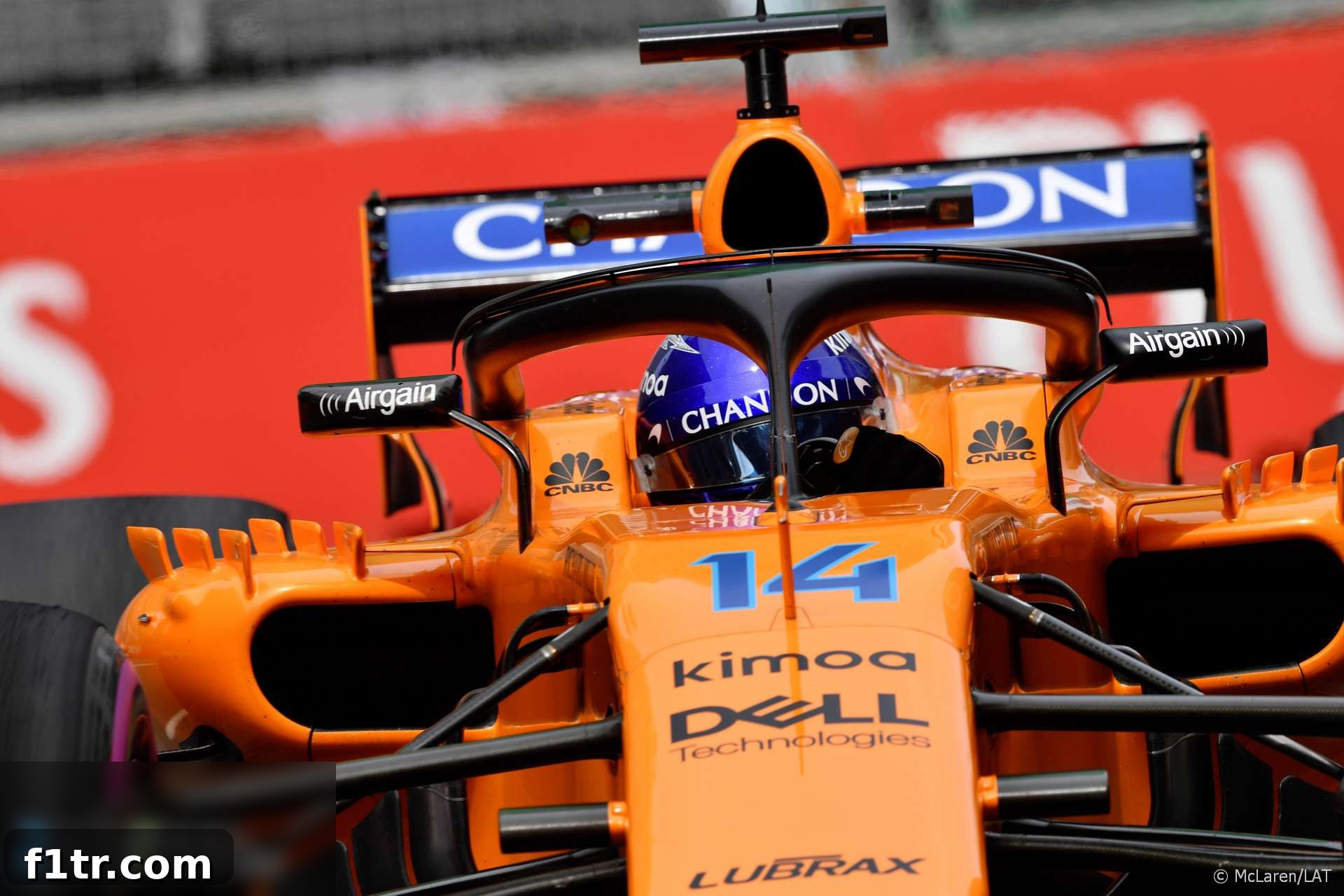
Fernando Alonso Lauds Renault Reliability: A New Era for McLaren in 2018 F1 Season
Fernando Alonso has expressed immense satisfaction with the “outstanding” reliability of his Renault power unit, attributing McLaren’s significantly improved start to the 2018 Formula 1 season to this crucial factor. Speaking in Baku ahead of the Azerbaijan Grand Prix, the two-time world champion highlighted the stark contrast in engine dependability compared to his previous experiences with Honda.
For years, McLaren and Alonso grappled with persistent power unit failures, particularly during their partnership with Honda from 2015 to 2017. This period was marked by grid penalties, retirements, and a profound lack of competitiveness, often overshadowing any potential chassis performance. The switch to Renault power for 2018 was a high-stakes gamble, and early indications suggested it was paying off.
“It’s difficult to compare year to year, as circumstances are always different,” Alonso explained. “However, I’ve always used this particular race, Baku, to change engines in the past, which inevitably meant starting from 20th position. This year marks the first time I haven’t faced that penalty and started from the back. That’s a significant difference already.”
The veteran driver emphasized the tangible benefits of a reliable engine. “I think the reliability, touch wood, has been exceptional. After four races, four qualifying sessions, and all the practice sessions, we’re still running with the first component on everything. This consistency has been instrumental. It has undoubtedly allowed us to score 22 points so far, which is a very positive start for us.”
Alonso acknowledged the challenges of direct performance comparisons between seasons due to evolving regulations and tire specifications. “In terms of driving feel or how the car performs, it’s hard to compare because the cars change so much. The tires also undergo significant changes; for example, we brought two steps softer compounds to this race compared to last year, including the ultra-soft. These factors make season-on-season comparisons difficult. But, without a doubt, reliability has been outstanding so far, and that’s genuinely good news for the team.”
Indeed, the reliability factor translated directly into championship points. Both Alonso and his teammate Stoffel Vandoorne finished Sunday’s race in Baku, further increasing the team’s points tally to a respectable 36 after just four rounds. This early accumulation of points was a clear departure from the team’s struggles in previous seasons, where unreliability often meant missed opportunities, regardless of the drivers’ efforts or the chassis’ potential.
McLaren’s Reliability Renaissance: A Deep Dive into Power Unit Component Usage
The most compelling evidence of McLaren’s improved reliability comes from the data on power unit component usage. In modern Formula 1, strict limits are imposed on the number of engine components each driver can use per season. Exceeding these limits results in grid penalties, severely hindering a team’s chances of scoring points.
For the 2018 season, drivers were permitted to use only three Internal Combustion Engines (ICE), Turbochargers (TC), and Motor Generator Units – Heat (MGU-H). For the Motor Generator Units – Kinetic (MGU-K), Energy Stores (ES), and Control Electronics (CE), the limit was two units. These stringent regulations make every component change a critical strategic decision, and frequent changes can quickly derail a season.
The contrast between McLaren’s 2018 and 2017 component usage after the first four races is stark and tells a powerful story of improved engineering and dependable power. The tables below highlight this dramatic shift:
McLaren Power Unit Component Use After First Four Races
2018 Season
| ICE | TC | MGU-H | MGU-K | ES | CE | |
|---|---|---|---|---|---|---|
| Fernando Alonso | 1 | 1 | 1 | 1 | 1 | 1 |
| Stoffel Vandoorne | 1 | 1 | 1 | 1 | 1 | 1 |
2017 Season
| ICE | TC | MGU-H | MGU-K | ES | CE | |
|---|---|---|---|---|---|---|
| Fernando Alonso | 2 | 3 | 3 | 2 | 1 | 1 |
| Stoffel Vandoorne | 2 | 5 | 5 | 2 | 3 | 3 |
ICE: Internal Combustion Engine; TC: Turbocharger; MGU-H: Motor Generator Unit – Heat; MGU-K: Motor Generator Unit – Kinetic; ES: Energy Store; CE: Control Electronics
As evident from the 2018 data, both Fernando Alonso and Stoffel Vandoorne had only utilized their first allocated unit for every single power unit component after the initial four races. This immaculate record meant zero grid penalties and maximum track time, allowing the team to focus purely on chassis development and race strategy rather than damage limitation.
Compare this to the 2017 figures. Fernando Alonso had already used his second ICE and third TC and MGU-H units, incurring penalties and effectively wiping out his chances of competitive weekends. Stoffel Vandoorne’s situation was even more dire, having gone through five Turbochargers and MGU-H units by the fourth race. This excessive component usage translated directly into numerous grid penalties, forcing him to start at the back of the grid repeatedly and severely hampering his ability to make progress.
The Impact of Reliability: A Foundation for Performance
This remarkable turnaround in reliability with the Renault power unit represents more than just avoiding penalties; it signifies a fundamental shift in McLaren’s operational capabilities. When a team can rely on its power unit to complete race distances and practice sessions without incident, it unlocks several critical advantages:
- **Consistent Data Collection:** More laps mean more data, which is essential for understanding tire behavior, aerodynamic performance, and overall car setup.
- **Driver Confidence:** A reliable car allows drivers to push to the limit without constantly fearing a mechanical failure, fostering greater confidence and better performance.
- **Strategic Flexibility:** Without the constant threat of grid penalties, the team gains more freedom in strategic planning for races and championship aspirations.
- **Resource Allocation:** Engineering teams can dedicate their efforts to performance upgrades and chassis optimization rather than constantly diagnosing and fixing power unit issues.
While outright pace and chassis development remain crucial, reliability forms the bedrock upon which any successful Formula 1 campaign is built. Fernando Alonso’s praise underscores the relief and renewed optimism within McLaren. This newfound dependability with the Renault power unit positioned McLaren for a more competitive 2018 season, allowing them to truly evaluate their chassis and driver performance without the debilitating shadow of engine woes.
The journey for McLaren to return to the pinnacle of Formula 1 was certainly long and arduous, but the early signs of power unit reliability suggested they had found a critical piece of the puzzle. This stable foundation meant they could now truly focus on unlocking the full potential of their package.
2018 F1 Season Coverage
- F1 feared “death knell” for Drive to Survive after Ferrari and Mercedes snub
- McLaren staff told us we were “totally crazy” to take Honda engines in 2018 – Tost
- ‘It doesn’t matter if we start last’: How Red Bull’s junior team aided Honda’s leap forward
- Honda’s jet division helped F1 engineers solve power unit problem
- McLaren Racing losses rise after Honda split
Browse all 2018 F1 season articles