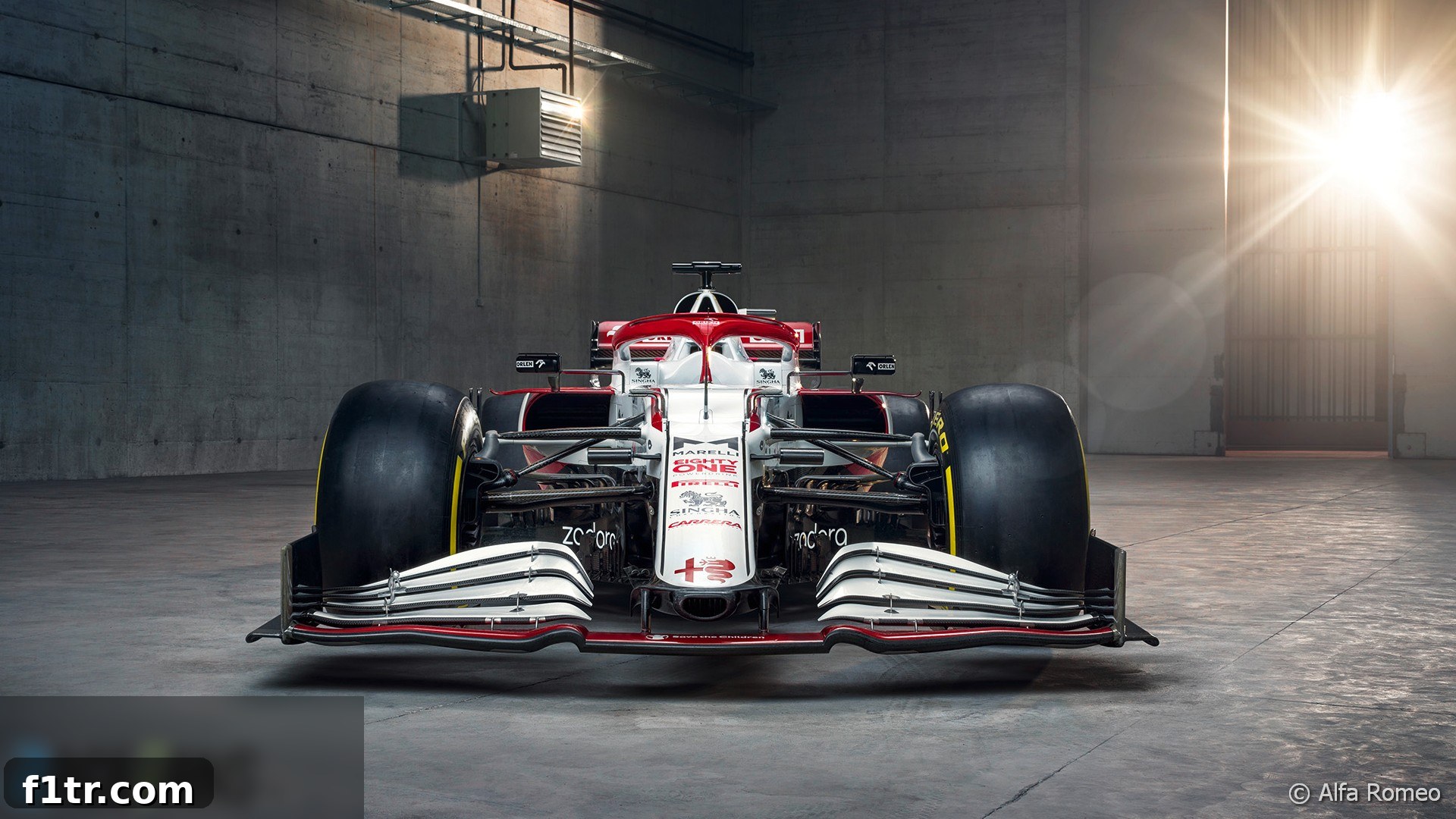
Alfa Romeo Unveils C41: A Strategic Evolution for the 2021 F1 Season
The dawn of a new Formula 1 season always brings anticipation, and for Alfa Romeo Racing ORLEN, the unveiling of their C41 chassis marks a pivotal moment. Introduced today, the most significant and visibly striking modification to their 2021 contender is a newly designed, slimmer nosecone. This strategic alteration is not merely cosmetic but represents a focused investment of their limited development resources, setting the tone for their ambitions in a uniquely challenging season.
Technical Director Jan Monchaux confirmed that the team judiciously utilized its allocated development ‘tokens’ to move away from the wider nose configuration seen on its predecessor, the C39. These development restrictions were a direct consequence of the global Covid-19 pandemic, which forced a delayed start to the 2020 championship and necessitated stringent cost-saving measures across the sport. For teams like Alfa Romeo, every design decision became a critical strategic choice, impacting not just immediate performance but also the entire season’s trajectory.
Navigating the Regulations: A Carry-Over Concept for the C41
The 2021 regulations introduced an unprecedented scenario for Formula 1 teams. “The C41 shares a lot of common parts with the C39, simply because of the regulations that were voted in as a result of the pandemic,” Monchaux explained. These rules mandated the freezing of development for several key components, meaning teams could not engineer entirely new cars from the ground up. Critical elements such as the chassis, gearbox, and various cooling system components had to be carried over directly from the previous season’s specification. This ‘carry-over’ concept presented a unique engineering puzzle, pushing teams to find innovative ways to extract performance within tight constraints.
The token system was introduced to allow for a limited degree of modification. Teams were permitted to invest a maximum of two development tokens to implement changes to their existing designs. “The regulations allow to invest two so-called development tokens to carry out changes and we chose to use them on the nosecone,” Monchaux elaborated. This decision underscores the perceived importance of the nose’s aerodynamic influence. It’s an unusual situation for Formula 1, a sport traditionally defined by relentless innovation and entirely new car designs each season. However, in the context of global economic challenges and the objective of maintaining cost control, it was a necessary and logical step for the sport’s sustainability.
The Strategic Investment: Why a Slimmer Nose?
The nosecone of an F1 car is far more than a structural component; it is a crucial aerodynamic device that dictates how airflow is managed over the front of the car and subsequently along its entire length. A slimmer nose typically allows for cleaner airflow to the underside of the chassis, the bargeboards, and ultimately the rear diffuser. This improved airflow management can significantly enhance front-end downforce, improve steering response, and optimize overall aerodynamic efficiency. By investing their precious tokens in this area, Alfa Romeo signal a clear intent to address potential front-end stability or downforce deficiencies that might have plagued the C39, aiming to provide their drivers with a more responsive and balanced car.
The departure from the wider nose seen previously suggests that the team identified this as a key area for performance gain, believing the aerodynamic advantages outweighed any structural or packaging complexities involved in the redesign. This focused approach, enabled by the token system, exemplifies how teams had to make difficult choices, prioritizing specific areas for development to maximize their limited resources.
The Crucial Three-Day Test in Bahrain: A Condensed Crucible
Adding to the challenges of car development, Alfa Romeo and their competitors faced an unprecedentedly short pre-season testing window. Traditionally, teams would enjoy several days, often spread over multiple weeks, to evaluate their new machinery. For the 2021 season, this was dramatically reduced to just three days of collective testing in Bahrain. This condensed schedule transforms testing into an intense sprint, demanding meticulous planning and flawless execution from every team.
“Testing in Bahrain will be hectic,” Monchaux predicted, acknowledging the immense pressure on the engineers and drivers. “I expect every team to put in as much mileage as possible in an attempt to tick off all the boxes on their plans.” With such limited track time, every lap becomes invaluable. Teams must prioritize reliability runs, aerodynamic correlation checks, setup optimization, and understanding the new tyre compounds – all within a fraction of the time usually allotted.
Understanding the New Pirelli Tyres
A significant element of this compressed testing period, and a critical unknown for all teams, was the introduction of new tyre specifications from Pirelli. “One of the key elements of testing will be the new tyres, which we were able to test in a couple of occasions last year, so there will be a lot of work to be done in this field,” Monchaux highlighted. While some initial testing was conducted in 2020, the full scope of their characteristics and how they interact with the new car designs remained to be thoroughly explored. Changes in tyre construction, compound, or operating window can have a profound impact on a car’s balance, performance, and strategy, making their analysis during testing paramount. The reduced window for this crucial data gathering meant teams had to be exceptionally efficient, with little room for error or technical glitches that could eat into precious track time.
Driver Stability: Alfa Romeo’s Unsung Advantage
In a season defined by continuity in car design, Alfa Romeo Racing ORLEN found a significant, perhaps underestimated, advantage in their driver lineup. Unlike many of their rivals, all but one of whom (Mercedes) featured at least one new driver in their ranks, Alfa Romeo retained the experienced duo of Kimi Raikkonen and Antonio Giovinazzi. Both drivers entered their third consecutive season with the team, fostering a level of consistency and familiarity that Monchaux believes is invaluable.
“A crucial element is that, from the very start, you know with certainty what your drivers like and what they don’t,” Monchaux stated. This deep understanding of their drivers’ preferences, driving styles, and feedback patterns is a rare commodity in the fast-paced world of Formula 1. Given that the 2021 C41 is a close evolution of last year’s C39, this continuity proved especially beneficial. “Knowing what Kimi and Antonio want, we were able to focus on mitigating the aspects they did not like,” he added. This precise targeting of development, directly informed by consistent driver feedback, allowed the engineering team to make more impactful changes using their limited tokens.
The Benefits of a Consistent Driver-Engineer Partnership
Had Alfa Romeo introduced a completely new driver, perhaps one with a significantly different driving style or a steep learning curve for the team’s operational procedures, it would have presented an additional, substantial challenge – particularly with the extremely limited testing time available. New drivers often require time to adapt to a car’s unique characteristics, and their initial feedback might not be as precise or actionable as that from a seasoned incumbent. The stability provided by Raikkonen and Giovinazzi meant engineers could hit the ground running, confident in the reliability and accuracy of the feedback they received.
This continuity allows for a more efficient diagnostic process, enabling engineers to quickly identify and address issues, fine-tune setups, and extract maximum performance from the car without the added variable of a driver adjusting to new surroundings. “The stability on the drivers’ front definitely helps our engineers focus on giving them the tools to be confident at the wheel and extract the most from the car,” Monchaux concluded. In a sport where fractions of a second can mean the difference between points and obscurity, this well-established synergy between drivers and engineers is a powerful asset.
Looking Ahead: Hopes for the 2021 Campaign
For Alfa Romeo Racing ORLEN, the 2021 season was set to be a test of their strategic acumen and resilience. With the C41, they aimed to improve upon their performance from the previous year, where they often found themselves battling in the lower midfield. The focused development on the nosecone, combined with the carry-over components, suggested a strategy of refinement rather than radical overhaul. Their stable driver lineup was poised to capitalize on this, providing consistent feedback and maximizing the car’s potential from the very first race.
The unique circumstances of the 2021 season, with its carry-over rules and compressed testing, offered a potential opportunity for teams that made smart, targeted investments and could leverage internal consistency. Alfa Romeo’s approach was a clear demonstration of this philosophy. The hope was that the C41, a product of thoughtful evolution rather than revolution, would enable Kimi Raikkonen and Antonio Giovinazzi to consistently challenge for points and elevate Alfa Romeo’s standing in the competitive Formula 1 grid.
2021 F1 season
- Masi ‘basically gifted the championship’ to Verstappen says 2021 FIA steward Sullivan
- Las Vegas race backers looking to extend F1 deal beyond 2025
- Why Mercedes put ‘a reminder of joy and pain’ on display in their factory lobby
- Verdict on error in GT race suggests Mercedes would have lost 2021 Abu Dhabi GP appeal
- Title ‘stolen’ from Mercedes made us ‘underdogs people cheer for’ – Wolff
Browse all 2021 F1 season articles