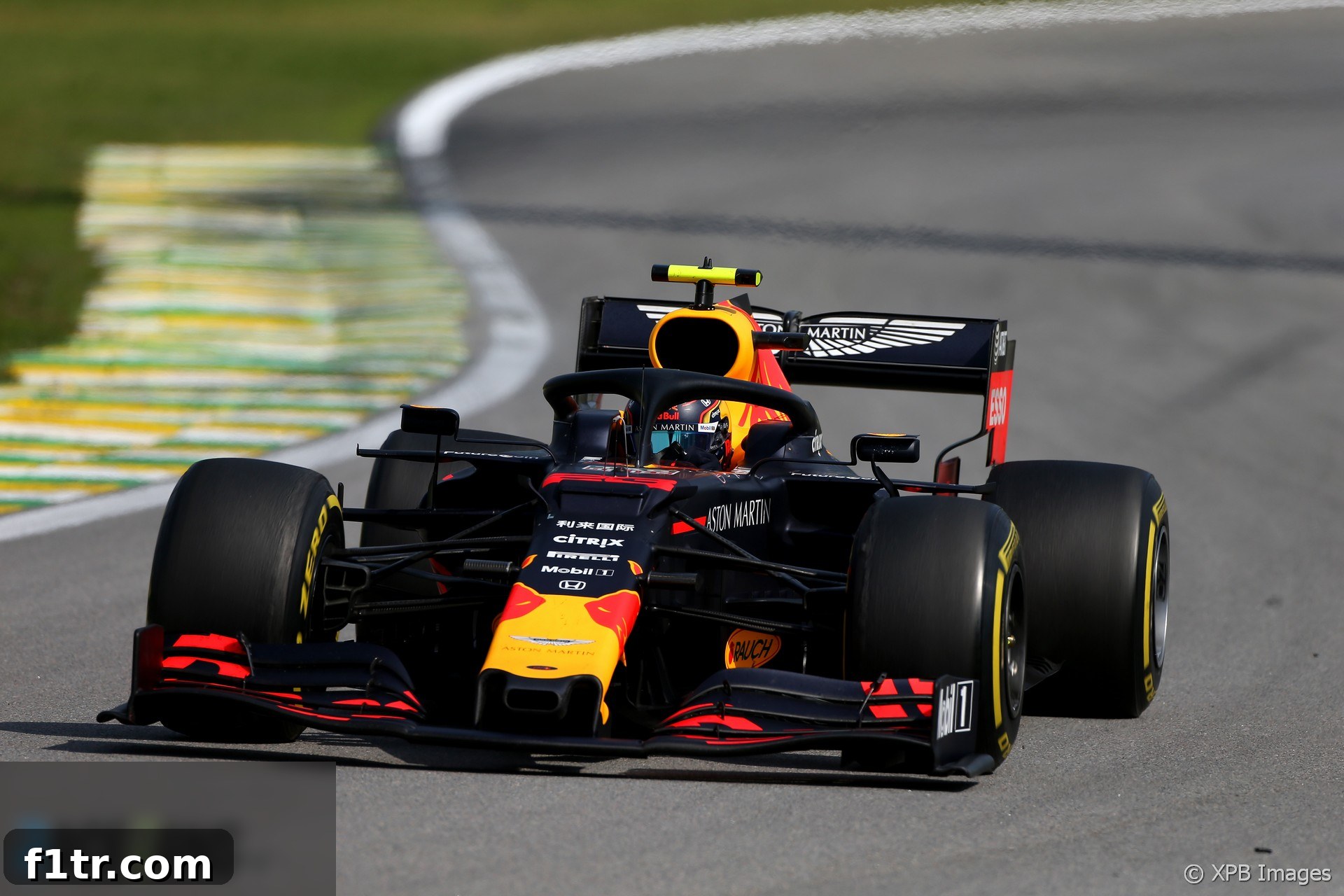
Alexander Albon, the promising young talent at Red Bull Racing, has voiced strong confidence that the crucial post-season testing opportunities will be instrumental in refining his performance and truly unlocking the full potential of his Formula 1 car. Having made a mid-season transition into one of the sport’s most competitive seats, Albon’s journey has been one of rapid adaptation under intense scrutiny. His recent confirmation as a full-time driver for the 2020 F1 season underscores the team’s belief in his capabilities, yet Albon acknowledges there’s still a significant amount of work to be done to master the formidable RB15. He views the upcoming testing sessions as an invaluable chance to delve deeper into the car’s intricacies, an opportunity rarely afforded during the demanding race weekends.
The Steep Learning Curve at Red Bull Racing
Joining an elite team like Red Bull Racing mid-season presents a unique set of challenges, even for a driver of Albon’s calibre. The transition from Toro Rosso to the senior squad meant adapting not just to a faster, more complex car, but also to a different engineering philosophy, team dynamics, and significantly higher expectations. Albon openly admits he is still identifying and conquering areas within the RB15 where he needs to enhance his comfort and control. Formula 1 cars are precision instruments, each with its own quirks and sweet spots, and extracting peak performance requires an intimate understanding that only comes with extensive track time.
The RB15, known for its agile front end and often demanding rear, requires a very specific driving style to consistently hit its maximum potential. For Albon, this adaptation involves more than just raw speed; it’s about fine-tuning his inputs, understanding tyre degradation patterns specific to the Red Bull chassis, and effectively communicating intricate feedback to his engineers. “I’m still finding areas in the car where which I know I need to work on and just feel more comfortable with,” Albon stated, highlighting the ongoing process. “But I know that’s [down to] seat time and that’s playing around with different things. Just finding that happy middle place where I’m confident in the car and I’m feeling like I can really extract that performance out of it.” This ‘happy middle place’ is crucial – it’s where a driver’s natural talent converges with the car’s design, leading to consistent, high-level performance.
The sheer complexity of modern F1 machinery means that even minute adjustments can have a profound impact on handling and lap times. Developing a consistent rhythm and pushing the car to its absolute limit requires thousands of kilometres and countless hours of analysis. Albon’s candour about his ongoing learning process is a testament to his realistic outlook and dedication to improvement, setting the stage for what promises to be a focused off-season period aimed at bridging this performance gap.
Unleashing Potential: The Indispensable Role of Testing
The limited track time during a typical Grand Prix weekend offers little scope for extensive experimentation. Free practice sessions are dominated by race simulation, qualifying preparation, and addressing immediate setup issues, leaving very little room for a driver to explore radical changes or fundamentally alter their approach. This is precisely why Albon is keenly anticipating the dedicated testing sessions. “I know it’ll take time, but that’s also why I’m looking forward to the testing post-season in Abu Dhabi and even when we have our pre-season testing,” he explained. “Of course it’s not that easy to do a lot of changes during a race weekend just because you have very limited time and not much time to experiment with the car.”
Post-season testing, traditionally held after the final race in Abu Dhabi, provides a unique low-pressure environment. For Albon, this will be an invaluable opportunity to conduct long runs, try out various setup philosophies, and even experiment with different driving lines without the intense pressure of a looming qualifying session or a race. These tests allow for a systematic approach to understanding the car’s limits, exploring its behaviour with different fuel loads and tyre compounds, and most importantly, tailoring the car to his specific driving style. Engineers can implement significant mechanical and aerodynamic changes, gathering vast amounts of data to correlate with driver feedback, all aimed at optimizing the package for the following season.
Similarly, pre-season testing, held before the start of the 2020 championship, will be equally critical. While primarily focused on validating the new season’s car, it also offers Albon more crucial seat time in a competitive environment. This is where the fruits of his post-season labour can be refined, and he can build confidence with the latest iteration of the Red Bull challenger. These dedicated test days are the crucible where a driver truly becomes one with their machine, transforming potential into palpable pace and consistency. For a driver still acclimatizing to a top-tier car and team, these structured testing windows are not merely beneficial but absolutely essential for long-term success and cementing his place within the team.
Benchmarking Against a Champion: Albon vs. Verstappen
One of the most significant metrics of a driver’s performance in Formula 1 is the comparison against their teammate. For Alexander Albon, that benchmark is none other than Max Verstappen, widely regarded as one of the fastest and most aggressive talents on the current grid. On average, Albon has been around half a second slower than Verstappen in qualifying sessions since his move to Red Bull. While this gap might seem substantial at first glance, it’s important to contextualize it: Verstappen has been with Red Bull for several years, has grown with the team and the car’s development, and possesses a prodigious natural talent honed over many seasons at the sharp end of the grid.
The half-second deficit is often not lost in one single area but is accumulated through marginal gains across various parts of the lap – perhaps a slightly earlier throttle application out of one corner, a more precise entry into another, or a better feel for the peak grip limits of the tyres. Albon understands this and remains pragmatic. “I think it’s just general driving really,” he commented, expressing his belief that the gap will naturally diminish with increased experience. “Once I can start to really push the car I will feel comfortable. That’s when the lap time will pick up.” This suggests that as he becomes more intrinsically comfortable with the RB15, his ability to extract that extra tenth or two will become second nature, allowing him to push closer to Verstappen’s formidable pace.
The learning curve in F1 is steep, and consistency is as vital as outright speed. Albon’s progress has been commendable, demonstrating strong race craft and an ability to recover from challenging situations. Closing the qualifying gap to Verstappen will be a key indicator of his continued development and his growing mastery of the Red Bull package, a challenge he appears ready to embrace with unwavering determination. The consistent pressure from a world-class teammate is an intense motivator, driving Albon to continually analyze and refine every aspect of his driving.
The Mental Game: Staying Focused Amidst Pressure
The world of Formula 1 is not just physically demanding but also intensely mentally taxing. Drivers operate under immense pressure, with every performance dissected and their future often the subject of relentless media speculation. Before his confirmation for the 2020 season, Albon found himself at the centre of such discussions, but he adopted a robust mental strategy to navigate the uncertainty. “The way I’ve been thinking about things, I’m just trying to be very in the present and not thinking about all the external stuff,” he revealed. This laser-like focus on the immediate task at hand is a crucial trait for any top athlete, especially in a sport where concentration can mean the difference between triumph and disaster.
This disciplined mindset has served him well and is something he intends to maintain. “It even carries on for now, I think I’ll just keep on doing what I’m doing for the rest of the season and then onto next year. Because knowing or not knowing wouldn’t have changed the situation, it’s still the results that count and that was my focus.” Albon’s approach highlights a profound understanding that ultimately, a driver’s destiny is shaped by their performance on track, not by rumour or conjecture. By compartmentalizing and eliminating external noise, he allows himself to dedicate his full mental energy to refining his driving, collaborating with his engineers, and delivering the best possible results.
This mental fortitude is particularly impressive given his rapid ascent through the ranks and the sudden promotion to Red Bull Racing. Maintaining such composure under pressure is not just about personal well-being; it directly translates into better on-track performance, allowing for clearer decision-making and a more consistent approach to race weekends. As he looks towards a stable future with the team, this unwavering focus on the “results that count” will undoubtedly be a cornerstone of his strategy for success.
Looking Ahead to the 2020 F1 Season
With his place firmly secured for 2020, Alexander Albon can now shift his entire focus towards maximizing his potential for the upcoming season. Red Bull Racing has ambitious goals, aiming to challenge Mercedes and Ferrari for both championships. Albon’s development is a critical component of this strategy. A strong, consistently performing second driver is essential for collecting constructor points and applying pressure on rival teams, both strategically and psychologically. The winter period, including the crucial testing sessions, will therefore be paramount for Albon to solidify his understanding of the Red Bull package and ensure he hits the ground running when the new season begins.
The synergy between driver and team is vital in Formula 1. Albon’s ability to provide detailed and accurate feedback will be crucial for the engineers to further develop the RB16 (or whatever the 2020 car will be named). His growing confidence and comfort in the car will enable him to push the boundaries, providing Red Bull with two strong challengers capable of fighting for podiums and potentially wins. The journey from a mid-season replacement to a confirmed full-time driver at a top team is a testament to Albon’s talent and resilience. With the invaluable testing opportunities on the horizon and a clear focus on continuous improvement, Alexander Albon is poised to make significant strides in his Formula 1 career and become an even more formidable force for Red Bull Racing in 2020 and beyond.
More from the 2019 F1 Season
- Crying in the Melbourne car park at 2019 grand prix was my career low – Ocon
- McLaren Racing reports reduced £71 million loss in 2019
- Kvyat: Hockenheim podium last year was “my biggest achievement” so far
- How the FIA’s new encrypted fuel flow meter targets Ferrari’s suspected ‘aliasing’ trick
- “He smashed my office door”: 23 must-see moments from ‘Drive to Survive’ season two
Browse all 2019 F1 season articles