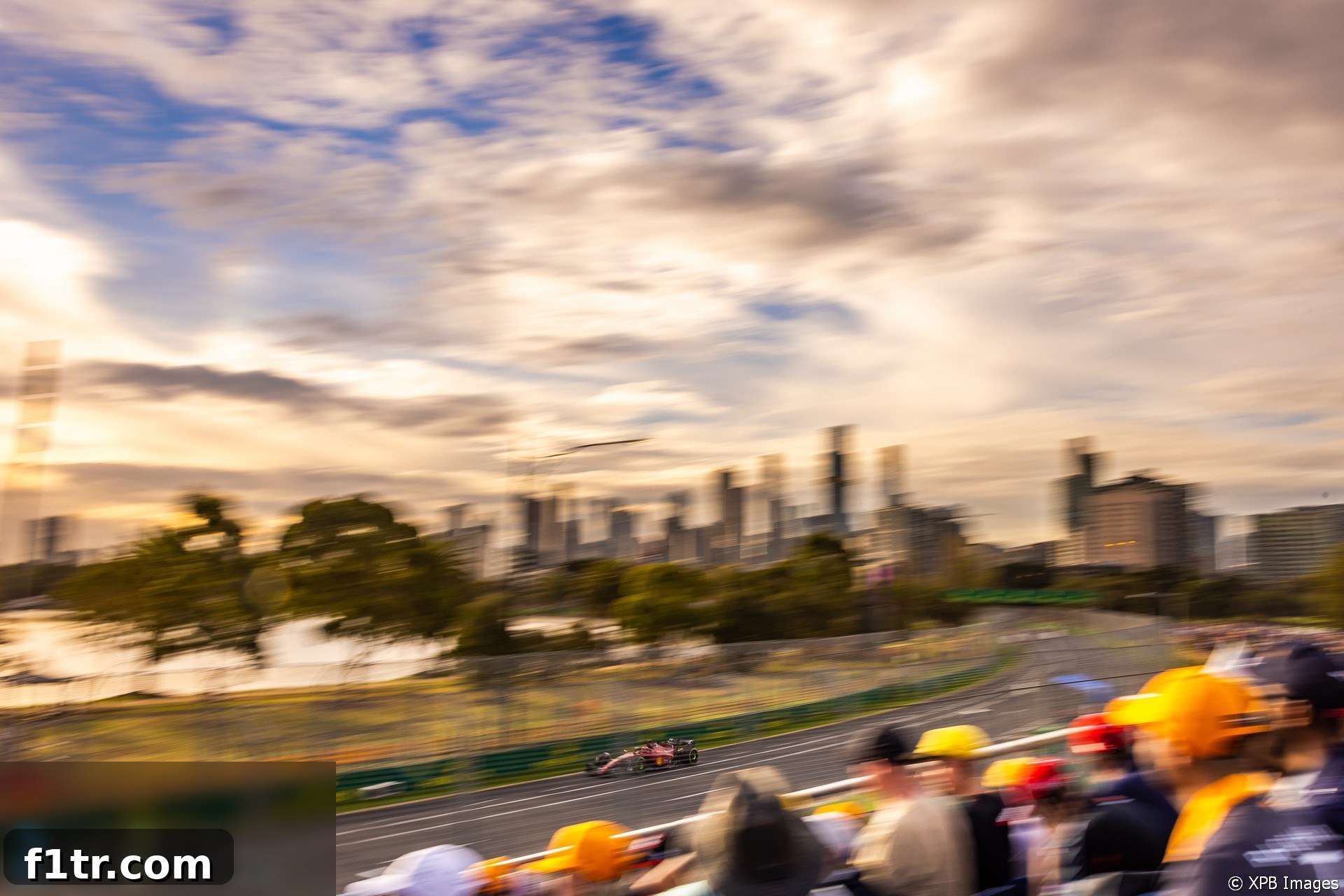
Formula 1 drivers have largely welcomed the extensive modifications to the iconic Albert Park circuit ahead of this weekend’s much-anticipated Australian Grand Prix. The consensus among the grid suggests that these changes are poised to significantly enhance the on-track action and inject new life into what has sometimes been a procession-like race.
The alterations, meticulously planned and executed by the track operators, go far beyond a simple facelift. Key revisions include the removal of one of the slower chicanes, particularly affecting Turns 9 and 10, which previously hampered overtaking opportunities. Additionally, several corners have been strategically widened, offering drivers more diverse lines and greater potential for side-by-side racing. Complementing these changes, Turn 11 has been tightened, demanding more precision and potentially creating further chances for drivers to capitalize on mistakes or differing approaches. The overarching objective of these modifications is clear: to foster more dynamic racing and encourage a substantial increase in overtaking maneuvers, addressing a long-standing criticism of the circuit’s previous layout.
One of the most vocal proponents of the revamped circuit is local hero Daniel Ricciardo. The McLaren driver, who notably provided direct input during the planning stages of the modifications to his home track, expressed palpable optimism after his initial runs on the reconfigured course during Friday practice sessions. His insights offer a unique perspective, blending local knowledge with the demands of modern F1 racing.
“I think it will be better,” Ricciardo confidently stated, reflecting on the potential impact of the changes. While tempering expectations against over-exaggeration, he added, “Is it going to be 10 times better? Probably not to that extent, but I think it will be some degree better.” Ricciardo underscored that the circuit changes are not operating in isolation. He highlighted the synergistic effect with the addition of an extra DRS (Drag Reduction System) zone, which empowers drivers with more overtaking tools, and the inherent design philosophy of the 2022 F1 cars, which are engineered to follow each other more closely than their predecessors. This combination, he believes, is crucial.
“If there’s not more overtaking, I think you’re going to see at least closer racing and more kind of nose-to-tail [action],” he predicted, emphasizing that even without a dramatic increase in overtakes, the spectacle will be improved by continuous battles. Despite his optimism, Ricciardo maintained a cautious stance, aware that race day dynamics can often defy practice predictions. “I think we’ll get a fun one Sunday, but I’m cautious not to oversell it because I honestly don’t know what the track will be,” he admitted. Nevertheless, his personal experience was overwhelmingly positive: “But the main thing today is it was an enjoyable driving experience.” This sentiment from a driver who knows the circuit intimately speaks volumes about the quality of the revisions.
Max Verstappen, the reigning world champion, who demonstrated his pace by finishing second-quickest behind Charles Leclerc on the opening day, also offered his approval, particularly praising the extensive resurfacing work undertaken on the street circuit. The smooth new asphalt has significantly altered the driving characteristics and improved the overall feel for the drivers.
“It’s good, the track grip is quite nice. The bumps definitely improved, it’s a bit smoother,” Verstappen observed. The removal of traditional street circuit bumps not only enhances comfort but fundamentally changes how drivers can approach the corners. “But I think it actually makes the track nicer as well because you can attack the corners a bit better now, being a bit more smooth,” he explained. This ability to be more aggressive on entry and through the apex can shave precious tenths off lap times and open up new racing lines. Verstappen concluded with a straightforward endorsement: “So they did a good job with that, I enjoyed my laps today.” His comments highlight the importance of surface quality in enabling drivers to extract maximum performance and push the limits.
Not all drivers shared an entirely rosy view of the changes, however. Lando Norris, Ricciardo’s McLaren teammate, articulated a nuanced perspective, suggesting that while beneficial for racing, the track might have sacrificed some of its unique character. “It’s a big change,” he conceded. “Honestly, I think it’s lost a little bit of the characteristic that it had.”
Norris expressed a degree of nostalgia for the older layout, which he had grown up watching on television and had come to associate with the Australian Grand Prix. “The track from a few years ago was the track that I’ve watched on TV for many years. So I kind of got to drive that and that was the Australia that I knew,” he reflected. This sentiment highlights the emotional connection drivers, and fans, often have with established circuits. Yet, he was quick to acknowledge the inevitable march of progress and the rationale behind the modifications: “But times change and I think for good reasons, it’s to make the racing better and make it more exciting.” Ultimately, his on-track experience confirmed the intended outcome: “From what I felt today, it seems like it’s in that direction so it’s a good thing.”
The higher cornering speeds now achievable at Albert Park have also translated into a more physically demanding experience for the drivers, as Norris elaborated. The combination of faster sections and the newly laid Tarmac presents a tougher challenge, requiring immense concentration and stamina. “It’s very easy to make mistakes. I don’t know if it’s just these cars or the combination of this Tarmac and the cars because you’ve seen a lot of people going on the gravel and locking the fronts and so on,” he pointed out, referring to the various errors observed during practice. “It’s difficult to put it all together and stay consistent.” This increased margin for error adds another layer of excitement for viewers, as even the most skilled drivers can be caught out.
“But it’s exciting, it’s fast as well, physically it’s a bit tougher than what it used to be,” Norris affirmed, embracing the challenge. The current generation of F1 cars are designed for incredible high-speed performance, and the revised Albert Park accentuates this. “And these cars they’re very fast in the high speed, so turn nine-10, the fast chicane feels very fast already,” he added, referring to the section that replaced the removed chicane, now a sweeping, high-speed sequence. “So it’s good fun.” Crucially for the racing, Norris also provided a positive assessment of the cars’ ability to follow each other, a critical factor for improved racing: “I think on the following side of it as well, I did a bit and it seems good and I think the race is going to be good as well.”
The Rationale Behind Albert Park’s Transformation
The decision to overhaul Albert Park stemmed from a desire to elevate the Australian Grand Prix’s reputation as a pure racing spectacle. While beloved for its picturesque setting and early-season slot, the circuit’s original layout, characterized by several medium-to-slow speed chicanes and tight sections, often made genuine overtaking a rare commodity. Drivers frequently found themselves in a high-speed procession, unable to get close enough to challenge their rivals without losing aerodynamic performance.
The primary architectural change involved the modification of Turns 9 and 10, which were previously a tight right-left chicane. This section has now been transformed into a much faster, sweeping sequence, effectively creating a new, flowing sector that significantly increases the average speed of the lap. This not only makes the track more challenging but also allows cars to carry more speed onto the following straight, crucial for setting up overtakes.
Beyond this major alteration, corners like Turn 1, Turn 3, Turn 6, and Turn 13 have been widened. This seemingly minor adjustment is pivotal. By offering a broader entry and a more expansive apex, drivers are presented with multiple racing lines, encouraging them to try different approaches and potentially allowing two cars to run side-by-side through the corner where before only one could dominate the optimal line. Turn 11, conversely, has been tightened, creating a more acute braking zone that can force drivers into errors or open up strategic opportunities for rivals to pounce.
The extensive resurfacing, as praised by Max Verstappen, plays an equally vital role. A smoother, more consistent surface enhances grip levels, reduces wear on tires, and allows the advanced aerodynamics of modern F1 cars to perform optimally. This translates to increased confidence for drivers, enabling them to push harder and explore the limits of their machinery without the distraction of unpredictable bumps.
Crucially, an additional DRS zone has been integrated into the revised layout. This fourth zone complements the physical track changes by providing drivers with an extra tool to overcome the aerodynamic drag of the car ahead, creating a strategic element to overtaking where drivers must judge precisely when and where to deploy their DRS for maximum effect. These modifications collectively aim to transform Albert Park from a high-speed, technical challenge into a circuit that actively promotes wheel-to-wheel combat.
The Synergy of 2022 Regulations and Track Evolution
The timing of the Albert Park circuit modifications is particularly pertinent, coinciding with the introduction of Formula 1’s radical new technical regulations for the 2022 season. These regulations were specifically designed to address the perennial problem of dirty air, which made it incredibly difficult for cars to follow each other closely, especially through high-speed corners. The new ground-effect aerodynamics generate downforce from the underbody of the car, significantly reducing the turbulent air that previously hampered following cars.
When combined with a track layout specifically engineered to encourage closer racing and overtaking, the potential for a truly thrilling spectacle is amplified. The wider corners at Albert Park, for instance, allow the new generation cars to utilize their ability to follow more closely, offering more diversified lines into and out of turns. The removal of the restrictive chicane promotes higher speeds and better flow, reducing the accordion effect that often bunched cars up but prevented actual racing.
Furthermore, the strategic placement of four DRS zones provides drivers with additional moments to gain an advantage. In the past, DRS was often criticized for creating artificial overtakes. However, when combined with cars that can genuinely follow and battle through corners, DRS becomes a tactical element that facilitates genuine passing opportunities rather than simply guaranteeing them. The Albert Park transformation, therefore, represents a perfect storm of circuit development and regulatory overhaul, aiming to deliver the best possible on-track action for fans and drivers alike.
Anticipating Race Day: A Promising Spectacle
The collective sentiment from the F1 paddock suggests that the Australian Grand Prix is poised to deliver a significantly more engaging and unpredictable race than in previous years. The blend of a faster, more flowing circuit, combined with the capabilities of the 2022 generation cars, and the strategic addition of an extra DRS zone, paints a promising picture for an event renowned for its vibrant atmosphere.
While some drivers, like Lando Norris, acknowledged a slight shift in the circuit’s character, the overriding sentiment is that these changes are a necessary and welcome evolution. The increased physical demands will test driver endurance and precision, while the expanded overtaking opportunities are expected to keep fans on the edge of their seats from the first lap to the last. The Australian Grand Prix at the reimagined Albert Park circuit is not just a race; it’s a statement about Formula 1’s ongoing commitment to pushing the boundaries of competitive motorsport and delivering an unforgettable experience.
2022 Australian Grand Prix
- Aston Martin’s porpoising “does not allow us to exploit the progress the guys have made”
- Wolff puts Mercedes’ odds of championship victory at “two to eight”
- FIA responds to Verstappen’s criticism of Safety Car performance
- “So this is the end of our race, I guess?” How Alonso’s luckless Australian GP unfolded
- Two-degree temperature rise led to Hamilton’s “difficult position” radio message
Browse all 2022 Australian Grand Prix articles