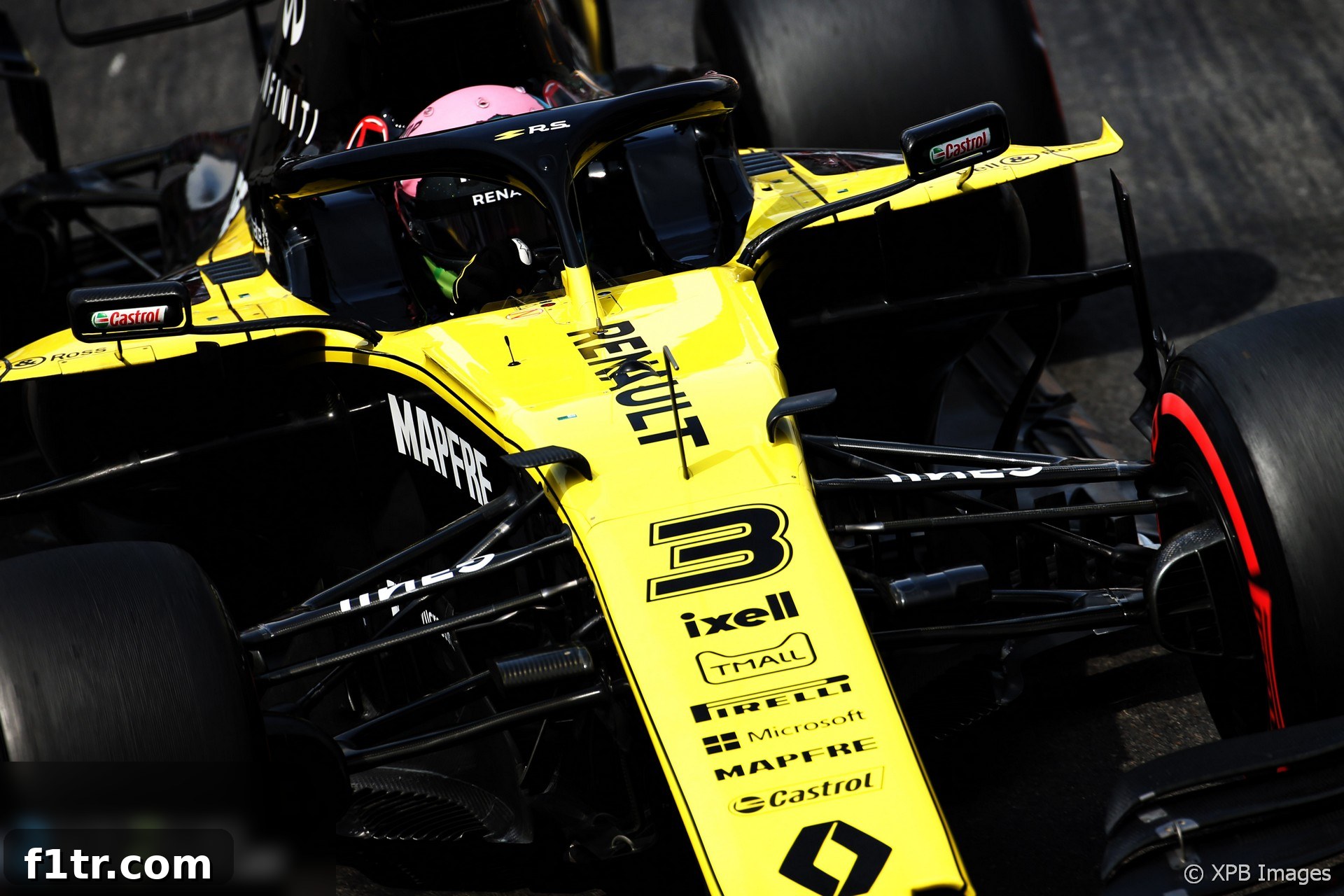
In the fiercely competitive world of Formula 1, where every fraction of a second can dictate success or failure, the performance of a power unit is paramount. For years, Renault has toiled to elevate its engine program to challenge the established front-runners. Recent assessments from McLaren Technical Director James Key suggest that the French manufacturer has finally achieved a significant breakthrough, making what he believes to be its most substantial performance step yet with its Formula 1 power unit.
Key, a highly respected figure in the paddock, brings a unique perspective to this observation. Having transitioned to McLaren from Toro Rosso, a team that relied on Renault’s V6 hybrid turbo engines for the majority of the past five seasons, his insight into the development trajectory of the Renault power unit is particularly valuable. His firsthand experience allows for a direct comparison, highlighting the palpable progress made during the recent off-season. “I have to say they’ve made some really good steps forward this year with their engine,” Key remarked, emphasizing the extent of the improvement. He continued, stating, “It’s been the best I’ve ever seen Renault at in terms of their performance step.”
The sentiment from Key is not merely anecdotal; it is substantiated by concrete evidence. He noted, “You can see that in the data as well which is very encouraging.” This data-driven confirmation is crucial, as it indicates a measurable and verifiable uplift in horsepower and efficiency, rather than just a subjective feeling. This objective improvement, according to Key, has also fostered a renewed sense of confidence within the Renault engine division. “I think since I worked with them last they’ve grown in confidence. So it’s a pleasure to work with them again,” he added, underscoring the positive psychological impact of their engineering advancements.
The significance of this performance leap cannot be overstated. In modern Formula 1, the power unit is a complex piece of engineering, combining internal combustion, energy recovery systems, and sophisticated electronics. A major step forward implies a deep understanding and optimization of these interconnected components. For Renault, a manufacturer with a rich history in Formula 1 but one that has sometimes struggled to match the raw pace of rivals like Mercedes and Ferrari in the hybrid era, this progress marks a potential turning point. It suggests that years of investment and hard work are finally bearing fruit, pushing them closer to the sharp end of the grid.
Adding further weight to Key’s assessment, Renault’s lead driver, Daniel Ricciardo, has also spoken positively about the gains, particularly in the crucial area of qualifying performance modes. Historically, Renault had lagged behind its competitors when it came to unleashing maximum power for a single lap – a critical factor for securing advantageous grid positions. Ricciardo, known for his incisive feedback and ability to push a car to its limits, confirmed that the team has made clear strides in this department. Both Ricciardo and his team mate Nico Hulkenberg openly praised the team for their advancements after qualifying in Monaco, a track where engine performance, particularly in terms of torque delivery and drivability, can make a significant difference.
Ricciardo elaborated on his experience with the updated power unit, stating, “Our quali mode was, I felt, pretty strong.” He drew a direct comparison to his previous season, providing tangible evidence of the improvement. “My reference from last year, obviously, I’m pulling an extra gear before some apexes and stuff like that. And so definitely a year on it’s a lot better.” This detail illustrates how the increased power and improved energy management allow drivers to utilize higher gears more effectively, enhancing corner exit speeds and overall lap time. The Australian driver even suggested that the progress was continuous, noting, “I think even from China, which was our last little step, it’s getting there. We actually have a real qualifying mode this year.” This statement is particularly telling, as it implies a level of optimization and power deployment that was previously out of reach for the team.
The ability to deploy a robust qualifying mode is not merely about raw horsepower; it encompasses sophisticated software mapping, efficient energy recovery, and optimized fuel flow. For Renault to have made such visible progress indicates a comprehensive effort across multiple engineering disciplines. In a sport where pole position can often be half the race, having a competitive qualifying mode is indispensable for maximizing a team’s potential on race day. It allows drivers to start in cleaner air, avoid midfield skirmishes, and execute their race strategies more effectively, ultimately leading to better championship outcomes.
However, the path to sustained performance in Formula 1 is rarely straightforward. Renault has had to contend with a significant challenge: reliability. At the beginning of the season, the power unit experienced issues that necessitated careful management and development. Daniel Ricciardo acknowledged that this ongoing battle with reliability might impose constraints on how quickly the team can fully unlock the remaining performance potential from their current design. The delicate balance between extracting maximum power and ensuring the engine can withstand the rigors of a full race distance is one of the most complex equations in F1 engineering.
“I definitely feel like it’s in the right direction now. The nice thing is there’s still more to come and they see that,” Ricciardo explained, indicating optimism for future advancements. Yet, he also provided a realistic assessment of the immediate hurdles: “But it’s just getting the reliability is what’s going to hold us up from going that step further. We could squeeze a bit more [in Monaco], even on a low-power circuit you could feel it come to fruition. So some little positives.” This highlights the inherent trade-off; engineers often have to de-tune engines slightly or run them below their absolute peak performance to ensure they complete the race without failures. Once reliability is fully addressed, the true potential of Renault’s improved power unit can be unleashed, benefiting not only the factory team but also their customer, McLaren.
The implications of Renault’s engine progress extend beyond just their factory team. As an engine supplier to McLaren, the improvements directly impact the competitive landscape for both outfits. A stronger power unit from Renault allows McLaren to also elevate its performance, potentially making the midfield battle even fiercer and pushing both teams closer to the front. This dynamic adds an intriguing layer to the championship, demonstrating how engine development can reverberate throughout the entire grid, challenging the dominance of long-standing engine benchmarks like Mercedes and Ferrari. Ultimately, a more competitive power unit contributes to a more thrilling and unpredictable Formula 1 season, benefiting fans and the sport as a whole.
Looking ahead, the focus for Renault will undoubtedly remain on consolidating their performance gains while meticulously addressing any lingering reliability concerns. The confidence expressed by James Key and Daniel Ricciardo serves as a strong indicator that the underlying engineering principles and development direction are sound. If Renault can successfully marry its newfound performance with bulletproof reliability, the factory team could genuinely aspire to challenge for podiums more consistently, and McLaren could solidify its position as a leading midfield contender, potentially threatening the established top teams on certain circuits. The evolution of the Renault F1 power unit is a narrative worth following closely as the season progresses, promising to add an exciting dimension to the Formula 1 championship.
Further Reading from the 2019 F1 Season
- Crying in the Melbourne car park at 2019 grand prix was my career low – Ocon
- McLaren Racing reports reduced £71 million loss in 2019
- Kvyat: Hockenheim podium last year was “my biggest achievement” so far
- How the FIA’s new encrypted fuel flow meter targets Ferrari’s suspected ‘aliasing’ trick
- “He smashed my office door”: 23 must-see moments from ‘Drive to Survive’ season two
Browse all 2019 F1 season articles