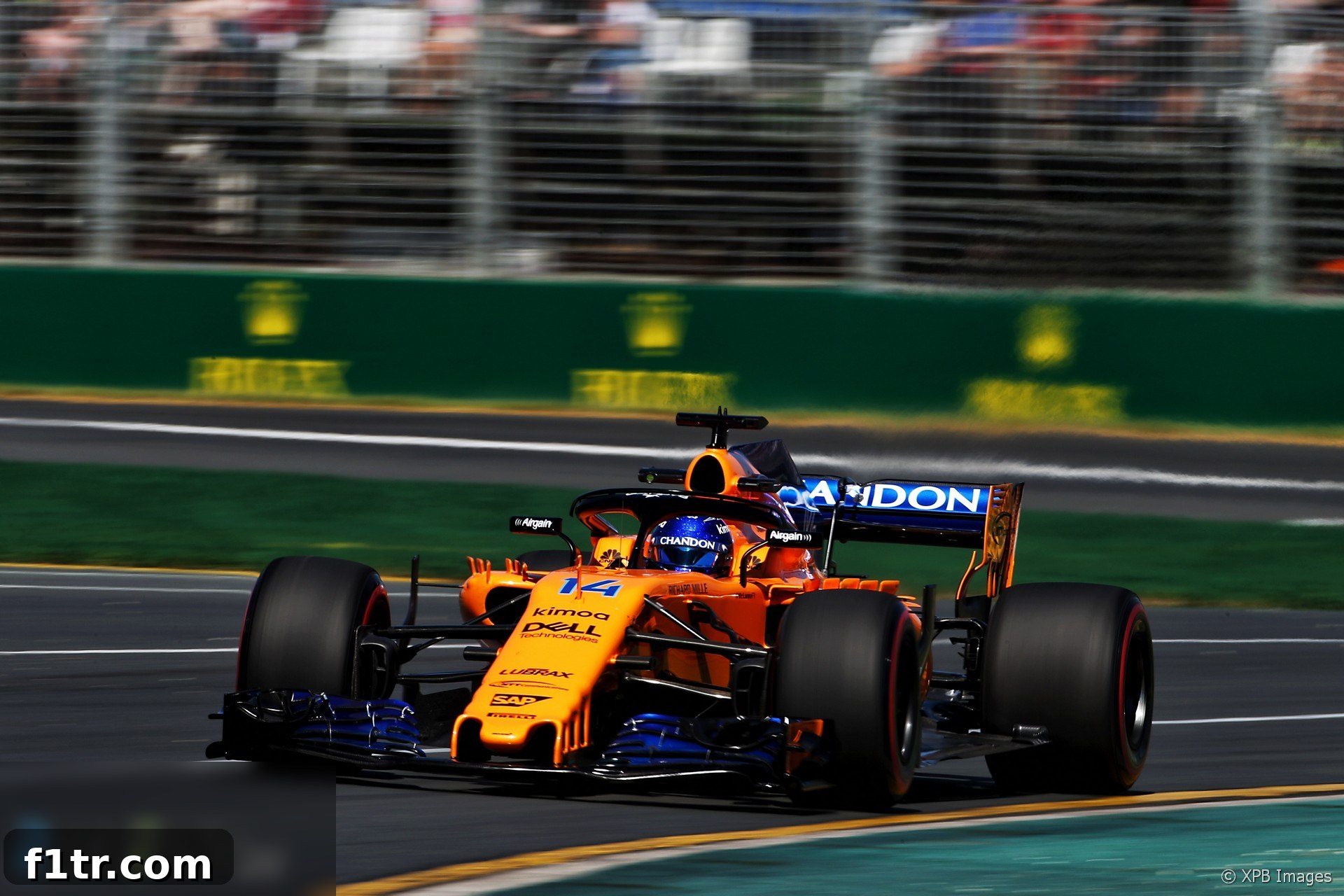
Fernando Alonso and McLaren Defy Early Setbacks with Strong Australian GP Practice Showing
The highly anticipated 2018 Formula 1 season kicked off with the Australian Grand Prix, bringing with it a renewed sense of optimism and scrutiny for the McLaren team. After a challenging pre-season marked by a fundamental power unit change, all eyes were on how the Woking-based squad, led by the formidable Fernando Alonso, would perform. Despite encountering an early exhaust problem that hindered their initial running, McLaren demonstrated remarkable resilience and pace during the first day of practice at Albert Park.
Early Setbacks and a Resilient Recovery in Melbourne
The opening free practice session (FP1) saw a tense start for McLaren fans as neither Fernando Alonso nor his teammate Stoffel Vandoorne managed to set a timed lap during the crucial first hour of running. This was due to an exhaust issue on Alonso’s car, a problem that echoed some of the technical gremlins experienced during pre-season testing. However, the team’s swift response and engineers’ efforts paid off, allowing them to make up for lost time in the subsequent session.
“We lost a little bit of time in FP1 with some issues,” Alonso explained, addressing the concerns. “We managed to recover everything in FP2.” This quick recovery was a vital sign of the team’s operational efficiency and ability to troubleshoot under pressure, a critical attribute for any competitive F1 outfit. The initial scare could have derailed their day, but McLaren managed to regroup effectively, ensuring they collected valuable data for the remainder of the weekend.
Surpassing Expectations: Both McLaren Drivers in the Top 10
Just the day before practice, Fernando Alonso had offered a cautious, if not pessimistic, forecast for the Australian Grand Prix weekend, suggesting it would likely be McLaren’s “weakest showing the year.” This prediction was rooted in the understanding that the complex integration of the new Renault power unit, a significant technical undertaking, would require time to fully optimize. Teams often face a steep learning curve after such a fundamental change, and the season opener can expose any lingering teething problems.
However, the practice sessions painted a surprisingly positive picture. Defying Alonso’s own pre-weekend assessment, both he and Stoffel Vandoorne consistently placed their MCL33 cars inside the top 10 during both FP1 and FP2. This strong performance, especially given the earlier technical hiccup, immediately boosted spirits within the garage and among their supporters. A top 10 finish in practice is often an indicator of competitive potential for qualifying and the race, suggesting that McLaren might be closer to the front-runners than initially anticipated.
This unexpectedly strong showing in the early stages of the season is a testament to the hard work undertaken by the entire McLaren team. From the design and manufacturing of the chassis to the complex task of integrating the new power unit and the diligent work of the mechanics and engineers on track, every department has been pushing to extract performance. The practice results offer a glimmer of hope that the team’s struggles in recent years might be firmly behind them as they embark on this new chapter with Renault power.
The Fundamental Shift: McLaren’s Power Unit Transition Explained
Alonso’s comments about the team’s continuous improvement are particularly insightful given McLaren’s recent history. The switch from Honda to Renault engines represented a monumental undertaking, not merely a simple swap. Integrating a completely different power unit architecture into an existing chassis concept requires extensive redesigns, recalibrations, and meticulous optimization of cooling, aerodynamics, and weight distribution. This “fundamental change,” as Alonso described it, is why expectations were tempered, and why any early success is magnified.
“We will get better and better, that’s logical,” Alonso stated with conviction. “We are the only team doing this fundamental change on the car with the power unit. So we will get better and better but hopefully we will also be competitive from day one here.” His statement encapsulates the dual reality for McLaren: an acknowledgment of the inherent development curve required post-engine switch, coupled with an ambitious desire to be competitive immediately. The sheer complexity of adapting to a new power unit means that performance gains are typically incremental, achieved through continuous testing, data analysis, and iterative design improvements throughout the season.
The fact that McLaren is the only team undergoing such a significant power unit transition for 2018 means they are in a unique position. While other teams fine-tune existing concepts, McLaren is essentially re-engineering much of its package. This journey implies a steeper initial learning curve but also potentially greater upside as they unlock the full potential of the Renault engine, renowned for its strong performance and reliability compared to their previous supplier. The Albert Park practice sessions provided the first real-world data points on this crucial journey.
Strategic Gambits: Tyres and the Unpredictable Australian Weather
Beyond raw pace, Formula 1 is also a game of strategy, and Fernando Alonso’s sharp tactical mind was already at work dissecting the potential race scenarios. Pirelli’s tyre compounds are always a significant talking point, and for the Australian Grand Prix, the softer compounds were expected to offer a range of strategic options. Alonso noted the interesting characteristics of the available tyres, which could lead to varied approaches from different teams.
“All three tyres look quite similar in a way,” he observed. “So I think it will be definitely some different strategies for different teams.” This perceived similarity between compounds – likely referring to their degradation characteristics or lap time difference – suggests that teams might have more flexibility in their race strategies, potentially leading to exciting multi-stop or single-stop variations. Understanding the nuances of each compound and how they perform over a race stint is crucial for maximizing performance and securing points.
However, Alonso, ever the realist, quickly brought attention to the biggest unknown factor in Melbourne: the weather. Albert Park is notorious for its unpredictable conditions, and rain can completely upend carefully crafted race plans. “But I think the weather will be the biggest factor. Maybe rain tomorrow, maybe rain on Sunday and we don’t see any of the purple or yellow tyres,” he speculated. The “purple” ultra-soft and “yellow” soft tyres, which are typically favoured in dry conditions for outright pace or durability respectively, could become irrelevant if heavy rain necessitates intermediate or wet tyres. A wet race would level the playing field, making driver skill and timely strategy calls even more paramount, potentially playing into the hands of an experienced driver like Alonso.
A Glimmer of Hope for the Season Ahead
The initial practice sessions for the 2018 Australian Grand Prix have provided McLaren and Fernando Alonso with a much-needed morale boost. Overcoming an early technical issue to put both cars consistently in the top 10 is a strong indication that the team’s new partnership with Renault is off to a promising start. While it’s only practice, and the true pecking order will only be revealed in qualifying and the race, these results suggest that McLaren might be more competitive than many had dared to hope after a challenging period.
Alonso’s leadership and ability to extract every ounce of performance from the car will be crucial as McLaren continues its development curve. His tactical insights into tyre strategy and the potential impact of weather underline his comprehensive approach to racing. For now, the team’s focus will be on analyzing all the data gathered from Friday’s sessions to “do the best package for tomorrow,” aiming to translate their practice pace into strong qualifying positions and, ultimately, valuable championship points.
The Road Ahead: Challenges and Opportunities
While the strong practice performance is encouraging, McLaren remains acutely aware of the challenges that lie ahead. The intricate nature of Formula 1 means that even small adjustments can yield significant performance changes, and rivals will undoubtedly be working just as hard to optimize their own packages. The real test will come in qualifying, where ultimate single-lap pace is demonstrated, and in the Grand Prix itself, where consistency, reliability, and race craft are paramount. The Australian Grand Prix merely represents the first step in a long and arduous season.
However, the initial signs are unequivocally positive. McLaren has shown that despite undergoing a significant technical transition, they possess the engineering talent and the driving prowess to compete towards the sharp end of the midfield, and perhaps even challenge some of the established top teams on certain weekends. The journey to fully unlock the potential of their new package will be long, but the practice sessions in Melbourne have certainly provided a strong foundation upon which to build, injecting a renewed sense of purpose and excitement into McLaren’s 2018 campaign.
Go ad-free for just £1 per month>> Find out more and sign up
Related Content: Insights from the 2018 F1 Season
Delve deeper into the events and narratives that shaped the exciting 2018 Formula 1 season with these relevant articles, providing further context and analysis on key moments and team developments:
- F1 feared “death knell” for Drive to Survive after Ferrari and Mercedes snub
- McLaren staff told us we were “totally crazy” to take Honda engines in 2018 – Tost
- ‘It doesn’t matter if we start last’: How Red Bull’s junior team aided Honda’s leap forward
- Honda’s jet division helped F1 engineers solve power unit problem
- McLaren Racing losses rise after Honda split
Browse all 2018 F1 season articles