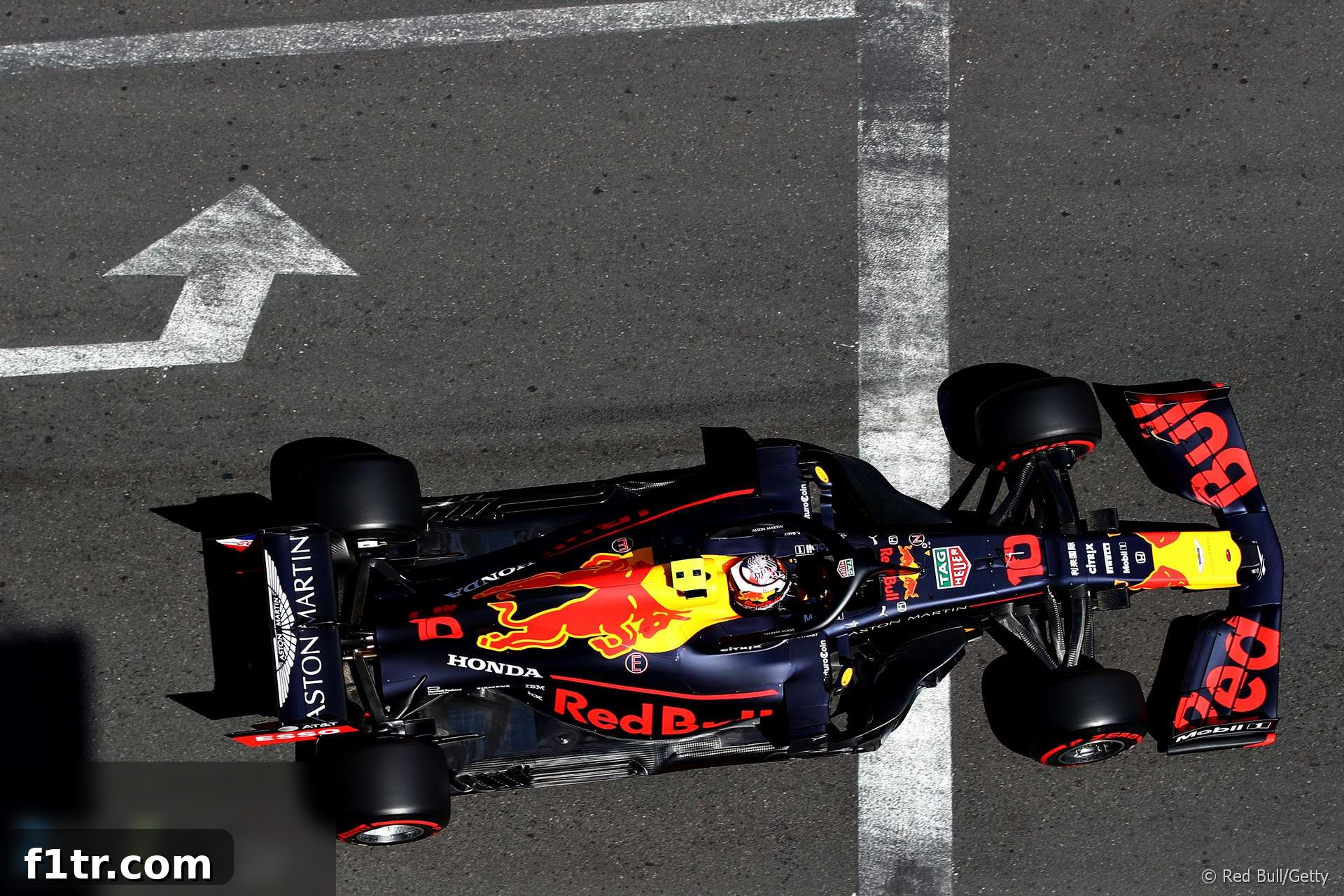
The exhilarating world of Formula 1 is a realm where precision, speed, and adherence to intricate regulations dictate success. For Pierre Gasly, his participation in the 2019 Azerbaijan Grand Prix was marred even before the lights went out, as a seemingly minor infraction during Friday’s second practice session led to a significant penalty. The Red Bull driver was mandated to start the race from the pit lane, a decision that sparked considerable debate and discussion across the F1 paddock and among fans.
The core of the issue revolved around Gasly’s failure to stop at the mandatory weigh bridge during FP2. While some observers and even segments of the F1 community deemed the penalty unduly harsh given the circumstances, the stewards’ ruling was, in fact, entirely consistent with precedents set in previous seasons. Formula 1 regulations are meticulously designed to ensure fair competition and uphold sporting integrity, and even seemingly trivial breaches can carry substantial consequences, as Gasly discovered.
The specific regulation under which Gasly was penalized is Article 29.1 (a) of the FIA Formula 1 Sporting Regulations. This clause unequivocally states: “Any driver who fails to stop when asked to do so, and then fails to bring the car back to the FIA garage, or if work is carried out on the car before it is returned to the FIA garage, will be required to start the race from the pit lane.” This regulation is not new; it has been an integral part of the sporting framework for several years, ensuring that all teams and drivers are fully aware of the strict protocols surrounding technical inspections, including weight checks.
The weigh bridge procedure is a critical component of technical scrutineering in Formula 1. It serves to verify that cars comply with the minimum weight requirements set by the FIA, ensuring no team gains an unfair advantage through underweight machinery. Drivers are signaled to stop at the weigh bridge via clear, illuminated signs positioned at the pit lane entry. These signals display the car number and the driver’s three-letter acronym, leaving little room for ambiguity. Compliance is non-negotiable, and the severity of the pit lane start penalty reflects the FIA’s commitment to maintaining a level playing field.
Gasly’s incident, while unfortunate, was not an isolated case in the recent history of Formula 1. Indeed, a few of his contemporary rivals have also fallen afoul of this very same regulation, underscoring the FIA’s consistent application of the rules. One notable instance involved Carlos Sainz Jnr during the 2015 Monaco Grand Prix weekend. Sainz, then driving for Toro Rosso, received a pit lane start after failing to stop at the weigh bridge during a practice session. The notoriously tight and demanding street circuit of Monaco makes any disadvantage particularly punitive, highlighting the severity of such a penalty in a race where track position is paramount.
The following year, Kevin Magnussen found himself in an identical predicament. At the 2016 Bahrain Grand Prix, while driving for Renault, Magnussen also failed to stop at the weigh bridge during a practice session and was subsequently handed the same pit lane start penalty. These instances serve as stark reminders that the regulation is applied universally, irrespective of the driver’s experience or the team’s standing. Gasly’s transgression marked the first time a driver had incurred this specific penalty since Magnussen three years prior, bringing the rule back into sharp focus.
The details surrounding Gasly’s incident add further layers to the narrative. Coincidentally, when Gasly was summoned to the weigh bridge at the conclusion of second practice, Kevin Magnussen’s Haas car was already present, undergoing its mandatory weight check. It is plausible, though speculative, that seeing Magnussen’s car already there might have subconsciously led Gasly to assume he would not also be called in, contributing to a momentary lapse in attention. However, the signals on the right-hand side of the pit lane were unmistakably indicating Gasly’s car number (10) and his three-letter acronym, ‘GAS’.
As Gasly entered the pits, he was reportedly focused on specific instructions from his race engineer, who advised him to “attack pit entry, focus on the marks.” This directive is common, encouraging drivers to maintain speed and precision even during pit entries to maximize track time and practice race-like conditions. Gasly executed this, even correcting a slight snap of oversteer as he navigated the challenging chicane on the pit entry. It appears that his intense concentration on these critical driving aspects, combined with the inherent demands of pushing a Formula 1 car to its limits, meant he was simply too preoccupied to notice the crucial signals instructing him to divert to the weigh bridge.
The situation, however, wasn’t solely Gasly’s oversight. The rules also provide a potential recourse: once a driver misses the weigh bridge, the team still has an opportunity to rectify the situation by bringing the car to the scales for weighing before any work is carried out on it. This crucial step could have potentially mitigated or even completely avoided the penalty. Unfortunately for Gasly and Red Bull, this was not done either. This collective oversight, encompassing both the driver’s missed signal and the team’s subsequent inaction, ultimately sealed Gasly’s fate, leading directly to his sanction.
Having to start a Formula 1 Grand Prix from the pit lane is undeniably a major setback. It means relinquishing any qualifying position gained, beginning the race behind all other competitors, and immediately facing the challenge of navigating through the field. For a driver like Gasly, who was still finding his footing at Red Bull Racing in the early stages of the 2019 season, this added pressure was significant. However, neither Gasly nor his Red Bull team could genuinely claim to feel hard done by the ruling. The regulation is clear, the precedents are established, and the responsibility ultimately rests with the team and driver to adhere to all sporting directives.
Despite the considerable disadvantage, Gasly and Red Bull could at least draw some measure of consolation from the unique characteristics of the Baku City Circuit, the venue for the Azerbaijan Grand Prix. Unlike many other tracks on the F1 calendar, Baku is renowned for its long straights and relatively straightforward overtaking opportunities, particularly into Turn 1. This characteristic makes it a circuit where cars with strong straight-line speed, like the Red Bull-Honda package, can often make good progress through the field. Furthermore, the tight, winding castle section of the track, combined with the high speeds on other parts, frequently leads to incidents and subsequent Safety Car periods.
Safety Car deployments in Formula 1 races are often significant game-changers, as they effectively neutralize any existing gaps between cars and allow those who might have fallen behind, or started from the back, to close up to the main pack. This offers a strategic lifeline to drivers starting from the pit lane, providing opportunities to pit under caution and potentially gain track position without losing as much time as a normal pit stop. Therefore, while a pit lane start is always detrimental, Baku offered Gasly a comparatively better chance of recovery than many other circuits on the calendar, where overtaking is more challenging and Safety Cars are less frequent.
The incident served as a powerful reminder of the meticulous attention to detail required in Formula 1, not just in car design and driving, but also in regulatory compliance. It highlighted the unwavering stance of the FIA stewards in applying the rules consistently, regardless of the perceived minor nature of an infraction. For Pierre Gasly, it was a valuable, albeit costly, lesson in the importance of every signal and every procedure in the high-stakes environment of Grand Prix racing, setting the stage for a challenging but potentially thrilling race from the very back of the pack.
Magnussen and Gasly’s Weigh Bridge Signals
At the conclusion of second practice, observers noted how Kevin Magnussen had clearly seen the signal instructing him to stop at the weigh bridge. In contrast, images and telemetry from Gasly’s car showed him driving past the very same type of signals that were illuminated specifically for him, indicating a missed directive.
This stark visual contrast between a driver successfully complying and another missing the instruction further emphasized the importance of driver awareness within the pit lane. It served as a clear illustration of how such crucial procedural elements are communicated to drivers during the intense and high-pressure environment of a Formula 1 practice session.
2019 F1 season
- Crying in the Melbourne car park at 2019 grand prix was my career low – Ocon
- McLaren Racing reports reduced £71 million loss in 2019
- Kvyat: Hockenheim podium last year was “my biggest achievement” so far
- How the FIA’s new encrypted fuel flow meter targets Ferrari’s suspected ‘aliasing’ trick
- “He smashed my office door”: 23 must-see moments from ‘Drive to Survive’ season two
Browse all 2019 F1 season articles