The Critical Role of Reserve Drivers in F1: Navigating the Unexpected
Formula 1, a sport synonymous with speed, precision, and unwavering competition, operates on tight margins where every detail, including driver availability, can significantly impact a team’s fortunes. In an era redefined by global health challenges, the role of a capable reserve driver has escalated from a ‘nice-to-have’ to an absolute necessity. The championship’s chairman and CEO has firmly stated that races will proceed even if a driver tests positive for Covid-19, underscoring the sport’s determination to race on and the pivotal importance of contingency planning. “An individual having been found with a positive infection will not lead to a cancellation of a race,” he articulated earlier this month. “If a driver has an infection, [teams have] reserve drivers available.”
This directive highlights the immediate and practical challenge facing all ten Formula 1 teams. While the hope remains for a smooth resumption of racing with no recurrence of the positive Covid-19 tests that infamously led to the cancellation of the season-opening Australian Grand Prix, teams must be impeccably prepared for any eventuality. The delicate balance of driver talent, experience, and the stringent FIA Superlicence requirements adds layers of complexity to this crucial aspect of team management. From top-tier contenders to midfield battlers, the question of ‘who steps in?’ is one that demands a clear and actionable answer, often involving intricate arrangements and strategic partnerships.
For several teams, identifying a replacement driver might seem straightforward, relying on directly contracted reserves or a robust junior programme. However, the situation becomes more intricate for others, especially those at the sharp end of the grid, where potential solutions could involve ‘borrowing’ drivers from smaller customer teams, thereby creating a fascinating web of inter-team dependencies. Furthermore, some teams have appointed reserve drivers who, despite their talent, do not yet possess the requisite FIA Superlicence points to compete in Formula 1. While theoretical dispensations can be granted to drivers who haven’t accumulated the minimum 40 points on their licences, securing such approval via a World Motor Sport Council vote within the tight constraints of a race weekend is often impractical. Teams are, understandably, reluctant to place their race weekend in the hands of a potentially time-consuming and uncertain bureaucratic process, making a readily race-qualified backup option an incredibly sensible and often essential strategic move.
Team-by-Team Contingency Plans: Who Steps In When It Matters Most?
The F1 paddock is a melting pot of talent, and behind every star driver is a network of potential replacements, each with their own unique pathway to the pinnacle of motorsport. Let’s delve into the specific arrangements each team has in place should one of their primary drivers be unavailable.
Mercedes-AMG Petronas F1 Team
Mercedes, the reigning champions, boast a strong and experienced lineup of reserve drivers, ensuring they are well-prepared for any unexpected circumstances. Their two primary named reserve drivers are both former Formula 1 racers who possess the experience and readiness to seamlessly slot into a top-tier F1 car: Stoffel Vandoorne and Esteban Gutierrez. Vandoorne, who joined the Mercedes fold in February, brings recent competitive experience from Formula E, where he races for the Mercedes-EQ team, currently on hiatus. Gutierrez, meanwhile, has a history of performing demonstration runs for the team, maintaining his familiarity with F1 machinery. While Vandoorne’s recent addition means he hasn’t yet been seen in a physical (non-virtual) Mercedes F1 car, his pedigree is undeniable.
Beyond their direct reserves, Mercedes holds a strategic advantage through its extensive junior driver program and customer team relationships. Prominently, junior driver George Russell is placed at Williams, a team that uses Mercedes power units. The possibility of promoting Russell, who has impressed immensely during his time at Williams, is a tantalizing prospect. Mercedes might indeed prefer to elevate someone with more recent F1 race experience and direct knowledge of the team’s hardware. Intriguingly, arrangements are already in place for Vandoorne or Gutierrez to race for other teams, implying that loaning one of them out to Williams as a replacement for Russell could be a viable option, effectively creating a driver swap. Russell, who has openly lobbied Toto Wolff for a chance to drive the Mercedes, would undoubtedly seize such an opportunity with both hands, making this a win-win scenario for all parties involved should the need arise.
Scuderia Ferrari
For the iconic Scuderia Ferrari, the immediate solution for a driver replacement lies with Antonio Giovinazzi, who serves as their named reserve driver. Should either Charles Leclerc or Sebastian Vettel be unable to compete, Ferrari’s gaze would naturally turn towards Alfa Romeo Racing ORLEN, where Giovinazzi currently holds a full-time F1 race seat. This arrangement underscores the symbiotic relationship between Ferrari and its customer teams, allowing for strategic driver movements when contingencies are required. Giovinazzi’s experience driving for Alfa Romeo means he is intimately familiar with current F1 cars and race procedures, making him a ‘race-ready’ option. Ferrari also retains ex-F1 racer Pascal Wehrlein on its books as a simulator driver, providing an additional layer of technical support and a potential, albeit less likely, emergency call-up should the primary options be exhausted or unavailable due to conflicting commitments.
Red Bull Racing
Red Bull Racing, known for its dynamic driver academy and aggressive approach, also has robust contingency plans. If a reserve driver is needed for either Max Verstappen or Alexander Albon, the team could potentially see Formula E stalwart Sébastien Buemi return to the F1 grid for the first time since 2011. Buemi’s extensive experience, including prior F1 race starts with Toro Rosso (now AlphaTauri) and his current role as a test and reserve driver for Red Bull, makes him a highly credible option. Alternatively, Red Bull might choose to exercise its influence over its sister team, AlphaTauri, by recalling either Pierre Gasly or Daniil Kvyat. This strategic move would then necessitate placing Buemi at AlphaTauri, illustrating the internal flexibility within the Red Bull family. A third viable option is Sergio Sette Câmara, who finished an impressive fourth in F2 last year and has accrued sufficient Superlicence points to make his F1 debut. His youth and recent F2 success make him an exciting prospect, although a direct jump into a Red Bull Racing seat might be considered a high-pressure debut.
McLaren F1 Team
McLaren, a team undergoing a resurgence, has secured a pragmatic solution for their reserve driver needs. Ahead of their planned switch to Mercedes power units next year, McLaren has already forged an arrangement to utilize one of Mercedes’ reserve drivers if required. This means that should Carlos Sainz or Lando Norris be unavailable, the Woking-based team could see Stoffel Vandoorne make a return to his old team. This partnership provides McLaren with access to highly experienced and race-ready drivers without the overhead of maintaining their own full-time reserve, a sensible move given the complexities of current F1 regulations and logistics.
Renault F1 Team
Renault’s nominated reserve driver, Guanyu Zhou, represents a promising future talent. He was the top rookie in Formula 2 last year and notably secured victory in Formula 1’s inaugural Virtual Grand Prix, showcasing his skill and adaptability. However, the 21-year-old from Shanghai currently faces a significant hurdle: he does not yet possess sufficient FIA Superlicence points to race in F1. This situation highlights the challenges young drivers face in accumulating the necessary points within a specific timeframe. If Renault needed an immediate replacement for Daniel Ricciardo or Esteban Ocon, they would have to look elsewhere or seek an unlikely dispensation for Zhou. In such a scenario, the team could potentially turn to Sergey Sirotkin, their previous reserve driver, who raced in F1 for Williams two years ago and possesses the full Superlicence necessary to compete.
AlphaTauri
As Red Bull’s sister team, AlphaTauri benefits from the same pool of talent. They can also readily make use of Sébastien Buemi’s services should either Pierre Gasly or Daniil Kvyat be unable to race. This shared resource strategy offers both Red Bull teams flexibility. However, AlphaTauri’s primary focus on nurturing Red Bull’s Junior Team drivers means that while they have several promising young talents, none of Red Bull’s nine drivers currently on its Junior Team line-up have yet accumulated enough Superlicence points to make their F1 debut. This underscores the challenge of balancing future talent development with immediate operational readiness in F1.
BWT Racing Point F1 Team
Similar to McLaren, Racing Point, another customer team of Mercedes, has secured an agreement to call upon Mercedes’ reserve drivers if the need arises. This partnership provides Racing Point with access to highly qualified and experienced drivers like Stoffel Vandoorne or Esteban Gutierrez, ensuring they have robust contingency plans in place without the necessity of a dedicated reserve program. This collaborative approach highlights the practical advantages of customer team relationships in modern Formula 1.
Alfa Romeo Racing ORLEN
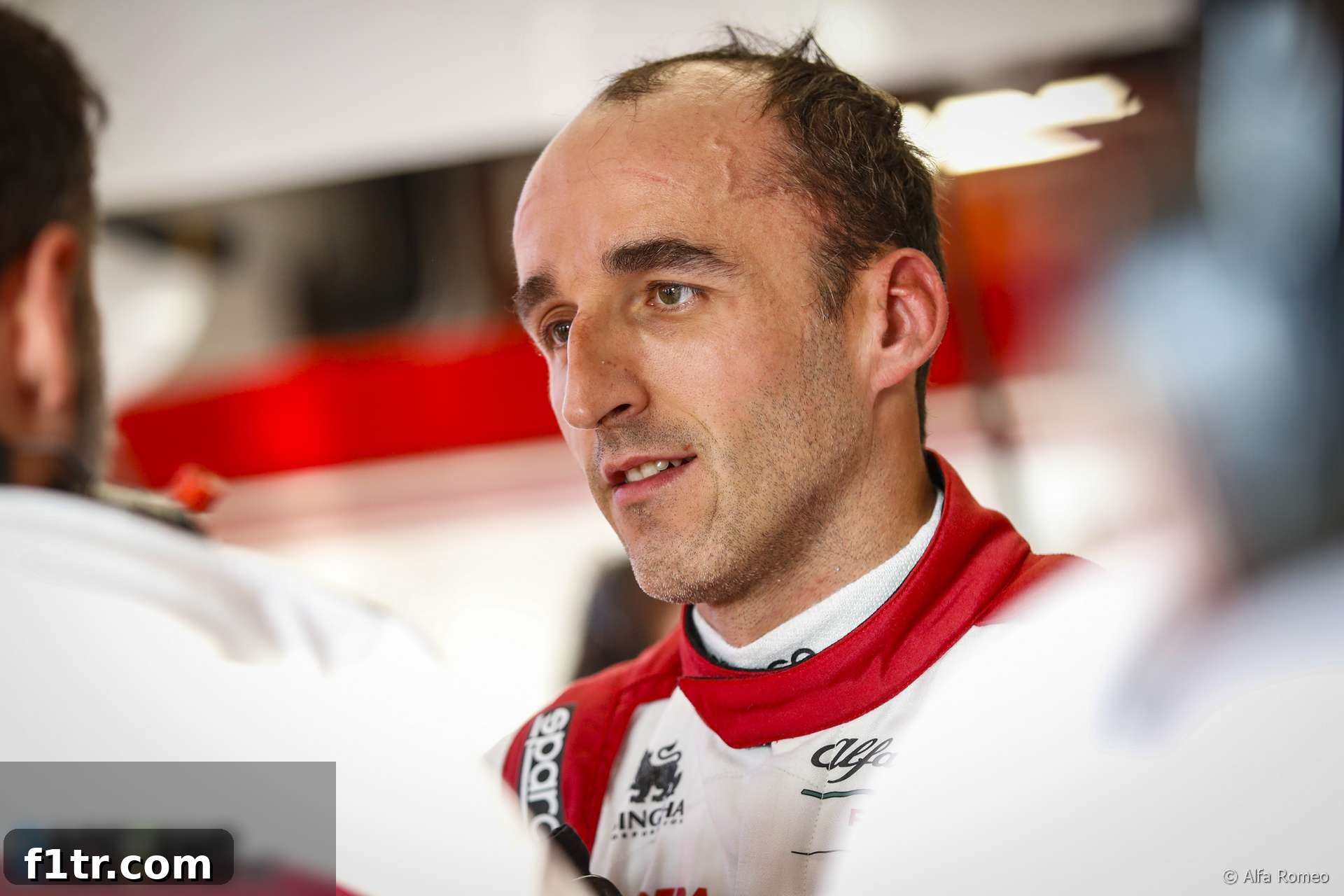
For Alfa Romeo Racing, the experienced Robert Kubica stands as a primary and highly capable reserve option. Kubica could potentially make a return to the F1 grid if either Kimi Räikkönen or Antonio Giovinazzi is sidelined. Indeed, if Ferrari were to call upon Giovinazzi as their reserve, Kubica would become the most logical choice for Alfa Romeo. His intimate familiarity with the C39, having driven for the team in pre-season testing, makes him an immediately viable candidate. However, Kubica is also slated to race in the DTM series this year, which could lead to clashing commitments. If his DTM schedule prevents him from fulfilling F1 reserve duties, the team might consider Pascal Wehrlein, Ferrari’s simulator driver and a former Sauber (now Alfa Romeo) racer, as a sensible appointment. Wehrlein’s prior F1 experience and current simulator role keep him sharp and ready for action.
Haas F1 Team
Haas F1 Team has appointed Louis Deletraz and Pietro Fittipaldi as their reserve drivers. Both drivers carry notable motorsport legacies, with Fittipaldi being the grandson of two-time F1 champion Emerson Fittipaldi. However, neither Deletraz nor Fittipaldi has yet accumulated the necessary Superlicence points to qualify for an F1 race start. This presents a challenge for Haas, as they would either need to seek a dispensation from the FIA for one or both drivers—a process fraught with uncertainty, especially on a race weekend—or look to external options. The decision of whether to pursue a dispensation or explore alternative, fully qualified drivers remains a significant strategic consideration for the American team.
Williams Racing
Williams Racing, a team with a rich history, has a promising new reserve driver in Jack Aitken. While Aitken hasn’t yet raced in F1, he was scheduled to make his first practice session run this year, indicating the team’s confidence in his abilities. Aitken finished as runner-up to George Russell in GP3 in 2017 and secured fifth place in Formula 2 last year, crucial results that have earned him sufficient FIA Superlicence points to make his F1 debut. This means that if Williams had to call upon him to replace Nicholas Latifi or George Russell, he would be immediately eligible to compete, providing the team with a reliable and fully qualified backup option, a testament to the effectiveness of their driver development pathway.
Conclusion: The Unsung Heroes of a Challenging Season
In a Formula 1 season poised to be unlike any other, the role of reserve drivers has become undeniably critical. Beyond the headlines and the glory of the podium, these individuals represent the crucial safety net that allows the championship to continue navigating unforeseen challenges. From the complexities of Superlicence points to strategic inter-team loans, the process of ensuring a full grid for every race is a testament to the sport’s resilience and adaptability. As teams brace for a demanding schedule, the readiness, experience, and eligibility of their backup drivers will be paramount, highlighting them as the unsung heroes capable of stepping into the cockpit when it truly matters.
View the current list of 2020 F1 drivers and teams
2020 F1 season
- Grosjean to make F1 test return tomorrow for first time since Bahrain horror crash
- Pictures: Wrecked chassis from Grosjean’s Bahrain fireball crash to go on display
- Bottas vs Rosberg: Hamilton’s Mercedes team mates compared after 78 races each
- F1 revenues fell by $877 million in Covid-struck 2020 season
- Hamilton and Mercedes finally announce new deal for 2021 season
Browse all 2020 F1 season articles