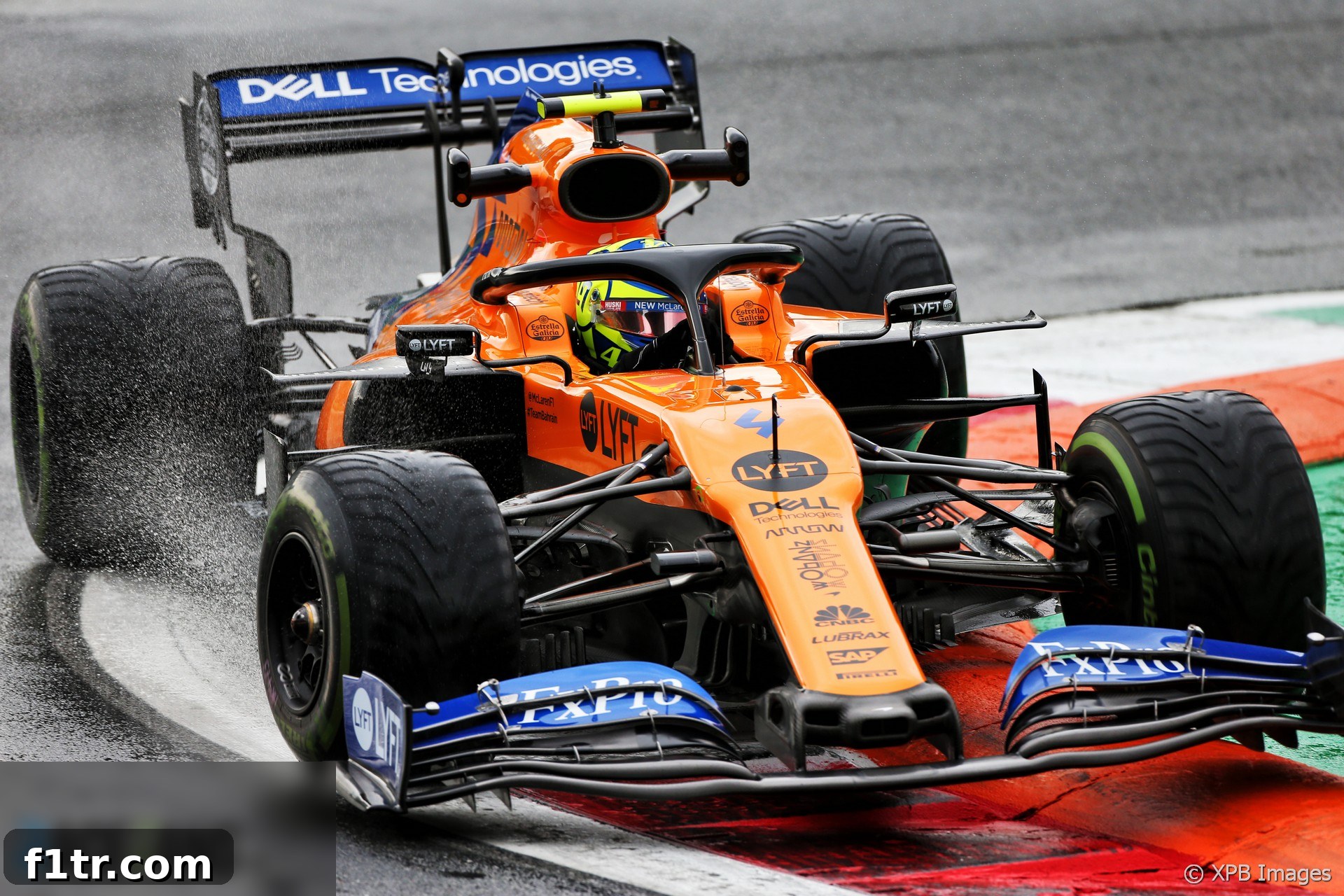
The highly anticipated Italian Grand Prix at the legendary Monza circuit is set to deliver thrilling racing, but not without its customary pre-race drama. A significant storyline unfolding in the paddock revolves around strategic power unit changes, which will see several prominent drivers facing grid penalties. This year, the “Temple of Speed” will witness Lando Norris, Max Verstappen, and Pierre Gasly starting from the back of the grid, a consequence of exceeding their season’s allocation for crucial power unit components. These penalties underscore the relentless technical and strategic challenges faced by Formula 1 teams in managing the complex hybrid power units throughout a demanding championship season.
Formula 1’s regulations are meticulously designed to control costs and promote a level playing field, particularly regarding the use of power unit components. Each driver is allocated a limited number of specific power unit elements for an entire season. Exceeding these allowances triggers mandatory grid penalties, typically ranging from five or ten places for the first infringement on a given component, escalating to a full back-of-the-grid start for more extensive changes. This system forces teams to make critical decisions about component management, weighing the risk of mid-season reliability issues against the performance gains of fresh parts, often choosing circuits like Monza where overtaking is traditionally more feasible to absorb such penalties.
One of the key drivers impacted is McLaren’s Lando Norris. Following a disappointing retirement on the penultimate lap of the Belgian Grand Prix, his team has confirmed a power unit change. While Norris will retain his existing set of control electronics, a largely new Renault power unit will be fitted to his car. This change means he will join Verstappen and Gasly at the very rear of the starting grid. The incident in Spa highlighted the fine margins teams operate within, and McLaren’s decision reflects a proactive approach to ensuring reliability and performance for the remaining races, even at the cost of a challenging start at Monza. For Norris, a young and promising talent, this presents an uphill battle at a circuit that demands maximum engine performance, but also offers opportunities for recovery with its long straights.
Advert | Become a Supporter & go ad-free
Joining Norris at the back are Max Verstappen and Pierre Gasly, both driving Honda-powered cars. As previously announced by Honda, both drivers will be fitted with complete new power units. This move often signifies a strategic decision by the manufacturer to introduce an upgraded specification or to address reliability concerns proactively. For Red Bull Racing’s Verstappen, a complete power unit change implies a reset, providing fresh components for the crucial latter stages of the season where championship points are fiercely contested. Similarly, for Gasly, now with Toro Rosso, this could offer a much-needed boost in performance and reliability after a challenging period. Honda’s decision to deploy new units for both their factory-backed Red Bull and sister team Toro Rosso suggests a coordinated effort to optimize performance and prevent future issues, carefully selecting Monza as the venue to minimize the impact of the grid drops on their overall season objectives.
Meanwhile, other drivers have also faced power unit complexities at Monza. Lando Norris’s McLaren teammate, Carlos Sainz Jnr, experienced a power unit problem at the start of the Belgian Grand Prix. However, McLaren engineers have demonstrated their expertise by successfully salvaging his power unit, allowing him to run it again in practice sessions at Monza. This remarkable feat of engineering is crucial, as it saves Sainz from incurring a grid penalty that could severely compromise his weekend. Avoiding such a penalty can be the difference between a points finish and a fruitless race, highlighting the relentless work behind the scenes to maintain the delicate balance of performance and longevity in these highly stressed components.
The home crowd favorites, the two Ferrari drivers, are also utilizing new power unit components for their Italian Grand Prix campaign. Sebastian Vettel and Charles Leclerc are running new engines (Internal Combustion Engine – ICE), turbochargers (TC), and MGU-Ks (Motor Generator Unit – Kinetic). Crucially, these are the last new examples of these specific parts they can introduce without incurring penalties under the current regulations. This strategic timing ensures Ferrari can leverage maximum performance at their home race, a high-speed circuit where engine power is paramount, without the burden of starting further down the grid. The pressure on Ferrari at Monza is always immense, and having fresh, potent components will be vital in their quest for a strong result in front of the Tifosi.
Understanding the F1 Power Unit: The Heart of Modern Racing
To fully appreciate the strategic decisions and penalties, it’s essential to understand the intricate components that make up a modern Formula 1 hybrid power unit. These units are marvels of engineering, designed for both extreme performance and energy efficiency. Each driver is permitted a finite number of these components for the duration of the season, typically 3 or 4 depending on the specific part, which makes their management a constant strategic chess game.
Here’s a breakdown of the key elements:
- ICE (Internal Combustion Engine): This is the traditional gasoline-powered engine, the core power generator. F1 engines are V6 turbocharged units, highly optimized for power and fuel efficiency. Exceeding the allocation for the ICE often results in significant penalties.
- TC (Turbocharger): The turbocharger compresses air entering the engine, significantly boosting power output. It works in conjunction with the MGU-H. Its reliability is paramount for consistent performance.
- MGU-H (Motor Generator Unit – Heat): This innovative component recovers energy from the exhaust gases, converting heat energy into electrical energy. This recovered energy can then be stored in the Energy Store or deployed directly to the MGU-K. The MGU-H is one of the most complex and sensitive parts of the hybrid system.
- MGU-K (Motor Generator Unit – Kinetic): The MGU-K recovers kinetic energy during braking, similar to KERS systems of the past. This energy is also stored in the Energy Store and can be deployed to provide an instant power boost to the rear wheels during acceleration, adding a strategic element to driving.
- ES (Energy Store): Commonly known as the battery, the ES stores the electrical energy harvested by the MGU-H and MGU-K. The capacity and efficiency of the ES are crucial for consistent power deployment and energy management over a race distance.
- CE (Control Electronics): The ‘brain’ of the power unit, the CE manages all the complex interactions between the ICE, turbocharger, and the two MGU units. It dictates when energy is recovered, stored, and deployed, ensuring optimal performance and compliance with technical regulations.
The interdependence of these components means that a failure in one can often necessitate the replacement of others, compounding the penalty situation. The constant development of these parts by manufacturers like Mercedes, Ferrari, Honda, and Renault is a major factor in the pecking order of the sport.
Power Unit Parts Used So Far: A Glimpse into Season-Long Strategy
The table below provides a comprehensive overview of the power unit components each driver has utilized up to this point in the season. Analyzing this data reveals the varying degrees of reliability across manufacturers and the strategic decisions made by individual teams. Drivers who have used a higher number of components are naturally at greater risk of incurring penalties in the remaining races, creating tension and requiring careful planning for every Grand Prix.
| No. | Car | Engine | Driver | ICE | TC | MGU-H | MGU-K | ES | CE |
|---|---|---|---|---|---|---|---|---|---|
| 10 | Toro Rosso | Honda | Pierre Gasly | 6 | 5 | 5 | 5 | 3 | 3 |
| 27 | Renault | Renault | Nico Hulkenberg | 6 | 4 | 4 | 3 | 2 | 3 |
| 26 | Toro Rosso | Honda | Daniil Kvyat | 5 | 5 | 5 | 4 | 3 | 3 |
| 55 | McLaren | Renault | Carlos Sainz Jnr | 5 | 4 | 4 | 4 | 4 | 3 |
| 3 | Renault | Renault | Daniel Ricciardo | 5 | 4 | 4 | 3 | 3 | 3 |
| 4 | McLaren | Renault | Lando Norris | 4 | 4 | 4 | 4 | 4 | 3 |
| 99 | Alfa Romeo | Ferrari | Antonio Giovinazzi | 4 | 4 | 4 | 2 | 2 | 4 |
| 23 | Red Bull | Honda | Alexander Albon | 4 | 4 | 4 | 3 | 3 | 3 |
| 33 | Red Bull | Honda | Max Verstappen | 4 | 4 | 4 | 3 | 3 | 3 |
| 18 | Racing Point | Mercedes | Lance Stroll | 4 | 4 | 4 | 2 | 1 | 1 |
| 63 | Williams | Mercedes | George Russell | 3 | 3 | 3 | 2 | 3 | 3 |
| 20 | Haas | Ferrari | Kevin Magnussen | 3 | 3 | 3 | 2 | 2 | 3 |
| 5 | Ferrari | Ferrari | Sebastian Vettel | 3 | 3 | 3 | 2 | 2 | 3 |
| 7 | Alfa Romeo | Ferrari | Kimi Raikkonen | 3 | 3 | 3 | 2 | 2 | 2 |
| 8 | Haas | Ferrari | Romain Grosjean | 3 | 3 | 3 | 2 | 2 | 2 |
| 77 | Mercedes | Mercedes | Valtteri Bottas | 3 | 3 | 3 | 2 | 2 | 2 |
| 44 | Mercedes | Mercedes | Lewis Hamilton | 3 | 3 | 3 | 2 | 2 | 2 |
| 16 | Ferrari | Ferrari | Charles Leclerc | 3 | 3 | 3 | 2 | 2 | 2 |
| 11 | Racing Point | Mercedes | Sergio Perez | 3 | 3 | 3 | 2 | 1 | 1 |
| 31 | Williams | Mercedes | Robert Kubica | 3 | 3 | 3 | 2 | 1 | 1 |
As observed, Pierre Gasly and Nico Hulkenberg have already used six Internal Combustion Engines, significantly above the standard allocation, hence their impending penalties or past ones. This suggests either a more aggressive development cycle from Honda/Renault or inherent reliability challenges. Mercedes-powered cars generally show lower usage across the board, indicating a strong emphasis on reliability from the German manufacturer. The varying numbers for Energy Stores and Control Electronics also highlight that failures can be specific to different parts of the complex power unit ecosystem. Teams continuously monitor these figures, making real-time decisions that can drastically alter their competitive standing.
Advert | Become a RaceFans supporter andgo ad-free
2019 F1 Season Insights
The 2019 Formula 1 season has been packed with memorable moments and critical turning points. From dramatic races to intense championship battles, the season continues to unfold with unexpected twists and turns. The strategic management of power unit components is just one aspect of the incredible complexity that defines the pinnacle of motorsport. Stay updated with the latest from the F1 world by exploring these related articles:
- Crying in the Melbourne car park at 2019 grand prix was my career low – Ocon
- McLaren Racing reports reduced £71 million loss in 2019
- Kvyat: Hockenheim podium last year was “my biggest achievement” so far
- How the FIA’s new encrypted fuel flow meter targets Ferrari’s suspected ‘aliasing’ trick
- “He smashed my office door”: 23 must-see moments from ‘Drive to Survive’ season two
Browse all 2019 F1 season articles
As the grid lines up at Monza, the implications of these power unit changes will undoubtedly shape the race. While starting from the back is a significant disadvantage, the high-speed nature of the Autodromo Nazionale Monza often allows for thrilling overtakes and dramatic charge-throughs. The strategic choices made by McLaren, Red Bull, and Toro Rosso, though costly in terms of grid position, are aimed at securing long-term reliability and performance advantages. The Italian Grand Prix promises to be a compelling battle, not just for the lead, but also for those drivers fighting their way up from the rear, a testament to the intricate blend of engineering, regulations, and sheer driving skill that defines Formula 1.