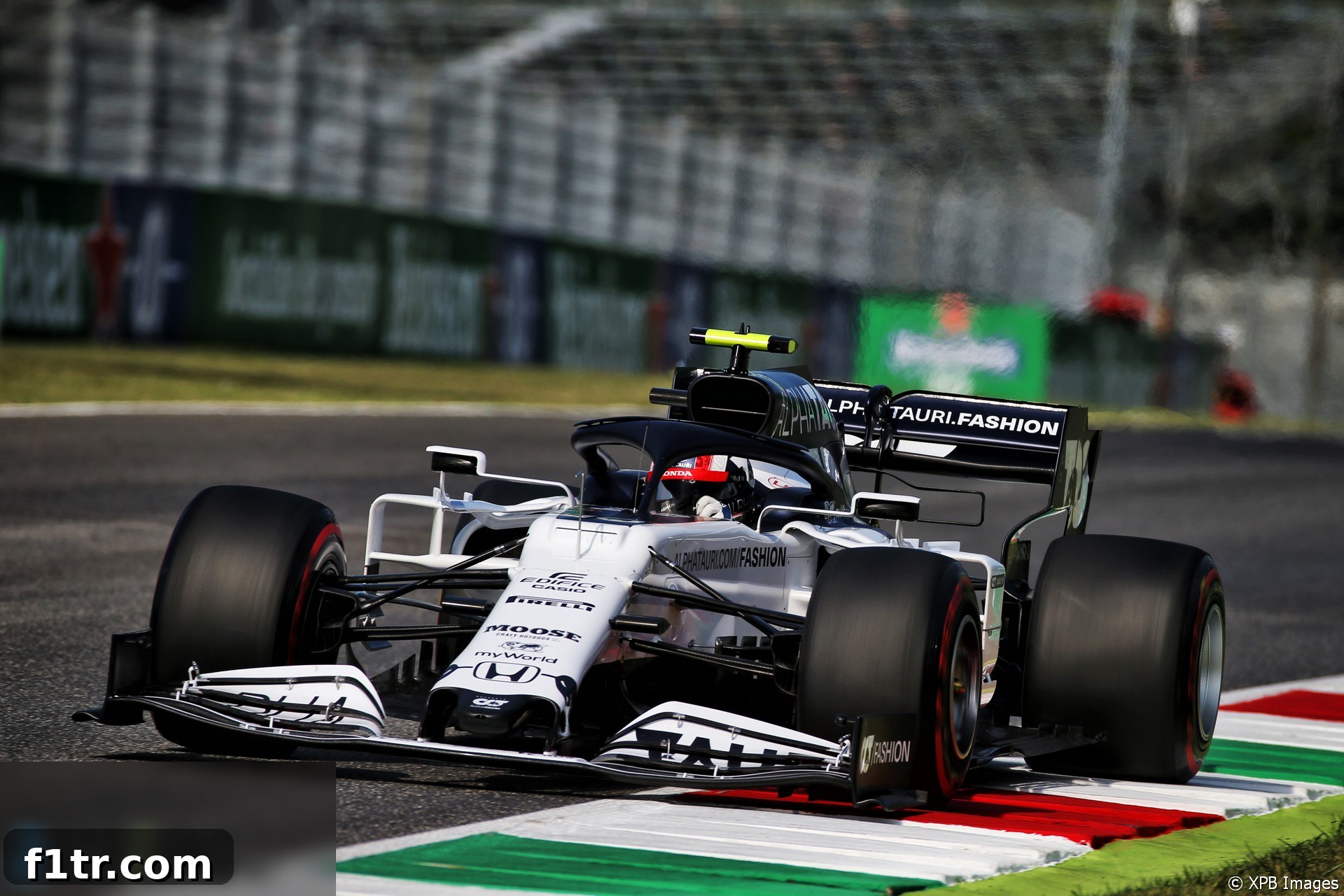
Just two weeks after clinching a stunning and memorable victory at the Italian Grand Prix, Pierre Gasly experienced a dramatic shift in fortunes, finding himself eliminated in the very first round of qualifying for the inaugural Tuscan Grand Prix. The AlphaTauri driver’s promising weekend took an unexpected turn when a critical technical issue — a depletion of battery power just meters before the finishing line — severely compromised his final hot lap. This unfortunate incident not only cost him valuable time but also denied him progression to the second qualifying session (Q2) by the slimmest of margins, casting a shadow over his aspirations at the picturesque Mugello circuit.
A Shocking Qualifying Exit for Pierre Gasly at Mugello
Gasly’s P16 classification meant he missed out on advancing by less than five hundredths of a second, a minuscule gap that underscores the brutal competitiveness of Formula 1. The setback was particularly galling given his strong performance in the final free practice session earlier in the day, where he had comfortably placed fifth fastest, signaling genuine pace and potential for a strong qualifying result.
“It was obviously a very, very disappointing qualifying for us after a great free practice,” a visibly frustrated Gasly admitted after the session. He pinpointed the exact moment where his charge faltered: “Today we missed it by half a tenth. We lost over a tenth with the ERS deployment running out of charge way too early 300 metres before the line. We lost over a tenth to Daniil [Kvyat] there and it cost us Q2 and an opportunity to go further.”
The Crucial Half-Tenth: ERS Deployment Fails
The Energy Recovery System (ERS) is a vital component in modern Formula 1 powertrains, designed to recover energy during braking and exhaust heat, then redeploy it as an extra boost of power. For a driver to lose this crucial ERS deployment in the final meters of a flying lap is akin to running a marathon and stumbling just before the finish line – it’s a devastating loss of momentum and speed when every millisecond counts. This untimely power cut directly translated into the tenths of a second that ultimately proved decisive, highlighting the complex interplay of human skill and advanced technology in elite motorsport.
The Relentless F1 Midfield: No Room for Error
Missing out by such an infinitesimally small margin, Gasly candidly described as “a reality of where we are in this midfield.” He elaborated on the fine margins that define success and failure in the closely contested pack: “Last weekend was exceptional and we know that this midfield is so tight if we make mistakes as we did today there is no room for errors.” This statement serves as a stark reminder of the unforgiving nature of the Formula 1 grid, where perfection is not just desired, but often required, to advance through the different qualifying stages. The midfield battle in Formula 1 has become increasingly intense, with multiple teams vying for every point and every grid position, making any minor misstep potentially catastrophic for a driver’s weekend.
The Intricacies of Setup: A Search for Grip
Beyond the battery issue, Gasly also pointed towards potential setup changes made between the successful final practice session and qualifying as a contributing factor to his dip in performance. “We made a few changes after third practice that didn’t go in the right direction and we’re still analysing why we went slower than practice,” he explained, responding to questions from the media. “We lost grip and we can see it, so we’re still investigating.”
This highlights another layer of complexity in Formula 1 racing: the delicate balance of car setup. Teams constantly fine-tune parameters like wing angles, suspension stiffness, ride height, and differential settings to extract maximum performance from the car on a given track. A seemingly minor adjustment, intended to find an extra fraction of a second, can sometimes backfire, leading to a loss of balance, stability, or crucially, grip. Gasly affirmed that his driving was not at fault: “My lap was decent, honestly. There wasn’t any mistakes. Obviously you can lose a bit of time here and there but it was a pretty good lap. I’m not blaming anyone, I’m just saying us as a team didn’t do the perfect job today.” This sentiment underscores the collective responsibility in F1, where driver and team performance must align perfectly to achieve optimal results, a challenge that even the most seasoned teams face regularly.
The Unique Backdrop: 2020 Tuscan Grand Prix at Mugello
The 2020 Tuscan Grand Prix held a special significance for multiple reasons. It marked the first time Formula 1 visited the stunning Mugello Circuit, a fast, flowing track nestled in the hills of Tuscany, renowned for its challenging corners and high-speed sections. Furthermore, it was a momentous occasion for Ferrari, celebrating their 1000th Grand Prix in Formula 1 at their own test track. This historic milestone, coupled with the novelty of a new venue, added an extra layer of excitement and pressure to the weekend. Every team and driver was eager to make their mark on this virgin F1 territory, making Gasly’s Q1 exit all the more frustrating amidst such a unique atmosphere where every performance was under intense scrutiny.
Pierre Gasly’s Rollercoaster 2020 Season
Pierre Gasly’s 2020 season had been nothing short of a rollercoaster, defined by incredible highs and perplexing lows. After being demoted from Red Bull Racing to their sister team, AlphaTauri, in mid-2019, Gasly had steadily rebuilt his confidence and form. His maiden F1 victory at Monza was a testament to his resilience, raw talent, and the AlphaTauri team’s consistent improvements. That win, achieved against all odds, propelled him into the spotlight and raised expectations for his subsequent performances, solidifying his reputation as a formidable competitor.
The Monza triumph, however, also highlighted the unique dynamics of the 2020 season, characterized by unpredictable races and the potential for midfield teams to capitalize on front-runner issues. While AlphaTauri has shown flashes of brilliance, particularly on tracks that suit their package, they remain firmly entrenched in the midfield battle. This makes consistent top-tier results challenging, emphasizing the impact of even minor technical glitches or setup missteps, as seen at Mugello. The team’s ongoing development efforts are crucial in this competitive environment, striving for consistency that can bridge the gap to the front of the grid.
The Art of Formula 1 Qualifying: A Precision Dance
Formula 1 qualifying is a high-stakes ballet of precision, speed, and strategic thinking. Teams and drivers push their cars to the absolute limit over a single flying lap, striving to extract every last millisecond of performance. Factors such as tire temperature management, track evolution, fuel load, and energy deployment strategies become paramount. A perfectly executed lap requires not only driver skill but also a car that is perfectly balanced and technically sound, all within a tight time window.
The incident with Gasly’s ERS system serves as a powerful reminder of how intricate and finely balanced these machines are. A minor software glitch, a miscalculation in energy deployment, or an unexpected depletion of the battery can unravel an otherwise flawless lap. In a midfield battle where gaps are often measured in thousandths of a second, such technical hiccups can have disproportionately large consequences, turning potential heroes into disappointed spectators for the latter stages of qualifying. The relentless pursuit of perfection in engineering and execution is what defines success in this sport.
A Race of Recovery: The Challenge Ahead for Gasly
Starting from P16 on the grid at a track like Mugello, known for its high-speed corners and limited overtaking opportunities, presents a formidable challenge for Pierre Gasly. However, the Frenchman has demonstrated remarkable fighting spirit throughout his career, often excelling in races where he starts further down the order. His ability to manage tires, make strategic overtakes, and maintain focus under pressure will be crucial for any meaningful recovery drive on Sunday.
The Tuscan Grand Prix could still offer opportunities for Gasly and AlphaTauri. Unpredictability often defines F1 races, especially on new tracks or in the highly competitive 2020 season. Safety Cars, unforeseen incidents, or differing tire strategies could open doors for a charge through the field. While the disappointment of qualifying will linger, Gasly’s objective will now shift entirely to maximizing his Sunday performance, aiming to salvage valuable points and prove his resilience once again.
The team will undoubtedly conduct a thorough investigation into the ERS failure and the setup changes to ensure similar issues do not recur. For now, Gasly must harness the frustration of Saturday into motivation for a strong recovery drive, transforming a challenging start into a memorable fightback at the historic Mugello circuit, seeking to add another chapter to his compelling and unpredictable season.
2020 Tuscan Grand Prix Ferrari 1000
Browse all 2020 Tuscan Grand Prix Ferrari 1000 articles