Formula 1 and Motorsport Round-up: Unpacking the Austrian Grand Prix Weekend
Welcome to our comprehensive motorsport round-up, meticulously curated to bring you the essential stories, analyses, and discussions from a thrilling weekend of racing action. This edition delves deep into the high-stakes world of Formula 1, exploring the nuanced challenges faced by top drivers and teams, while also casting a spotlight on emerging talents in the junior series and significant developments across the broader motorsport landscape. From driver resilience in the face of illness to critical strategic dilemmas and philosophical approaches to championship success, we cover the key moments that shaped the weekend and continue to fuel conversations among fans and experts alike.
Weekend Highlights: Driver Determination and Team Performance Battles
Insights from the Paddock: Resilience, Pace, and Championship Strategy
Lando Norris: Unwavering Speed Despite Feeling Unwell at the Austrian Grand Prix
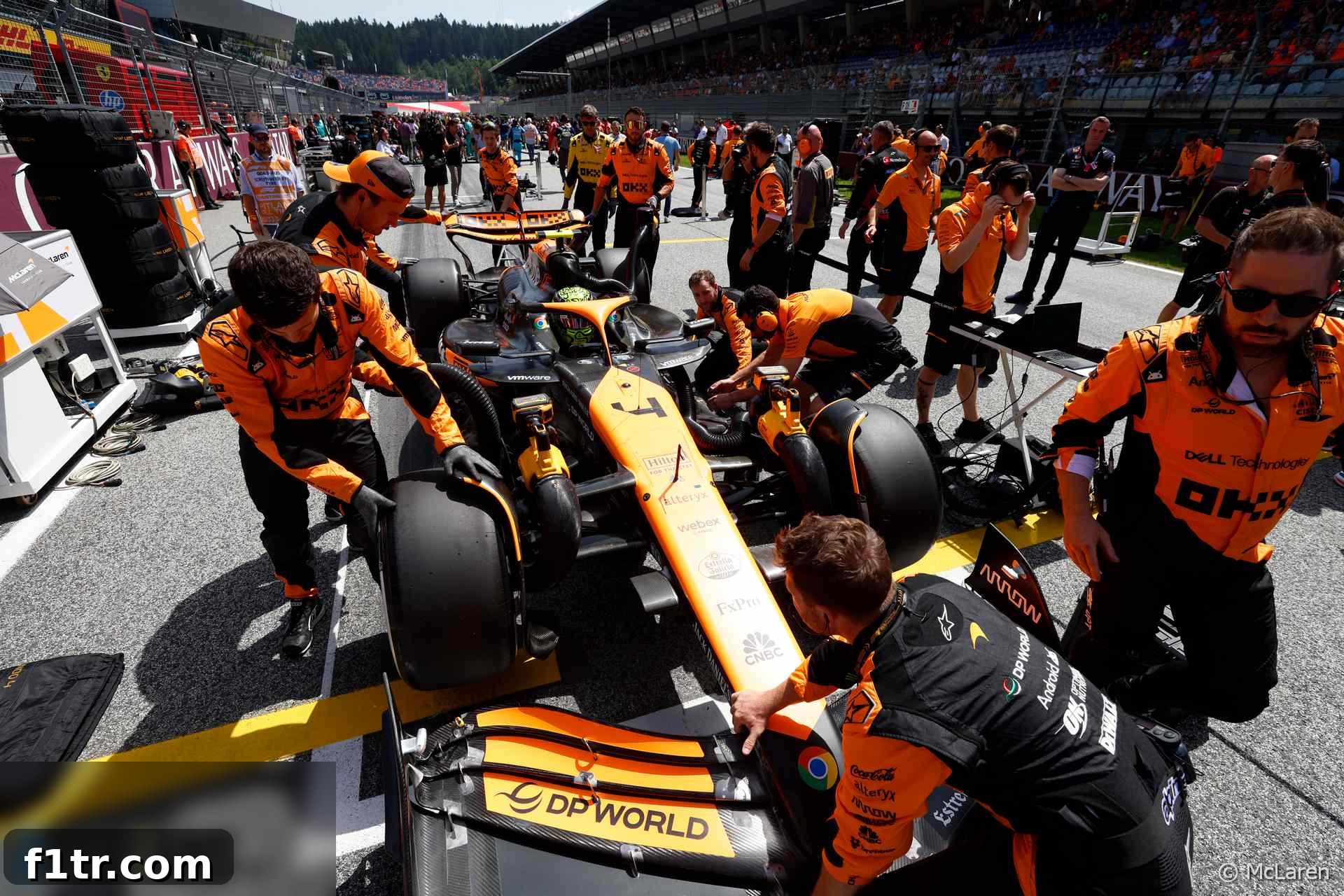
McLaren’s Lando Norris has publicly assured fans and media that his physical condition, despite him feeling unwell throughout the Austrian Grand Prix weekend, has not diminished his competitive edge on track. The British driver, known for his candidness, revealed he has been battling an illness. This news understandably sparked discussions about how such a demanding sport can be impacted by a driver’s health, particularly at a circuit like the Red Bull Ring, which features elevation changes and high-speed sections that test physical endurance.
“I can’t precisely pinpoint the extent to which it’s affecting me,” Norris admitted during a press briefing. “It’s certainly not making things easier, that’s probably the most accurate way to put it. However, I genuinely wouldn’t say it’s altering my performance capabilities on the circuit. It simply hasn’t reached that critical level where my driving is compromised.”
Norris further elaborated on the specific challenges, explaining, “It’s more about the smaller struggles away from the track: feeling perpetually tired, experiencing disturbed sleep, and general discomfort. So, while I’m sure it has a subtle impact, it’s definitively nothing I would ever use as an excuse for my on-track results or a perceived lack of performance.” His steadfast resolve underscores the immense mental fortitude and dedication characteristic of Formula 1 drivers, who frequently push their physical limits to compete at the pinnacle of motorsport. This unwavering commitment is crucial for maintaining focus and competitive spirit, especially when McLaren is consistently vying for top positions and Norris himself is considered a potential future champion.
Aston Martin’s Desperate Search for Pace: Mechanics Skip Lunch for Radical Setup Changes
Advert | Become a Supporter & go ad-free
Fernando Alonso, the seasoned two-time world champion, brought to light the extraordinary measures his Aston Martin mechanics undertook in their relentless pursuit of improved performance at the Austrian Grand Prix. Following a disappointing 16th place finish in the sprint race, and ahead of a grand prix qualifying session that saw him secure a 15th place grid slot, Alonso revealed that his dedicated team sacrificed their lunch break entirely. Their mission: to implement a drastic and complete overhaul of his car’s setup. This intense effort vividly illustrates the pressures and challenges faced by teams struggling to find optimal performance in the highly competitive Formula 1 environment, particularly during condensed sprint race weekends where preparation time is severely limited.
“It’s been a really tough qualifying, and indeed, a very challenging weekend for us overall,” Alonso candidly expressed to the official F1 channel. “We simply lack the necessary speed to genuinely fight for higher positions on merit.”
He continued, highlighting the team’s commitment despite the lack of immediate reward: “However, the team is absolutely trying everything within their power. They didn’t even have a moment to eat lunch today, because we literally changed the car completely from its sprint race configuration to what we ran in qualifying. We transformed the entire setup, experimenting with something fundamentally different. Yet, we ended up more or less in the same grid positions. This strongly suggests that the core problem isn’t merely a setup issue; we fundamentally do not possess the inherent pace at this circuit.” Alonso’s assessment points to a deeper, more structural performance deficit that Aston Martin must address, moving beyond mere car adjustments to tackle underlying aerodynamic or mechanical weaknesses, which is a significant concern for the Silverstone-based outfit.
Paul Aron: The Formula 2 Championship Leader Who Prioritizes Consistency Over Wins
Formula 2 championship leader Paul Aron has offered a compelling and somewhat unconventional perspective on achieving success in junior motorsport categories. He firmly believes that accumulating consistent points and maintaining a steady presence at the front of the field is far more critical than securing individual race victories. This philosophy has served him well, as he currently leads the drivers’ championship despite not having claimed a single win this season, a fact he underscored with another valuable podium finish in yesterday’s sprint race.
“In categories like Formula 2 and Formula 3, consistency often proves to be a more valuable asset than outright race wins,” Aron articulated to media, including RaceFans. “My current position, leading the championship without any victories, stands as tangible proof of this principle.”
Aron further elaborated on his reasoning, highlighting the inherent risks in junior racing: “I think the primary reason for this is the sheer number of variables that are entirely beyond a driver’s control, which can go awry very easily. Moreover, all the drivers here are young, naturally ambitious, and inherently optimistic, meaning going all-out for a win in every single race carries substantial risk. Sometimes, this aggressive approach will undoubtedly reward you with a victory, but equally often, it can lead to scoring no points at all. For me, I would much rather be in my current position as the championship leader with no wins, than to be a driver with two or three race victories but find myself much further down in the overall standings.” His mature and strategic approach to championship racing provides a powerful lesson in balancing aggression with prudence, a critical skill for any aspiring Formula 1 driver aiming for sustained success rather than fleeting glory.
Advert | Become a RaceFans supporter andgo ad-free
Beyond the Circuit: Notable Motorsport Headlines and Engaging Discussions
Key Stories Shaping the Narrative Across the Racing World
Here’s a selection of insightful motor racing links that have recently captured attention, offering diverse perspectives and crucial updates from various corners of the sport. These stories delve into critical aspects, from fan engagement to driver longevity and junior series strategic insights.
Advert | Become a Supporter & go ad-free
British Grand Prix director defends F1 ticket prices after Hamilton criticism (Guardian)
Stuart Pringle, the managing director of the British Grand Prix at Silverstone, has issued a robust defense of Formula 1 ticket prices following recent criticisms, notably from seven-time world champion Lewis Hamilton. The debate surrounding the affordability and accessibility of F1 events for core fans is a perennial and increasingly vital topic as the sport expands its global footprint. Pringle emphasized the circuit’s commitment to addressing fan concerns, stating, “We fully support Lewis’s comments and acknowledge the sentiment. In response, we have made a greater number of our lowest-priced general admission tickets available this year compared to 2023.” This proactive stance by Silverstone demonstrates an awareness of the delicate balance between commercial growth and maintaining a loyal, accessible fanbase, ensuring the iconic British Grand Prix remains a highlight on the calendar for a diverse audience.
Lewis Hamilton and Fernando Alonso have combined age of 81 and are inspiring title hopefuls to delay retirement (Talk Sport)
The remarkable and sustained careers of Formula 1 titans Lewis Hamilton and Fernando Alonso are redefining expectations for driver longevity in motorsport. With a combined age of 81, their continued performance at the highest level is serving as a powerful source of inspiration for a new generation of racing drivers, including Formula E championship contender Mitch Evans, who now envision longer careers for themselves. Evans suggests that the sight of drivers competing effectively into their forties is poised to become “more common” across various categories. He attributes this evolving trend to significant advancements in driver fitness regimes, sports nutrition, and the increasingly sophisticated design of modern racing cars, which are less physically punishing than their predecessors. As Hamilton prepares for his eagerly anticipated move to Ferrari and Alonso continues to defy age at Aston Martin, their enduring presence stands as a testament to their unparalleled dedication and the changing landscape of athletic careers in motorsport. Evans, whose own title hopes in Formula E are reaching a critical phase this weekend, views these veterans as exemplary models for sustained excellence.
Crawford eyeing Spielberg Feature Race podium after coming through the field in the Sprint (Formula 2)
Jak Crawford, a promising young talent competing in Formula 2, has clearly set his sights on securing a podium finish in the upcoming Spielberg Feature Race. His confidence stems from an impressive performance in the preceding sprint event, where he skillfully navigated his way through the field, showcasing strong racecraft and formidable pace. Crawford’s strategic acumen and on-track prowess position him as a formidable contender for the main race. “I honestly believe we have the potential to fight for a podium,” Crawford confidently stated, expressing his trust in both his team’s strategic capabilities and his car’s performance. “The crucial aspect will be making the absolute right strategy call, but I am convinced we possess excellent pace. We were effectively battling directly with drivers who started on the front row, such as Hauger and Duerksen. I believe I successfully passed Duerksen and then maintained a similar pace, closing the gap to Hauger, which conclusively demonstrates that we have the speed to compete with the front-runners. Now, it’s solely about executing the optimal strategy to position ourselves at the sharp end of the grid.” This focus on strategy is paramount in F2, where tire management, pit stop timing, and fuel conservation can dramatically influence outcomes, providing thrilling races for fans and an invaluable proving ground for future Formula 1 stars.
We always endeavour to credit original sources. If you have a tip for a link relating to single-seater motorsport to feature in the next RaceFans round-up please send it to us via the contact form.
Advert | Become a RaceFans supporter andgo ad-free
Social Media Pulse: Instant Reactions and Key Moments from the Digital Sphere
Capturing Driver Voices, Regulatory Shifts, and Dramatic Race Action Online
Delve into some of the most notable posts and discussions that have resonated across X (formerly Twitter) and other social platforms. These insights offer a direct glimpse into the motorsport community’s immediate thoughts, reactions, and the evolving narrative of the sport as captured in real-time online.
Hello, I wanted to say big apologies what I said in the radio today. Obviously I didn’t use it intentionally and was completely misunderstanding from myself that exact meaning of it. I now have better understanding for what the word means and am very apologetic for what I said.…
— 角田裕毅/Yuki Tsunoda (@yukitsunoda07) June 29, 2024
Yuki Tsunoda, the charismatic Japanese driver, utilized social media to issue a heartfelt apology for remarks made over his team radio during the intense Austrian Grand Prix weekend. Tsunoda clarified that his use of certain language was entirely unintentional and stemmed from a genuine misunderstanding of its precise meaning and implications. This incident underscores the intense scrutiny that Formula 1 drivers operate under, and it highlights the FIA’s increasingly stringent stance on the use of offensive language during competitive sessions. Tsunoda’s swift and public apology serves as a testament to his commitment to professional conduct, a crucial aspect for any athlete thrust into the global spotlight of Formula 1. Such moments serve as poignant reminders of the paramount importance of respectful and appropriate communication, even amidst the high-pressure and high-emotion environment of elite motorsport.
The @FIA has toughened up its response to drivers using offensive language on the radio.
In 2020 @Max33Verstappen, after a collision with @Lance_Stroll, referred to him using the same word @YukiTsunoda07 was just fined €40,000 for uttering, but received no punishment.#F1 pic.twitter.com/bUCRyVmjas
— Keith Collantine (@keithcollantine) June 29, 2024
This insightful post from motorsport journalist Keith Collantine starkly illustrates the FIA’s evolving and increasingly rigorous enforcement of regulations concerning offensive language on team radio. Collantine draws a direct and impactful comparison between Yuki Tsunoda’s recent substantial €40,000 fine for using a particular derogatory word and Max Verstappen’s use of the identical term after a collision with Lance Stroll back in 2020, an incident which, notably, resulted in no punitive action. This glaring contrast vividly highlights a significant shift in the FIA’s disciplinary approach, signaling a much tougher and less tolerant stance on such infractions. The implementation of harsher penalties reflects a broader, concerted effort by the governing body to uphold and maintain a higher standard of conduct and sportsmanship within motorsport, especially as its global viewership continues to expand and digital platforms amplify every utterance. This progressive enforcement strategy aims to establish clearer boundaries for driver communication, aligning the sport more closely with contemporary expectations for professional athletes and ensuring a more respectful environment.
The moment that changed EVERYTHING 😳
Championship leader Nick Cassidy loses it on the penultimate lap of the @Hankook_Sport #PortlandEPrix. pic.twitter.com/WQMeDBaL4A
— Formula E (@FIAFormulaE) June 29, 2024
A truly dramatic and potentially championship-altering moment unfolded at the Portland E-Prix, where current Formula E championship leader Nick Cassidy experienced a critical loss of control on the penultimate lap of the race. This costly error could have significant and far-reaching repercussions for his title aspirations in the all-electric series. The incident serves as a powerful and visceral reminder of the razor-thin margins that define high-stakes motorsport, where a singular misjudgment or technical glitch can instantly and completely rewrite the narrative of an entire championship. The inherent unpredictability of Formula E, exacerbated by its challenging street circuits and the complex demands of energy management, frequently culminates in such nail-biting, unpredictable finishes. For Cassidy, this untimely slip-up undoubtedly intensifies the pressure as the Formula E season charges towards its climax, rendering every remaining race exceptionally critical for his bid to clinch the coveted championship title.
What a day! I’ve had my eyes on @FIAFormulaE since the series’ inception and it was an incredible experience to get back behind the wheel of an open wheel car. This series continues to inspire and innovate and I look forward to working with them to further push boundaries. 👊 pic.twitter.com/TngHnO4Vrk
— Robert Wickens (@robertwickens) June 29, 2024
Robert Wickens, the highly respected Canadian racing driver, shared his profound exhilaration and joy after a momentous day that saw him return to the cockpit of an open-wheel car, specifically within the dynamically innovative realm of Formula E. Wickens, whose remarkable career was tragically interrupted by a severe spinal injury, has consistently stood as a powerful beacon of resilience, determination, and unwavering spirit in the face of immense adversity. His recent engagement with Formula E deeply underscores the series’ overarching commitment to relentlessly pushing both technological and human boundaries. His compelling comments – “This series continues to inspire and innovate and I look forward to working with them to further push boundaries” – vividly highlight the profoundly positive impact Formula E is having on the broader motorsport community. It functions not only as a pioneering platform for sustainable and high-performance racing but also, crucially, as a potent source of inspiration for drivers confronting extraordinary personal and professional challenges. Wickens’ story is a powerful testament to the enduring human spirit and the unifying passion that defines the world of racing.
#INDYCAR is taking innovation to a whole new level.
Go inside the Hybrid Power Unit with @Hinchtown ahead of its much-anticipated debut at Mid-Ohio. pic.twitter.com/WRx1ZtKap4
— NTT INDYCAR SERIES (@IndyCar) June 29, 2024
The NTT IndyCar Series is poised for a significant technological leap forward with the eagerly awaited debut of its cutting-edge Hybrid Power Unit. This groundbreaking development was prominently showcased in a revealing feature presented by former driver and popular personality, James Hinchcliffe, affectionately known to fans as “Hinchtown.” The introduction of this advanced hybrid technology marks a pivotal moment for America’s premier open-wheel series, aiming to enhance both outright performance and overall efficiency. This strategic move firmly aligns IndyCar with global automotive trends emphasizing sustainability and innovation, promising to usher in a new era of strategic racing where meticulous energy management will assume an even more critical role in determining race outcomes. Fans and competitors alike are buzzing with anticipation, eager to observe how this sophisticated hybrid system will fundamentally impact race dynamics at its highly anticipated debut at Mid-Ohio, thereby adding yet another compelling layer of complexity and excitement to the already thrilling championship.
Advert | Become a RaceFans supporter andgo ad-free
- Find more official F1 accounts to follow in the F1 Twitter Directory
Fan Perspective: The McLaren Team Order Debate
Analyzing Strategy and Sportsmanship in the Sprint Race Decision
A central point of fervent discussion among motorsport enthusiasts following the recent sprint race revolved around the contentious question of whether McLaren should have intervened with team orders to position Lando Norris ahead of his teammate, Oscar Piastri. This debate gained significant traction given Norris’s current standing as Max Verstappen’s nearest challenger in the intensely competitive championship standings. However, one insightful fan, BasCB, eloquently presented a compelling argument against such an intervention, emphasizing the fundamental principles of sportsmanship and the unique dynamics inherent in sprint races. Their detailed perspective resonated with many, offering a balanced view on a perennially debated topic in Formula 1:
I actually think there was no good reason to change the cars around after Piastri overtook Norris. As Norris mentioned after the race, they knew they had to do it in the first few laps. Since he let himself be repassed by Max and then Piastri got by too, that was it. Maybe if Piastri had not been able to get by, Norris would have been able to stay close enough to Max to have a shot right at the end, but it would probably have been just running close to him like he was now chasing Piastri.
And let’s remember this is a sprint race, where the difference between second and third is only a single point. For the team there was no difference at all, so why would you upset Piastri by asking him to give up a place he earned on track?
BasCB
BasCB’s commentary offers several critical and well-reasoned points that significantly enrich the debate. Firstly, the argument judiciously acknowledges Norris’s own post-race remarks, which explicitly indicated that any potential strategic swaps or team orders needed to be executed very early in the race. Once positions were firmly established on track and Piastri had legitimately overtaken Norris through fair competition, enforcing team orders retroactively would arguably undermine the sporting integrity of that on-track battle. Secondly, the intrinsic nature of the sprint race, characterized by its condensed format and the minimal championship points difference between second and third place (just a single point), renders such an intervention less justifiable from a purely team-centric perspective. For McLaren, a second and third place finish yields virtually the same overall strategic benefit as a third and second, especially when considering the minimal points haul. Lastly, and perhaps most crucially, coercing Piastri to relinquish a position he had earned fairly and squarely on the track could inflict considerable damage to team morale and foster resentment between teammates. In a high-performing team like McLaren, striving for consistent excellence and a positive, cohesive atmosphere, preserving the competitive spirit and mutual respect between drivers often takes paramount precedence, particularly when the championship stakes for a single sprint race point are relatively minor. This insightful fan comment powerfully captures the intricate balance between sportsmanship and strategic imperatives in the complex world of modern Formula 1 racing.
Celebrations and Milestones
Wishing a Happy Birthday to Our Community Members!
A very happy birthday to our esteemed readers and valued contributors: Rhys, Mike-E, and Optmist! We extend our warmest wishes for a fantastic day filled with joy, celebration, and everything that makes your special day memorable.
Motorsport History: On This Day in Racing
Reliving Iconic Moments and Dramatic Finishes from the Past
-
Five Years Ago Today: Max Verstappen’s Dramatic Austrian Grand Prix Victory and Stewards’ Investigation (July 1, 2019)
On this very day, five years ago, Max Verstappen secured a truly memorable and ultimately controversial victory at the Austrian Grand Prix. The then-young Red Bull driver famously executed a thrilling overtaking maneuver on Charles Leclerc during a fiercely contested battle in the closing laps, electrifying fans worldwide. However, the audacious move immediately came under intense scrutiny from the race stewards, initiating a tense and protracted three-hour investigation by the FIA, which left teams, drivers, and fans in agonizing suspense. Ultimately, after careful deliberation, Verstappen’s bold move was deemed legitimate, thereby cementing his victory and instantly etching that moment into the annals of Formula 1 history. This incident remains a vivid and often-revisited reminder of the razor-thin line between aggressive, hard racing and potentially unsporting conduct, and it underscores how crucial stewards’ decisions can profoundly impact not only individual race outcomes but also the broader championship narratives. It was a race that perfectly encapsulated the raw passion, intense competition, and high drama that defines Formula 1 at the picturesque Red Bull Ring.
Read more about Max Verstappen’s dramatic 2019 Austrian Grand Prix victory and the post-race investigation.
Stay Connected: Subscribe to Our Exclusive RaceFans Newsletter
Don’t miss out on any of our comprehensive RaceFans’ motorsport coverage! Get a daily update on all the latest news, in-depth analyses, exclusive features, and critical insights delivered directly to your inbox. Signing up for our free and informative RaceFans email Newsletter is quick, simple, and ensures you’re always up-to-date with the fast-paced world of motorsport: