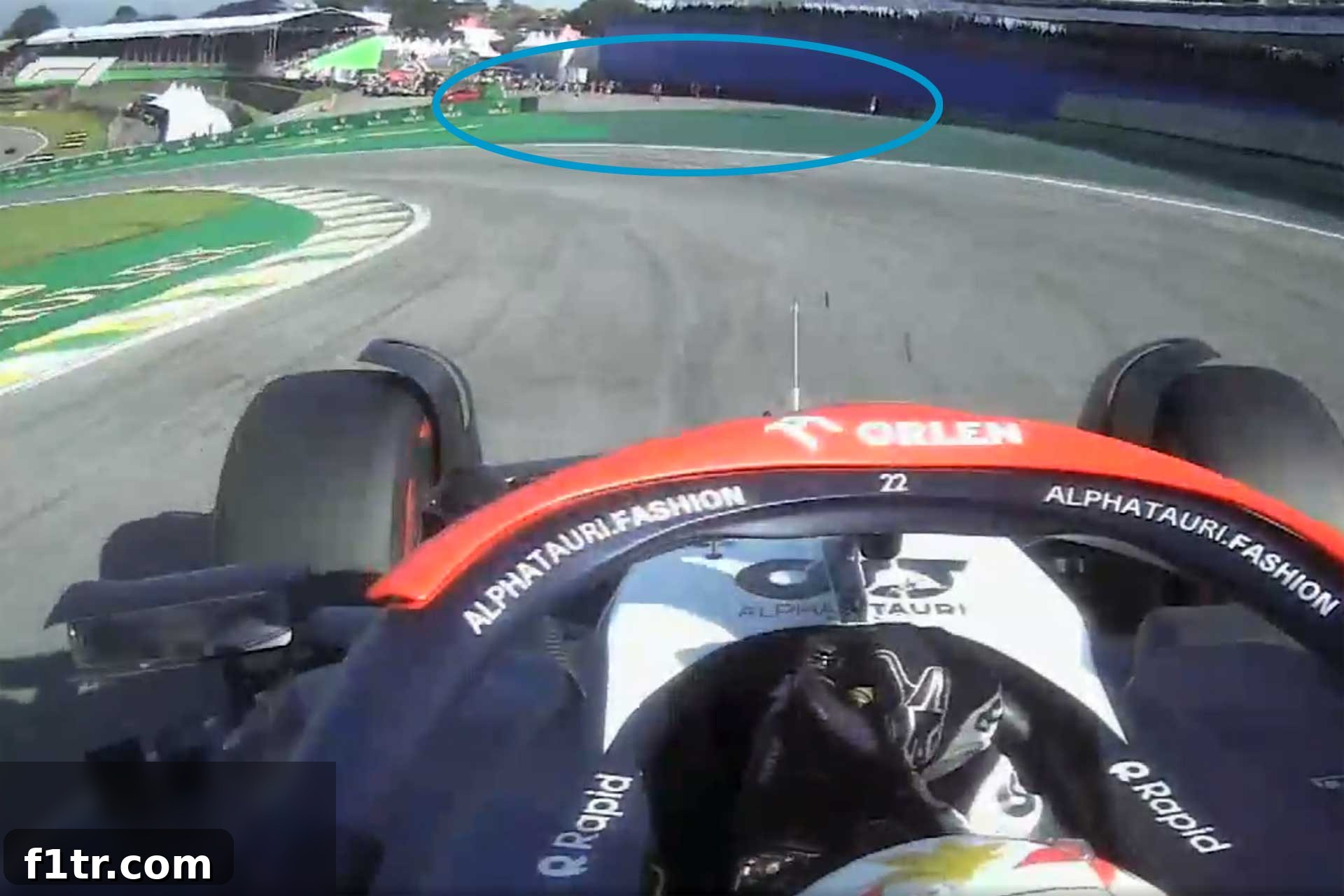
The exhilarating spectacle of Formula 1, particularly at a historic venue like Brazil’s Interlagos Circuit, is a global phenomenon that draws hundreds of thousands of passionate fans annually. However, the recent Brazilian Grand Prix, promoted by the Sao Paulo F1 Organisation (SPF1), concluded with a concerning incident that has cast a shadow over the event’s otherwise successful staging. Following a disturbing track invasion by spectators at the end of the race, SPF1 has candidly admitted significant failures in its safety and security arrangements, prompting a comprehensive investigation by both the promoter and the sport’s governing body, the FIA.
Support Our Work | Become a Supporter & Enjoy an Ad-Free Experience
The gravity of the situation was highlighted in a report by the FIA stewards, who noted, “a large group of spectators managed to break the security lines and accessed the run-off area at turn one while the race was finishing and cars were still on track.” This highly dangerous breach occurred at a critical moment when cars were still navigating the circuit, albeit at reduced speeds, posing an immediate and unacceptable risk to drivers, track marshals, and the invading spectators themselves. The potential for a catastrophic incident, including collisions or serious injuries, was undeniably high, underscoring the urgent need for stringent safety protocols in motorsport.
Following the race, representatives from SPF1 met with the FIA stewards to address the incident. During this crucial meeting, SPF1 openly acknowledged their shortcomings in preventing spectators from gaining unauthorized access to the track. The stewards’ report confirmed this admission, stating, “SPF1 candidly admitted the failures in terms of the security protocols and safety measures.” This acknowledgement is a critical first step towards rectification, demonstrating a recognition of responsibility by the event organisers.
The FIA stewards further observed that this was not an isolated incident, highlighting a concerning pattern at the Brazilian Grand Prix. “SPF1 concurred with the FIA sporting delegate and the race director report and agreed that comparable circumstances already occurred in Brazil and that this was an unacceptable situation which could have had disastrous consequences,” the stewards’ document detailed. This historical context amplifies the seriousness of the recent breach, suggesting that previous warnings or remedial actions might have been insufficient or inadequately implemented. The recurring nature of such incidents at Interlagos raises questions about the long-term effectiveness of security strategies and the commitment to their rigorous enforcement.
In response to the severe criticism and the potential for regulatory penalties, SPF1 stated, in mitigation, that they would “conduct a thorough investigation and take steps to remediate in time for the next event in Brazil.” This commitment signifies an immediate pledge to identify the root causes of the security lapse and implement robust corrective measures. Such an investigation would typically involve a detailed review of crowd control strategies, personnel deployment, barrier integrity, communication protocols, and emergency response plans. The promise of remediation “in time for the next event” suggests an understanding of the urgency and the necessity of proactive intervention to restore confidence in the event’s safety standards.
The stewards’ ruling unequivocally stated that the promoter had failed to adhere to Article 12.2.1.h of the 2023 FIA International Sporting Code. This specific article forbids “any unsafe act or failure to take reasonable measures, thus resulting in an unsafe situation.” The regulatory framework of Formula 1 places immense responsibility on event promoters to ensure the safety of all participants and spectators. A breach of this article indicates a significant lapse in duty, holding the promoter directly accountable for the unsafe conditions that arose. This regulation is designed to prevent scenarios exactly like the track invasion, ensuring that every reasonable precaution is taken to mitigate risks in a high-speed motorsport environment.
In addition to their internal investigation, the promoter has committed to presenting a formal remediation plan to the FIA no later than the end of January next year. This detailed plan will outline the specific actions SPF1 intends to take to bolster security, enhance crowd management, and prevent future incursions. The FIA will scrutinize this plan to ensure its comprehensiveness and effectiveness, demanding concrete, measurable improvements. This structured approach is crucial for accountability and for rebuilding trust in the organisational capabilities of the Brazilian Grand Prix promoter.
Recognizing the gravity and the systemic implications of the incident, the FIA stewards have also referred the matter to the FIA World Motor Sports Council (WMSC) for further investigation and potential action. The WMSC is the highest decision-making body within the FIA, responsible for all motorsport regulations, safety, and development worldwide. Their involvement signifies that the issue transcends a local security breach and touches upon fundamental principles of Formula 1 safety. “As this relates to serious issues around safety and security, the stewards hereby request the FIA to review and comment on whether the above mentioned steps are adequate to address the concerns raised and to state if any further measure(s) need to be taken, as soon as possible,” the stewards added. This referral implies that the WMSC may impose further sanctions, which could range from fines to more severe penalties, potentially impacting the future of the Brazilian Grand Prix on the Formula 1 calendar if significant improvements are not demonstrated.
The incident occurred against a backdrop of record-breaking attendance at this weekend’s Brazilian Grand Prix, which welcomed an impressive 267,000 spectators across its three days, averaging 89,000 per day. This surge in popularity underscores the immense global appeal of Formula 1 and the unique atmosphere of Interlagos. Ironically, just prior to the race weekend, Formula 1 announced it had extended its contract with the promoter to keep the race on the calendar until at least 2030. While the contract extension signals confidence in the event’s long-term commercial viability and its place as a fan favourite, the recent safety breach undoubtedly places increased scrutiny on the promoter’s ability to deliver a secure environment commensurate with such a high-profile international event.
This incident at Interlagos is not an isolated one within the broader Formula 1 ecosystem. In April of the same year, the Australian Grand Prix promoter was also found to have failed to prevent an unauthorised track invasion during its round of the world championship in Melbourne. The recurring nature of such breaches across different F1 venues signals a potential systemic challenge within the sport’s security framework. These incidents highlight the immense pressure on promoters to manage large crowds, secure vast perimeters, and ensure rigorous adherence to safety protocols in dynamic, high-stakes environments. They also prompt questions about knowledge sharing and best practices across different F1 circuits globally.
The paramount importance of safety in Formula 1 cannot be overstated. From the cutting-edge technology protecting drivers to the marshals diligently enforcing track rules, every aspect of the sport is geared towards minimizing risk. A track invasion, however brief, fundamentally compromises this meticulously built safety net. It endangers human lives, disrupts the integrity of the race, and potentially tarnishes the sport’s global image. Event promoters bear a profound responsibility to safeguard the well-being of everyone involved, from the drivers on track to the tens of thousands of spectators in the grandstands. The swift and decisive action taken by the FIA and the commitment from SPF1 to implement comprehensive remediation are crucial for upholding these standards and ensuring that the thrill of Formula 1 remains synonymous with unwavering safety.
Going forward, all eyes will be on the Sao Paulo F1 Organisation to see how effectively they can implement their promised remediation plan and how the FIA World Motor Sports Council will ultimately rule on this serious matter. The future of the Brazilian Grand Prix, while secured contractually for years to come, now carries the imperative to demonstrate an uncompromising commitment to safety, ensuring that such dangerous incidents are relegated to the past and that the Interlagos circuit can continue to host world-class motorsport events with the highest standards of security for all.
Support Our Work | Become a RaceFans supporter andgo ad-free
2023 Brazilian Grand Prix: Related Insights
- Perez’s missed “open goal” in Miami was turning point in title fight – Horner
- F1 drivers insist new rules to prevent impeding in qualifying don’t work
- McLaren surprised by margin over rivals at track Norris thought would be “tough”
- “Follow Fernando’s line” – How Red Bull tried everything to get Perez past Alonso
- Mercedes’ Brazilian GP set-up was “conservative” after US GP disqualification
Browse all 2023 Brazilian Grand Prix articles