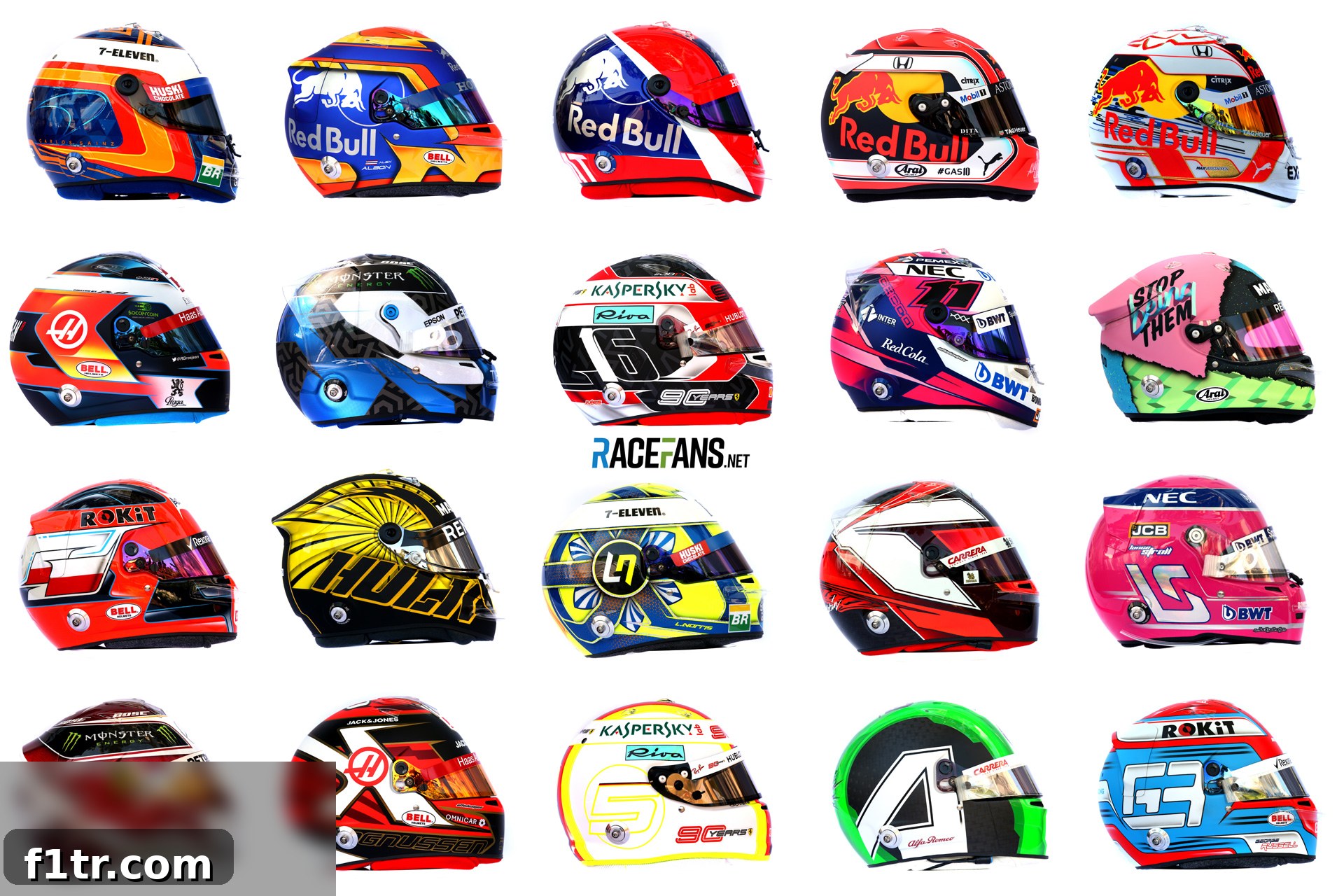
As the engines roared to life for the highly anticipated 2019 Formula 1 season, fans and pundits alike eagerly awaited not just the unveiling of new cars and team liveries, but also the crucial canvases of personal expression for each driver: their helmets. These intricate designs are far more than mere safety equipment; they are vivid statements of identity, nationality, passion, and sometimes, even tribute. Each of the twenty drivers on the grid presented a fresh, or significantly updated, helmet design, setting the tone for their individual campaigns and adding a splash of color and personality to the high-octane spectacle of Formula 1. From bold artistic statements to subtle nods to heritage, the 2019 F1 helmet collection offered a fascinating glimpse into the minds of the sport’s elite.
The F1 helmet has evolved into a driver’s most recognizable signature, a mobile billboard for sponsors, and a deeply personal piece of art. It’s the one element that remains uniquely theirs, even as teams and car designs change around them. For the 2019 season, this tradition continued with a diverse array of styles. New team allegiances, returns to the sport, and rookie debuts all brought about fresh design philosophies, ranging from vibrant and audacious to sleek and understated. Drivers pour significant thought and personal meaning into these designs, often collaborating with specialized artists to bring their visions to life, ensuring their headgear stands out both on track and in the memory of fans.
Among the most striking 2019 F1 helmet designs was that of Daniel Ricciardo. Marking his significant move from Red Bull to Renault, Ricciardo unveiled a completely new aesthetic that captured headlines. His helmet featured a vibrant pink and blue color scheme, a stark departure from his previous Red Bull-era designs. He playfully described his new look as “funky” and “artistic in a modern way,” perfectly embodying his cheerful personality and signaling a fresh chapter in his illustrious career. This bold choice resonated with many, highlighting his desire for personal expression beyond traditional team colors and demonstrating the growing trend of drivers embracing unique, eye-catching aesthetics.
Ricciardo was not the only driver to embrace the color pink for the 2019 season. Following his transition to Racing Point, Lance Stroll adopted the team’s distinctive pink color scheme. This vibrant hue has been a signature for Racing Point (and previously Force India) since their cars famously incorporated it two years prior to match their prominent sponsor, BWT. Stroll’s helmet design seamlessly integrated this team identity, showcasing how driver helmets often blend personal taste with corporate branding to create a cohesive visual presence on the grid. This integration ensures that while a helmet remains personal, it also serves as a key component of the team’s visual marketing.
Newcomer Lando Norris made his Formula 1 debut in 2019, bringing his familiar and popular blue and bright yellow colors from his junior racing categories into the pinnacle of motorsport. This continuity allowed fans who had followed his rise through the ranks to instantly recognize him, reinforcing his personal brand from the outset. For many rookies, maintaining elements of their junior designs is a way to honor their journey and establish immediate recognition. Similarly, Antonio Giovinazzi, the sole Italian driver on the grid that year, proudly displayed his country’s tricolor flag on his helmet, a powerful symbol of national pride and a tribute to his roots, connecting with fans both in Italy and globally who share his heritage.
The return of seasoned veterans also brought meaningful designs. Robert Kubica, making his emotional return to F1 after a nine-year absence, incorporated his Polish flag prominently into his helmet design. This was not just a symbol of nationality but also a powerful statement of resilience and determination, marking a truly remarkable comeback story for the sport. Daniil Kvyat, another driver making a return to the grid in 2019, revised his design with a bolder, more striking red coloring, perhaps signaling a renewed aggression and focus for his second stint in F1. His Toro Rosso teammate, rookie Alexander Albon, opted for a combination of vibrant orange and blue, creating a fresh and youthful look for his debut season, reflecting the energy and ambition of a new generation of drivers.
Lewis Hamilton
As a five-time world champion entering the 2019 season, Lewis Hamilton’s helmet designs are always highly anticipated. His 2019 helmet continued his signature aesthetic, predominantly featuring white and purple elements, often intertwined with chrome or silver accents. Known for its clean lines and bold number 44, his design frequently includes subtle details or messages reflecting his current mindset or inspirations. Hamilton’s helmets are a canvas for self-expression, often evolving throughout the season with special editions for specific races, but the core 2019 design maintained a powerful, regal presence befitting a reigning champion. His choice of purple is a personal connection, making his helmet instantly recognizable amongst his peers.
Valtteri Bottas
Valtteri Bottas’s 2019 helmet design maintained a clean, classic aesthetic, predominantly featuring shades of blue and white, colors that strongly represent his Finnish heritage. His designs are typically minimalist yet distinctive, often incorporating subtle graphic elements that reflect his reserved yet determined personality. The 2019 rendition continued this trend, focusing on clarity and impact, ensuring that his helmet stood out with its crisp lines and patriotic undertones, a true embodiment of the “Flying Finn” spirit.
Sebastian Vettel
Sebastian Vettel is renowned for his ever-changing helmet designs, a unique trait in Formula 1. For the 2019 season, while he still showcased variations, his primary helmet maintained elements of his classic German flag colors – black, red, and gold – integrated into a sleek, often white or metallic base. Vettel’s designs are always meticulous and often carry symbolic meaning or tributes, making each new iteration a point of interest. His 2019 helmet continued to reflect his heritage and precise nature, a balance of tradition and personal flair.
Charles Leclerc
Stepping into a coveted Ferrari seat for 2019, Charles Leclerc’s helmet design reflected this significant career milestone. While embracing the iconic Ferrari red, his helmet also prominently featured the red and white colors of the Monegasque flag, a proud nod to his home country. His design was sleek and modern, often with sharp lines and a clear, elegant layout, establishing his presence as a future star and aligning his personal brand with the Scuderia’s rich history.
Max Verstappen
Max Verstappen’s helmets are consistently among the most recognizable on the grid, largely due to the prominent display of the Dutch lion motif and his signature orange color. His 2019 design was no exception, featuring a dynamic and aggressive pattern that reflected his racing style. The lion, a symbol of national pride and strength, was intricately woven into the design, making his helmet a fierce visual statement and a fan favorite. The bright orange ensures he is instantly spotted even from afar on track.
Pierre Gasly
Joining Red Bull Racing for the 2019 season, Pierre Gasly’s helmet naturally integrated the dominant Red Bull blue and yellow. However, his design still managed to inject personal touches, often including elements of the French flag and subtle nods to his personal brand. Gasly’s helmets are typically well-balanced, combining bold team colors with intricate details that reflect his national pride and individual identity. His 2019 helmet was a clear step up in visibility, matching his new high-profile role.
Go ad-free for just £1 per month>> Find out more and sign up
Daniel Ricciardo
As previously highlighted, Daniel Ricciardo’s 2019 helmet was a complete refresh, abandoning his previous designs for a “funky” pink and blue scheme. This bold move symbolized his new chapter with Renault and his ever-present jovial spirit. The artistic, modern look was distinct from any other on the grid, reflecting his unique personality and desire to express himself. This helmet instantly became iconic for the 2019 season, truly embodying a fresh start.
Nico Hulkenberg
Nico Hulkenberg’s 2019 helmet design, featuring his signature “Hulk” green and black elements, maintained a strong connection to his long-standing nickname and personal brand. His designs are usually clean, aggressive, and easily identifiable, reflecting his consistent presence and no-nonsense approach in Formula 1. The striking color combination ensures that his helmet always stands out on the track, even amongst the most vibrant liveries.
Romain Grosjean
Romain Grosjean’s 2019 helmet showcased a refined version of his characteristic designs, often featuring the French tricolor and subtle personal motifs. His helmets are known for their elegant balance between national pride and a sleek, modern aesthetic. The design typically incorporates a clean base with flowing lines, making it easily distinguishable and reflecting his seasoned presence in the sport. His choice of colors subtly ties back to his roots while maintaining a contemporary feel.
Kevin Magnussen
Kevin Magnussen’s 2019 helmet proudly featured the colors of the Danish flag – red and white – in a bold and distinctive pattern. His designs are characterized by their strong graphic elements and clear representation of his national identity, making him easily identifiable on the track. Magnussen’s helmet often conveys a sense of directness and power, mirroring his robust driving style and connecting him visually with his fan base and home country.
Carlos Sainz Jnr
Carlos Sainz Jr.’s 2019 helmet, in his first season with McLaren, was a vibrant display of Spanish pride combined with McLaren’s iconic orange. His design typically features elements of the Spanish flag, often interwoven with dynamic lines and bold colors. For 2019, it was a strong blend of his personal “Chilli” brand and his new team’s heritage, creating a fresh and energetic look that quickly became a fan favorite. The bright, energetic hues perfectly matched his enthusiastic driving style.
Lando Norris
Lando Norris’s 2019 debut helmet was instantly recognizable, carrying his iconic blue and bright yellow colors from his junior single-seater career into Formula 1. This choice helped establish immediate recognition for the young British driver, linking his past successes to his exciting future. His design often includes stylized geometric patterns and vibrant contrasts, symbolizing his youthful energy and modern approach to the sport. The bold, youthful design made him an instant hit with new fans.
Sergio Perez
Sergio Perez’s 2019 helmet prominently featured elements of the Mexican flag, often with intricate patterns and vibrant colors that reflect his national identity. As a driver for Racing Point, his helmet also incorporated the team’s distinctive pink hue, creating a unique blend of personal heritage and team branding. Perez’s designs are always striking and clearly communicate his roots, making him a proud ambassador for Mexico on the global F1 stage.
Lance Stroll
As detailed earlier, Lance Stroll’s 2019 helmet with Racing Point embraced the team’s distinctive pink livery, harmonizing his personal design with the BWT-sponsored team colors. His helmets typically feature clean, geometric patterns that subtly incorporate elements from his Canadian heritage. For 2019, the pink provided a bold new base, making his helmet instantly recognizable as part of the Racing Point squad while still retaining a degree of individual style.
Kimi Raikkonen
Kimi Raikkonen’s helmet designs are iconic for their consistent, minimalist, and instantly recognizable “Iceman” motif. For the 2019 season, in his return to Sauber (now Alfa Romeo), his helmet maintained this signature style, often featuring shades of blue, white, and red, incorporating the Finnish flag. His designs are straightforward, powerful, and timeless, reflecting his unpretentious personality and cementing his status as one of F1’s most unique characters. The stark, clean lines of his helmet are a testament to his focused approach.
Antonio Giovinazzi
Antonio Giovinazzi’s 2019 helmet was a proud declaration of his Italian heritage, prominently featuring the green, white, and red of the Italian tricolor flag. As the only Italian driver on the grid, his helmet served as a powerful symbol for his nation, resonating deeply with fans. His design was bold yet elegant, reflecting a classic racing aesthetic while proudly showcasing his national colors, a tribute to Italy’s rich motorsport history.
Daniil Kvyat
Daniil Kvyat, returning to Formula 1 in 2019 with Toro Rosso, unveiled a revised helmet design featuring bolder red coloring. This updated look conveyed a sense of renewed determination and a fresh start for the “Torpedo.” His designs typically incorporate strong, dynamic lines and a patriotic nod to his Russian heritage, making his helmet a visual representation of his aggressive yet precise driving style and his return to the pinnacle of motorsport.
Alexander Albon
Alexander Albon, making his Formula 1 debut with Toro Rosso in 2019, chose a distinctive helmet design featuring vibrant orange and blue colors. This fresh combination provided a youthful and energetic look for the rookie. His designs often subtly incorporate elements of his Thai heritage alongside dynamic graphic elements. Albon’s helmet for 2019 symbolized a new era, embodying the excitement and potential of a new talent on the F1 grid with a design that was both striking and memorable.
George Russell
Making his F1 debut with Williams in 2019, George Russell’s helmet design proudly featured the Union Jack, reflecting his British nationality. His helmet typically combines a clean white base with prominent blue and red elements, creating a sharp and modern look. The design often incorporates subtle geometric patterns, symbolizing his precision and forward-thinking approach as a young talent. Russell’s 2019 helmet was a classic yet contemporary statement, marking the beginning of his journey in F1.
Robert Kubica
Robert Kubica’s return to Formula 1 in 2019 after a long and arduous recovery was celebrated with a helmet design deeply rooted in his Polish heritage. His helmet prominently featured the colors and symbolism of the Polish flag, a powerful statement of his national pride and incredible resilience. The design was both simple and profound, highlighting the monumental achievement of his comeback. It became a symbol of hope and determination for fans worldwide, resonating far beyond the racetrack.
Become a RaceFans supporter andgo ad-free
The 2019 F1 season brought with it a diverse and exciting collection of helmet designs, each telling a unique story of identity, ambition, and national pride. From Daniel Ricciardo’s bold pink and blue statement to Robert Kubica’s poignant tribute to his enduring spirit, these helmets serve as vibrant canvases of expression in the fast-paced world of Formula 1. They are a crucial part of the spectacle, allowing fans to connect with their favorite drivers on a more personal level and adding a rich layer of visual artistry to every race weekend. The evolution of F1 helmet designs continues to be a captivating aspect of the sport, reflecting not just current trends but also the individual narratives of the extraordinary athletes who wear them.
Beyond the aesthetic appeal, the helmets represent a fusion of cutting-edge safety technology and personalized artistry. Each driver’s chosen livery becomes an extension of their public persona, fostering brand recognition and creating a memorable visual legacy. Whether it’s the consistent branding of a veteran champion or the fresh palette of a promising rookie, these F1 driver helmet designs are a testament to the sport’s blend of high-performance engineering and individual flair. They are an integral part of the Formula 1 experience, celebrated by fans and drivers alike as symbols of passion, speed, and individuality.
2019 F1 season
- Crying in the Melbourne car park at 2019 grand prix was my career low – Ocon
- McLaren Racing reports reduced £71 million loss in 2019
- Kvyat: Hockenheim podium last year was “my biggest achievement” so far
- How the FIA’s new encrypted fuel flow meter targets Ferrari’s suspected ‘aliasing’ trick
- “He smashed my office door”: 23 must-see moments from ‘Drive to Survive’ season two
Browse all 2019 F1 season articles