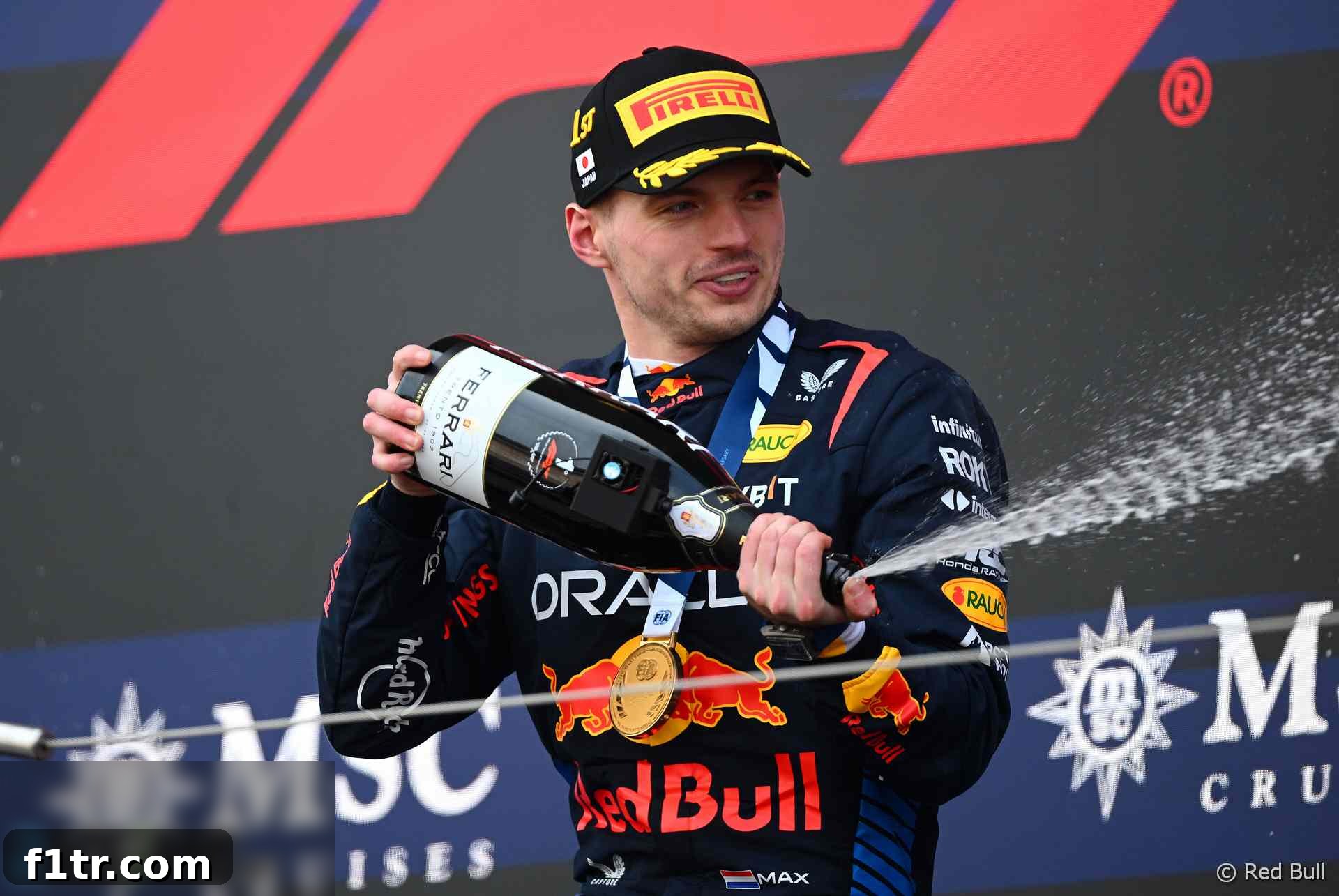
The Formula 1 calendar, now a demanding marathon spanning 24 rounds and featuring more events than ever, often blurs the lines between seasons. Yet, the initial races of 2024 served as an immediate and stark reminder of the previous year’s unwavering dominance. Max Verstappen’s resounding victory at the Chinese Grand Prix was not merely another win; it was his eleventh triumph from the preceding twelve rounds, a testament to an unparalleled period of sustained excellence that firmly established his reign.
Indeed, Verstappen was firmly on course to add another win to his formidable tally in the subsequent race. However, an ill-timed Safety Car intervention reshuffled the deck, ultimately handing a pivotal victory to the driver who would emerge as the most significant challenger to Verstappen’s bid for a fourth consecutive championship title: Lando Norris. This moment, occurring at the Miami Grand Prix, marked a crucial turning point, signifying the first serious threat to Red Bull’s seemingly unshakeable dominance. Despite this setback and the intensifying competition, Verstappen’s remarkable consistency ensured he still claimed more race victories than any other driver by a substantial margin throughout the season.
However, securing a championship title in Formula 1 is rarely solely about accumulating the highest number of wins. As the season progressed, and with rivals increasingly breathing down his neck, Verstappen’s path to glory was paved not only by his dominant victories but equally by his capacity to perform under immense pressure and strategically maximize points on days when victory was out of reach. His ability to be content with second or even lower positions, consistently extracting the maximum from challenging situations, often proved as impressive as his outright race-winning performances. This strategic acumen and relentless consistency were critical differentiating factors in a season that became increasingly competitive.
Verstappen’s mettle was repeatedly tested, and he consistently delivered. A prime example was the Canadian Grand Prix, a race notoriously unpredictable due to its mixed weather conditions. Here, he engaged in a direct and thrilling multi-car battle with both Lando Norris and George Russell, ultimately prevailing through a masterful display of car control and strategic decision-making. He replicated this fighting spirit and triumphant form at Catalunya, once again fending off the formidable pairing of Norris and Russell in another fiercely contested race, showcasing his superior racecraft and ability to perform under the highest stakes.
The Evolving Challenge: Navigating a Season of Peaks and Plateaus
At that juncture, having secured a staggering seven victories in the opening ten rounds, few in the paddock or among fans would have predicted the turn of events that followed. Remarkably, the driver who had showcased such overwhelming superiority would not stand on the top step of the podium in any of the subsequent ten races. This period, an uncharacteristic lull by his own lofty standards, saw Verstappen record only four podium finishes during that challenging spell. It was a clear indication that the competition had not only caught up but, in certain circumstances, had surpassed Red Bull’s initial advantage, forcing Verstappen to dig deeper than ever before.
Max Verstappen
| Best | Worst | |
|---|---|---|
| GP start | 1 (x8) | 17 |
| GP finish | 1 (x9) | 6 (x4) |
| Points | 437 | |
Despite this mid-season recalibration, Verstappen’s strategic brilliance shone through. He astutely identified Lando Norris and McLaren as his primary threat in the championship standings and recalibrated his approach, focusing his energies squarely on thwarting his rival’s burgeoning efforts. This strategic focus manifested in various forms, demonstrating the multi-faceted nature of his genius behind the wheel.
Mastering the Race: Skill, Strategy, and Calculated Aggression
Sometimes, Verstappen achieved his objectives through sheer, unadulterated superior skill and impeccable race strategy. Silverstone and Spa offered compelling examples of this, where he masterfully managed his tires, executed flawless overtakes, and capitalized on every opportunity, often making critical strategic calls that outmaneuvered his competitors. These races were not simply about raw pace, but about the intelligent application of his talent, showcasing a matured and complete driver.
At other times, particularly when the McLaren package, especially in Norris’s hands, appeared untouchable, Verstappen’s objective shifted from winning to minimizing losses. Races like Zandvoort and Singapore became exercises in damage limitation. Faced with an unassailable opponent, he drove with precision and restraint, ensuring he still collected valuable championship points rather than risking a DNF or a lower finish in a futile pursuit of victory. This adaptability, the ability to recognize when to attack and when to consolidate, was a hallmark of his championship-winning season.
There were also instances where Verstappen pushed the boundaries of the regulations to their absolute limit, striving to delay, hinder, or disrupt his rival’s rhythm. This often involved aggressive defensive driving or audacious attacking maneuvers. In Austria, for example, a collision with Norris underscored his willingness to accept an inevitable penalty if it meant protecting or advancing his track position. Similarly, in Mexico, his audacious “zero-percentage” lunge down the inside of Norris at Turn Seven was a stark reminder of his uncompromising, win-at-all-costs mentality. While these incidents sometimes drew criticism, they also highlighted his fierce competitive spirit and unwavering belief in his own abilities, even when the odds were stacked against him.
The Uncontested Crown: A Merited Fourth Championship
The turning point in solidifying his lead came at Interlagos, a race where luck undeniably played a role in the Grand Prix outcome – though it had eluded him in qualifying – but where his flawless driving in dire, ever-changing conditions was nothing short of heroic. This race, a testament to his adaptability and mental fortitude, allowed him to stop the rot in his points lead and regain crucial momentum.
When he finally secured his fourth world title with a characteristically conservative yet perfectly executed drive in Las Vegas, there was no room for doubt; it was a championship fully merited. Many pundits and fans alike considered it arguably his finest title to date, a mature and comprehensive display of talent and strategy. Crucially, this triumph was achieved without the acrimony and controversy that had unfortunately tainted the dramatic finale of the 2021 season, allowing Verstappen to savor a truly clean and undisputed victory, solidifying his legacy in the sport’s annals.
With the immense pressure of the championship battle now lifted, Verstappen unleashed his pure, unadulterated speed and aggression. He took a final, emphatic win in Qatar, demonstrating his mastery by sweeping aside George Russell at the start and then shrewdly capitalizing on Lando Norris’s yellow flag error en route to his ninth victory of the season. This post-title dominance highlighted just how much capacity he had held in reserve. Following this remarkable display, it was genuinely strange to witness him end the year with an uncharacteristic and seemingly needless clash with Oscar Piastri in Abu Dhabi. Until that final, anomalous incident, Verstappen had demonstrated an utter and complete mastery of the competition, delivering a season that will be remembered for its relentless pursuit of excellence.
RaceFans’ driver rankings are based partly on the scores awarded to drivers for their performances in each round as well as other factors, providing a comprehensive assessment of their season-long efforts.
Advert | Become a RaceFans supporter andgo ad-free
Conclusion: A Legacy Forged Through Dominance and Adaptability
Max Verstappen’s fourth Formula 1 World Championship season was a multifaceted narrative of relentless dominance, strategic adaptation, and unyielding competitive spirit. While the early phase was marked by an almost unchallenged supremacy, the emergence of formidable rivals like Lando Norris and a resurgent McLaren forced Verstappen to evolve. He showcased an incredible ability to win when the car was superior, fight tooth and nail when the playing field leveled, and intelligently minimize losses when his competitors held the upper hand. His season was a masterclass in championship management, combining blistering pace with tactical brilliance and a mental toughness that allowed him to navigate both the peaks of victory and the unexpected challenges of a highly competitive grid.
This championship victory, devoid of the controversies of past seasons, cemented Verstappen’s status not just as a prodigious talent but as one of Formula 1’s truly elite drivers. His ability to perform consistently at the highest level, under immense pressure, and across a diverse range of conditions, underscores a legacy that continues to grow with each passing season. The occasional aggressive maneuver or a rare misstep only served to highlight the fiery passion that fuels his pursuit of perfection. As the sport looks ahead, Max Verstappen remains the benchmark, a driver whose relentless pursuit of victory continues to reshape the landscape of Formula 1, leaving an indelible mark on its history.
Advert | Become a Supporter & go ad-free
Formula 1 Insights and Related Articles
- GT driver killed in multi-car crash at Nurburgring Qualifiers
- Should F1 change tracks or racing guidelines to tackle dangers in 2026 rules?
- Controversies, Norris, Newey and more: Five new motorsport books reviewed
- One of F1’s greatest races happened 15 years ago today. Or did it?
- “Overtaking is overtaking”: Domenicali denies F1’s yo-yo racing is “artificial”
Browse all Formula 1 articles