The 2019 Formula 1 season had, until recently, been a masterclass in dominance by Mercedes-AMG Petronas Motorsport. Their formidable W10 challenger had swept every single race, leading many to wonder if they would achieve the unprecedented feat of an undefeated season. However, the Austrian Grand Prix presented an unexpected challenge, marking the end of their winning streak and potentially serving as their ‘Monza 1988’ moment – a rare, singular defeat in an otherwise flawless campaign. This home victory for Red Bull Racing was more than just a win; it was a profound illustration of how specific environmental and track conditions can expose even the most dominant of machines.
The Austrian Anomaly: Heat, Altitude, and the Mercedes W10’s Achilles’ Heel
The Red Bull Ring in Spielberg provided a unique confluence of factors that exposed a critical vulnerability in Mercedes’ meticulously engineered car concept. The scorching temperatures in Austria affected multiple crucial aspects of performance. Firstly, the Pirelli tires, particularly the thinner-gauge compounds introduced for the 2019 season, became exceptionally sensitive. While Mercedes typically excelled at generating and maintaining optimal tire temperatures, these extreme conditions pushed them into an unwelcome overheating zone, shifting the performance advantage towards their rivals. More critically, the relentless heat severely compromised the Mercedes power unit’s cooling capabilities, pushing it beyond its designed operational limits.
Team Principal Toto Wolff openly admitted the severity of the situation, stating that Mercedes was “literally right on the limit” in their attempts to manage the W10’s temperatures during the race. “We couldn’t do anything any more,” he revealed. “It was already very damaging for performance what we did. There was no step left any more.” The desperation was palpable, with Wolff humorously adding, “The next step would have been to remove all the bodywork. So that was not really an option. The sponsors wouldn’t have liked it.” This candid admission underscored the extreme measures the team was forced to undertake, highlighting a fundamental design constraint.
To prevent catastrophic engine failure and maintain reliability, Mercedes was compelled to dial back their powerful engine modes. This forced reduction in power output not only cost them potential pole position but also relegated them into the competitive midfield pack. Racing in close proximity to other cars further exacerbated their cooling woes. The aerodynamic wake from leading cars disrupts airflow, significantly reducing the efficiency of a car’s cooling systems. This issue wasn’t entirely new; Valtteri Bottas had previously highlighted the W10’s sensitivity to heat in Canada, explaining that his cooling performance was already compromised simply by qualifying outside the front row. The Austrian conditions simply amplified this inherent weakness to an unprecedented degree.
Understanding the Red Bull Ring’s Demands
The Red Bull Ring, nestled amidst the picturesque Styrian hills, presents a distinctive set of challenges for Formula 1 cars. The circuit is characterized by two high-speed sectors punctuated by a slower, more technical third sector. While generally considered a fast track, its layout doesn’t impose unusually high lateral loads on the tires. Instead, it is predominantly a “traction track,” meaning that longitudinal grip – under heavy braking and explosive acceleration – becomes the dominant performance factor. This emphasis on traction places immense stress on the power unit, demanding maximum ERS deployment and combustion engine power out of every corner.
Regarding tire wear, the track’s design is somewhat counter-intuitive. The two most heavily loaded corners are left-handers, while the majority of the track comprises right-handers. This means that even when tires are at their most stressed, it’s often the less hard-worked tires on the opposite side of the car bearing the brunt. Coupled with a relatively low-grip and low-abrasion surface, tires typically don’t suffer from excessive internal heat buildup. However, any amount of sliding, common when managing reduced grip or battling for position, can quickly lead to overheating on the tread surface due to increased slip angles. These nuanced characteristics meant that tire management was a delicate balance, particularly under the intense heat.
Adding another layer of complexity, the Red Bull Ring’s higher altitude compared to most F1 venues affects engine performance and cooling. Thinner air at higher altitudes means less oxygen for combustion, reducing power output if not compensated for, and crucially, less dense air flowing through radiators, which diminishes cooling efficiency. The weather in mountainous regions is notoriously unpredictable, oscillating from sun-drenched to rain-soaked. The 2019 Austrian GP weekend, following a track-cleaning downpour the night before practice, was firmly in the sun-drenched category. Clear skies and intense sunshine quickly elevated ambient temperatures beyond 30°C and track surface temperatures above a scorching 45°C. While F1 races frequently encounter high temperatures, these figures surpassed team expectations, creating a critical challenge for managing both tire and power unit temperatures.
The Pirelli Conundrum and Ferrari’s Power Advantage
The 2019 season’s thinner-gauge Pirelli tires introduced a new level of criticality to temperature management. For teams like Mercedes, whose car concept excels at quickly bringing tires up to temperature and keeping them there, this new specification proved challenging. While advantageous in cooler conditions, under extreme heat, these tires would rapidly overheat if not meticulously managed, leading to a significant drop in performance. Conversely, teams that struggled slightly more with generating tire energy from their chassis, and thus often battled to reach optimal temperatures, found the elevated ambient heat beneficial, as it helped them keep their tires within the ideal operating window. Mercedes’ car concept, designed to aggressively work the tires, became a rare handicap under these specific high-temperature scenarios. Adjusting this fundamental characteristic is not a simple trackside tuning exercise; removing downforce or altering suspension settings, while potentially reducing tire energy, would inevitably compromise lap times and could even increase tire sliding, further complicating temperature control.
Significantly, the high temperatures in Bahrain earlier in the season were another instance where Ferrari found themselves perfectly within their desired tire temperature window, contrasting with Mercedes’ struggles. This correlation highlighted how Ferrari’s car characteristics, whether by design or serendipity, were better suited to handling such extreme heat, giving them a performance edge in those particular conditions. The Red Bull Ring’s traction-heavy nature also amplified the importance of raw power unit output. The short bursts of acceleration out of its numerous turns demand maximum ERS deployment and peak combustion engine power, making engine performance a pivotal factor.
Mercedes has consistently acknowledged Ferrari’s power unit advantage throughout the 2019 season, marking the first time a rival had established such a consistent and lasting edge over them. The disparity in how Ferrari and Mercedes deploy their hybrid power has been a topic of intense discussion and analysis. Ferrari appears to have optimized an ERS deployment strategy that allows for the full, sustained utilization of the MGU-K (Motor Generator Unit – Kinetic) along the entire length of the straights. In contrast, Mercedes’ ERS system often exhibits a phenomenon known as ‘clipping,’ where the MGU-K assistance tapers off or ceases before the end of a long straight, limiting their ultimate top speed.
The exact methodology behind Ferrari’s sustained ERS deployment remained a perplexing enigma, even for their rivals. Valtteri Bottas voiced this widespread bafflement: “It doesn’t seem to matter how long or short the track is, they always make the same time gain on the straights, it’s weird.” He further illustrated this point by recalling their performance at Monaco, a track known for its very short straights: “In Monaco they were also gaining half a second on the straights, and they are not long there. It seems like it’s always half a second, long straights or short straights.” This consistent advantage pointed towards a highly refined and possibly unique approach to energy management.
The prevailing theory suggested that Ferrari was likely harvesting energy from the MGU-H (Motor Generator Unit – Heat) on full power and then directly routing it to the MGU-K to prolong its approximately 160 horsepower boost. The critical mystery, however, lay in how they achieved this without simultaneously hindering combustion engine performance or significantly increasing fuel consumption. Such an engineering feat, if fully understood, could fundamentally alter power unit design paradigms across the grid. It highlighted the intricate balance between power, efficiency, and reliability that defines modern F1 hybrid engines.
Mercedes’ Engineering Philosophy and Cooling Compromises
Conversely, Mercedes’ renowned power unit strategy involved running their combustion engine significantly harder, not just for peak horsepower in their ultimate ‘Strat’ engine modes, but consistently throughout the race. This aggressive approach enabled them to deploy a greater percentage of their potential horsepower for longer durations, underpinning their overall car strategy for the season. From an engineering perspective, Mercedes’ ability to maintain such high-performance levels from their V6 hybrid turbo engines, which are now required to last for as many as seven race weekends (up from the original three), is truly impressive. Managing reliability and power degradation over such extended lifespans primarily involves meticulously controlling the engine’s ‘duty cycle’ – the specification of how hard and for how long the engines can operate.
All four engine manufacturers have made massive strides in increasing their duty cycles over recent years. They have achieved this while ensuring a negligible drop-off in performance over an engine’s life and, in many cases, demonstrating near-bulletproof reliability. Mercedes’ proficiency in pushing their engine so hard for such extended periods has been a cornerstone of their dominant car strategy. However, this aggressive engine utilization inevitably comes with inherent compromises. Firstly, a harder-working engine generates significantly more heat. Consequently, this increased heat rejection necessitates larger radiator packages and more open bodywork, which in turn leads to greater aerodynamic drag.
Engineers always incorporate a safety margin into the cooling design of an F1 car. Teams often begin the season with slightly oversized cooling packages. As race data accumulates and proves how much of this safety margin can be safely utilized, they progressively close up bodywork openings to reduce drag and extract further aerodynamic performance. If an engine runs too hot, however, maintaining reliability demands a reduction in the duty cycle, meaning less use of the high-power modes to decrease the heat rejected from the engine. This directly impacts performance, reducing the likelihood of securing pole position and, critically, increasing the chances of running in traffic during the race. Running in traffic only exacerbates overheating issues, creating a detrimental feedback loop that forces even lower power engine modes. This vicious cycle actively works against all the carefully engineered advantages designed to secure pole and control the race, turning a minor issue into a worsening performance spiral.
Throughout the 2019 season, Mercedes had largely opted for a very closed car design, featuring small sidepods and minimal bodywork openings, primarily aimed at reducing aerodynamic drag. With Ferrari demonstrating a clear straight-line speed advantage, minimizing drag was a strategic imperative for Mercedes to try and recoup some of that deficit. Lewis Hamilton articulated the impact of this philosophy during the Austrian Grand Prix: “There’s only 10 corners, but the cars are always on the limit in terms of cooling, and they end up having to open up the car to create cooling and that’s always worse for the car aerodynamically, so you lose performance. Some teams have to do it less than others.”
Mercedes’ frequent luxury of starting from pole position meant they rarely had to run in turbulent air behind other cars, allowing their closed bodywork strategy to generally pay off. Their car design was so finely balanced on the edge of overheating that it even incorporated oversized cooling openings near the cockpit, which could be blanked off during qualifying to reduce drag, as the shorter runs mitigated cooling concerns. In a race scenario, if the car was found to be running hot during the initial stint, Mercedes could ingeniously remove these blanking plates during a pit stop. This clever trick was deployed when the car was stuck behind a competitor or when a lighter fuel load and fresh tires might boost the car’s pace in the second stint. While innovative, this strategy vividly highlighted just how close the team consistently operated to its overheating threshold, with very little safety margin.
The Aftermath and Future Implications
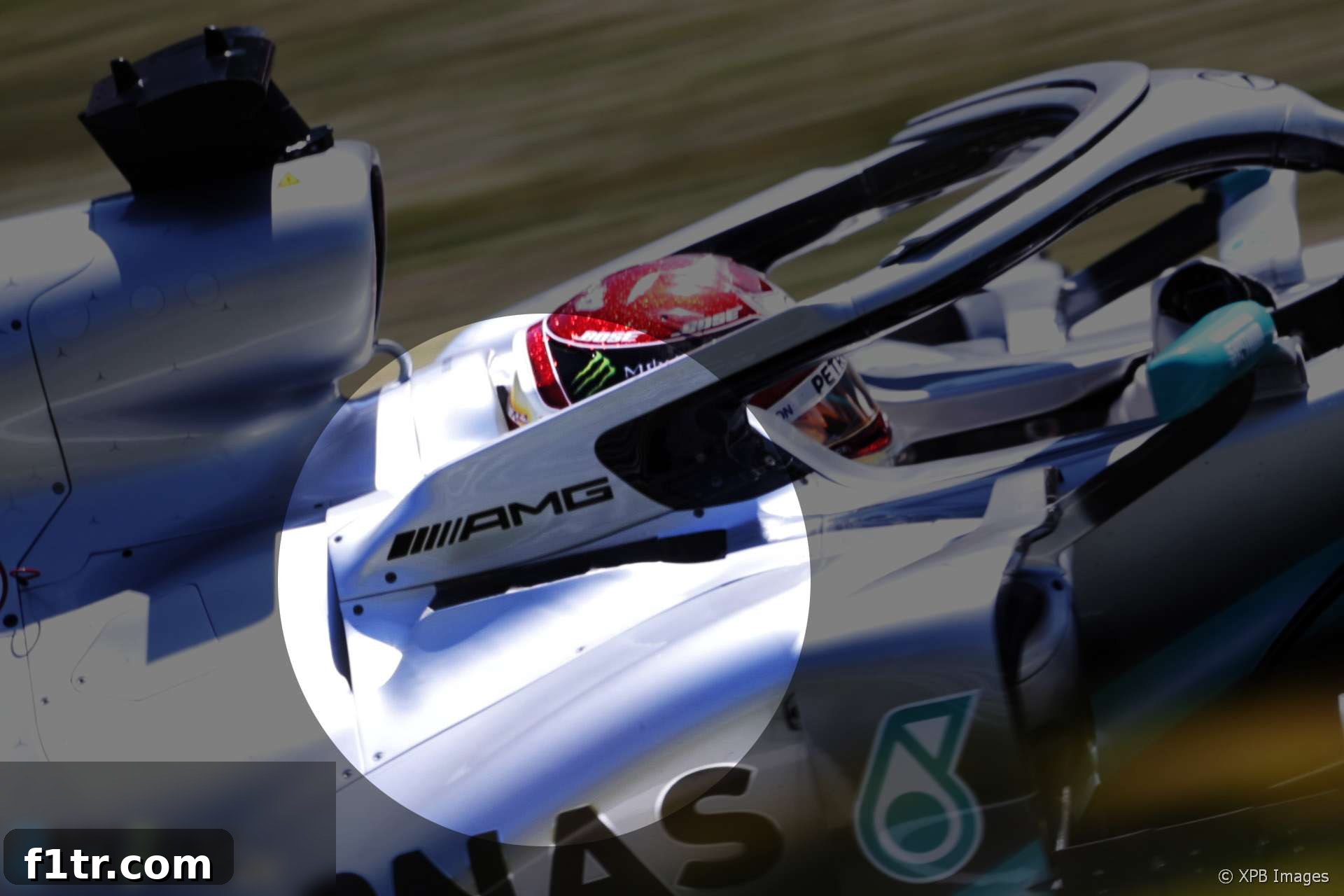
In Austria, the unfortunate combination of unexpectedly high ambient temperatures coupled with the altitude effect led Mercedes to miscalculate their cooling setup. The team candidly admitted their inability to deploy the higher, more powerful engine modes, and this enforced power deficit began to severely erode their lap times. Visual evidence from the race confirmed increased cooling panel openings next to the cockpit, with an additional rectangular section removed, allowing the fins of the radiators to be clearly visible through the aperture. Even with these last-ditch cooling modifications, Mercedes remained significantly handicapped, forced to reduce engine power simply to manage the overwhelming heat.
“We were running the engine way turned down, lifting and coasting for up to 400 meters,” Toto Wolff explained, detailing the extreme compromises. “It’s almost having no throttle rolling downwards. But we were limited by the cooling problems.” After an unprecedented eight consecutive victories, the perfect storm of altitude, searing weather, hot tires, and overheated engines culminated in Mercedes finishing behind not just one, but two of their rivals. This profound defeat brought into sharp focus what Wolff had aptly termed their ‘Achilles’ Heel.’ The critical question emerged: would this vulnerability present frequent opportunities for their competitors to challenge their seemingly unshakeable dominance?
An examination of the remaining races on the 2019 calendar suggested that few tracks were likely to fully replicate the very specific combination of circumstances encountered in Austria. The Red Bull Ring’s unique demands, particularly its altitude and traction-heavy layout, stood out. However, the calendar did feature other venues prone to high ambient temperatures, and some with significant altitude. Mercedes’ demonstrated sensitivity to cooling would undoubtedly make them exceptionally wary of the hotter circuits – notably Budapest (Hungary) and Singapore. This concern would be amplified if Ferrari’s ongoing car development continued to yield performance gains, potentially positioning them as more consistent challengers for pole position and race victories.
It would therefore be no surprise if Mercedes prioritized the development and implementation of revised cooling bodywork well before these challenging races, especially considering the inherent unpredictability of European summer weather. Indeed, the team had already indicated that this was a key part of their strategic plan. Andrew Shovlin, Trackside Engineering Director, candidly admitted, “Fundamentally the car doesn’t have big enough radiators and that’s something that we were a bit optimistic with how much we could get out of the cooling system.” He elaborated further, “It’s under-delivered to what we hoped we could achieve, and it’s meant that we are carrying this issue where in the very hot races we will be struggling to keep everything cool enough.” Shovlin reassured fans and analysts that addressing this weakness was a top priority: “We’ve got a lot of projects looking at this particular issue with the cooling [and] how we can improve that. That work started well before the race weekend in Austria and there’s a lot of people here busy with that.” The Austrian Grand Prix served as a critical wake-up call, prompting Mercedes to double down on an area they had perhaps underestimated, reminding everyone that even the most dominant teams face hurdles in the relentless pursuit of perfection in Formula 1.
2019 F1 Season Insights
- Crying in the Melbourne car park at 2019 grand prix was my career low – Ocon
- McLaren Racing reports reduced £71 million loss in 2019
- Kvyat: Hockenheim podium last year was “my biggest achievement” so far
- How the FIA’s new encrypted fuel flow meter targets Ferrari’s suspected ‘aliasing’ trick
- “He smashed my office door”: 23 must-see moments from ‘Drive to Survive’ season two
Browse all 2019 F1 season articles