In a candid post-race analysis, Mercedes’ head of trackside operations, Andrew Shovlin, reflected on the outcomes of yesterday’s Dutch Grand Prix, concluding that the team hadn’t squandered a significant opportunity for victory. Despite a strong effort from Lewis Hamilton, who started and finished second behind Max Verstappen, Shovlin’s assessment pointed to a fundamental pace advantage held by Red Bull Racing, compounded by Mercedes’ own weekend challenges, which ultimately placed the top step of the podium out of reach.
Strategic Battles and Pace Disparity at Zandvoort
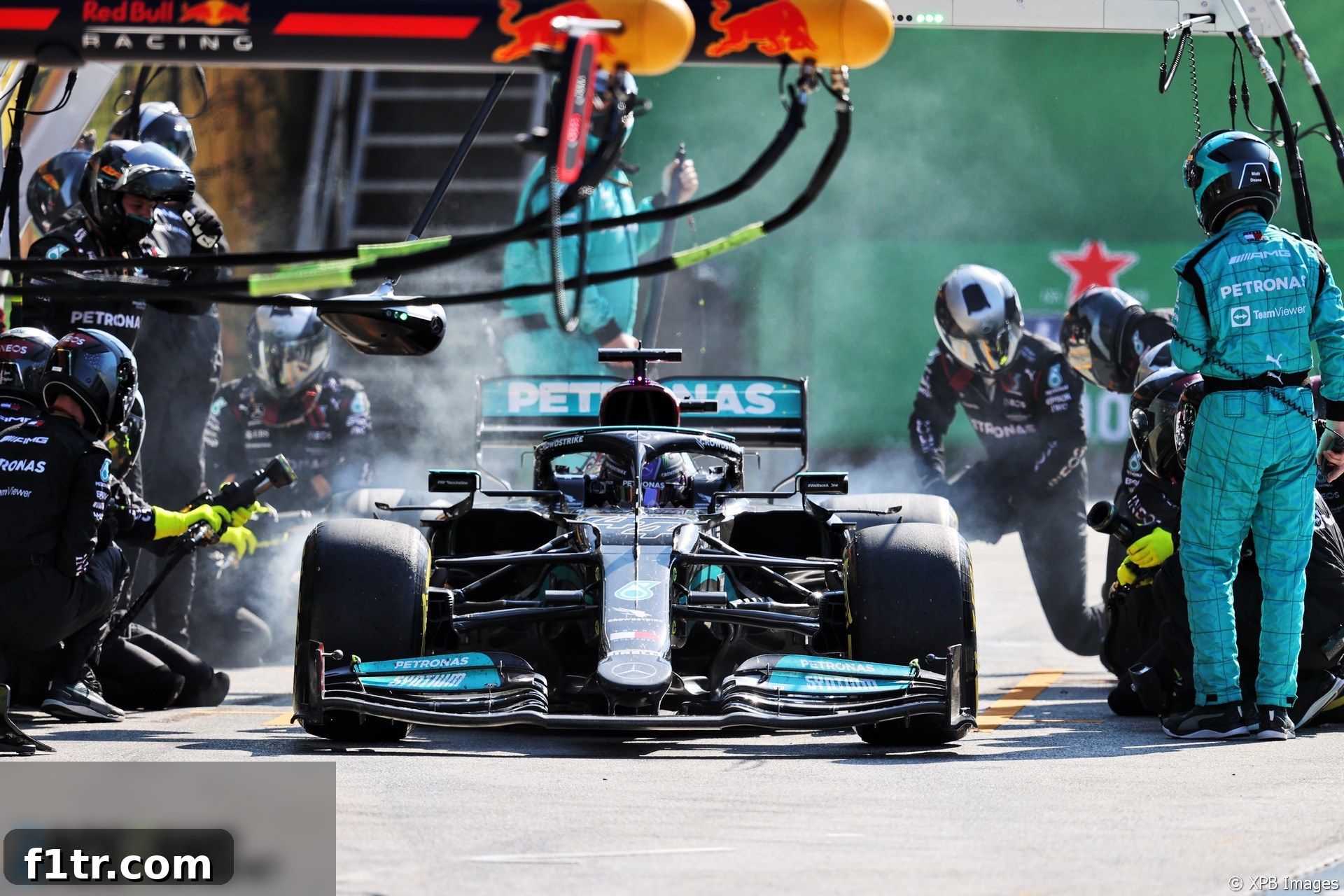
The race at the iconic Zandvoort circuit saw Lewis Hamilton engaged in a relentless pursuit of Max Verstappen. Mercedes attempted to gain an advantage through strategic pit stops, twice bringing Hamilton in before his Red Bull rival in a bid to execute an undercut. This aggressive approach aimed to utilize fresh tyres to gain precious lap time, hoping to emerge ahead once Verstappen completed his own stop. However, each time, the Red Bull driver demonstrated superior pace and flawless execution, consistently re-emerging from the pits still in the lead, effectively neutralizing Mercedes’ strategic gambits.
Further demonstrating their commitment to securing a better result, Mercedes also extended Valtteri Bottas’ first stint. This tactic was designed to create an alternative strategic window or to put pressure on Red Bull, potentially aiding Hamilton in his quest to close the gap to Verstappen. Yet, even this concerted team effort proved to be to no avail, as the Red Bull-Verstappen combination maintained their dominant position throughout the race.
Shovlin’s Assessment: No Missed Opportunities for Victory
Andrew Shovlin was unequivocal in his belief that Red Bull’s inherent pace advantage was simply too much for Mercedes to overcome on the day. He contended that the opportunities for Mercedes to achieve a better result were severely limited, and that there was no significant moment where victory slipped through their grasp.
“The opportunities are the normal ones like getting off the line,” Shovlin explained, alluding to the critical importance of a strong start. “If that had been better, then it at least puts you in the driving seat.” However, he quickly tempered this by emphasizing that even an improved start likely wouldn’t have altered the fundamental outcome given Red Bull’s performance envelope. Shovlin delved deeper into the team’s race analysis, particularly concerning the pit stops. “Looking at the stops, the problem was Lewis was having to push very hard to close up. We certainly seemed a little bit stronger on that medium tyre and we could get that gap down a bit, and we’ll go through it as we always do. But I don’t think there was a point where you’d say we could have won.”
A key aspect of Verstappen’s commanding performance, according to Shovlin, was his ability to manage the race pace. “Also when you look at the gaps and when we were at our closest, it was too far for us to really run to the finish. But you’ve got to remember that Max has an element of management in his running and he can let those gaps shrink when you’re not at risk and grow them when you are.” This insight highlights that Verstappen was likely driving well within his car’s limits for much of the race, possessing the ability to respond to any Mercedes challenge without truly pushing to the absolute edge. Shovlin concluded, “We could see where he was pushing hard and I think in reality, there wasn’t any big opportunity that we let slip through our fingers.” This statement underscores Mercedes’ belief that they extracted nearly everything possible from their package on race day, but it simply wasn’t enough.
The Undermining Impact of Practice Disruptions
While race day strategy and pace were paramount, Shovlin suggested that Mercedes’ competitive position could have been stronger had they extracted more from their car during the crucial practice sessions leading up to the Grand Prix. The foundation for a successful race weekend is laid in practice, where teams fine-tune their car setups, gather vital data, and conduct long-run simulations.
“I think it goes back to arriving here in better shape with a set-up that’s working well, completing the programme, getting all our homework done, and when we’ve checked all those boxes we’re normally in a position to challenge them properly for the win,” Shovlin stated. This reflects a belief that early-weekend optimization is key to unlocking full potential, especially when battling a rival as formidable as Red Bull. The Zandvoort circuit, with its unique characteristics, including banked corners and a demanding layout, places a high premium on perfect setup, and any deviation from an optimal preparation plan can have significant repercussions.
Lewis Hamilton’s Friday Setback and Its Ripple Effect
The challenges faced by Mercedes were significantly exacerbated by disruptions during practice, particularly for Lewis Hamilton. While all drivers contended with frequent red flags that interrupted sessions and limited track time, Hamilton suffered a more severe setback: a power unit failure during Friday’s second practice session. This mechanical issue meant Hamilton missed virtually all of that vital session, robbing him of crucial running time needed to understand the circuit and fine-tune his car.
The ramifications of this missed Friday track time cascaded throughout the weekend. The team was forced to reallocate some of their Friday job list to Saturday’s practice sessions, which in turn reduced the amount of dedicated preparation time available for qualifying. Shovlin explained, “All we tried to do was put a bit of long-run work into Saturday because he hadn’t really done any long run.” This shift meant sacrificing valuable time that would normally be spent on qualifying simulations and exploring the limits of the car with low fuel. Consequently, Hamilton also missed another critical opportunity to properly evaluate the soft tyre compound, which is crucial for maximizing qualifying pace.
Qualifying’s Agonizingly Close Call
The ripple effect of the practice disruptions even extended into qualifying itself. The chaotic nature of the sessions, marked by more red flags, made it difficult for teams to get their tyres into the optimal operating window. Shovlin detailed the challenges faced: “Even his session on Saturday was impacted. And even going into qualifying because we did the medium [in Q1] and then we were on cold tyres because of a red flag going into Q2, it was quite late before we actually had a run where it was hot tyres out of the box that were fresh.” This inability to consistently generate optimum tyre temperature meant drivers were often on the back foot, trying to extract performance from tyres that weren’t quite ready.
Despite these significant hurdles, Hamilton demonstrated his remarkable talent and resilience, coming agonizingly close to pole position, missing out by just 38 thousandths of a second. This incredibly tight margin underscored the fine line between success and disappointment at the pinnacle of motorsport. Shovlin acknowledged the team’s relentless effort: “So we were just playing catch-up a bit and it was encouraging to see that we could get close – I know Max didn’t have a perfect lap.” However, he also emphasized the underlying issue: “But this weekend we’ve been a little bit behind the curve and trying to catch up and we need to get everything right to beat them.” This candid admission highlights Mercedes’ ongoing battle to match Red Bull’s raw pace and the imperative to maximize every single session to gain an advantage.
Implications for the Intense Championship Battle
The Dutch Grand Prix was more than just another race; it was a pivotal moment in the intensely fought 2021 Formula 1 World Championship. The relentless rivalry between Lewis Hamilton and Max Verstappen has defined the season, with every race, every point, and every strategic decision carrying immense weight. Coming into Zandvoort, the championship momentum had swung back and forth, and the pressure on both teams to deliver was immense.
For Mercedes, a victory at Zandvoort would have been a crucial psychological blow against their rivals, especially on Verstappen’s home turf where the atmosphere was electrifying. However, the outcome reinforced the brutal reality of their championship fight: against a perfectly executed weekend from Red Bull and a flawless drive from Verstappen, even a near-perfect performance from Mercedes wasn’t enough. The result further tightened the championship standings, intensifying the battle for supremacy as the season entered its latter stages. Mercedes knows that to emerge victorious in this titanic struggle, they cannot afford any missteps, either in car development, race strategy, or weekend execution.
Conclusion: The Relentless Pursuit of Perfection
In conclusion, Andrew Shovlin’s post-race analysis of the Dutch Grand Prix paints a clear picture: Mercedes did not miss a significant chance to win because, fundamentally, Red Bull and Max Verstappen had the superior package and executed a near-perfect weekend. The inherent pace advantage of the Red Bull car on the Zandvoort circuit, combined with Verstappen’s expert race management, created a formidable barrier that even Hamilton’s relentless pressure and Mercedes’ strategic efforts could not breach.
Compounding this challenge were the significant disruptions Mercedes faced during practice, particularly Lewis Hamilton’s power unit failure on Friday. This critical loss of track time had a ripple effect, compromising their setup optimization and race preparation, ultimately putting them on the back foot from the outset. While Hamilton’s raw talent brought him agonizingly close to pole and a P2 finish, the team’s overall struggles to get the W12 fully dialed in for the unique demands of Zandvoort meant they were always playing catch-up.
The Dutch Grand Prix serves as a stark reminder of the razor-thin margins at the pinnacle of motorsport. To overcome Red Bull in this intense championship battle, Mercedes acknowledges that every detail matters – from arriving at the circuit with a well-understood setup, to executing flawless practice sessions, to nailing every strategic call on race day. The team will undoubtedly meticulously review every aspect of their Zandvoort performance, seeking out every fractional improvement to ensure they are in the strongest possible position for the remaining races of what promises to be an unforgettable season.
2021 Dutch Grand Prix
- “So many people love him”: Raikkonen’s rivals pay tribute to retiring champion
- Alonso studied junior series, not IndyCar, for Zandvoort banking clues
- 2021 Dutch Grand Prix Star Performers
- Paddock Diary: Dutch Grand Prix part two
- Verstappen makes the Netherlands 12th country to produce a home F1 winner
Browse all 2021 Dutch Grand Prix articles