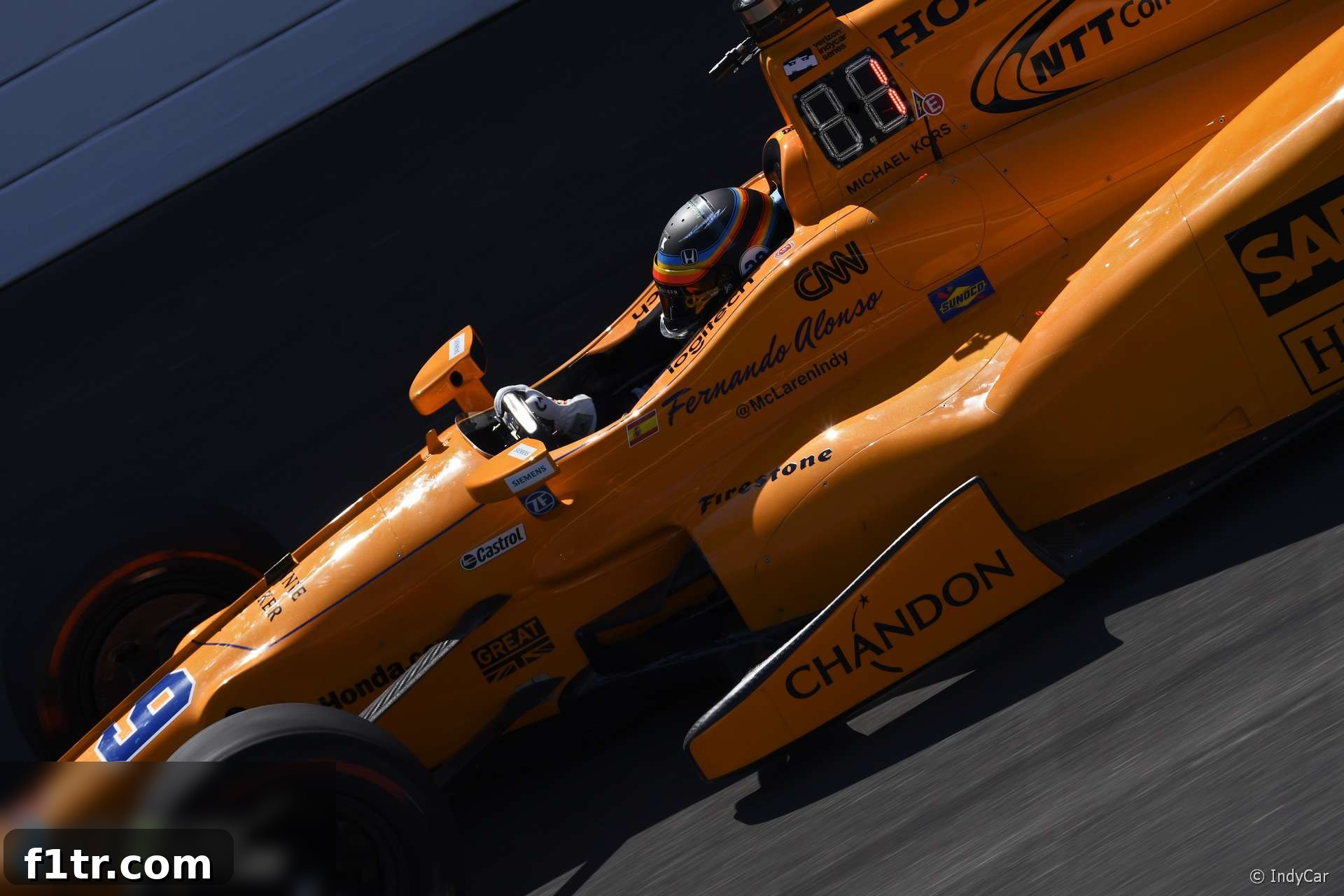
In the high-stakes world of international motorsport, strategic decisions can dramatically alter a team’s trajectory. For McLaren, a name synonymous with Formula 1 excellence, the path forward involves a complex blend of F1 restructuring and ambitious exploration into other racing arenas. Despite recent significant changes within its Formula 1 operation, triggered by the departure of Eric Boullier, the legendary British team remains steadfast in its consideration of a full-time IndyCar entry for the upcoming season. This potential expansion represents a bold statement of intent, signaling McLaren’s desire to reassert its dominance across diverse motorsport disciplines, while simultaneously navigating pivotal internal transformations.
The recent upheaval in McLaren’s F1 leadership has drawn considerable attention. Following Eric Boullier’s resignation as Racing Director, the team promptly announced a comprehensive restructuring of its F1 operations. This internal reorganization saw the promotion of individuals to key strategic roles, aimed at revitalizing their performance on the Grand Prix circuit. A notable appointment in this reshuffle was that of IndyCar champion Gil de Ferran, who joined McLaren earlier this year with widespread speculation about his potential involvement in a mooted IndyCar program. However, his new role as Sporting Director of the F1 team places him at the heart of McLaren’s immediate efforts to improve its Formula 1 fortunes, momentarily shifting the focus of his expertise.
McLaren CEO Zak Brown Addresses IndyCar Ambitions Amid F1 Focus
Addressing the swirling speculation during an event at Silverstone, McLaren Racing CEO Zak Brown offered crucial insights into the team’s multifaceted strategy. Brown acknowledged the immediate imperative to stabilize and enhance the Formula 1 team’s performance, stating unequivocally that the organization is “laser-focused on Formula 1 right now.” This commitment reflects the gravity of their current F1 challenges and the critical need to return to competitive form. However, Brown was quick to clarify that this intense focus on Formula 1 does not translate into an abandonment of their broader motorsport aspirations. He explicitly stated that expanding into IndyCar next year remains a distinct possibility and has not been ruled out.
“No, we still haven’t made a decision,” Brown affirmed, dismissing premature reports. “We have some time so right now we’re just not focused on thinking about it. We’ll pick that up when we need to make a decision.” This statement underscores a measured approach, indicating that McLaren is conducting a thorough evaluation, weighing the benefits, challenges, and resource implications of such a significant undertaking. The timeline suggests that while F1 recovery is the immediate priority, the strategic potential of an IndyCar program is being carefully considered for a later, more opportune moment. “I’ve seen it reported that we’re not [entering IndyCar], but no decision has been taken,” he reiterated, keeping all options firmly on the table.
The strategic allure of IndyCar for McLaren is manifold. Entering the NTT IndyCar Series would not only provide a significant opportunity for brand expansion in the lucrative North American market but also offer a distinct platform for engineering and operational synergies. McLaren’s rich heritage in American open-wheel racing, including multiple Indy 500 victories in the 1970s, makes a return to the series a natural fit. Such a move could bolster their global motorsport portfolio, showcasing McLaren’s versatility and commitment to winning across diverse and highly competitive environments. The technical challenges and the distinct racing culture of IndyCar could also serve as valuable proving grounds for talent and technology, potentially benefiting their F1 program in the long run.
Fernando Alonso and the Pursuit of the Triple Crown
Central to McLaren’s broader motorsport narrative, and intrinsically linked to any potential IndyCar venture, is the future of two-time Formula 1 world champion, Fernando Alonso. Brown’s comments strongly indicated that Alonso could indeed play a pivotal role in their IndyCar plans, reigniting excitement among fans eager to see the Spanish maestro tackle the iconic Indianapolis 500 once more. Alonso’s undeniable ambition to achieve motorsport’s elusive Triple Crown—victories at the Monaco Grand Prix, the 24 Hours of Le Mans, and the Indianapolis 500—is a driving force behind his recent explorations beyond Formula 1.
“I think anything’s possible as far as what Fernando could drive next year,” Brown speculated, highlighting the flexibility in Alonso’s potential future endeavors. The relationship between McLaren and Alonso extends beyond a conventional driver-team dynamic; it is a partnership built on shared ambition and a mutual desire for historic achievements. Alonso has already secured the Monaco Grand Prix and, during his tenure with Toyota Gazoo Racing, added the 24 Hours of Le Mans to his impressive resume. The Indianapolis 500 remains the final, glittering jewel in his Triple Crown quest.
“He definitely wants to win the Triple Crown, we’d like to do that with him,” Brown emphasized. This statement confirms McLaren’s commitment to supporting Alonso’s personal objectives, recognizing the immense prestige and marketing value associated with such an accomplishment. Should McLaren launch a full-time IndyCar team, it would provide a direct and highly integrated pathway for Alonso to contest the Indy 500, potentially even on a full-season basis, depending on contractual arrangements and his broader racing schedule. The prospect of Alonso piloting a McLaren-branded IndyCar for an entire season, or even just for the Indy 500, would undoubtedly generate massive global interest and elevate the profile of both the team and the series.
However, Brown also acknowledged the immediate temporal constraints: “So I’d say if that’s possible for next year given where everything is right now we’re not quite shifted towards who’s driving what next year.” This indicates that while the ambition is clear, the practicalities of planning a new racing program and finalizing driver lineups are still a few steps away, contingent on the overarching decision regarding the IndyCar entry itself. The intricate dance between F1 commitments, resource allocation, and Alonso’s personal goals will ultimately shape the feasibility and timing of his next Indy 500 attempt with McLaren.
The Broader Implications of McLaren’s Motorsport Strategy
McLaren’s contemplation of a full-time IndyCar entry transcends mere competitive aspiration; it reflects a broader strategic realignment within the upper echelons of motorsport. In an era where leading brands seek diverse avenues for engagement and technological development, a multi-series presence offers distinct advantages. It allows for the cross-pollination of engineering talent, sharing of operational best practices, and a wider platform for sponsorship acquisition and brand exposure. For McLaren, a team undergoing significant introspection and change in its core F1 program, expanding into a series like IndyCar could provide a crucial psychological boost and a demonstration of renewed ambition and resilience.
The challenges, however, are not insignificant. Launching a new team in any major motorsport series requires substantial financial investment, a dedicated pool of highly skilled personnel, and meticulous logistical planning. McLaren’s F1 team is currently consuming considerable resources in its recovery efforts, making the allocation of additional funds and talent for an IndyCar program a complex balancing act. The decision will undoubtedly hinge on a detailed cost-benefit analysis, taking into account potential revenue streams, strategic partnerships, and the long-term vision for McLaren Racing as a global motorsport powerhouse.
Ultimately, the coming months will be critical for McLaren. The decision regarding a full-time IndyCar entry will not only define its immediate future in North American open-wheel racing but also send a clear signal about the strategic direction of one of motorsport’s most storied names. Whether it’s through a revitalized F1 effort, a triumphant return to IndyCar, or a combination of both, McLaren is clearly signaling its intent to remain at the forefront of global racing competition, driven by ambition, innovation, and the enduring pursuit of victory. The potential for Fernando Alonso to complete his Triple Crown under the McLaren banner only adds another layer of intrigue to an already compelling narrative.
Related Motorsport News & Features
- F1’s Docuseries Dilemma: Ferrari and Mercedes Snub’s Impact
- Inside Story: McLaren’s Bold Honda Engine Decision in 2018
- Honda’s F1 Resurgence: The Role of Red Bull’s Junior Team
- From Jets to F1: Honda’s Cross-Divisional Engineering Success
- Financial Impact: McLaren Racing’s Losses Post-Honda Split
Browse all articles related to McLaren’s racing history and strategy