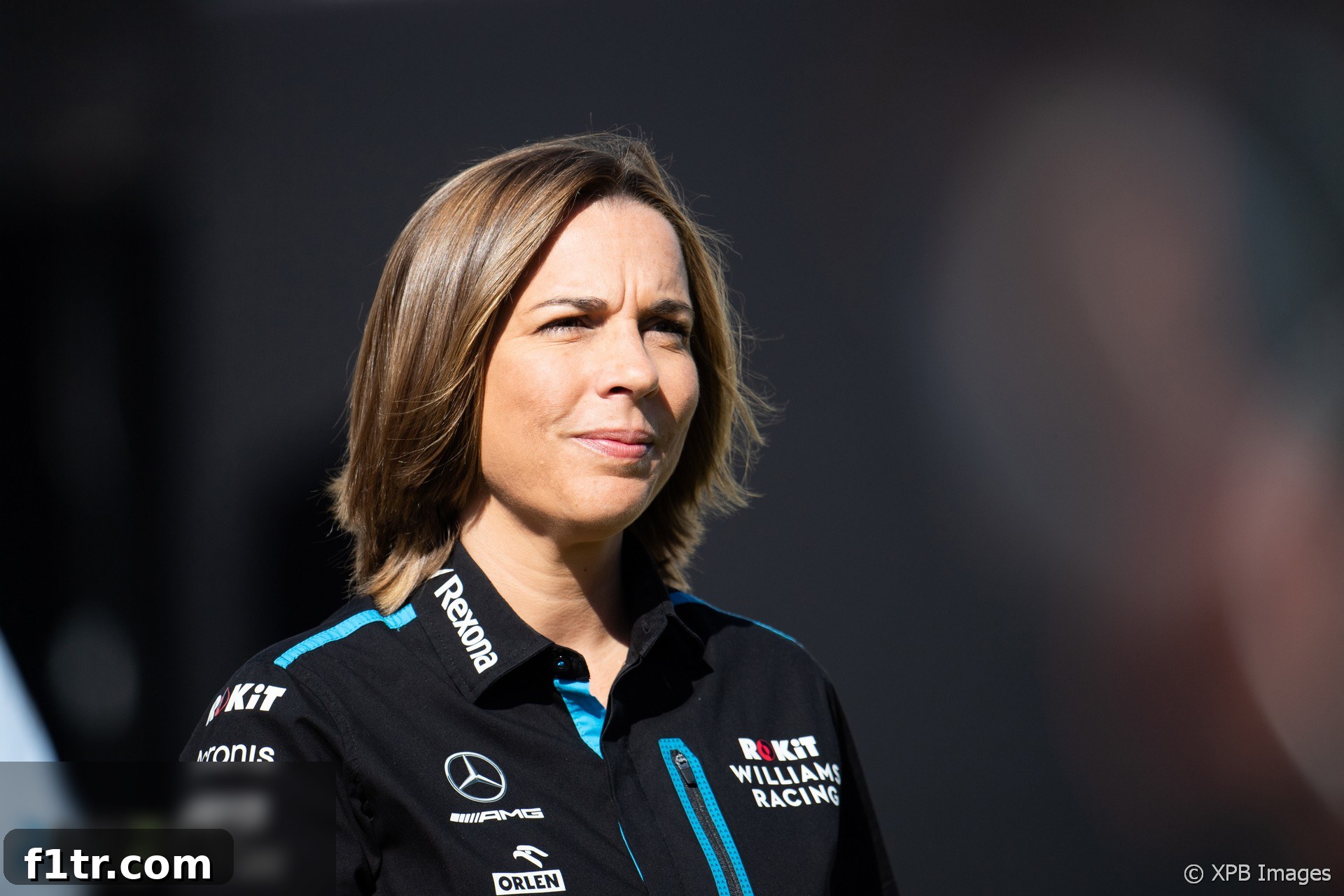
Williams Racing, one of Formula 1’s most iconic and historically significant teams, finds itself at a pivotal crossroads. Deputy Team Principal Claire Williams has openly stated the urgent need to secure fresh funding for the struggling outfit, a process that could potentially culminate in a sale of the team. This crucial strategic review is targeted for completion within the next three to four months, underscoring the pressing nature of the situation for the Grove-based constructor.
The announcement last week confirmed what many in the F1 paddock had speculated: Williams is actively exploring all strategic options to safeguard its future. Having plummeted to the bottom of the Constructors’ Championship in recent seasons, the team acknowledges that a significant injection of capital or a change in ownership is essential to reverse its fortunes and reclaim a competitive standing in the sport. This candid admission marks a somber, yet determined, chapter for a team synonymous with racing excellence and innovation.
Advert | Become a Supporter & go ad-free
Claire Williams emphasized the swift timeline for this critical undertaking. “We haven’t put a time frame on this process, but we want to complete it within the next three to four months,” she remarked, adding with a characteristic nod to F1’s high-speed ethos, “We like to do things fast in Formula 1, don’t we? We feel that we can achieve it in that time frame.” This urgency is not merely for show; it reflects the rapidly evolving landscape of Formula 1, particularly with significant regulatory changes and a new budget cap on the horizon for the 2021 season and beyond. While the team is “fully funded throughout the remainder of this year to continue racing as and when we can go back to the circuit,” securing long-term financial stability is paramount for future success.
Navigating a Critical Juncture: The Rationale Behind Williams’ Strategic Review
The decision to explore a sale or seek substantial new investment is a testament to the immense pressures faced by independent teams in modern Formula 1. Williams Racing, once a dominant force with multiple world championships to its name, has endured several challenging years. A consistent presence at the back of the grid has not only impacted morale and on-track performance but has also made it increasingly difficult to attract and retain top-tier sponsorship, exacerbating financial strains.
The team’s last constructors’ championship came in 1997, and while there have been flashes of competitiveness since, the recent downturn has been particularly severe. Being at the bottom of the F1 pecking order means reduced prize money, which forms a significant portion of a team’s annual budget. This creates a challenging cycle where a lack of funds hinders performance, and poor performance, in turn, impacts revenue streams. The strategic review is therefore a necessary step to break this cycle and provide the team with the resources needed to climb back up the grid.
This move is particularly poignant given the team’s unique heritage. Founded by Sir Frank Williams and Sir Patrick Head, Williams Racing is one of the few remaining family-run teams in Formula 1, a proud independent entity in an era increasingly dominated by manufacturer-backed giants. The Williams family’s dedication to the sport is legendary, and this strategic review underscores their commitment to the team’s long-term survival, even if it means relinquishing some control to ensure its future.
Investment Priorities: Rebuilding for Future Success
The need for significant investment extends beyond merely covering operational costs. Claire Williams detailed the areas requiring immediate attention to bolster the team’s competitive edge. Following the departure of former Chief Technical Officer Paddy Lowe at the beginning of last season, the team undertook a comprehensive restructuring of its technical operation. While this involved considerable investment in personnel at certain levels over the past two years, more is still required to elevate Williams to a level where it can consistently challenge rivals.
“We’ve invested in this team mostly from a personnel perspective over the past two years,” Claire Williams confirmed. “But there are lots of things. Formula 1 teams, you give them money to spend and they’ll spend it straight away. We give it to engineers and they spend it even faster and they want even more.” This statement perfectly encapsulates the insatiable demand for resources in Formula 1, where every fraction of a second gained on track often translates to millions invested off it.
Specifically, investment in infrastructure is highlighted as a key priority. Modern Formula 1 demands state-of-the-art facilities, including cutting-edge wind tunnels, advanced simulation tools, and sophisticated manufacturing capabilities. Without continuous upgrades and maintenance in these areas, even the most talented engineers and designers will struggle to produce a competitive car. These are the foundational elements that empower a technical team to innovate and develop performance-enhancing solutions.
While acknowledging the strength of the current senior technical leadership, Williams hinted at potential further recruitment within the team’s lower ranks. “I don’t necessarily believe that we need to invest in personnel at a senior level, I think we’ve got that. Whether we need more people in the ranks below, that will be a question that we will look at.” A deep and talented pool of engineers, aerodynamicists, strategists, and mechanics is crucial for a successful F1 operation. Building this depth requires sustained financial backing to attract and retain the best talent in a highly competitive job market. These plans, while not disclosed in detail, are clearly integral to the team’s vision for revitalization.
The F1 Landscape: Pandemic, Budget Caps, and a New Era
The timing of Williams’ strategic review is further complicated and influenced by the unprecedented global challenges of 2020. The COVID-19 pandemic brought the world to a standstill, and Formula 1 was no exception. The disruption to the racing calendar, the postponement or cancellation of events, and the significant reduction in commercial revenue for the sport as a whole have placed immense financial pressure on every team, particularly those without the deep pockets of a major manufacturer.
In response to these challenges and a long-standing desire to create a more equitable and sustainable sport, Formula 1 introduced a landmark budget cap, set to be implemented from the 2021 season. This cap, initially set at $175 million and subsequently lowered to $145 million for 2021, with further reductions planned for subsequent years, is designed to level the playing field. For teams like Williams, this presents a unique opportunity. A lower budget cap means that financial might will no longer be the overwhelming determinant of success, potentially allowing smarter, more efficient teams to close the performance gap to the sport’s giants.
However, capitalizing on this opportunity requires significant upfront investment. To operate effectively within the budget cap, teams need to have modern infrastructure and a streamlined, highly efficient workforce already in place. For Williams, securing new funding now is critical to making those necessary improvements before the cap fully constrains spending. It’s about building a solid foundation from which to launch a recovery, ensuring they can be competitive under the new financial regulations rather than just surviving them.
What Lies Ahead: Securing Williams Racing’s Legacy
The next three to four months will undoubtedly be a defining period for Williams Racing. The outcome of this strategic review will determine the trajectory of one of Formula 1’s most revered names. Whether it results in new investment partners joining the family ownership structure, or a complete sale of the team, the ultimate goal remains the same: to provide Williams with the financial stability and resources it desperately needs to compete at the pinnacle of motorsport once again.
Claire Williams and the entire team are committed to ensuring the legacy of Williams Racing endures. This includes not only preserving its identity but also restoring its competitiveness and bringing the team back to where its rich history suggests it belongs – fighting for points, podiums, and eventually, victories. The F1 community, fans, and rivals alike will be watching closely as this crucial chapter unfolds, hoping for a positive resolution that secures the future of a truly iconic Formula 1 institution.
Advert | Become a RaceFans supporter andgo ad-free
2020 F1 season
- Grosjean to make F1 test return tomorrow for first time since Bahrain horror crash
- Pictures: Wrecked chassis from Grosjean’s Bahrain fireball crash to go on display
- Bottas vs Rosberg: Hamilton’s Mercedes team mates compared after 78 races each
- F1 revenues fell by $877 million in Covid-struck 2020 season
- Hamilton and Mercedes finally announce new deal for 2021 season
Browse all 2020 F1 season articles