Las Vegas Grand Prix: Russell Reigns Supreme as Verstappen Claims Historic Fourth F1 World Championship
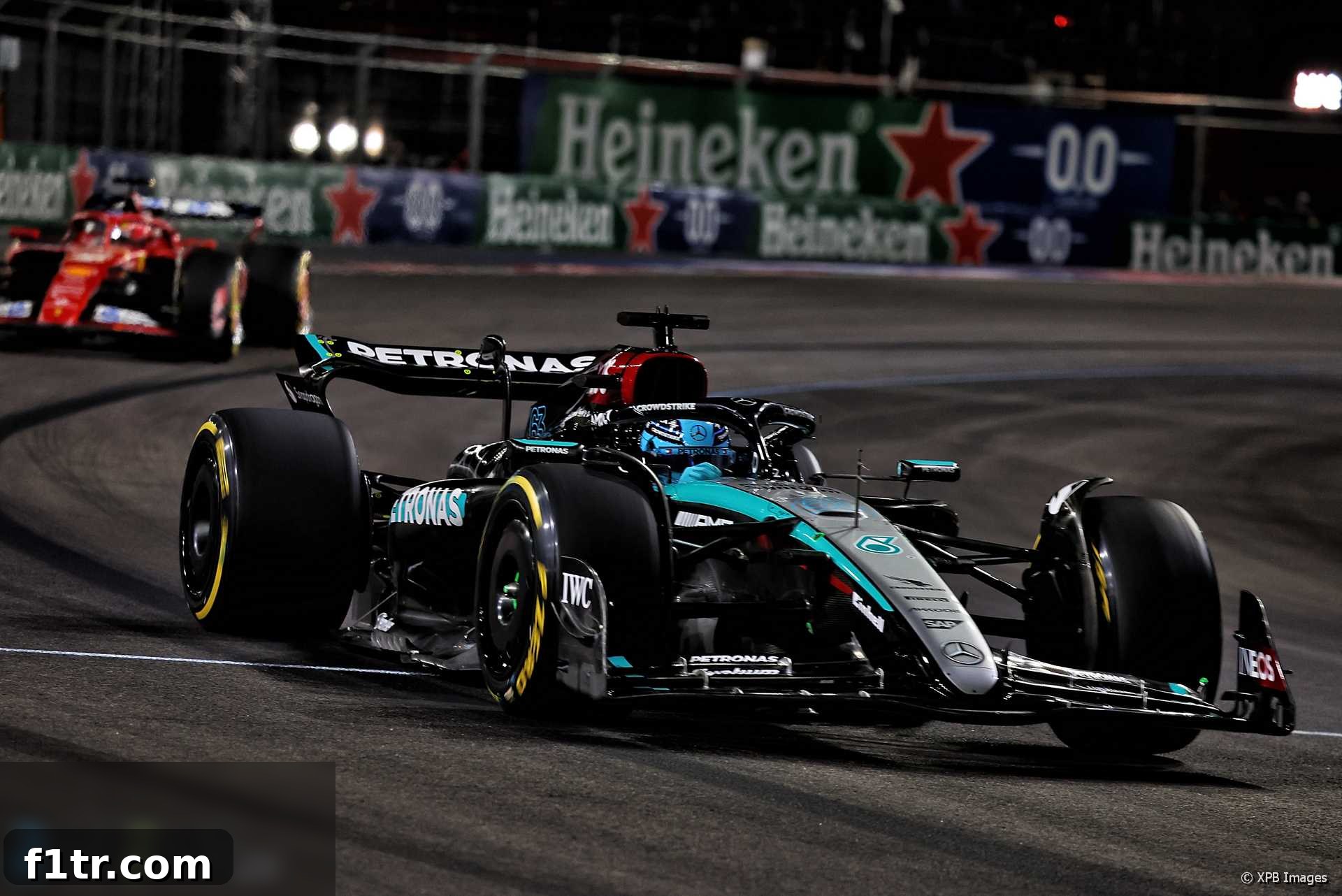
The glittering spectacle of the Las Vegas Grand Prix culminated in a thrilling victory for George Russell, who led a commanding Mercedes one-two, with teammate Lewis Hamilton securing a remarkable second place. Amidst the neon glow of the Strip, the true highlight of the evening was Max Verstappen, who, despite finishing fifth, clinched his fourth consecutive Formula 1 World Championship title, etching his name further into the annals of motorsport history. This highly anticipated race delivered high drama, strategic masterclasses, and unforgettable moments, living up to the hype surrounding its grand return to the F1 calendar.
Russell’s Dominant Performance: From Pole to Victory in Las Vegas
Starting from pole position, George Russell demonstrated exceptional control and race craft from the very first lap. The young British driver converted his pole into a second victory of the season, showcasing the raw pace and strategic prowess of the Mercedes team. The start itself was a fiercely contested affair, with Russell immediately asserting his authority over the grid.
As the lights went out, Russell launched flawlessly, fending off the initial challenge from Carlos Sainz Jnr. However, the true early battle unfolded behind him. Sainz’s Ferrari teammate, Charles Leclerc, demonstrated aggressive intent, surging past third-place starter Pierre Gasly to slot himself into a prime position. Through the notoriously tight first corners of the Las Vegas street circuit, the two scarlet Ferraris ran side-by-side in a heart-stopping display of close-quarters racing. Leclerc, with a decisive move, managed to get ahead of his team mate, settling into second place behind the leading Mercedes.
Early Laps: Strategic Chess and Tire Management
In the initial phase of the race, Charles Leclerc mounted a spirited challenge for the lead, consistently applying pressure to George Russell. The Monegasque driver, known for his relentless pursuit of victory, pushed his Ferrari to its limits, attempting to find a way past the composed Mercedes driver. However, Russell, unfazed by the aggressive maneuvers behind him, expertly defended his position, utilizing the Mercedes’ straight-line speed and tactical placement to maintain his lead. His defensive driving was impeccable, denying Leclerc any clear overtaking opportunities.
After his intense efforts to seize the lead proved futile, Leclerc’s pace began to wane slightly. The Ferrari seemed to be struggling with tire graining, a common issue on new tarmac and street circuits, which rapidly degrades tire performance. This prompted a strategic shift within the Ferrari garage. Leclerc eventually fell back from Russell, and in a calculated move, allowed his teammate Carlos Sainz Jnr to pass him, perhaps in an attempt to optimize team points or try a different strategy. Shortly after, the relentless Max Verstappen, who had been meticulously working his way through the field, capitalized on Ferrari’s struggles, overtaking Leclerc to demote him to fourth.
The tire graining issues continued to plague the Ferraris, forcing both drivers into an early pit stop. Leclerc was brought in at the end of lap nine for a set of hard compound tires, a move designed to extend his stint and regain performance. Sainz followed suit the very next lap. These early stops by a front-running team immediately triggered a chain reaction among their rivals, Red Bull and Mercedes. The strategic game of chess was officially underway, with teams trying to anticipate and counter each other’s moves. Following the initial round of stops, Russell maintained a comfortable lead, but the chasing pack had reshuffled, with Sergio Perez and Nico Hulkenberg, both yet to pit, temporarily moving up. Crucially, Verstappen found himself in a net second place, poised to challenge once the pit stops normalized, with the two Ferraris of Sainz and Leclerc running in close proximity behind him.
Hamilton’s Masterclass: A Charge from Tenth to Second
While George Russell was meticulously managing his lead at the front, the performance of the day arguably came from his teammate, Lewis Hamilton. Starting from a challenging tenth position on the grid, Hamilton embarked on one of his characteristic charges through the field. His experience and race craft were on full display as he systematically picked off competitors, demonstrating a formidable pace that few could match.
As the race progressed, Russell continued to maintain a healthy advantage over Max Verstappen, who was now running in a net second place. However, the real drama unfolded behind them as Hamilton closed in on the Ferraris of Sainz and Leclerc, who were battling for third and fourth. Hamilton’s relentless pursuit saw him not only catch the red cars but also swiftly dispatch them with precise and aggressive overtakes.
Mid-Race Dynamics and the Second Round of Pit Stops
The strategic landscape shifted once more on lap 27 when Max Verstappen became the first of the front-runners to pit for a second time. This move effectively initiated the second round of pit stops among the leaders, forcing other teams to react to Red Bull’s strategy. The timing of these stops proved crucial in shaping the final outcome of the race and the championship implications.
Capitalizing on the pit stop windows and his blistering pace, Lewis Hamilton executed a series of brilliant maneuvers. He first surged ahead of both Ferrari drivers, showcasing the strength of his Mercedes W15 on the Las Vegas circuit. But the most significant overtake came along the iconic Las Vegas Strip, where Hamilton brilliantly passed Max Verstappen to move up into an astounding second place. This incredible move secured a provisional Mercedes one-two, a testament to the team’s strategic execution and the drivers’ exceptional performances.
Following this, Verstappen found himself losing further positions to both Ferrari drivers, dropping him to fifth. While this might have seemed like a setback, it was strategically critical. Despite falling down the order, Verstappen remained crucially ahead of his championship rival, Lando Norris, who was running in sixth place. This position was sufficient to secure the world championship, a fact undoubtedly communicated to Verstappen by his Red Bull pit wall.
Mercedes’ Stunning One-Two and Verstappen’s Championship Glory
With Lewis Hamilton in second place, Mercedes looked set for a sensational one-two finish. Hamilton, ever the competitor, began to reel in his teammate, George Russell. However, Russell, demonstrating maturity and composure beyond his years, managed his pace impeccably, ensuring he did not allow Hamilton to close within five seconds. His control over the final laps was unwavering, maintaining a significant gap to secure a well-deserved victory.
George Russell crossed the finish line a triumphant seven seconds ahead of Hamilton, claiming his second victory of the season in spectacular fashion. Hamilton completed the Mercedes one-two, a monumental achievement for the team and a strong statement about their late-season performance. This result underscored Mercedes’ resilience and their ability to extract maximum performance when it mattered most.
Max Verstappen: A Fourth Consecutive World Championship Title
While the Mercedes celebrations were undoubtedly vibrant, the true coronation belonged to Max Verstappen. Finishing in fifth place, the Dutch sensation secured his fourth consecutive Formula 1 World Championship title. This remarkable achievement places Verstappen in an elite group of drivers, solidifying his status as one of the sport’s all-time greats. His season had been a masterclass in consistency, speed, and strategic brilliance, culminating in this historic moment in Las Vegas. Despite not winning the race, the points gained were more than enough to put the championship beyond the reach of any competitor, marking another dominant year for Red Bull Racing and their star driver. The celebration was subdued on track, but the significance of his accomplishment resonated throughout the paddock.
The Rest of the Field: Podiums, Points, and Unfortunate Retirements
The podium was completed by Carlos Sainz Jnr, who skillfully navigated Ferrari’s early tire issues and strategic challenges to claim a commendable third place. He finished a mere two seconds ahead of his teammate, Charles Leclerc, highlighting the fierce intra-team battle at Ferrari. Sainz’s strong finish was a testament to his persistent driving and the team’s ability to recover from a difficult start.
McLaren’s Lando Norris finished sixth, a solid points haul for the British team. Norris capped off his race by pitting late to take the fastest lap, demonstrating the sheer pace of the McLaren MCL38 and adding a crucial bonus point to his tally. His teammate, Oscar Piastri, followed closely in seventh, securing valuable points and showcasing McLaren’s strong overall performance.
Further down the order, Nico Hulkenberg delivered a commendable performance for Haas, claiming crucial points for his team by finishing eighth. This result, combined with Yuki Tsunoda’s ninth-place finish for AlphaTauri, allowed Haas to move back up to sixth in the constructors’ championship, leapfrogging Alpine, a significant achievement for the American outfit. The final point on offer, for tenth place, was secured by Sergio Perez in the second Red Bull, rounding out a day that saw his teammate clinch the ultimate prize.
Unfortunate Retirements: Power Unit Woes Strike Two Teams
The demanding nature of the Las Vegas Grand Prix circuit and the high speeds on offer led to a couple of unfortunate retirements. Pierre Gasly was forced to withdraw early in the race after smoke began emanating from the rear of his Alpine. Investigations later confirmed a power unit problem, bringing a premature end to his competitive weekend.
Similarly, Alexander Albon also saw his race cut short. The Williams driver was retired by his team after his car developed a power unit issue, adding to the list of mechanical casualties on the challenging Las Vegas Strip circuit. These retirements serve as a stark reminder of the technical demands and fine margins in Formula 1 racing, where even a slight mechanical failure can abruptly end a promising race.
Looking Back at Las Vegas: A Race of High Stakes and Strategic Brilliance
The 2024 Las Vegas Grand Prix delivered a memorable spectacle, combining the glitz and glamour of its unique setting with thrilling on-track action. George Russell’s impeccable drive to victory, leading a dominant Mercedes one-two, showcased the team’s late-season resurgence and their ability to execute a flawless race strategy. For Russell, it was a moment to cement his growing reputation as a future champion.
However, the overarching narrative belonged to Max Verstappen. His fifth-place finish, while not a victory, was the critical result that confirmed his fourth consecutive Formula 1 World Championship. This achievement is a testament to his unparalleled talent, the relentless development by Red Bull Racing, and their formidable combination over the past four seasons. Verstappen’s dominance has redefined an era of Formula 1, placing him among the sport’s most legendary figures.
The race also offered plenty of strategic intrigue, with tire management, pit stop timings, and daring overtakes shaping the outcome. From Lewis Hamilton’s charge through the field to Carlos Sainz Jnr’s resilient podium finish, the Las Vegas Grand Prix proved to be a fitting stage for a pivotal moment in the 2024 F1 season. It left fans eager for more, having witnessed both individual brilliance and championship glory unfold under the dazzling lights of one of the world’s most iconic cities.