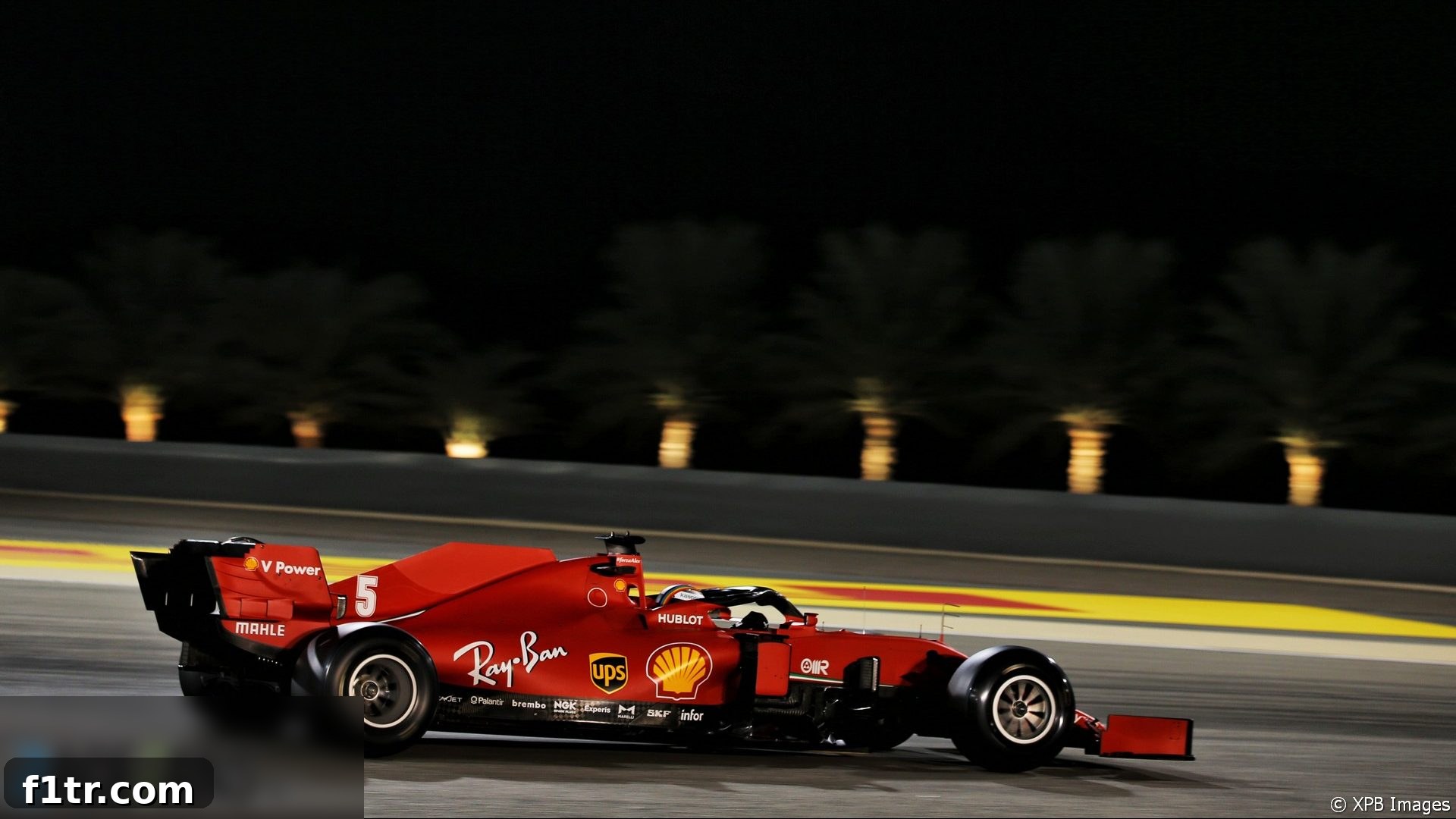
Formula 1’s Evolving Track Limits: Bahrain Grand Prix at Turn 4 Sees Policy Reversal
The exhilarating world of Formula 1 racing constantly balances the pursuit of ultimate speed with the necessity of fair play and adherence to regulations. Among the most debated rules in recent seasons are track limits – the invisible lines that define the boundaries of the racing surface. This weekend, at the high-stakes Bahrain Grand Prix, these regulations have once again taken center stage, particularly concerning the exit of Turn 4. Following intense scrutiny and widespread driver frustration during the initial practice sessions, Formula 1 race control has announced a significant policy reversal: track limits at the exit of Turn 4 will no longer be policed for the remainder of the Bahrain Grand Prix weekend.
This pivotal decision marks a dramatic shift from the stringent enforcement seen just yesterday, setting the stage for potentially faster and more aggressive racing as teams and drivers prepare for qualifying and the main event. The move aims to simplify the racing conditions and allow drivers to explore the absolute limits of the circuit, redefining what constitutes a legitimate racing line at this crucial corner.
Initial Controversy: Dozens of Lap Times Deleted at Turn 4
The opening practice sessions for the Bahrain Grand Prix were overshadowed by a wave of lap time deletions, all stemming from drivers exceeding the prescribed track limits at the exit of Turn 4. Yesterday, a staggering total of 33 lap times were scrubbed from the record across F1’s two practice sessions. The previous rule dictated that drivers were forbidden from crossing the white line completely at the exit of this corner, a common method for track limit enforcement across many circuits.
This strict interpretation immediately impacted numerous drivers, leading to widespread frustration and a perceived lack of consistency. Among the most affected was Mercedes-AMG Petronas F1 Team’s Lewis Hamilton, who saw five of his fastest laps invalidated for running wide at Turn 4. Other notable drivers who fell afoul of the regulations included Sebastian Vettel, Nicholas Latifi, Romain Grosjean, Pierre Gasly, and Alexander Albon, each losing four critical lap times that could have been used for valuable data analysis or qualifying preparation. Daniil Kvyat, who had two lap times deleted for straying wide at this point, famously voiced his exasperation over the team radio, urging F1 race director Michael Masi to “get rid of the fucking track limits.” Kimi Raikkonen, Kevin Magnussen, and George Russell also had their lap times disallowed, highlighting the pervasive nature of the problem across the grid.
The high number of penalties created a chaotic environment during practice, making it difficult for teams to accurately assess their performance and build confidence for the demanding weekend ahead. Drivers, in their relentless pursuit of tenths of a second, instinctively pushed the boundaries, only to be met with the virtual slap on the wrist of a deleted lap time. This not only added stress but also detracted from the purity of performance analysis, raising questions about the practicality of such tight enforcement at a corner designed to invite wider lines.
The Policy Reversal: A Pragmatic Approach to Racing Integrity
In response to the significant challenges and ongoing debate, updated guidance was issued today, dramatically altering the landscape for the remainder of the Bahrain Grand Prix weekend. The new directive explicitly states that “the track limits at the exit of Turn 4 will not be monitored with regard to setting a lap time, as the defining limits are the artificial grass and the gravel trap in that location.” This means that drivers are now permitted to run beyond the white line at the exit of Turn 4, provided they do not venture onto the artificial grass or, more drastically, into the gravel trap.
This policy shift represents a pragmatic acknowledgment of the inherent design of Turn 4 at the Bahrain International Circuit. The corner’s layout, particularly its wide exit and the subsequent run onto a straight, naturally encourages drivers to carry more speed through the apex and utilize all available asphalt. By defining the limits with more physical and visually distinct boundaries like artificial grass and gravel, race control aims to eliminate the ambiguity and subjective interpretation that often plagues white-line enforcement.
The decision also addresses the broader philosophical debate within Formula 1: should drivers be penalized for utilizing every inch of paved track available, or should the sport promote a clearer distinction between track and off-track excursions? By relaxing the rules at Turn 4, the FIA appears to be leaning towards allowing drivers more freedom to race, letting the natural consequences of exceeding genuine physical limits (like losing time in gravel) serve as the deterrent, rather than a technical penalty for crossing an arbitrary line.
Implications for Qualifying and the Race
The immediate impact of this policy reversal is expected to be profound, particularly during qualifying and the Grand Prix itself. With the lifting of the track limits requirements at Turn 4, there are now no such restrictions anywhere on the Bahrain International Circuit this weekend. This unprecedented freedom means drivers can attack every corner with full confidence, knowing that only a genuine mistake leading to a loss of control or time in the runoff areas will be penalized.
In qualifying, this could translate to even faster lap times as drivers push the absolute limits of their machinery and the circuit’s asphalt. They can adopt wider, faster lines through Turn 4 without the apprehension of seeing their crucial qualifying laps deleted, allowing for more aggressive and spectacular performances. Teams will no longer need to instruct their drivers to be overly cautious at this specific corner, freeing up mental bandwidth and strategic focus.
For the race, the implications are equally significant. Drivers might find new overtaking opportunities by utilizing the full width of the track at Turn 4, potentially leading to closer wheel-to-wheel action. The absence of strict monitoring should reduce the number of post-race penalties or in-race warnings, ensuring that the results are determined purely by on-track performance rather than controversial interpretations of track limits. This change is likely to be welcomed by fans, who often find track limit penalties confusing and disruptive to the flow of racing.
The Enduring Track Limits Debate in Formula 1
The saga at Turn 4 in Bahrain is merely the latest chapter in Formula 1’s long-running and often contentious debate surrounding track limits. Historically, track limits were less of an issue due to the prevalence of gravel traps and unforgiving barriers that naturally deterred drivers from straying off the racing line. However, with the advent of modern, safer circuits featuring vast asphalt run-off areas, drivers have increasingly exploited these spaces to gain a competitive edge.
The FIA’s challenge has been to find a consistent and fair way to police these boundaries. Different circuits employ different methods: some use sensors embedded in the track to detect infringements, others rely on visual observation by race stewards, and many still use the white line as the primary demarcation. This inconsistency has often been a source of frustration for drivers and fans alike, leading to accusations of arbitrary penalties and unclear rules.
Proponents of strict track limit enforcement argue that it maintains the integrity of the track, prevents drivers from gaining an unfair advantage, and ensures that the challenge of keeping the car on the racing surface remains a core skill in motorsport. Without strict limits, they contend, circuits could become glorified car parks, with drivers taking unnatural lines purely for speed, compromising the fundamental design of the track.
Conversely, critics argue that excessive policing can stifle natural racing instinct, lead to overly cautious driving, and punish minor infractions that do not genuinely offer a significant advantage. They believe that drivers should be allowed to push their cars to the absolute physical limits, with physical deterrents like gravel traps or steeper kerbs serving as sufficient penalties for mistakes. The “spirit of racing” often comes into play here, with many believing that minor excursions should be part of the game.
The decision at Bahrain’s Turn 4 represents a step towards a more pragmatic approach, acknowledging that certain corners are designed in a way that makes rigid white-line enforcement impractical or counterproductive. It highlights the ongoing evolution of F1 regulations and the continuous effort to balance safety, fairness, and the spectacle of racing. The hope is that this flexibility will lead to more exciting and less controversial racing outcomes, allowing the true skill of the drivers to shine through.
The Bahrain International Circuit: A Unique Challenge
The Bahrain International Circuit itself is a modern marvel nestled in the Sakhir desert. Known for its smooth asphalt, challenging brake zones, and distinctive floodlit night races, it presents a unique set of challenges to Formula 1 teams. The track features a mix of high-speed straights and technical corners, demanding a versatile car setup and precise driving. Turn 4, in particular, is a crucial corner that follows a relatively long straight, leading into a sequence of corners that define a significant portion of the lap time.
Its wide exit and the nature of the braking zone leading into it naturally tempt drivers to carry speed and use as much of the available track as possible. Before this weekend’s policy change, the strict enforcement at Turn 4 often caught drivers out, interrupting their rhythm and potentially impacting their subsequent corner entry. By allowing more freedom here, the circuit’s design can be exploited more fully, potentially revealing new strategic lines and opportunities for drivers to extract maximum performance.
Looking Ahead: The Future of Track Limits in F1
The policy reversal at the Bahrain Grand Prix for Turn 4 could set an important precedent for future F1 events. While each circuit and corner has its own unique characteristics, the principle of using physical deterrents (like gravel or artificial grass) over arbitrary lines for track limits might gain more traction. This approach could lead to a more consistent and intuitive understanding of track boundaries across the calendar, reducing driver frustration and improving the clarity for fans.
The FIA continues to explore technological solutions, such as more sophisticated sensor systems, but ultimately, the balance between speed, safety, and sporting integrity remains a complex philosophical debate. The Bahrain decision reflects a willingness to adapt rules in real-time to enhance the racing product and minimize unnecessary interference. As Formula 1 continues to push the boundaries of technology and human performance, the discussion around how to best define and enforce the limits of the racetrack will undoubtedly remain a focal point for the sport’s stakeholders.
As the Bahrain Grand Prix weekend unfolds, all eyes will be on how drivers utilize this newfound freedom at Turn 4 and what impact it has on the qualifying grid and the eventual race outcome. It promises to be a thrilling display of top-tier motorsport, where the focus returns firmly to driver skill and strategic prowess.
Stay Connected with Formula 1 News
For the latest updates, analyses, and exclusive content from the world of Formula 1, follow us on social media:
- Join us on Facebook
- Follow us on Twitter
- Receive daily email updates
Support independent F1 journalism: Become a supporter and enjoy an ad-free experience.
Explore More on the 2020 Bahrain Grand Prix
- Grosjean reunited with helmet which saved him from huge fire in 2020 Bahrain crash
- Pictures: Wrecked chassis from Grosjean’s Bahrain fireball crash to go on display
- Grosjean reveals extent of burns to right hand
- ‘I put both my hands in the fire’: Grosjean describes his 28 seconds trapped in an inferno
- “Thank you for saving my life” Grosjean tells crash scene marshals
Browse all 2020 Bahrain Grand Prix articles