Formula 1 Insights: Mercedes’ Resurgence, Calendar Challenges, and Motorsport’s Rich History
The world of Formula 1 is always in motion, and the recent mid-season break has done little to quell the intensity. As teams prepare for the demanding triple-header at Spa-Francorchamps, key figures like Mercedes team principal Toto Wolff and Haas boss Guenther Steiner offer their perspectives on car development, championship battles, and the logistical hurdles of a pandemic-impacted calendar.
F1 Mid-Season Update: Key Team Principal Views
Wolff Encouraged by Mercedes Gains and Championship Fight
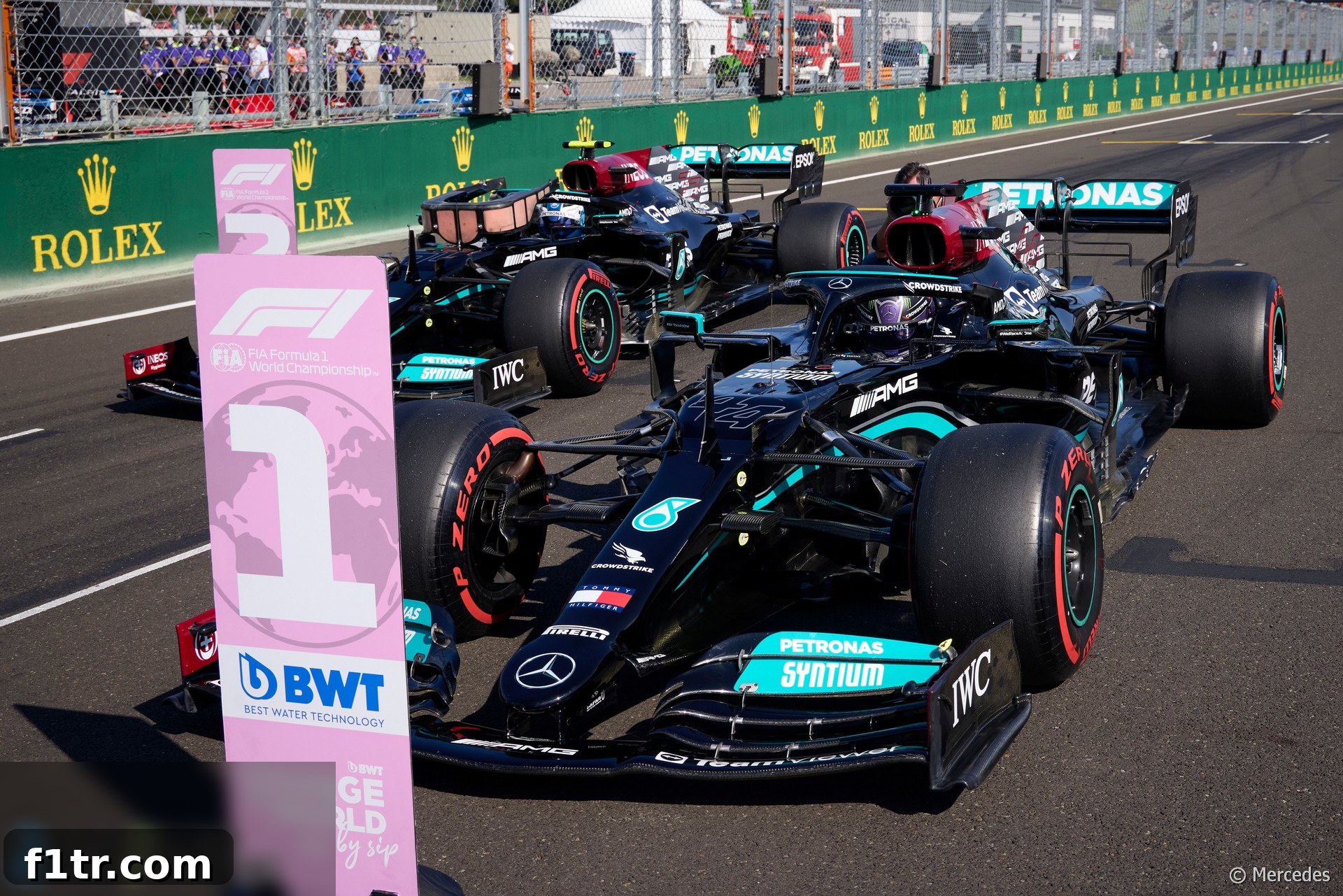
Following a significant aerodynamic update introduced at the British Grand Prix, Mercedes has shown a notable uplift in performance. This progression has been instrumental in allowing Lewis Hamilton to regain the lead in the drivers’ championship. While rival Max Verstappen has faced unfortunate incidents in recent rounds, contributing to this shift, Toto Wolff firmly believes that Mercedes’ own technical advancements have played a crucial role in their improved competitive stance.
As Formula 1 emerges from its brief summer hiatus and gears up for the legendary Spa-Francorchamps circuit, Wolff expressed considerable optimism regarding the team’s position. “We head to Spa-Francorchamps in a good position,” he stated, highlighting the team’s dual lead in both the drivers’ and constructors’ championships. He emphasized the tangible improvements in the W12 challenger, noting, “The W12 feels in a better place, after the upgrades introduced at Silverstone and an encouraging showing in Hungary.” These developments suggest Mercedes has successfully addressed some of the car’s earlier balance and performance limitations, unlocking greater potential as the season progresses.
Despite the positive momentum, Wolff remains grounded, acknowledging the volatile nature of the current season. “But we know there is a long road ahead and so much can still happen in this season of ups and downs,” he cautioned. This reflects a strategic awareness that the championship battle with Red Bull Racing is far from decided, and every race will present new challenges and opportunities. The technical upgrades, particularly those targeting aerodynamic efficiency and balance, appear to have provided Hamilton and Valtteri Bottas with a more consistent and predictable platform, crucial for navigating the remaining demanding circuits.
The championship struggle against Red Bull has truly captivated the motorsport world, with Wolff describing it as “definitely been one of the most intense F1 seasons that I can remember, so far.” The fierce competition, marked by dramatic on-track battles and strategic plays, underscores the high stakes involved. With the battle intensifying, the entire Mercedes team, much like their rivals, is eager to return to action. “The battle is far from over and after a few weeks away from the track, we’re all really excited to get back to work,” Wolff concluded, setting the stage for a thrilling second half of the season where every point will be critical.
Triple-Headers: A Necessary Evil for the F1 Calendar – Guenther Steiner
The Formula 1 calendar is infamous for its relentless schedule, and this weekend marks the beginning of the sport’s second triple-header of the season, with the possibility of two more gruelling sequences to follow. While these back-to-back-to-back race weekends are a logistical nightmare for teams, Haas team principal Guenther Steiner acknowledges their unfortunate necessity, especially in the context of the ongoing global pandemic.
“Triple-headers aren’t avoidable with the pandemic still around,” Steiner explained, articulating the difficult reality faced by Formula 1 management. The primary objective for F1 CEO Stefano Domenicali and his team at Formula One Management (FOM) has been to deliver a comprehensive and exciting calendar despite travel restrictions, health protocols, and the fluidity of global events. This often means compressing races into tighter schedules to maximize the number of events that can safely take place.
Steiner elaborated on his preferred, more sustainable calendar structure. “Ideally it would be a single race with a week in-between and then the second option would be to have double-headers and one week in-between, but we can’t choose this year.” This highlights the immense strain triple-headers place on team personnel, from mechanics and engineers to logistics staff and drivers. The constant travel, setup, dismantling, and re-setup of equipment, combined with the pressure of performance, can lead to severe fatigue and impact mental well-being across the entire paddock. For smaller teams like Haas, with more limited resources, the challenge is even more pronounced.
Despite the inherent difficulties, Steiner expressed confidence in FOM’s efforts. “I think FOM and Stefano are doing a very good job in getting a good calendar together for us and we have to live by it.” He commended Domenicali’s leadership in navigating an unprecedented period, ensuring the sport continues to deliver exhilarating racing to fans worldwide. While the practical implications are tough, there’s a collective understanding within the sport that these measures are temporary and essential for the financial health and continuity of Formula 1.
Looking ahead, Steiner did not mince words about the challenges awaiting his team. “For sure, it will be a tough second half of the season, but our team is tough, and we will get to the end of it.” This sentiment reflects the resilience and dedication inherent in Formula 1 teams. The demanding schedule requires meticulous planning, efficient execution, and unwavering commitment from every member. Despite the physical and mental toll, teams are driven by their passion for motorsport and the goal of competing at the highest level, demonstrating their ability to overcome adversity.
Motorsport Links of Interest: Financial Scrutiny, US Grand Prix, and Driver Comebacks
Beyond the immediate F1 action, the motorsport world continues to buzz with significant news, from financial investigations impacting major automotive brands to updates on upcoming races and inspiring personal stories of driver resilience. Here’s a curated selection of interesting links that offer a broader perspective on the sport:
Regulators reject suspicions of insider trading in Aston Martin and Daimler shares (FT)
In a story that captured attention in the financial world surrounding Formula 1, regulators in Germany and the UK have dismissed suspicions of insider trading related to shares in Aston Martin and Daimler. The Financial Times reported on the conclusion of investigations, with “BaFin [Germany’s Federal Financial Supervisory Authority] said it had not found evidence to proceed with an investigation. The FCA [UK’s Financial Conduct Authority] declined to comment.” This outcome brings clarity to a situation that could have had broader implications for the transparency and integrity of financial dealings involving major stakeholders in Formula 1 teams. A person familiar with the matter further confirmed that “the FCA had not pursued an investigation,” effectively closing the book on these particular suspicions.
Austin Mayor expects USGP go-ahead this week, open to second race (Racer)
The highly anticipated United States Grand Prix at the Circuit of the Americas (COTA) in Austin, Texas, has been under a cloud of uncertainty due to rising COVID-19 case rates in the region. However, a reassuring update comes from Austin Mayor Steve Adler, who expressed confidence in the event proceeding as planned. Racer.com reported that “With a case rate as one of the highest for the remaining races on the Formula 1 calendar, there’s been some speculation about whether the race itself will proceed as planned, but Austin Mayor Steve Adler is confident the green light will be given soon.” Furthermore, in a testament to the growing interest in F1 in America, the Mayor even hinted at the possibility of hosting a second race, signalling a strong commitment to Formula 1 and its expansion within the US market, provided the health situation allows.
Tóth confident he’s back to his best after Le Castellet absence (F3)
The journey of young motorsport talents is often filled with challenges, and Hungarian Formula 3 driver László Tóth provides a recent example of overcoming adversity. After being sidelined from the Le Castellet event, Tóth shared his experience of contracting COVID-19 and its impact on his preparations and fitness. “The time that I spent not driving was quite a lot and it was tough. I tested positive and couldn’t travel anywhere, so that meant that I couldn’t go to the factory to practice on the sim, it meant that I couldn’t use the gym and there were several other small things that happened as a result that was not really helpful for me,” he recounted. His candid reflection highlights the comprehensive nature of driver training and how even seemingly minor disruptions can significantly impede progress. However, Tóth’s renewed confidence indicates a strong comeback, demonstrating the mental fortitude required to succeed in competitive junior formulas.
We always endeavour to credit original sources and provide diverse insights into the world of single-seater motorsport. If you have a tip for a link relating to Formula 1 or any single-seater series to feature in the next RaceFans round-up, please send it in via our contact form. Your contributions help us keep our community informed and engaged.
Community Voice: The Future of Innovation in Formula 1
The spirit of innovation has always been a cornerstone of Formula 1, pushing the boundaries of engineering and design. However, a recent discussion within the F1 community, highlighted by @Dbradock, raises questions about the future of ground-breaking technical advancements, particularly in light of evolving regulations.
Given that Brawn has already suggested that they’ll change regulations to prevent any a team from gaining the benefit of something innovative like the double diffuser was, I doubt we’ll see anything like it after a race or two in 2022.
I used to love seeing the new seasons cars in the first few races and seeing how different innovations played out, even when one team ended up being way better than the rest of the field, but I’m not sure we’re ever going to see that again as there just doesn’t seem to be enough room for a team to bring something entirely radical to the table. That in turn is probably going to ensure that lower budget teams always remain at the back.
DB-C90 (@Dbradock)
The commenter’s observations touch upon a critical debate within F1: the balance between fostering innovation and maintaining competitive parity. The double diffuser, famously exploited by Brawn GP in 2009, provided such a significant performance advantage that it arguably defined that season. Ross Brawn, now F1’s managing director of motorsport, has hinted at a more proactive approach to regulation changes, aiming to curb designs that offer too great a performance differential. This strategy is designed to prevent a single team from dominating for extended periods due to a unique interpretation of the rules.
However, as @Dbradock points out, such stringent oversight might inadvertently stifle the very creativity that has historically made F1 so compelling. The excitement of seeing radically different car concepts emerge at the start of a new season, and observing how engineers push the boundaries of aerodynamics and chassis design, is a cherished aspect for many fans. The concern is that if there’s “not enough room for a team to bring something entirely radical to the table,” the sport might lose some of its technical allure, becoming more about marginal gains rather than revolutionary leaps.
Furthermore, the comment raises a crucial point about the impact on smaller, lower-budget teams. If the regulations are too prescriptive and limit the scope for truly innovative yet cost-effective solutions, these teams might find it even harder to close the gap to the front-runners. Historically, ingenuity has sometimes allowed smaller outfits to punch above their weight. If this avenue is increasingly closed off, it could solidify the hierarchy and make the sport less unpredictable, ensuring that “lower budget teams always remain at the back.” This ongoing dialogue between innovation, regulation, and competitive balance will undoubtedly continue to shape the future direction of Formula 1.
Social Media Highlights: Drivers Share Their Experiences
Social media offers a unique window into the lives and thoughts of motorsport personalities, providing fans with direct engagement and behind-the-scenes glimpses. From adrenaline-fueled track experiences to personal reflections, these platforms are an integral part of the F1 ecosystem.
An recent Instagram post provided a captivating visual, likely showcasing a stunning motorsport moment or a behind-the-scenes look at driver preparations, resonating with fans eager for visual content from their favourite sport.
I now understand the excitement around Brands hatch turn one
100% commitment to a blind apex while falling 10 meters. It’s like the most extreme rollercoaster you’ve ever been on 🤩
I can’t wait until I race Brands hatch again 🏎️🏁 pic.twitter.com/se2dNjsxSz
— Brendon Leigh (@BrendonLeigh72) August 24, 2021
Esports champion and sim racer Brendon Leigh shared his exhilarating experience at Brands Hatch. His tweet vividly describes the challenge of “Brands Hatch turn one,” known for its daunting characteristics: “100% commitment to a blind apex while falling 10 meters.” This description perfectly captures the thrill and precision required to tackle one of motorsport’s most iconic corners. Leigh’s comparison to “the most extreme rollercoaster you’ve ever been on” effectively conveys the intense physical and mental demands of racing on such a legendary circuit, generating excitement for his next appearance there.
- Find more official F1 accounts to follow in the F1 Twitter Directory, your comprehensive guide to connecting with the sport’s biggest names and latest updates.
Happy Birthday to Motorsport Personalities and Icons!
A special shout-out to those celebrating their birthdays! Today, we extend our best wishes to Scalextric, a brand synonymous with slot car racing and a gateway for countless enthusiasts into the world of motorsport, and to Michael Williamson, a notable figure within the racing community. Their contributions, whether through inspiring future generations of racers or working behind the scenes, are invaluable to the sport.
If you’d like a birthday shout-out in our future round-ups, please don’t hesitate to tell us when yours is via our contact form. You can also contribute by adding your birthday to our growing list here, becoming part of our vibrant community’s celebrations!
On This Day in Motorsport History: Schumacher’s Debut and Senna’s Dominance
- Thirty years ago today, motorsport witnessed a pivotal moment in Formula 1 history: Ayrton Senna secured a crucial victory in the Belgian Grand Prix, while simultaneously marking the unexpected and dramatic debut of a young German talent named Michael Schumacher. This day, August 25th, 1991, at the challenging Spa-Francorchamps circuit, set the stage for one of the sport’s most legendary careers.
On that fateful Sunday, the legendary Ayrton Senna, then driving for McLaren, put in a masterful performance to claim a vital win in his championship fight against Nigel Mansell. His victory at Spa, a circuit he adored and often dominated, was a testament to his unparalleled skill and determination.
However, the race is perhaps even more vividly remembered for the arrival of Michael Schumacher. Stepping in for the imprisoned Bertrand Gachot at Jordan-Ford, the relatively unknown German immediately turned heads. During Friday qualifying, Schumacher stunned the paddock by setting the seventh-fastest time, outpacing his more experienced teammate Andrea de Cesaris. This extraordinary performance hinted at the immense potential that would soon make him a global icon. His raw speed and fearless approach to the notoriously difficult circuit were undeniable, instantly capturing the attention of commentators and rival teams alike.
Tragically, Schumacher’s impressive debut came to an early and abrupt end on race day. He didn’t even complete the first lap, retiring due to a clutch issue shortly after the start. As the caption succinctly puts it, “Senna led the field to Les Combes and went on to win but unlucky Schumacher didn’t even get this far.” Despite the mechanical failure, his brief but electrifying appearance was enough to secure him a future with Benetton, setting him on a path to win seven World Championships and redefine the sport. This day at Spa remains a legendary chapter, intertwining the established greatness of Senna with the dawn of a new era heralded by Schumacher’s explosive, albeit short-lived, first outing.