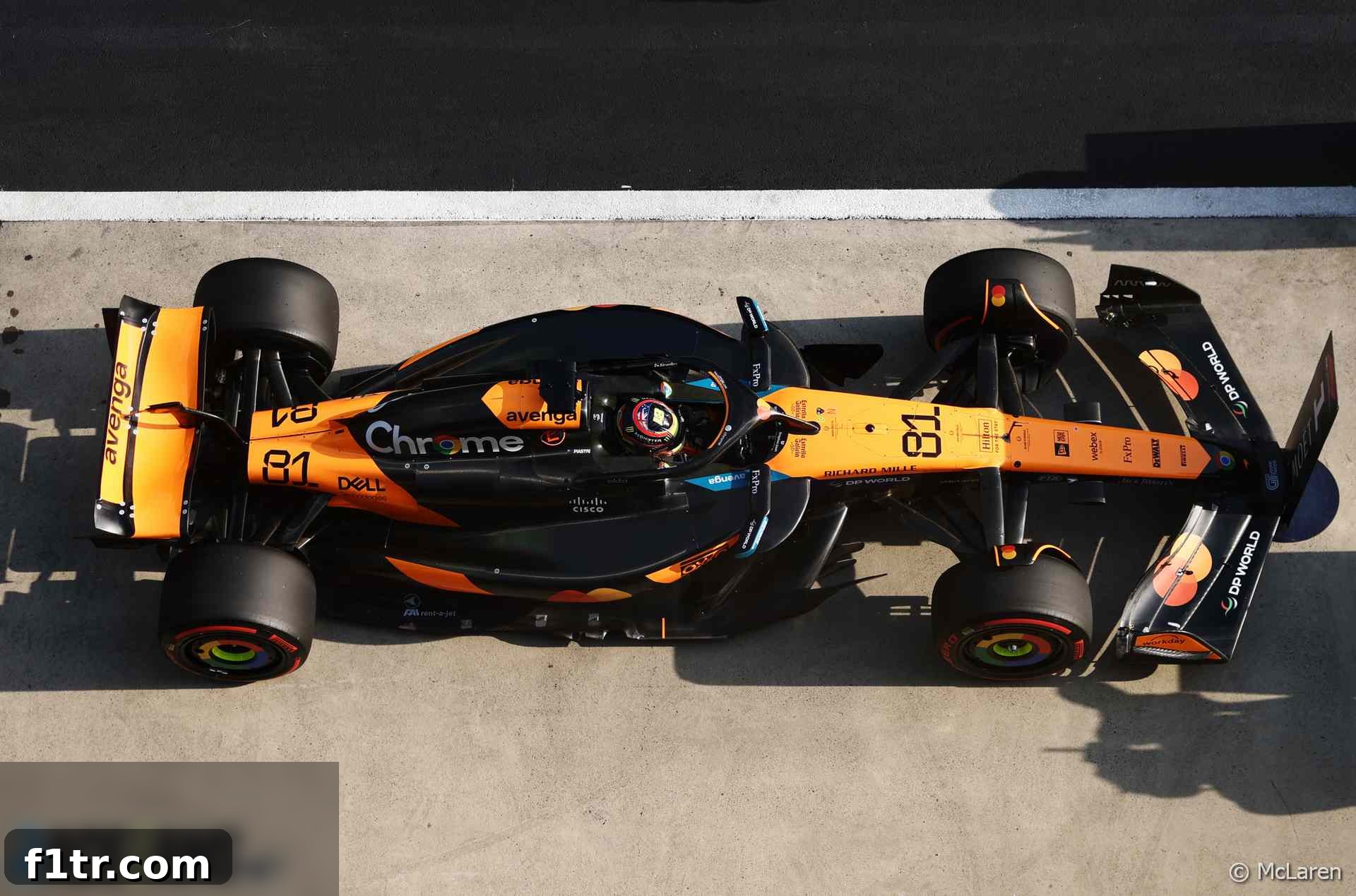
Accelerating Towards a Greener Grid: FIA, McLaren, and Deloitte Launch F1 Circularity Handbook for Sustainable Motorsport
In a groundbreaking collaborative effort, the Fédération Internationale de l’Automobile (FIA) has partnered with leading Formula 1 team McLaren and global professional services firm Deloitte to introduce a comprehensive guide designed to steer racing car production towards a more sustainable future. This initiative marks a significant stride in Formula 1’s commitment to environmental responsibility, providing teams with actionable strategies to minimize their ecological footprint without compromising performance.
The F1 Constructors’ Circularity Handbook: A Blueprint for Sustainable Innovation
Dubbed the “F1 Constructors’ Circularity Handbook,” this pioneering document is set to be distributed across all Formula 1 teams, serving as a vital resource for embedding sustainable practices into the core of car manufacturing. Its overarching goal is multifaceted: to drastically reduce resource consumption, curtail waste generation, and maximize the inherent value of materials utilized throughout the entire car production lifecycle. This holistic approach to sustainability aims to transform the linear “take-make-dispose” model into a more regenerative “circular” economy within the high-stakes environment of motorsport.
The handbook delves into practical methodologies, offering meticulous guidance on how teams can effectively gather crucial data related to their material flows. It provides frameworks for rigorously examining the circularity of both incoming resources and generated waste, enabling teams to identify key areas for improvement. Ultimately, the guide empowers constructors to calculate a single, quantifiable circularity metric, allowing for transparent tracking of progress and fostering a culture of continuous environmental enhancement. This data-driven approach is essential for setting benchmarks, measuring impact, and driving meaningful change across the sport.
McLaren: Paving the Way for Performance and Planet
McLaren’s involvement in this landmark project is particularly fitting, given their established reputation as a frontrunner in motorsport sustainability. The Woking-based outfit was notably the first Formula 1 team to achieve the FIA’s prestigious three-star Environmental Accreditation, a testament to their long-standing commitment to ecological best practices. Furthermore, McLaren has consistently pushed the boundaries of sustainable innovation, including experimenting with the integration of recycled carbon fibre in their racing cars during previous seasons. These real-world applications demonstrate that cutting-edge performance and environmental stewardship are not mutually exclusive but can, in fact, be mutually reinforcing.
Their active participation in developing the Circularity Handbook underscores a belief that sustainability is not merely a compliance issue but a strategic imperative that drives innovation, enhances efficiency, and secures the long-term viability of the sport. McLaren’s practical experience provides invaluable insights, ensuring the handbook’s recommendations are not just theoretical ideals but robust, implementable strategies for a demanding operational environment like Formula 1.
FIA’s Vision: Integrating Sustainability into F1’s DNA
Nikolas Tombazis, the FIA’s single-seater director, articulated the governing body’s unwavering commitment to fostering more sustainable car production within Formula 1. He confirmed that the FIA would actively explore and implement measures to promote these practices, signaling that future developments could potentially include the introduction of new regulations to solidify environmental gains across the grid.
“The importance of environmental considerations has surged dramatically over the past decade, and this trajectory will undoubtedly continue,” Tombazis emphasized. “It is our fundamental obligation – to society, to our beloved sport, and to its enduring sustainability – to consistently champion progress on all environmental fronts. Circularity represents a pivotal aspect of this endeavor.”
Tombazis highlighted the immense scale of component manufacturing and usage in Formula 1, where countless parts are meticulously crafted, raced, and often discarded on an almost daily basis. “Measuring and encouraging a more responsible use of these components, alongside maximizing their potential for reuse, is absolutely vital,” he added, underscoring the urgency and strategic importance of the handbook’s focus.
The FIA’s role, as explained by Tombazis, is dual-pronged. Firstly, it involves active collaboration and open dialogue with all Formula 1 teams, engaging sustainability directors from both the FIA and the teams themselves to discuss ongoing progress and future initiatives. Secondly, the FIA is prepared to act as a regulatory body, implementing new regulations where necessary, or issuing comprehensive guidance documents when appropriate, all with the unified aim of disseminating and embedding this crucial sustainability message throughout the sport.
Balancing Performance and Planet: A Non-Conflicting Harmony
A key takeaway from this initiative, according to Tombazis, is the compelling evidence that sustainable practices do not inherently compromise competitive performance. The fact that a leading team like McLaren, which consistently performs well on track, is at the forefront of this sustainability project, serves as a powerful illustration.
“McLaren’s dedicated efforts in this domain are highly significant,” Tombazis noted. “They are not only in a leading position among teams for sustainability matters but also maintain a very strong position on the track. This clearly demonstrates that performance and environmental responsibility are not conflicting objectives. In fact, they can be synergistic, driving innovation and efficiency in new ways.”
The FIA’s intention is to collaborate closely with all teams to ensure the widespread adoption of these sustainable practices. Where necessary, future regulations might mandate the use of specific materials or enforce certain responsible manufacturing processes. This regulatory approach is designed not to disadvantage teams that proactively engage with sustainable practices, either in terms of performance or within the sport’s cost cap framework. Instead, its ultimate purpose is to ensure a level playing field where all teams are encouraged, and eventually required, to follow suit and contribute to the collective environmental goals of Formula 1.
Expanding Horizons: Beyond the Chassis and into Broader Industry Impact
While the initial scope of the F1 Constructors’ Circularity Handbook is focused on chassis construction, deliberately excluding other critical components such as power units and tyres, Tombazis views this as a strategic starting point. This focused approach allows for the development of robust methodologies before expanding to encompass the entire ecosystem of Formula 1 car production.
“This is a vibrant area for innovation within Formula 1,” Tombazis explained, outlining ambitious plans for the future. “We fully intend to expand its scope to include power unit manufacturers and tyre suppliers, eventually covering all facets of Formula 1 operations. The ultimate vision, however, extends far beyond motorsport.”
The ambition is for the principles and innovations pioneered within Formula 1 to eventually permeate the broader automotive industry and even spread across various sectors of society. Formula 1, with its rapid development cycles, cutting-edge engineering, and global reach, is uniquely positioned to act as a powerful testbed for sustainable technologies and methodologies. This transfer of knowledge and best practices from the racetrack to the road, and beyond, underscores the profound “innovation through motorsport” message, highlighting how the pinnacle of racing can contribute significantly to the general picture of global sustainability.
By fostering a circular economy approach within its demanding operational framework, Formula 1 is not just cleaning up its own act; it’s actively developing solutions and setting standards that have the potential for far-reaching positive impacts across industries, demonstrating that high performance and environmental responsibility can drive a collective, greener future.
The Broader Impact of Circularity in F1
The introduction of the F1 Constructors’ Circularity Handbook is more than just an environmental initiative; it is a strategic move that aligns Formula 1 with global efforts to combat climate change and resource depletion. By embracing circular economy principles, F1 teams will not only reduce their environmental footprint but also foster new avenues for innovation. The intense competitive nature of Formula 1 means that any efficiency gain, whether through material reuse, waste reduction, or advanced recycling techniques, can translate into a competitive advantage. This intrinsic motivation ensures that teams will rigorously pursue the handbook’s recommendations, driving rapid advancements in sustainable engineering.
Furthermore, this initiative enhances Formula 1’s brand image and appeal, particularly to a younger, environmentally conscious audience. As society increasingly values corporate responsibility, F1’s commitment to sustainability strengthens its position as a forward-thinking and relevant sport. The collaboration with industry leaders like McLaren and Deloitte also lends significant credibility to the project, showcasing a united front in the pursuit of a greener future for motorsport and beyond. This partnership highlights the power of cross-sector collaboration in tackling complex environmental challenges, setting a precedent for other global industries.
The journey towards full circularity in Formula 1 will undoubtedly present its challenges, from developing new material sciences to redesigning supply chains. However, with the FIA’s leadership, McLaren’s proven track record, and Deloitte’s strategic expertise, the sport is well-equipped to navigate these complexities. This handbook serves as a foundational step, a declaration that Formula 1 is not just racing for victory on the track, but also racing towards a more sustainable and responsible future for the planet.