Over a decade ago, the FIA introduced a robust penalty points system for Formula 1, designed to enforce higher standards of driving and deter consistently careless or dangerous on-track behavior. This system, assigning points to a driver’s superlicence for various infractions, carries the ultimate threat of a race ban for any driver who accumulates 12 points within a rolling 12-month period. Its implementation marked a significant step towards enhancing driver accountability and promoting safer racing practices across the pinnacle of motorsport.
Despite its long-standing presence, the system has proven to be a remarkably effective deterrent, with only a solitary driver incurring the ignominy of a compulsory race suspension. Kevin Magnussen, following the 2024 Italian Grand Prix, was the sole individual forced to miss a round after reaching the 12-point threshold, underscoring the severity and rarity of such an outcome. This singular instance highlights both the stringency of the regulations and the general discipline exercised by F1 competitors, even under immense pressure.
As the Formula 1 grid gears up for the intense final ten rounds of the championship after the summer break, the focus shifts to driver conduct and the potential impact of accumulated penalty points. With every Grand Prix presenting new challenges and opportunities for errors, understanding who stands closest to a race ban adds another layer of intrigue to the unfolding season. This comprehensive analysis delves into the current standings, identifying the drivers most at risk and exploring the implications for their championship campaigns and beyond.
Verstappen: Navigating the Edge of a Ban
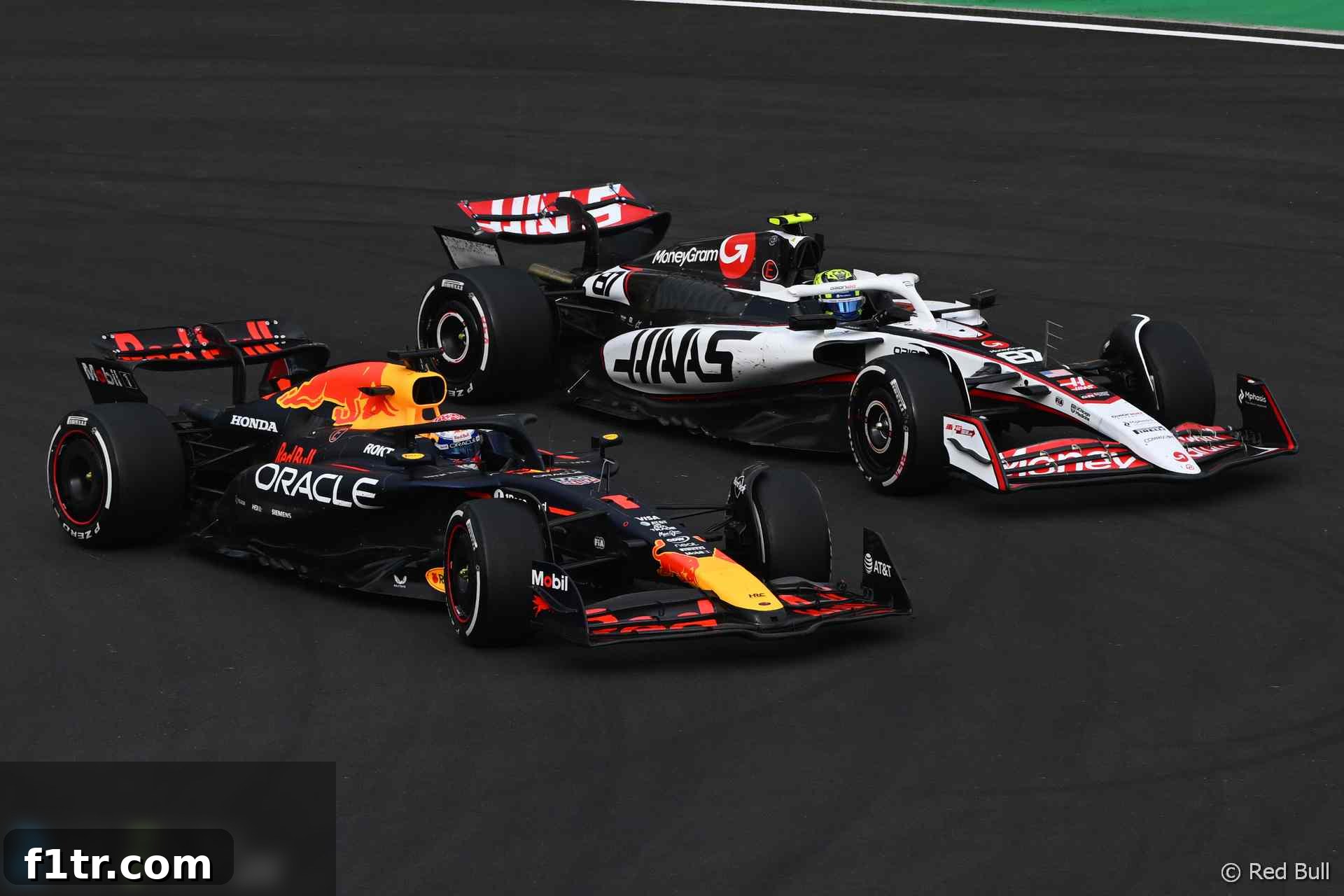
For Max Verstappen, the reigning world champion, the 2025 season presents a unique challenge, not only with the prospect of McLaren drivers potentially claiming his crown but also with the ever-present threat of a superlicence suspension. The Red Bull ace currently holds the dubious distinction of having the most active penalty points among all drivers on the grid, with a significant tally of nine.
A closer look at Verstappen’s penalty point history reveals a pattern of intense, sometimes overly aggressive, racing. Six of these points originate from a series of four distinct incidents during the demanding latter stages of the 2024 season. These included track limit infringements, minor collisions, and other rules infractions that collectively reflect a driver pushing the boundaries. The remaining three points were controversially acquired following his late-race skirmish with Mercedes’ George Russell at this year’s Spanish Grand Prix. This incident, which involved a contentious wheel-to-wheel battle leading to contact, sparked considerable debate among fans and pundits regarding racing etiquette and the fine line between aggressive driving and reckless behavior. The stewards ultimately judged Verstappen to be primarily responsible, adding to his rapidly growing points total.
Following that fiery confrontation at the Spanish Grand Prix, Verstappen found himself precariously close to an immediate race ban, just a single point shy with an alarming 11 points on his superlicence. However, a slight reprieve came after the Austrian Grand Prix, where two of his earlier penalty points expired due to the rolling 12-month rule. While this provided some breathing room, his situation remains critical. An additional two points are slated for deduction from his licence on October 27th, offering a further potential easing of pressure as the season progresses towards its climax.
Despite these expiring points, Verstappen must maintain exemplary conduct throughout the remaining races. With just three points separating him from a mandatory one-race suspension, any further misstep could be disastrous. A single on-track collision deemed his fault, or a serious technical or procedural infraction, could easily prompt the stewards to award him the three points that would trigger a ban, forcing him to sit out a Grand Prix weekend. Such an outcome, while not directly impacting a championship bid this year, would undoubtedly be a significant blow to his reputation and Red Bull’s Constructors’ Championship efforts, adding an unexpected layer of drama to his challenging season.
Bearman: A Rookie’s Steep Learning Curve Towards a Ban
Oliver Bearman, despite having the invaluable experience of three Grand Prix weekends under his belt before embarking on his first full Formula 1 season in 2025, has emerged as the most penalized rookie so far. This young Haas driver currently sits on eight penalty points, a concerning tally that puts him two-thirds of the way to a mandatory race ban. His situation underscores the steep learning curve and immense pressure faced by newcomers in the elite world of F1.
Two of Bearman’s points were accumulated in the previous year, suggesting an early tendency towards minor infractions. However, the majority of his current points total – a substantial six points – stem from just two incidents this season, both alarmingly related to red flag infractions. This particular category of penalty is treated with utmost seriousness by the FIA, given the critical safety implications of failing to adhere to strict protocols during track stoppages. Such breaches can endanger marshals, other drivers, and even medical personnel, making them some of the most frowned-upon offenses in the sport.
The first red flag incident occurred in Monaco, a circuit notorious for its unforgiving nature. Bearman received two penalty points for overtaking Carlos Sainz Jnr’s Williams under red flag conditions during a practice session. While perhaps a momentary lapse in concentration, it was a clear breach of safety regulations. A far more significant and serious incident unfolded at Silverstone, during which Bearman crashed while pushing hard into the pit lane under red flag conditions. This catastrophic error not only damaged his car but also drew a major reprimand from the stewards, who saw fit to award him an unprecedented four penalty points on his superlicence. This four-point penalty was a first in Formula 1 history; previously, no single infraction had resulted in more than three points, highlighting the exceptional gravity of Bearman’s misjudgment at Silverstone.
While Bearman still retains some breathing room before reaching the 12-point threshold, his precarious position demands extreme caution over the remainder of the year. The precedent set by his four-point penalty at Silverstone means that any repeat offense of similar magnitude between now and early November would immediately trigger a race ban. As a rookie striving to establish his presence in F1, avoiding further penalties will be crucial for his development and his team’s performance, especially as he navigates the complexities of the sport’s regulatory framework.
Repeat Offenders: A Closer Look at Consistent Infractions
While not yet in immediate danger of a race ban, a group of drivers have consistently found themselves on the wrong side of the stewards, accruing multiple penalty points over the last 12 months. Their repeated infractions underscore the challenges of maintaining a pristine record in the high-stakes environment of Formula 1. Liam Lawson, Lance Stroll, and Yuki Tsunoda each currently hold five points on their superlicences, signaling a need for greater caution in the coming races.
Liam Lawson and Lance Stroll both entered the current season carrying two points each from incidents in the previous year. They have since added three more points through two further incidents over the first 14 rounds of 2025. Lawson, known for his aggressive racing style, has picked up points for minor collisions and track limit breaches, demonstrating his ongoing adaptation to the demands of a full F1 season. Stroll’s penalties have often been linked to racing incidents, reflecting his commitment to pushing the limits, sometimes to his detriment.
Yuki Tsunoda’s five points, notably, all stem from three separate infractions within the 2025 season alone. This suggests a particularly challenging start to his year in terms of avoiding penalties. His incidents have ranged from unsafe releases in the pit lane to contentious on-track maneuvers, each adding to his growing tally. Unlike some of his peers, Tsunoda will not see any of his current points expire until the weekend of next year’s round in Catalunya, placing sustained pressure on him for a significant period.
Even championship leader Oscar Piastri finds himself with four points on his superlicence as the summer break commences. Two points were awarded for contact with Franco Colapinto during last year’s Abu Dhabi Grand Prix, while another two came from a Safety Car infraction at Silverstone this season. These incidents, though not severely impacting his title bid, serve as a reminder that even the front-runners are not immune to penalties. Jack Doohan, the Alpine reserve driver, despite not holding a full-time race seat this year, also carries four penalty points from two infractions over the Chinese Grand Prix weekend, highlighting how rapidly points can accumulate for active drivers. His replacement, Franco Colapinto, also has two incidents on his record, translating to three current points, illustrating a pattern of learning-curve penalties for the younger drivers.
Low-Risk: Points from Isolated Incidents
The largest contingent of drivers on the grid consists of those who have accumulated penalty points from just a single incident over the past year. While these drivers are currently at a lower risk of a race ban, their points serve as a reminder of the constant vigilance required in Formula 1. Four prominent names in this category – Lando Norris, Alexander Albon, Nico Hulkenberg, and George Russell – all committed their offenses during the latter half of the previous season, and some of their points are nearing expiry.
Lando Norris, despite his generally clean racing style, carries the most points in this group with three. These were awarded after he was found guilty of failing to slow down adequately under yellow flag conditions during last year’s Qatar Grand Prix. Such an infraction, while not a collision, is taken seriously due to the potential safety hazards it poses for marshals and other competitors. Alexander Albon, known for his tenacious defensive driving, and Nico Hulkenberg, a seasoned veteran, each hold two points for single incidents from 2024, demonstrating that even experienced drivers can occasionally misstep.
George Russell also has one point remaining from a 2024 incident, which will soon expire. Looking to the 2025 season, Andrea Kimi Antonelli, Pierre Gasly, and Carlos Sainz Jnr each have two points attributed to individual incidents this year. Antonelli, as a rookie, has shown promise but also the occasional error typical of new entrants. Gasly’s points often stem from minor racing incidents, while Sainz’s point-earning infractions tend to be for track limits or other procedural breaches. Charles Leclerc gained a single point at the most recent round before the summer break, in Hungary, for moving under braking while defending from Russell, an offense that directly impacts racing safety and fair play.
These isolated incidents, though less concerning than repeated infractions, illustrate the comprehensive nature of the FIA’s regulations. From failing to respect yellow flags to aggressive defensive maneuvers, the penalty points system covers a wide spectrum of driving standards, ensuring that even minor transgressions are noted and accounted for, fostering a consistent level of discipline across the grid.
On the Sidelines: Points Lingering for Non-Active Drivers
The rolling 12-month nature of the penalty points system means that some drivers who are not actively competing in the current Formula 1 season can still carry active points on their superlicences. This includes individuals who have left the grid or are slated for future returns, underscoring the long-term impact of past infractions. Three such drivers currently find themselves in this unique situation.
Valtteri Bottas, who is confirmed to make a highly anticipated return to F1 with Cadillac next year, amassed five penalty points in his final appearance at Yas Marina last year. These points, accumulated from various incidents in his last season with Sauber, are still active. However, the good news for F1’s newest team, Cadillac, is that all of Bottas’s penalty points are scheduled to expire well before their official debut on the grid at Melbourne next year. This means he will start his new chapter with a clean superlicence, free from the immediate threat of a ban, allowing him to focus solely on establishing Cadillac’s presence in the sport.
Similarly, Kevin Magnussen and Daniel Ricciardo each have points that have yet to expire off their superlicences, stemming from incidents in the latter part of last season. Magnussen, who previously served a race ban, carries two points. These are nearing their expiry date, reflecting the system’s eventual reset for past infractions. Daniel Ricciardo, with one remaining point, will also see his record cleared soon. These lingering points for non-active drivers highlight the FIA’s consistent application of the 12-month rule, ensuring accountability even when drivers are not regularly competing.
- Bottas faces a five-place grid penalty for his first race back in F1 with Cadillac next year, a separate consequence from his penalty points.
Clean Records: The Exemplary Drivers
A select group of five drivers can proudly boast spotless superlicences, having navigated the demanding world of Formula 1 without a single penalty point to their names. This achievement is a testament to their exceptional skill, discipline, and consistent adherence to racing regulations, setting them apart in a highly competitive and often controversial sport.
Perhaps unsurprisingly, this esteemed group includes the two most experienced and decorated drivers currently on the grid: Fernando Alonso and Lewis Hamilton. Their ability to consistently perform at the highest level while avoiding contentious incidents speaks volumes about their race craft and strategic prowess. Alonso last received penalty points in last year’s Austrian Grand Prix, when a collision with Zhou Guanyu’s Sauber brought his tally to eight at that time. Since then, he has demonstrated remarkable consistency and clean driving, successfully clearing his record.
To find the last time Lewis Hamilton received any points on his superlicence, one has to rewind to the 2023 Italian Grand Prix, where he was penalized for squeezing Oscar Piastri’s McLaren into the Della Roggia chicane. Since that incident, Hamilton has embarked on an incredible streak of 51 consecutive race weekends without collecting any penalty points – an unparalleled run that stands as the longest such record of any driver in the current era. This remarkable consistency highlights not only his driving talent but also his profound understanding of racing rules and his ability to execute aggressive yet fair maneuvers.
Esteban Ocon is the only other veteran driver on the grid who currently holds a clean record. His last infraction occurred in last year’s Monaco Grand Prix, where he infamously clashed with his then-teammate Pierre Gasly on the opening lap. That incident not only put Ocon out of the race but also damaged the sister Alpine car, leading to significant team tensions. His subsequent period of clean driving underscores a renewed focus on maintaining discipline on track.
Rounding out this elite group are two of this year’s most promising rookies, Gabriel Bortoleto and Isack Hadjar. Both have maintained a perfectly clean sheet through their first 14 rounds in the world championship, a remarkable feat for newcomers adapting to the immense pressures of F1. Fittingly, Bortoleto and Hadjar were the two drivers who topped the championship standings in last year’s Formula 2 season, demonstrating their raw talent and disciplined approach, which they have successfully carried forward into their Formula 1 careers in 2025.
Current Formula 1 Penalty Points Overview
The following table provides a comprehensive snapshot of the current penalty point totals for all active and some non-active Formula 1 drivers, detailing the number of infractions, points accumulated in 2024 and 2025, and the crucial dates for when their next points are scheduled for deletion.
| Driver | Current Points | 2024 Infractions* (Points) | 2025 Infractions (Points) | Next Deleted Points |
|---|---|---|---|---|
| Max Verstappen | 9 | 4 (6pts) | 1 (3pts) | Oct 27th (after MEX GP) |
| Oliver Bearman | 8 | 1 (2pts) | 2 (6pts) | Nov 3rd (after MEX GP) |
| Valtteri Bottas | 5 | 2 (5pts) | 0 | Dec 8th (after ABU GP) |
| Liam Lawson | 5 | 1 (2pts) | 2 (3pts) | Dec 1st (after QAT GP) |
| Lance Stroll | 5 | 1 (2pts) | 2 (3pts) | Dec 1st (after QAT GP) |
| Yuki Tsunoda | 5 | 0 | 3 (5pts) | 2026, June 14th (during CAT GP) |
| Jack Doohan | 4 | 0 | 2 (4pts) | 2026, Mar 22nd (after CHN GP) |
| Oscar Piastri | 4 | 1 (2pts) | 1 (2pts) | Dec 8th (after ABU GP) |
| Franco Colapinto | 3 | 1 (2pts) | 1 (1pt) | Oct 27th (after MEX GP) |
| Lando Norris | 3 | 1 (3pts) | 0 | Dec 1st (after QAT GP) |
| Alexander Albon | 2 | 1 (3pts) | 0 | Dec 1st (after QAT GP) |
| Andrea Kimi Antonelli | 2 | 0 | 1 (2pts) | 2026, June 29th (after AUT GP) |
| Pierre Gasly | 2 | 0 | 1 (2pts) | 2026, Aug 3rd (after HUN GP) |
| Nico Hulkenberg | 2 | 1 (2pts) | 0 | Sept 1st (after NED GP) |
| Kevin Magnussen | 2 | 1 (2pts) | 0 | Sept 1st (after NED GP) |
| Carlos Sainz Jnr | 2 | 0 | 1 (2pts) | 2026, Apr 13th (after BAH GP) |
| Charles Leclerc | 1 | 0 | 1 (1pt) | 2026, Aug 3rd (after HUN GP) |
| Daniel Ricciardo | 1 | 1 (1pt) | 0 | Sept 1st (after NED GP) |
| George Russell | 1 | 1 (1pt) | 0 | Dec 1st (after QAT GP) |
| Fernando Alonso | 0 | – | – | – |
| Lewis Hamilton | 0 | – | – | – |
| Esteban Ocon | 0 | – | – | – |
| Gabriel Bortoleto | 0 | – | – | – |
| Isack Hadjar | 0 | – | – | – |
*Only including incidents that took place within the last 12 months that still count towards a driver’s current tally.
Further Formula 1 Penalty Insights
- Explore detailed current penalty point totals for all Formula 1 drivers.
- Review a complete breakdown of Formula 1 driver investigations and penalties from the 2025 season.
Formula 1 News & Updates
Stay updated with the latest happenings, news, and analyses from the world of Formula 1:
- GT driver killed in multi-car crash at Nürburgring Qualifiers.
- Should F1 change tracks or racing guidelines to tackle dangers in 2026 rules?
- Controversies, Norris, Newey and more: Five new motorsport books reviewed.
- One of F1’s greatest races happened 15 years ago today. Or did it?
- “Overtaking is overtaking”: Domenicali denies F1’s yo-yo racing is “artificial”.
Browse all Formula 1 articles for more in-depth coverage.