In a candid post-race debrief following a thrilling and ultimately frustrating Mexico City Grand Prix, seven-time world champion Lewis Hamilton voiced his clear disappointment, attributing the pivotal opening lap incident that allowed rival Max Verstappen to seize control of the race to an error by his Mercedes team mate, Valtteri Bottas. The British driver highlighted a crucial lapse in strategy execution at the very start of the grand prix, an oversight that significantly complicated his own race and, by extension, Mercedes’ championship aspirations.
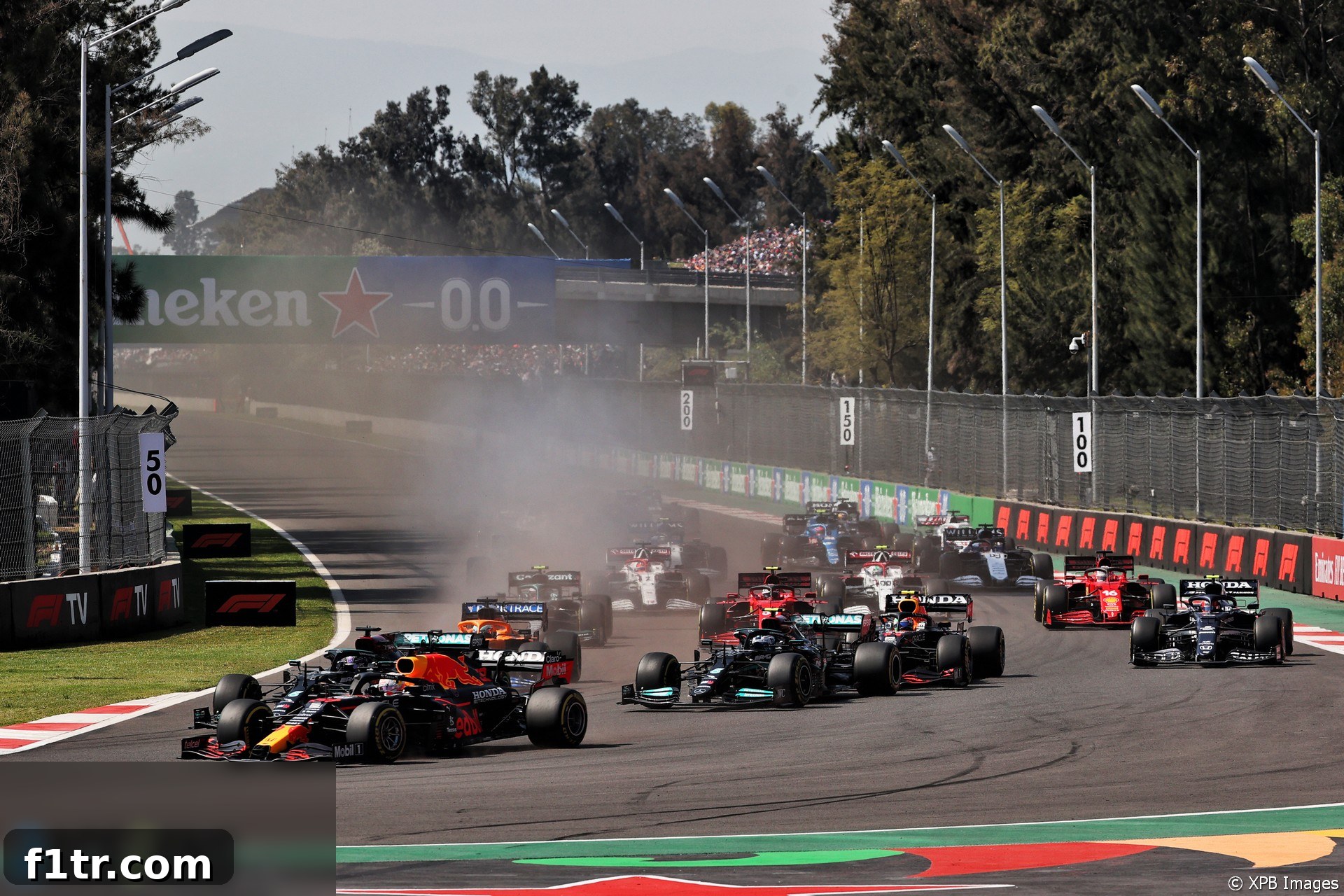
The highly anticipated race began with Mercedes holding a front-row lockout, with Bottas on pole position and Hamilton alongside him in second. This strategic advantage was meticulously planned to combat the formidable threat posed by Verstappen and his Red Bull Racing machine. However, as the lights went out, the meticulously crafted plans quickly unraveled. The three championship contenders – Bottas, Hamilton, and Verstappen – surged towards the first corner, a notorious braking zone known for its potential for drama. Verstappen, starting from third on the grid, demonstrated exceptional race craft and courage, positioning his Red Bull perfectly to sweep around the outside of both Mercedes cars, executing a breathtaking double overtake that sent shockwaves through the paddock.
Hamilton later explained the pre-race discussions within the Mercedes camp, where the primary objective was to coordinate their efforts to ‘contain’ Verstappen, effectively boxing him in and preventing him from getting an early jump. “I had envisaged it differently, naturally, in the sense that Valtteri maybe would get a better start and I would have tried to get into his tow,” Hamilton reflected, clearly indicating a pre-arranged strategy that failed to materialize. The ideal scenario involved Bottas pulling away cleanly, creating a slipstream for Hamilton to follow, thus forming a defensive blockade against the charging Red Bull.
However, the reality of the start deviated sharply from this script. Hamilton found himself alongside Bottas, a position he initially welcomed. “Obviously I was alongside him, which was good,” he stated. His immediate focus then shifted to defending his own line and preventing any Red Bull driver from making a move on his inside. “And then I was just covering my side of the track, trying to make sure no one could come up the inside so I was trying to keep whichever Red Bull I could see in my mirror behind.” This defensive posture was a natural reaction for a driver in a championship battle, protecting his position with utmost diligence.
The turning point, in Hamilton’s view, occurred when Bottas, leading the pack into Turn 1, inadvertently created an opening. “I thought Valtteri would be doing the same but obviously he left the door open for Max,” Hamilton lamented. Verstappen, ever the opportunist, wasted no time exploiting this gap. Being on the optimal “racing line” provided him with superior grip and braking stability, enabling him to commit fully to the overtake. “And Max was on the racing line so he did a mega job braking into turn one,” Hamilton conceded, acknowledging Verstappen’s brilliance. For Hamilton, positioned on the dirtier, less grippy inside line, there was no feasible counter-move. “Because I’m on the inside in the dirt there was no hope for me.” This early disadvantage set the tone for the rest of his race, forcing him into a defensive battle rather than a proactive charge for victory.
Hamilton’s team principal, Toto Wolff, echoed these sentiments, expressing clear displeasure at how easily Verstappen managed to bypass both Mercedes cars. “That should not happen,” Wolff stated emphatically, his words conveying a sense of frustration and perhaps a tacit agreement with Hamilton’s assessment of the situation. The incident highlighted a critical flaw in Mercedes’ execution of their race start strategy, a mistake that allowed their primary rival to gain an immediate, significant advantage.
Adding insult to injury, Mercedes’ woes compounded further almost immediately after the dramatic start. Just a few corners later, Valtteri Bottas’s race took an even more unfortunate turn when he was involved in a collision with Daniel Ricciardo. The contact, which occurred while Bottas was attempting to recover from the initial overtake, sent his Mercedes W12 spinning and relegated him to the very back of the field. This incident effectively eliminated Mercedes’ strategic advantage of having two cars to deploy against Verstappen. With Bottas out of contention for points and unable to assist, Hamilton was left to single-handedly fend off the relentless attack from both Max Verstappen and his Red Bull team mate, Sergio Perez, who was spurred on by the home crowd.
“That made the race a lot harder, naturally,” Hamilton admitted, underscoring the immense pressure he faced. “Having one car ahead just means they can play on the strategy.” This remark highlighted the tactical disadvantage Mercedes now found themselves in. With two Red Bulls operating in tandem, they had the flexibility to employ undercut or overcut strategies, splitting their cars to force Mercedes into difficult decisions. Hamilton, isolated, had no such luxury, relying solely on his own pace and tire management to maintain position.
Despite the immense challenge, Hamilton displayed his characteristic resilience and defensive prowess. He managed to hold onto second place, a commendable result given the circumstances, particularly against the backdrop of a fiercely determined Sergio Perez. “Sergio I think was super-close within that first stint and I couldn’t really pull away from him,” Hamilton explained, detailing the constant threat from the Mexican driver. Perez, boosted by the electric atmosphere of his home grand prix, pressed Hamilton relentlessly, making it a gruelling battle for the silver arrow. The proximity of Perez meant Mercedes had to react decisively to Red Bull’s potential strategic moves.
“So it was a moment where they were either going to undercut us or we were going to undercut them,” Hamilton elaborated, illustrating the tightrope walk Mercedes’ strategists were on. The decision was made for Hamilton to pit first, an attempt to pre-empt any Red Bull undercut. “So we stopped and I think the team did a great job – it was just we didn’t have really much left on the tyres at the end.” This aggressive strategy required Hamilton to push his tires to their absolute limit in the closing stages of the race. The final laps became a test of endurance and nerve, with Perez closing in rapidly, threatening to snatch second place.
With his tires degrading rapidly, Hamilton was forced to summon every ounce of skill and determination. “But where there’s a will, there’s a way. We managed to keep them behind. One more lap and I think it would have been over,” he concluded, a testament to the brutal demands of the race and his own fighting spirit. Securing second place was a crucial damage limitation exercise for Hamilton and Mercedes in their intense championship fight against Verstappen and Red Bull. While the victory slipped away early due to the opening lap incident, Hamilton’s defiant drive to salvage a podium finish underscored his enduring capabilities and the team’s ability to adapt under pressure, even when their initial plans fall apart. The Mexico City Grand Prix served as a stark reminder of the fine margins in Formula 1 and the critical importance of perfect execution from every member of the team, especially when facing a rival as sharp and relentless as Max Verstappen.
Related Articles from the 2021 Mexico City Grand Prix
- No one will win more F1 races than Verstappen this year
- Alfa Romeo’s misjudgement which prompted Giovinazzis’ sarcastic radio ‘thanks’
- “Nice catch”: How Verstappen’s canny bid to thwart Bottas almost succeeded
- 2021 Mexico City Grand Prix Star Performers
- Wolff “surprised” stewards did not investigate Ricciardo over Bottas collision
Browse all 2021 Mexico City Grand Prix articles