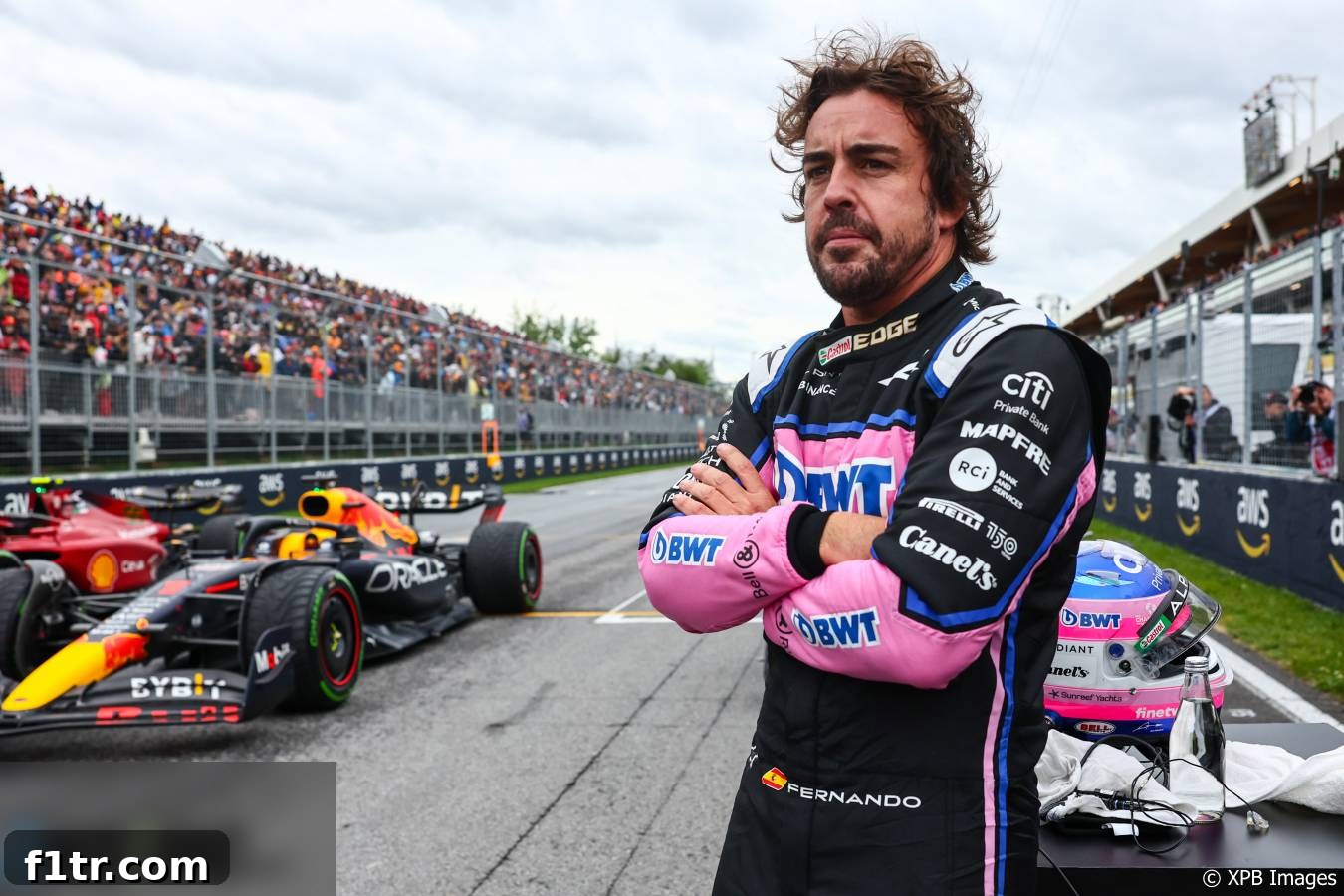
Fernando Alonso’s Masterclass: Experience Shines in Canadian GP Qualifying
Fernando Alonso’s sensational front-row start for the Canadian Grand Prix wasn’t merely a moment of personal triumph; it was a powerful testament to the invaluable role of seasoned experience in the cut-throat world of Formula 1. Securing second place on the grid, the veteran Alpine driver achieved his highest starting position in a decade, a remarkable feat in a qualifying session heavily influenced by unpredictable rain. This extraordinary performance underscored Alonso’s enduring skill and offered a vivid illustration of why, as he often says, “age and experience is always a help, it’s never a downside.”
The F1 paddock in Montreal buzzed with talk of Alonso’s exemplary performance, as he effortlessly navigated the challenging conditions that tripped up many of his younger counterparts. His immediate comfort with the Alpine A522 car, which he felt was competitive from the outset of the weekend, further highlighted a harmonious blend of driver talent and meticulous engineering prowess. This P2 qualification was not just a headline grabber but a strategic victory that set the stage for a compelling race.
Advert | Become a Supporter & go ad-free
A Decade of Determination: Alonso’s Glorious Return to the Front Row
For Fernando Alonso, a revered two-time Formula 1 world champion, claiming a front-row grid slot at the iconic Circuit Gilles Villeneuve marked a profoundly significant and emotionally resonant milestone. It had been a full ten years since he last lined up so high on the grid, a stark reminder of his enduring talent and the arduous journey he had undertaken since returning to the pinnacle of motorsport with the Alpine F1 team. This exceptional achievement was not merely a fleeting moment of glory but a clear and resounding indication of Alonso’s renewed vigour, his unwavering competitive spirit, and his unparalleled ability to extract every ounce of performance from his machinery, even in the most challenging and variable circumstances that Formula 1 can present to a driver.
The Canadian Grand Prix weekend, renowned for its dramatic twists and turns, particularly when rain makes a sporadic appearance, provided the perfect, unpredictable backdrop for Alonso to showcase his unique and deeply honed skill set. His P2 start was an immense morale booster for the entire Alpine F1 team, unequivocally affirming their strategic investment in an experienced, world-class driver and highlighting the substantial advancements made with their A522 chassis throughout the demanding 2022 season. The team’s dedicated engineers and astute strategists benefited immensely from Alonso’s precise and insightful feedback, allowing them to optimize the car’s intricate performance with minimal fuss and maximum efficiency – a critical advantage in the fiercely contested midfield battle for championship points and track position.
Mastering the Circuit Gilles Villeneuve: Where Every Ounce of Experience Truly Counts
The Circuit Gilles Villeneuve in Montreal stands as a truly unique and challenging beast on the Formula 1 calendar. It’s a semi-permanent track notorious for its distinctive blend of blistering high-speed straights, unforgiving tight chicanes, and the infamous concrete barrier ominously known as the ‘Wall of Champions’. Alonso astutely highlighted the absolute necessity for a consistent “rhythm” on this particular circuit, a quality that is not easily taught or replicated in simulators but rather meticulously honed through years of practical experience and an instinctive, visceral understanding of the track’s subtle nuances and ever-changing characteristics. “You use a lot of kerb riding here and it’s quite bumpy,” he explained with characteristic precision, pointing to the specific, physical demands that fundamentally differentiate it from more conventional, smooth, purpose-built race tracks found elsewhere in the world.
His extensive and storied history at the Canadian circuit – a remarkable “16 or 17 years” of racing – provided an undeniable and profoundly crucial advantage. In stark contrast, a significant portion of the current F1 grid had remarkably limited prior experience in Montreal due to the unfortunate COVID-19 pandemic-induced cancellations in previous years. For many, this was only their first or, at best, second visit to the challenging and idiosyncratic venue. This generational gap in track knowledge became acutely apparent in the rain-affected qualifying session, where an intuitive understanding of grip levels, track evolution, and the subtle characteristics of the asphalt proved infinitely more valuable than countless hours diligently spent in a static simulator.
Alonso’s often-repeated mantra that “age and experience is always a help, it’s never a downside” resonated profoundly through his qualifying performance, serving as a powerful validation of his philosophy. In the treacherous, low-grip conditions, where visibility was drastically reduced and the racing line constantly shifting and evolving, his unparalleled ability to anticipate changes, adapt his driving style on the fly with seamless fluidity, and provide clear, concise, and actionable feedback to his dedicated engineers was absolutely paramount. This deep, almost innate well of experience allowed him to push the boundaries with a calculated yet undeniable confidence, knowing precisely how the car would react on the very limit, even when faced with the inherent unpredictability of a wet and rapidly changing track surface.
A Car in Harmony: Immediate Confidence Paves the Way from Free Practice
The robust foundation of Fernando Alonso’s impressive qualifying performance was meticulously laid early in the Canadian Grand Prix weekend. From the very first laps of Free Practice 1 (FP1), the Alpine A522 demonstrated strong, consistent potential and an inherent balance. “The car was good straight away,” Alonso noted, emphasizing the immediate comfort and intuitive connection he felt behind the wheel. This early synergy and harmonious relationship between driver and machine meant the Alpine team didn’t have to scramble with drastic setup changes or engage in extensive, time-consuming experimentation – a common headache and significant time-sink for many teams during the precious practice sessions of a demanding Grand Prix weekend.
A well-balanced, predictable, and responsive car from the outset is a substantial and often underestimated advantage, particularly on a highly technical track like Montreal where fine-tuning and precision are absolutely crucial for navigating its complex mix of blistering high-speed straights, heavy braking zones, and tricky, slow-speed technical sections. Minimal setup adjustments during the practice sessions allowed the Alpine strategists and engineers to primarily focus their valuable time and resources on optimizing overall performance and gathering crucial long-run data for the race, rather than chasing elusive balance issues. This efficiency and proactive approach in the practice sessions contributed directly and significantly to Alonso’s ability to build confidence lap after lap and session after session, allowing him to push harder and explore the absolute limits of the car with greater assurance, ultimately culminating in his spectacular qualifying lap that placed him deservedly on the front row of the grid.
The Art of Wet Weather Qualifying: Where Raw Skill Trumps Pure Car Pace
The rain that unpredictably descended upon the Circuit Gilles Villeneuve during qualifying was more than just a meteorological event; it was a fundamental and dramatic game-changer for the entire Formula 1 grid. Wet weather sessions in Formula 1 are renowned for their profound ability to level the playing field, often allowing pure driver skill, intuition, and bravery to shine brighter and take undeniable precedence over the raw, inherent pace advantage of superior machinery. Fernando Alonso has a legendary and well-documented reputation for his unparalleled prowess and tactical genius in challenging, low-grip conditions, and the 2022 Canadian Grand Prix qualifying was a spectacular and thrilling reaffirmation of this extraordinary capability. His uncanny ability to find grip where others struggled, to intuitively understand the rapidly evolving track conditions, and to master the delicate fine line between aggressive driving and cautious car management was truly masterful to witness.
In such treacherous conditions, attributes like precise car control, exceptional adaptability, and an innate, almost telepathic feel for the absolute limits of adhesion become paramount. Drivers must contend not only with heavy spray from preceding cars and drastically reduced visibility but also with rapidly changing grip levels as the track either progressively dries out or becomes even wetter with continuing rainfall. Alonso’s characteristic cool demeanor under immense pressure and his incredibly precise and measured steering and throttle inputs allowed him to extract maximum performance from the intermediate tyres. He progressively improved his lap times as the session unfolded, demonstrating a profound understanding of how to manage tyre temperatures and optimize grip in the ever-changing conditions. This performance not only thrilled the legions of Formula 1 fans watching worldwide but also served as a stark and compelling reminder of why he is widely considered one of the greatest drivers of his generation, especially when Mother Nature decides to add an extra, unpredictable layer of complexity to the ultimate challenge of qualifying.
Realistic Ambitions: Targeting a Strategic Top-Five Finish in the Race
Despite the immense elation and widespread praise following his front-row start, Fernando Alonso approached the impending race day with a characteristically pragmatic and thoroughly realistic outlook. He was fully aware of the established competitive hierarchy within the thrilling world of Formula 1 during the 2022 season. While starting second undeniably presented an excellent opportunity to score significant points, he candidly admitted that his realistic target for the grueling Canadian Grand Prix race was a top-five finish. “I’m not sure about what the possibilities are tomorrow realistically. I will say that top five is what we should fight for,” he stated with clear strategic foresight, demonstrating his deep understanding of the competitive landscape.
This grounded perspective stemmed directly from the formidable pace and inherent performance advantage consistently demonstrated by the top two teams, Red Bull Racing and Scuderia Ferrari, throughout the 2022 Formula 1 campaign. Alonso acknowledged with unwavering honesty that even if a Red Bull or Ferrari car were to start from the very back of the grid, or encounter an early race incident such as a puncture or mechanical issue, they possessed the raw speed, the strategic depth, and the superior car performance to recover remarkably quickly. In such scenarios, they would often still finish with a considerable margin ahead of the midfield contenders, including Alpine. “We saw in many races already that Ferrari or Red Bull are starting last, or having a puncture in lap one or whatever, they still finish with good margin in front of us,” he elaborated, referencing clear patterns from previous races and highlighting the dominant pace of the front-runners.
For Alonso and the Alpine F1 team, the battle for the top three podium positions was, realistically speaking, largely considered a two-team affair between Red Bull and Ferrari. Consequently, securing the highly coveted “best of the rest” position, which often meant a strategic fifth place, was viewed by the team as being akin to a victory in itself, given the competitive landscape. “So, I think the top four places are locked. So yeah, fifth is like a win for us. And that’s probably the spot that we should aim for,” he concluded. This deeply strategic mindset underscored Alpine’s critical position in the tightly contested Constructors’ Championship battle, where consistent, high-value points finishes were absolutely vital for securing a strong overall standing against formidable midfield rivals such as McLaren, Alfa Romeo, and Mercedes on occasion.
Advert | Become a RaceFans supporter andgo ad-free
The Enduring Legacy of an F1 Icon: Alonso’s Impact Beyond the Driver’s Seat
Fernando Alonso’s exceptional performance at the Canadian Grand Prix was far more than just a single, impressive qualifying result; it was a profound reaffirmation of his enduring legacy and unwavering impact within the pinnacle of motorsport, Formula 1. His remarkable ability to compete at the very highest level, even in what might be considered the twilight of an already remarkable and illustrious career, serves as an undeniable inspiration to aspiring drivers and seasoned professionals alike. He brings not only immense raw speed and tactical brilliance to the Alpine F1 team but also an invaluable wealth of technical knowledge, strategic insight, and strong leadership that significantly benefits the team’s ongoing development trajectory and long-term aspirations for future success.
His meticulous approach to providing feedback, his relentless pursuit of perfection in every aspect of his craft, and his unwavering, fiery competitive spirit make him an absolutely invaluable asset to any Formula 1 team. In a sport that is increasingly dominated by intricate data analysis, advanced simulation technologies, and highly sophisticated computational models, Alonso’s unique human element—his unparalleled intuitive feel for the car, the tyres, and the evolving track conditions—remains a critical differentiator. This is especially true when race conditions turn inherently unpredictable, as they did so dramatically in Montreal. His presence on the front row in Canada vividly reminded the entire world that while automotive technology and engineering continue to advance at an astonishing pace, the true magic and excitement of Formula 1 still very often lie in the exceptionally gifted hands and minds of its most legendary drivers.
Looking Ahead: The Race Day Challenge for Alonso and Alpine
As the Canadian Grand Prix race day dawned over the city of Montreal, all eyes across the global motorsport community were undoubtedly fixed on Fernando Alonso. His sensational front-row start offered a golden, albeit challenging, opportunity, but it also presented a unique and complex set of strategic challenges for the Alpine F1 team to navigate. The primary goal was crystal clear: to convert the sensational qualifying performance into a strong, consistent points finish, ideally within the top five positions, as realistically assessed and targeted by the driver himself. The inherent unpredictability of the Circuit Gilles Villeneuve, combined with the fiercely competitive landscape of the 2022 Formula 1 season, promised nothing short of a thrilling and action-packed race. Alonso’s vast experience, his sharp strategic acumen, and the competitive package of the Alpine A522 would all be put to the ultimate test in the intense pursuit of securing those incredibly valuable championship points, vital for Alpine’s ambitions in the Constructors’ Championship.
More on the 2022 Canadian Grand Prix
Here’s a look back at more stories and insights from the thrilling 2022 Canadian Grand Prix weekend, offering further context and details on the event’s various facets:
- Alfa Romeo see “great future in F1” for Zhou after best result so far
- Ocon has “big hopes” for Alpine’s Silverstone upgrade package
- Hamilton’s Canada podium especially satisfying after run of “bad luck” – Wolff
- Verstappen urges Red Bull to find more pace after close win in Canada
- More confident Sainz is now a contender for wins – Binotto
Browse all 2022 Canadian Grand Prix articles