Takuma Sato’s Resounding Indianapolis 500 Victory: Defying Doubt and Cementing a Legacy
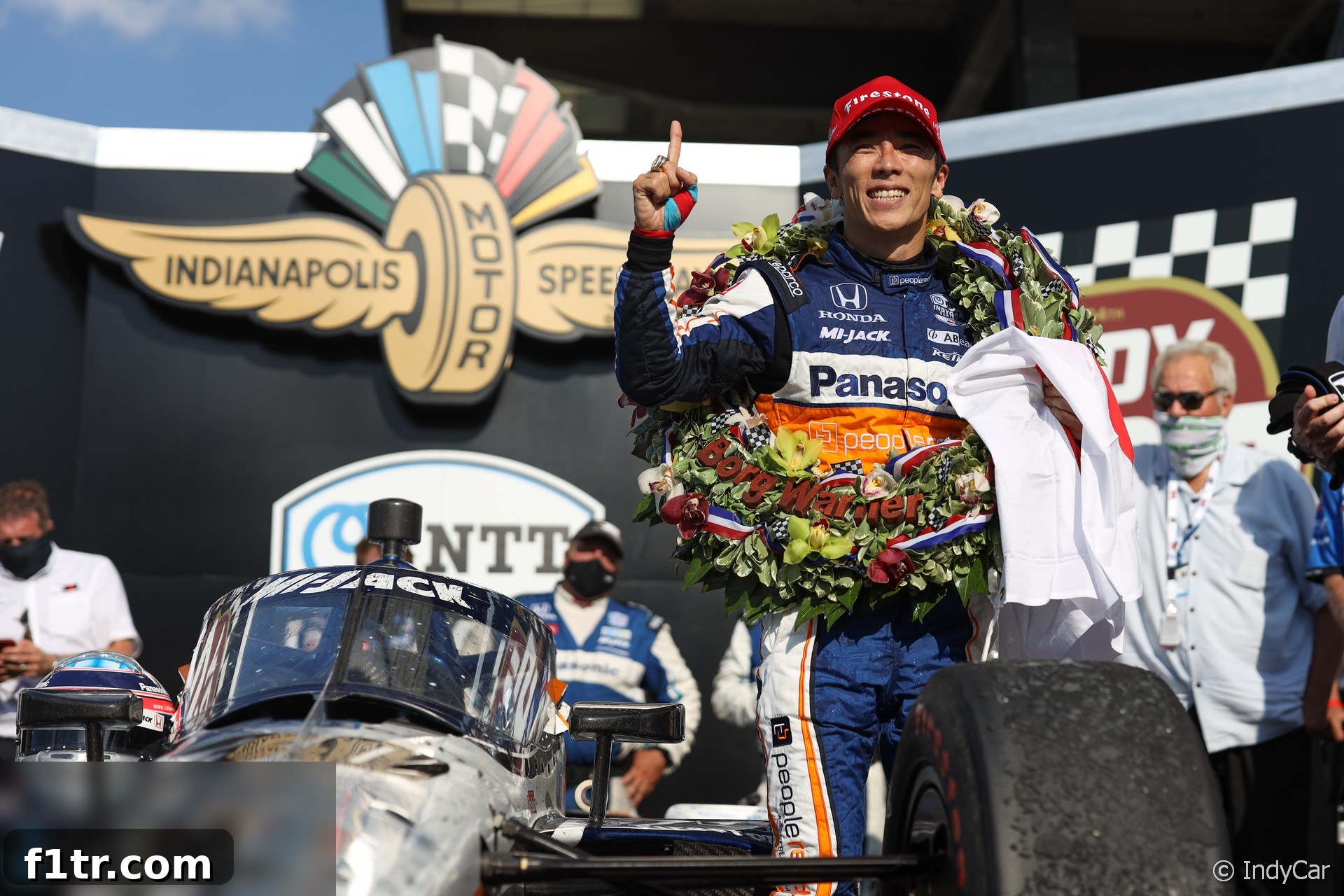
In a year marked by unprecedented circumstances, the 2020 Indianapolis 500 delivered a thrilling, albeit controversial, conclusion. Veteran driver Takuma Sato of Rahal Letterman Lanigan Racing clinched his second career victory at the iconic Brickyard, a remarkable achievement that solidified his place in motorsport history. However, the nature of his win, particularly a late-race caution period, sparked debate, with rival Scott Dixon among those questioning whether Sato could have held on for the win under green-flag conditions. Sato, with characteristic defiance and strategic insight, vehemently dismissed these suggestions, asserting that his victory was well-earned and not a product of circumstance. This deep dive explores the dynamics of Sato’s triumph, the contentious fuel mileage debate, and the broader implications of the race’s dramatic closing moments.
The Climax of the 2020 Indianapolis 500: A Race of Nerves and Strategy
The 104th running of the Indianapolis 500, held without spectators due to the global pandemic, was a strategic masterclass culminating in high drama. Throughout the latter stages of the 200-lap contest, the battle for supremacy narrowed primarily to two formidable competitors: Takuma Sato and Chip Ganassi Racing’s Scott Dixon, who had dominated much of the race. Sato, known for his aggressive yet calculated driving style, made his decisive move on Lap 172, expertly overtaking Dixon to seize the lead. From that point, the Japanese driver meticulously managed his car, his pace, and crucially, his fuel, anticipating every strategic turn.
As the laps dwindled, the tension inside the cockpit and in the pit lanes was palpable. With just five laps remaining, the race took an unexpected turn. Sato’s Rahal Letterman Lanigan teammate, Spencer Pigot, suffered a severe crash, making heavy contact with the barrier in turn four. The devastating incident necessitated a full-course caution, effectively freezing the field and guaranteeing Sato’s position at the front as the race concluded under yellow flags. This late caution, while bringing a premature end to green-flag racing, became the focal point of intense post-race discussions and fueled skepticism regarding Sato’s ultimate triumph.
The Fuel Mileage Controversy: Takuma Sato’s Strategic Defense
Scott Dixon, a five-time IndyCar Series champion and a previous Indy 500 winner himself, was quick to express his doubts following the race’s conclusion. He openly wondered if Sato could have maintained his blistering pace and conserved enough fuel to reach the checkered flag had the race remained green. Dixon’s skepticism was rooted in the common strategy employed in the Indianapolis 500, where drivers often push their cars to the absolute limit for speed, only to find themselves perilously close to running dry in the tense final laps. The balance between speed and fuel conservation is a critical element of Indy 500 strategy, often dictating who contends for the win.
Takuma Sato, however, offered a robust defense of his strategic approach and his team’s execution, dismissing the narrative that the caution handed him the victory. He detailed how he was meticulously managing his fuel consumption while simultaneously maintaining a competitive speed. “I knew towards the end of the stint I had very good speed,” Sato stated confidently, underscoring his belief in his car’s performance and his own racecraft. He acknowledged receiving immediate warnings from his pit crew about excessive fuel usage soon after taking the crucial lead from Dixon. This critical feedback prompted him to switch to a leaner fuel mixture, a crucial and calculated adjustment in endurance racing aimed at maximizing efficiency without sacrificing too much pace.
Sato candidly recalled the immediate consequence of this adjustment: “You can see immediately Scott caught me and tried to give it a go.” However, his vast experience and quick thinking allowed him to adapt swiftly. “At that point, I had to switch back to the maximum power,” he explained, demonstrating his exceptional ability to balance aggression with conservation on the fly. Sato’s confidence stemmed from his team’s precise data and his own disciplined driving. He emphasized, “He was three cars, four cars behind. I went with the leaner mixture. We were close. Even without it, I was hitting the number. If you scan my radio, we were on the number. Even [if] we’d gone through the entire green, I think we’d be okay.” His assertion that he had “some of that in the pocket”—referring to reserves of both fuel and power—underscored his profound belief that he had the situation completely under control, even if the final laps had remained under full green-flag racing. This level of meticulous management and unwavering confidence showcases the strategic depth and mental fortitude required to win at the legendary Indianapolis Motor Speedway.
Prioritizing Safety: A Teammate’s Well-being and IndyCar’s Advancements
While fans and pundits debated the race’s conclusion and its strategic implications, Takuma Sato’s immediate thoughts turned to his teammate, Spencer Pigot, whose heavy crash had triggered the decisive caution. Despite the sheer jubilation of his second Indy 500 victory, Sato expressed genuine concern for Pigot’s well-being, highlighting the inherent dangers that even the most advanced racing technology cannot fully eliminate. “I feel glad that my team mate Spencer got out of the car. It looked a really bad angle, I was a little worried about it,” Sato admitted, his words reflecting the camaraderie and shared risks among competitors in the high-stakes world of IndyCar.
Pigot’s ability to walk away from such a violent impact at high speed served as a powerful testament to the continuous and significant advancements in IndyCar safety protocols and equipment. Sato was quick to laud the series for its proactive efforts, specifically mentioning the revolutionary Aeroscreen, which had been introduced for the 2020 season. “Once again, an improvement for the safety of IndyCar. IndyCar did a phenomenal job with the Aeroscreen, we now feel so much protection. I think they’ve done a fantastic job,” Sato emphasized, acknowledging the monumental impact of this innovation. The Aeroscreen, a robust polycarbonate-laminated ballistic screen mounted to the chassis, significantly enhances driver head protection without compromising visibility, a critical balance in open-wheel racing. Its role in mitigating severe injuries from flying debris or impacts has been truly revolutionary, and Pigot’s incident, unfortunately, served as a stark, real-world reminder of its vital importance in the high-speed, high-impact environment characteristic of IndyCar racing.
Takuma Sato: An Enduring Legacy at the Brickyard
Takuma Sato’s second Indianapolis 500 victory was more than just another race win; it was a profound testament to his enduring talent, remarkable resilience, and unwavering passion for racing. At an age where many drivers contemplate retirement, Sato achieved a truly remarkable feat: winning the prestigious race twice after turning 40 years old. His first victory came in 2017 with Andretti Autosport, making him the first Japanese driver ever to win the iconic event. His 2020 triumph further cemented his status as a legendary figure at the Indianapolis Motor Speedway, placing him among an elite group of multiple winners.
Reflecting on his illustrious career, Sato spoke with a compelling mix of humility and profound pride. “I never even imagined a situation like today,” he confessed, indicating the surreal nature of his sustained success. “Look, after 40 years old, still driving, that is just living in a dream.” His journey in motorsport has been long and varied, including a notable stint in Formula 1 before his highly successful transition to IndyCar racing. He recalled past suggestions that his “peak” might have been in 2012, a year that famously saw him challenging for the Indy 500 win before a heartbreaking crash on the final lap. “People said 2012 was probably my peak and the best shot. Well, we’ll see. We kept on going,” he remarked, a subtle yet powerful nod to his detractors and a profound affirmation of his unwavering perseverance. Sato’s remarkable ability to remain at the pinnacle of one of the world’s most demanding sports showcases an extraordinary level of dedication, physical fitness, and strategic acumen. His career stands as an inspiration, powerfully proving that age is merely a number when passion, unparalleled skill, and relentless determination combine effectively to pursue excellence.
Conclusion: A Champion’s Unquestionable Triumph
Takuma Sato’s 2020 Indianapolis 500 victory stands as a significant and indelible moment in the race’s storied history. While the late caution period inevitably invited speculation and debate, Sato’s detailed account of his masterful fuel management strategy and his undeniable pace in the crucial final laps provide compelling evidence of a hard-fought and deserved win. His triumph not only showcased his exceptional driving talent and strategic prowess but also highlighted IndyCar’s continuous and unwavering commitment to driver safety, as powerfully demonstrated by Spencer Pigot’s safe egress from a severe accident. Sato, a veteran who continues to defy expectations and redefine what is possible in motorsport, further cemented his legacy as a two-time Indy 500 champion, living proof that experience, determination, and a relentless pursuit of excellence can indeed lead to ultimate success on the hallowed grounds of the Indianapolis Motor Speedway.