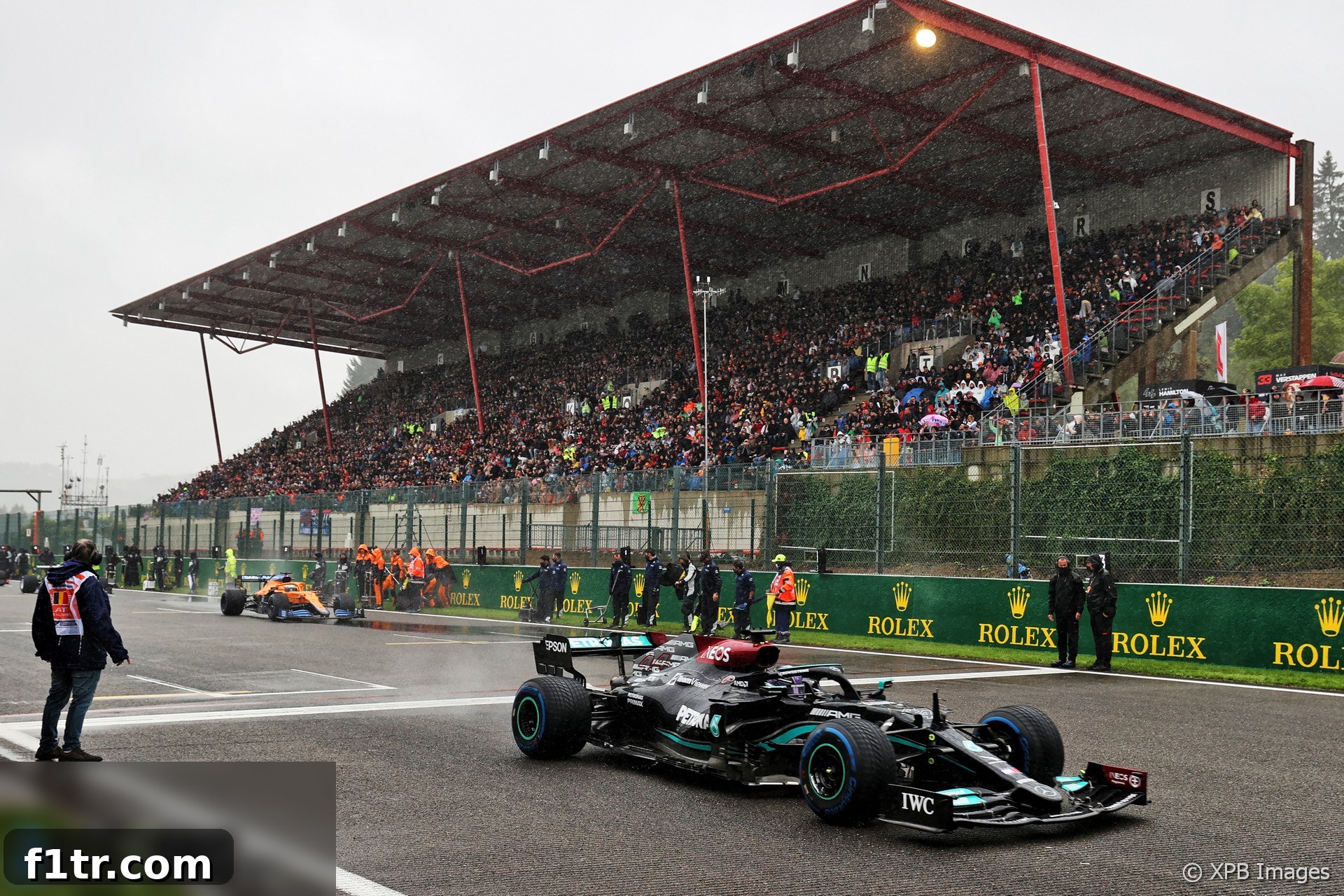
The world of Formula 1, often a spectacle of speed and strategic brilliance, faced an unprecedented challenge at the 2021 Belgian Grand Prix held at the iconic Spa-Francorchamps circuit. Heavy rain transformed the highly anticipated event into a controversial washout, leading to widespread disappointment among fans and strong criticism from drivers. In the aftermath of this highly unusual non-race, seven-time world champion Lewis Hamilton stepped forward with a heartfelt gesture, aiming to directly address the frustration of thousands of dedicated supporters who braved the elements only to witness a mere handful of laps behind a Safety Car. Hamilton’s initiative underscored a growing sentiment within the sport regarding the importance of fan experience and the integrity of competition, setting a precedent for how individual athletes might respond to collective fan grievances.
Advert | Become a Supporter & go ad-free
Lewis Hamilton’s Unprecedented Gesture to Disappointed Fans
In a move that highlighted his deep connection with his fanbase, Lewis Hamilton announced a unique offering for those who attended the 2021 Belgian Grand Prix. Taking to his Instagram profile, he shared a post originating from the dedicated fan account Lhamiltoncrew, promising “something very special” for “all the fans who attended Spa.” This personal initiative by the Mercedes driver sought to provide a tangible form of recognition and appreciation to fans who had invested considerable time, money, and hope into attending what ultimately became the shortest Grand Prix in Formula 1 history. The announcement generated significant buzz, not only for its inherent generosity but also for its direct challenge to the traditional, often slower, mechanisms of fan compensation within the upper echelons of professional sports.
The mechanism for receiving this exclusive token of appreciation was straightforward yet designed to ensure authenticity and reach those truly affected. Fans were specifically asked to provide “proof of purchase” of their tickets to the race, a necessary and effective step to verify their legitimate attendance at the rain-drenched event. Those who successfully submitted their documentation through a dedicated portal (accessible via a specific link) would subsequently “receive an exclusive gift from Lewis.” While the exact nature of the gift was not immediately disclosed, the sentiment behind it resonated powerfully with the motorsport community globally. It represented a direct apology and a personal thank you from one of the sport’s biggest stars, acknowledging the profound disappointment and significant financial outlay experienced by attendees. This highly personal and immediate touch stood in stark contrast to the more bureaucratic and often protracted discussions surrounding official refunds or broader compensation schemes, making Hamilton’s offer particularly impactful and memorable.
The Controversial Washout: A “Farce” Unfolds at Spa-Francorchamps
The events of the 2021 Belgian Grand Prix itself were nothing short of contentious, prompting Lewis Hamilton to voice his strong disapproval and concern. Persistent torrential rain throughout the weekend, and particularly on race day, rendered racing conditions treacherous, raising serious safety concerns for drivers, track personnel, and spectators alike. After multiple delays, frustrating false starts, and several attempts to begin the race properly behind the Safety Car, a controversial decision was eventually made to declare a result after just three laps were completed under safety car conditions. This unprecedented scenario led to the awarding of half-points to the drivers, a move that Hamilton vehemently criticised, famously labelling the entire event a “farce.” His public comments highlighted a profound dissatisfaction with Formula 1’s handling of the situation, especially concerning the ethical implications for the thousands of dedicated fans who had purchased tickets and endured the poor weather.
Hamilton’s criticism was rooted deeply in the belief that the fundamental integrity of the sport had been severely compromised, and that the fans, who are undeniably the lifeblood of Formula 1, had been unfairly treated. He passionately argued that spectators who had paid premium prices for tickets, often travelling long distances from across Europe and beyond, incurring significant expenses for travel and accommodation, deserved far more than a token number of laps behind a safety car, particularly when no actual racing, overtaking, or genuine competition occurred. His impassioned plea for immediate refunds for ticket holders resonated widely, not just within the tightly-knit F1 paddock but among the global fanbase and various media outlets. The seven-time champion’s resolute stance amplified a critical and necessary discussion about the delicate balance between commercial pressures, sporting regulations, and the paramount importance of ensuring fan satisfaction and safety. The incident at Spa served as a harsh yet vital reminder of motorsport’s inherent vulnerability to extreme weather conditions and the complex, high-stakes decisions that must be made in real-time under immense scrutiny and pressure.
Formula 1’s Official Response and Industry Perspectives on Compensation
In direct response to the mounting public pressure and widespread outcry following the non-event, Formula 1 swiftly acknowledged the unique and challenging circumstances of the 2021 Belgian Grand Prix. On the Wednesday immediately following the race weekend, the sport’s governing body confirmed that it was actively “considering options for ticket holders.” This official statement, while not immediately offering a concrete or specific solution, clearly signalled a recognition of the unprecedented situation and the undeniable need to address the widespread dissatisfaction among attendees at the historic Spa-Francorchamps circuit. The careful formulation of “options” rather than an outright commitment to full refunds suggested a complex process involving various stakeholders and significant financial considerations, reflecting the intricate commercial ecosystem that underpins modern Formula 1.
The discussion around potential compensation quickly highlighted the multifaceted and often intertwined nature of responsibility within the Formula 1 structure. Mercedes team principal Toto Wolff provided further nuanced insight into the situation, clarifying that any decision regarding fan compensation or similar gestures fell primarily under the purview of Formula 1 CEO Stefano Domenicali and the local race promoter responsible for the Spa event. “Stefano and the promoter are looking at that situation,” Wolff stated, emphasizing the contractual and logistical complexities that govern such situations in international sports. He acknowledged the shared financial ecosystem, noting, “Certainly we are all in the boat together and if it costs Stefano, it costs the teams, so we would be indirectly donating anyway.” However, he also made it unequivocally clear that “this can be resolved between [the] commercial rights holder and promoter and we are not part of this conference,” indicating that direct team involvement in the specific compensation discussions was limited due to existing contractual frameworks. This layered responsibility often makes swift, unified action challenging to coordinate across the sport, further underscoring the immediate and impactful significance of Hamilton’s individual initiative.
The Broader Impact on Fan Experience and F1’s Future Directives
Advert | Become a RaceFans supporter andgo ad-free
The 2021 Belgian Grand Prix washout and its contentious aftermath served as a crucial turning point for Formula 1 in its ongoing, proactive efforts to consistently prioritize and enhance the fan experience. In an era where major sports increasingly compete fiercely for viewership, digital engagement, and live attendance, neglecting the sentiments and financial investments of live attendees can have severe and long-term repercussions on brand loyalty and public perception. Fans often make significant financial and logistical commitments to attend a Grand Prix, investing substantially in international travel, accommodation, and premium tickets that can individually cost hundreds or even thousands of pounds. When such a substantial investment yields no actual racing action, the potential for deep disillusionment and resentment is alarmingly high. Hamilton’s immediate, personal response, sharply contrasted with the more measured and bureaucratic official channels, brought the fan experience squarely into the global spotlight, urging the sport as a whole to reflect deeply on its responsibilities beyond the immediate confines of sporting competition.
This pivotal incident at Spa sparked wider and more urgent discussions across the Formula 1 community about potential rule adjustments and comprehensive contingency plans for future weather-affected races. Critical questions arose about whether points should ever be awarded for laps completed solely behind a Safety Car, or if alternative, more equitable formats, such as awarding points based on qualifying results if a race cannot physically proceed, should be seriously considered and codified. The focus shifted decisively towards devising clearer protocols and implementing fair mechanisms that could better protect both the sporting integrity of Formula 1 and the unwavering satisfaction of its dedicated global fanbase in extreme and unpredictable circumstances. Ensuring absolute transparency, offering clear and timely communication, and implementing demonstrably fair compensation mechanisms are now widely seen as vital components of maintaining fan loyalty, fostering enduring trust, and preserving the sport’s coveted reputation. The incident at Spa-Francorchamps, while undoubtedly disappointing and controversial, ultimately provided an invaluable and unforgettable lesson for Formula 1 on the enduring power of its fanbase and the critical, ongoing need to continually nurture and respect that relationship.
Ultimately, while the financial and logistical burden of providing full refunds for all attendees was undoubtedly immense and complex, the collective response from influential figures like Lewis Hamilton, coupled with Formula 1’s eventual official acknowledgment and commitment to finding “options,” highlighted a growing and crucial recognition of fan value. The incident at Spa-Francorchamps will likely be remembered not just for the unfortunate lack of actual racing, but more profoundly for the deep and introspective discussions it triggered about sportsmanship, commercial responsibility, and the unbreakable, passionate bond between Formula 1 and its truly global community of passionate supporters. It served as a stark reminder that even in the high-stakes world of elite motorsport, the fans remain at the very heart of the spectacle.
2021 Belgian Grand Prix: Related Coverage
For more detailed perspectives and ongoing developments concerning the controversial 2021 Belgian Grand Prix, please explore the following articles:
- Spa spectators who saw no racing offered prize draw for 2022 tickets
- ‘Wrong to award points for a couple of laps behind the Safety Car’ – Horner
- Hamilton offers “exclusive gift” to fans who attended Belgian GP wash-out
- Change rules to give points for qualifying if race can’t happen – Seidl
- “I apologised to the entire team for my mistake” – Perez
Browse all 2021 Belgian Grand Prix articles