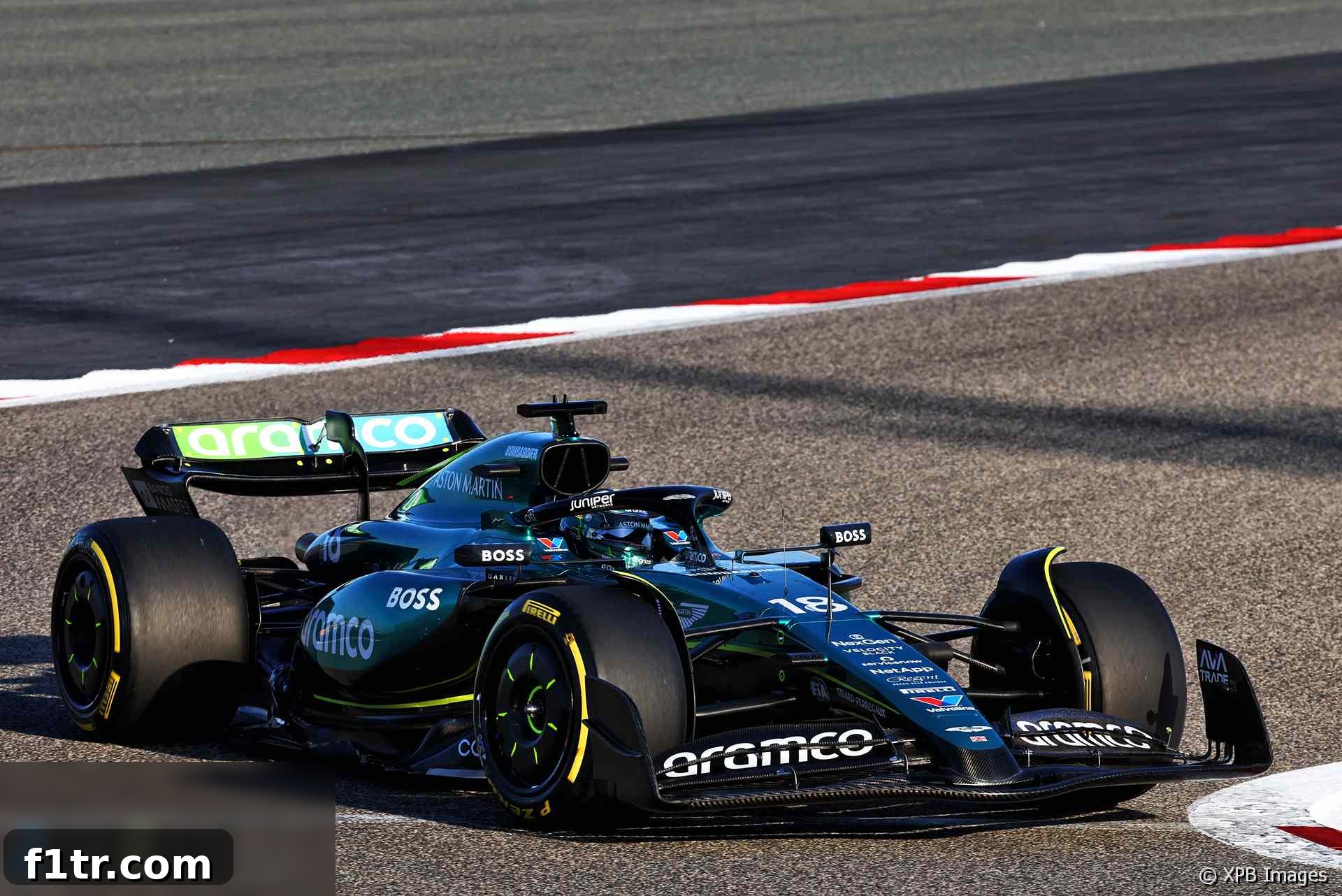
Aston Martin AMR24: A Detailed Technical Evolution and Ambitious Pursuit of F1’s Top Tier
The highly anticipated Aston Martin AMR24, a car the team describes as a “strong evolution” of its successful predecessor, has officially commenced its crucial pre-season testing in Bahrain. This pivotal phase marks the beginning of Aston Martin Aramco Formula 1 Team’s ambitious campaign for the 2024 Formula 1 season, where every lap and data point collected will be vital in refining its challenger.
Having made a significant stride forward in the previous season, vaulting from seventh to fifth in the Constructors’ Championship in 2023, Aston Martin is now setting its sights even higher. Team owner Lawrence Stroll has openly targeted a move into the fiercely competitive top four this year. This objective places the AMR24 in a direct battle with established giants like Red Bull, Mercedes, Ferrari, and McLaren, demanding not just incremental improvements but a fundamental enhancement across all aspects of the car’s performance envelope.
The Evolution of Performance: Unpacking the AMR24’s Core Changes
Achieving a top-four standing in the current era of Formula 1 requires a machine capable of consistently delivering points finishes and podiums. Technical Director Dan Fallows, a key architect behind Aston Martin’s design philosophy, has meticulously detailed the extensive modifications that distinguish the AMR24 from its predecessor, the AMR23. His insights reveal a comprehensive overhaul rather than a mere update.
Fallows emphasized the profound extent of the redesign, stating, “The chassis, nose, front wing, floor, and front and rear suspension are all new. None of the surfaces are the same as AMR23 apart from those where the design is prescribed by the regulations. Pretty much everything has changed.” This declaration underscores the team’s commitment to pushing the boundaries of design within the regulatory framework, seeking every possible performance advantage.
Chassis and Nose Design: Aerodynamic Efficiency at the Forefront
The foundation of any Formula 1 car is its chassis, and a completely new chassis for the AMR24 signifies a fresh starting point for optimizing weight distribution, structural rigidity, and packaging of internal components. Complementing this, the nose design has undergone a noticeable transformation. The AMR24 features a slightly shorter nose compared to last year’s car, a design trend observed across the grid as teams strive to maximize aerodynamic flow underneath the car.
A shorter nose, particularly when paired with the front wing, allows for greater freedom in shaping the central section of the front wing, potentially improving the initial quality of airflow that then travels downstream to the critical floor area. This nuanced change is indicative of the relentless pursuit of marginal gains that define modern F1 car development.
Revolutionizing Airflow: The Front Wing and Floor Synergy
Aerodynamics remains the single most dominant factor in Formula 1 performance, and the AMR24 introduces significant revisions to key aerodynamic surfaces. The front wing, a complex component responsible for initiating and shaping airflow across the entire car, now features an unattached leading flap. This design choice aims to enhance the air’s journey into the crucial underfloor region.
Dan Fallows elaborated on the intricate role of the front wing: “We’ve changed the front wing so it does a better job of managing the wake from the front wheels.” The turbulent wake generated by the rotating front wheels is a major source of aerodynamic drag and disruption. By refining the front wing’s interaction with this wake, Aston Martin seeks to create a cleaner, more organized airflow, ultimately increasing the efficiency of the car’s downforce-generating elements.
The bodywork surrounding the sidepods and engine cover has also been re-sculpted. “The bodywork has changed to manage the flow of air around the floor better and to control it more as it goes towards the rear wing,” Fallows explained. This comprehensive approach ensures that the airflow is meticulously guided from the very front of the car, through the mid-section, and finally to the rear, where it interacts with the diffuser and rear wing to generate maximum downforce and minimize drag.
Central to this aerodynamic philosophy is the floor, which Fallows rightly identifies as “the biggest area of downforce generation – it’s constantly evolving.” Under current ground effect regulations, the design of the floor and its intricate channels, fences, and diffusers are paramount. The AMR24’s new floor represents countless hours of computational fluid dynamics (CFD) simulations and wind tunnel testing, as the team strives to extract every ounce of performance from this critical component.
Suspension System Innovations: Adapting for Performance and Packaging
The suspension system plays a dual role in Formula 1: mechanical grip and aerodynamic stability. Aston Martin’s deep technical partnership with Mercedes, which supplies power units and gearboxes, extends to some suspension components. For the AMR24, Aston Martin has mirrored Mercedes’ strategic move away from a pull-rod configuration at the rear of the car.
“We now have a push-rod suspension layout at the rear,” confirmed Fallows. The shift from pull-rod to push-rod at the rear offers distinct advantages, particularly in terms of packaging and aerodynamic optimization around the diffuser area. A push-rod system can allow for a cleaner airflow path around the gearbox and rear suspension elements, contributing to a more efficient diffuser and greater downforce generation. Furthermore, it can influence weight distribution and the car’s dynamic behavior, offering engineers new avenues for setup optimization.
The front suspension has also been meticulously altered “to work better alongside the front wing and floor.” This highlights the integrated nature of modern F1 car design, where no component works in isolation. The interaction between the front suspension, front wing, and floor is crucial for controlling ride height, managing tire wake, and ensuring consistent aerodynamic performance through various speeds and cornering loads. The rear suspension, similarly, has been adapted “to accommodate the latest power unit and gearbox assembly from Mercedes,” ensuring seamless integration and optimal performance from the supplied components.
Sidepod Philosophy: Balancing Innovation with Proven Concepts
The sidepods are another highly visible area of aerodynamic development, and the AMR24 exhibits a blend of adopted trends and a continuation of its unique design philosophy. In front of the sidepods, Aston Martin has incorporated an extended lower lip, a feature increasingly common across the grid. This element is designed to manage and direct airflow more effectively around the sidepods, enhancing the sealing of the underfloor and promoting greater downforce.
However, Aston Martin has notably maintained its steeply undercut sidepod design, a characteristic feature from last year. This design, combined with an internal ramp on the inside of the sidepod, is engineered to direct air downwards towards the rear suspension and diffuser area. While some rivals have moved towards more expansive, “downwash” style sidepods, Aston Martin’s decision to stick with its proven concept suggests confidence in its ability to generate efficient downforce and cooling from this specific design. This commitment to their own philosophy, while integrating beneficial elements from other teams, demonstrates a sophisticated and strategic approach to car development.
Beyond the Visible: A Platform for Continuous Development
Beyond the specific design changes, a critical aspect of the AMR24’s development philosophy is its inherent capacity for in-season upgrades. Dan Fallows articulated this strategic focus: “We focussed on all areas of the aerodynamics and we’ve also looked at some of the mechanical components as well. But it is an evolution and we’re looking for it to be a good platform for development through the year.”
In the relentless world of Formula 1, a car’s launch specification is merely the starting point. The ability to introduce effective upgrades throughout the season is often the deciding factor in maintaining competitiveness. The AMR24 has been designed from the ground up to offer engineers greater freedom and scope for aerodynamic and mechanical development, ensuring that Aston Martin can respond effectively to its rivals and continuously unlock more performance as the season progresses. This focus on future development potential is a shrewd move, recognizing that the championship is a marathon, not a sprint.
The Drivers and the Track: Validating the Vision in Bahrain
The pre-season testing in Bahrain provides the first real-world validation of all the design concepts and simulations. For drivers Fernando Alonso and Lance Stroll, this period is crucial for understanding the car’s behavior, providing vital feedback to the engineering team, and dialing in initial setups. Their experience and input are indispensable in translating theoretical performance into tangible lap times.
Every corner, braking zone, and straight at the Bahrain International Circuit offers data points to confirm aerodynamic models, chassis stiffness, suspension characteristics, and power unit integration. The objective is not just raw speed, but reliability, consistency, and a clear understanding of the AMR24’s strengths and areas for improvement before the first Grand Prix. This iterative process of testing, data analysis, and refinement is fundamental to F1 success.
Pictures: 2024 Aston Martin AMR24 on track
As the 2024 Formula 1 season draws near, the Aston Martin AMR24 stands as a testament to the team’s relentless ambition and meticulous engineering. With a comprehensive redesign spanning crucial aerodynamic and mechanical components, and a strategic focus on continuous development, the AMR24 is poised to be a formidable contender. The upcoming races will reveal whether this “strong evolution” can indeed propel Aston Martin into the coveted top echelon of Formula 1, challenging the sport’s established powerhouses.
Formula 1
- GT driver killed in multi-car crash at Nurburgring Qualifiers
- Should F1 change tracks or racing guidelines to tackle dangers in 2026 rules?
- Controversies, Norris, Newey and more: Five new motorsport books reviewed
- One of F1’s greatest races happened 15 years ago today. Or did it?
- “Overtaking is overtaking”: Domenicali denies F1’s yo-yo racing is “artificial”
Browse all Formula 1 articles