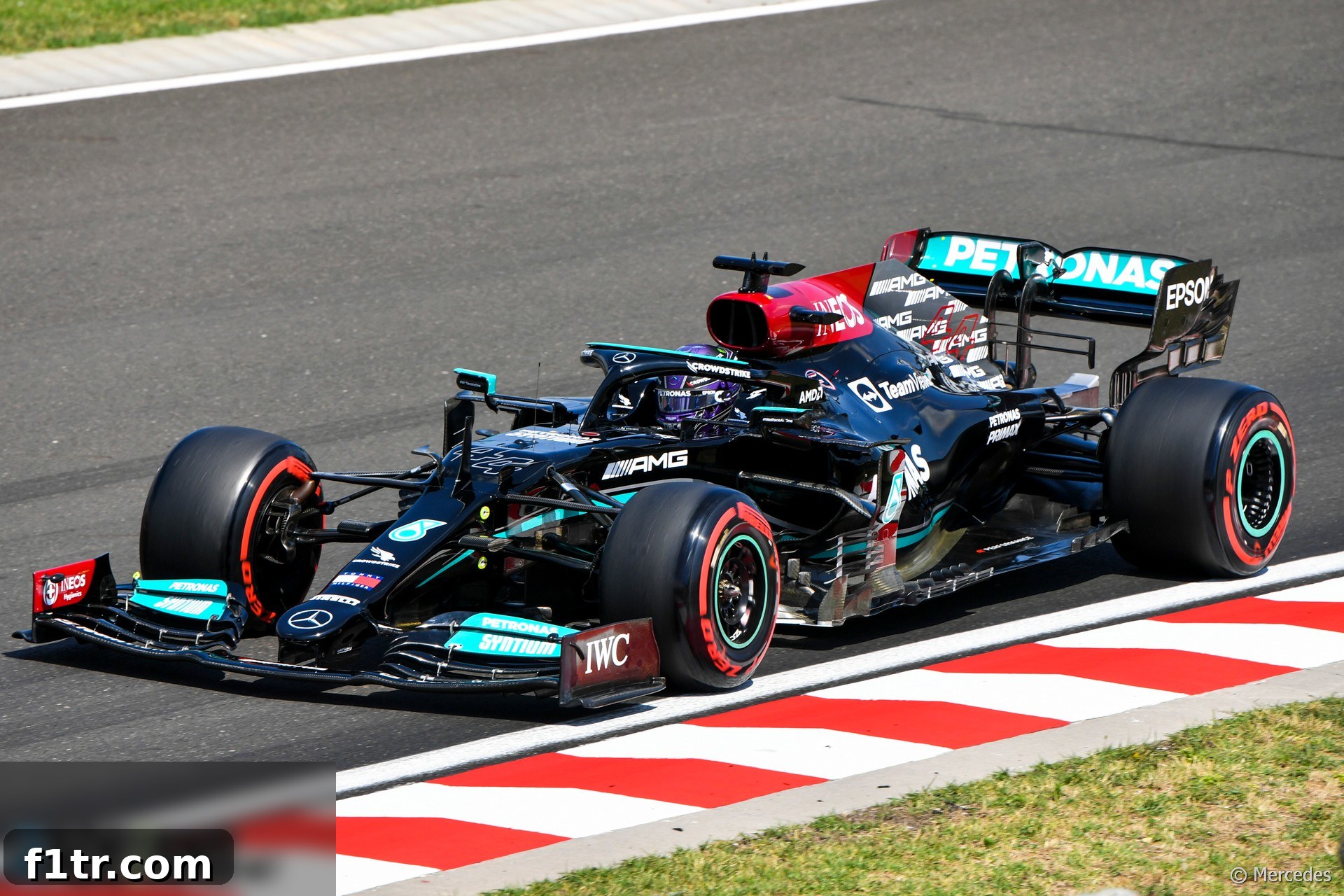
Hamilton Secures Pole in Tense Hungarian Grand Prix Qualifying, Verstappen P3
The Hungaroring, a circuit renowned for its tight and twisty nature, set the stage for a thrilling qualifying session for the Hungarian Grand Prix. In a display of tactical prowess and raw speed, Lewis Hamilton masterfully steered his Mercedes to snatch pole position, leading a formidable one-two for the Silver Arrows. The session concluded with palpable tension, as championship rival Max Verstappen, driving for Red Bull Racing, had to settle for third on the grid after a nail-biting dash to make the cut for his final flying lap.
The high-stakes battle between Mercedes and Red Bull intensified throughout all three segments of qualifying. With the Red Bull drivers queued directly behind Hamilton in the frantic closing moments of Q3, Sergio Perez faced the unfortunate fate of being unable to commence his final lap before the checkered flag fell, a moment that underscored the fine margins distinguishing success from setback in Formula 1.
Q1: Early Drama and Unexpected Exits
The opening exchanges of Q1 immediately set a rapid pace on the Hungaroring’s demanding tarmac. Max Verstappen quickly asserted his dominance, leading the way after the initial flurry of laps. The Mercedes duo were among the first to venture out, with Lewis Hamilton posting a competitive 1’16.424. However, Verstappen, opting for the soft tyre compound like most of his rivals, swiftly bettered this time by two-tenths of a second, showcasing Red Bull’s formidable outright pace. His early run was briefly interrupted when he was called to the weighbridge upon returning to the pits, a standard procedure that can sometimes add an element of pressure.
In contrast to his teammate’s strong showing, Sergio Perez found himself struggling to match Verstappen’s rhythm. Unable to extract similar performance from his car, Perez immediately embarked on another run on the same set of tyres in an attempt to improve. Despite his efforts, he remained a full second adrift of the other Red Bull, languishing in a precarious ninth position. This early sign of discrepancy within the Red Bull garage hinted at a challenging session for the Mexican driver.
The midfield battle was equally fierce. Carlos Sainz Jnr managed to secure the fourth-fastest time, just ahead of Pierre Gasly. A notable on-track incident saw Sainz clambering dramatically over the kerb on the inside of turn one after exiting the pits, a desperate maneuver to avoid impeding the AlphaTauri driver, Gasly, who himself had reportedly been hampered by Antonio Giovinazzi during the final practice session. Such moments highlight the tight confines and high traffic often seen during Q1.
Several drivers found themselves in perilous positions as the clock ticked down. Yuki Tsunoda, still recovering from his crash in first practice the previous day, struggled to find pace and fell into the bottom five before the final runs began. He was joined by both Williams and Haas drivers, all fighting to escape the initial cut. Tragically for Haas, Mick Schumacher’s qualifying bid was over before it even began, as the team was unable to repair the damage from his final practice crash in time for him to participate in Q1, leaving him unable to set a time.
The final runs brought no salvation for those in the drop zone. In a significant turn of events, George Russell’s impressive streak of Q3 appearances came to an abrupt halt. For the first time in the current season, the highly-regarded Williams driver failed to make it out of Q1, missing the cut by a agonizingly slim margin of less than a tenth of a second. His frustration was evident in his radio message: “Sorry guys, no good, just couldn’t get the car working.” His teammate, Nicholas Latifi, also faced early elimination, complaining bitterly about an engine cut-out during his crucial final run. “I lost so much time from the cutting,” he lamented. “This is new. I’m not doing anything wrong here.” These technical and performance woes painted a challenging picture for the Williams team.
Drivers eliminated in Q1
| 16 | Yuki Tsunoda | AlphaTauri-Honda | 1’17.919 |
| 17 | George Russell | Williams-Mercedes | 1’17.944 |
| 18 | Nicholas Latifi | Williams-Mercedes | 1’18.036 |
| 19 | Nikita Mazepin | Haas-Ferrari | 1’18.922 |
| 20 | Mick Schumacher | Haas-Ferrari | No time |
Q2: Strategic Gambles and a Red Flag Incident
Contrary to earlier forecasts predicting cooler or even damp conditions, the track surface at the Hungaroring proved to be blistering hot during Q2. By the time drivers began their runs, selecting their preferred race starting tyres, surface temperatures had soared past 60 degrees Celsius, mirroring the scorching conditions experienced on Friday afternoon. This intense heat had significant implications for tyre degradation and overall car performance, adding another layer of complexity to strategic decisions.
The leading contenders, Red Bull and Mercedes, opted for the more durable medium tyre compound, aiming to secure a strategic advantage for Sunday’s race start. Lewis Hamilton, demonstrating exceptional control and commitment, delivered a truly superb lap, clocking in at 1’16.553. This time was an impressive half-second quicker than his teammate, Valtteri Bottas. Max Verstappen initially showed strong pace in the opening sector of his lap, but crucially lost too much time to Hamilton in the middle sector, ultimately finishing two-tenths down on his championship rival. Encouragingly for Red Bull, Sergio Perez displayed a much-improved performance on the harder rubber, closing the gap significantly to his teammate’s pace, a promising sign after his Q1 struggles.
Meanwhile, the midfield runners, almost universally on the softer, faster tyres, immediately began to intersperse themselves among the medium-tyre times of the top teams. Sebastian Vettel and Pierre Gasly were among the first to leapfrog Bottas, showcasing the potency of the soft compound in outright pace. Fernando Alonso soon joined them, further illustrating the competitive nature of the midfield. Charles Leclerc then added his name to the list, moments before a dramatic incident involving his Ferrari teammate.
Disaster struck for Carlos Sainz Jnr as his Ferrari snapped away from him on the entry to the long, sweeping final corner. The car veered into the barrier, impacting heavily with its left-hand side. Sainz initially attempted to drive his damaged car back to the pits, but was quickly instructed to stop by his team as the session was immediately red-flagged. The incident brought a halt to proceedings with six-and-a-half crucial minutes still remaining, forcing a strategic reset for all teams.
When the session resumed, there was no immediate rush to the pit lane exit. The remaining drivers strategically waited until the final three-and-a-half minutes to emerge, ensuring optimal track conditions and minimal traffic. In a key strategic move, Valtteri Bottas opted for a fresh set of medium tyres, while Sergio Perez made a bold switch to softs. This wasn’t entirely unexpected, but Max Verstappen then sprang a genuine surprise by following suit, also bolting on a set of soft tyres. While front-runners often use soft tyres for a pre-Q3 ‘sighter’ lap at the end of Q2, Verstappen went further, significantly improving his time and thereby committing himself to starting the race on the soft tyre compound. This decision indicated a clear intention to maximize early race pace, but also introduced the question of managing degradation.
Perez capitalized on the soft tyres to improve his position, moving up to fourth with a 1’16.443, though he was still almost eight-tenths of a second slower than Verstappen’s revised time. The session culminated in a thrilling flurry of late improvements as drivers pushed to secure their Q3 spots. Sebastian Vettel dramatically denied Daniel Ricciardo a place in the final top 10 by less than a tenth of a second, a testament to the razor-thin margins. Ricciardo, meanwhile, found himself almost half a second behind his teammate Lando Norris, highlighting his ongoing struggles for pace. Lance Stroll also failed to advance with his teammate into Q3. Both Alfa Romeo drivers went no further, although Kimi Raikkonen managed to narrowly out-qualify Antonio Giovinazzi.
Drivers eliminated in Q2
| 11 | Daniel Ricciardo | McLaren-Mercedes | 1’16.871 |
| 12 | Lance Stroll | Aston Martin-Mercedes | 1’16.893 |
| 13 | Kimi Raikkonen | Alfa Romeo-Ferrari | 1’17.564 |
| 14 | Antonio Giovinazzi | Alfa Romeo-Ferrari | 1’17.583 |
| 15 | Carlos Sainz Jnr | Ferrari | No time |
Q3: Mercedes Dominance and a Missed Opportunity for Red Bull
The final, decisive Q3 session began with a twist. Max Verstappen expressed clear confusion and frustration after his initial flying lap, which left him a significant three-tenths of a second slower than his rapid Q2 time. “I don’t know why but I had just a massive lack of grip on this set,” he communicated to his team, indicating an unexpected drop in performance from his Red Bull. This unexpected hurdle created an immediate advantage for Mercedes.
The Mercedes pair capitalized decisively on Verstappen’s struggles. Lewis Hamilton unleashed a phenomenal lap, posting a 1’15.419 – a time over half a second faster than Verstappen’s initial Q3 effort. Valtteri Bottas further solidified Mercedes’ strong position by slotting his car between the two title contenders, securing provisional second place. Sergio Perez, in the second Red Bull, was over a second off Hamilton’s blistering pace, highlighting the challenges faced by the energy drink squad.
As the final runs commenced, the tension between the leading teams reached its zenith. The two Red Bull drivers strategically followed the Mercedes pair around the track, a common tactic to benefit from slipstream and track evolution, as the seconds meticulously ticked down on the session clock. Hugh Bird, Perez’s race engineer, assured his driver, “We should be good,” as Perez, the last of the four front-runners, prepared for his final charge.
Bottas was the first of the front-runners to start his crucial final lap, swiftly followed by Hamilton. Verstappen then trailed his championship rival, pushing his car to the limit, and managed to cross the start/finish line to begin his lap with barely a second to spare before the checkered flag fell. However, the drama was not over. As Sergio Perez emerged from the final corner, poised to begin his final attempt, the lights at the start/finish line glowed red. He had missed the cut. This heartbreaking scenario meant Perez, despite his efforts, would not get a final chance to improve his grid position.
Whether any driver would face a penalty for the late-session queuing and potential impeding of cars behind remained a subject of speculation; as of then, the stewards had not announced any formal investigation. However, the question ultimately proved academic. The track conditions, perhaps influenced by the fading sunlight or simply the intense activity, seemed to have deteriorated slightly. Consequently, the front-runners either failed to improve their times significantly or made no gains at all on their final attempts.
This confirmed Lewis Hamilton’s pole position for the Hungarian Grand Prix, a crucial advantage on this difficult-to-overtake circuit. Valtteri Bottas lined up alongside him, completing a dominant Mercedes front row lockout. The Red Bull pair started directly behind, with Max Verstappen in third and Sergio Perez in fourth. Perez was ultimately fortunate not to pay an even heavier price for failing to start his final lap, as Pierre Gasly, Lando Norris, and Charles Leclerc all closed in to within a tenth of a second of his time, showcasing the incredibly tight competition just behind the top two teams. The Alpine duo, Esteban Ocon and Fernando Alonso, along with Sebastian Vettel, rounded out the top 10, promising an enthralling race day at the Hungaroring.
Top ten in Q3
| 1 | Lewis Hamilton | Mercedes | 1’15.419 |
| 2 | Valtteri Bottas | Mercedes | 1’15.734 |
| 3 | Max Verstappen | Red Bull-Honda | 1’15.840 |
| 4 | Sergio Perez | Red Bull-Honda | 1’16.421 |
| 5 | Pierre Gasly | AlphaTauri-Honda | 1’16.483 |
| 6 | Lando Norris | McLaren-Mercedes | 1’16.489 |
| 7 | Charles Leclerc | Ferrari | 1’16.496 |
| 8 | Esteban Ocon | Alpine-Renault | 1’16.653 |
| 9 | Fernando Alonso | Alpine-Renault | 1’16.715 |
| 10 | Sebastian Vettel | Aston Martin-Mercedes | 1’16.750 |
Go ad-free for just £1 per month>> Find out more and sign up
2021 Hungarian Grand Prix
- Ocon congratulated by past French F1 aces after breakthrough win
- Alpine doubt first win signals a performance breakthrough
- Vettel disqualification hearing to take place on Monday
- Why no one received a Grosjean-style race ban for the Hungarian GP pile-up
- Ocon’s “beautiful” late-stint pace was other key to Alpine’s breakthrough win
Browse all 2021 Hungarian Grand Prix articles