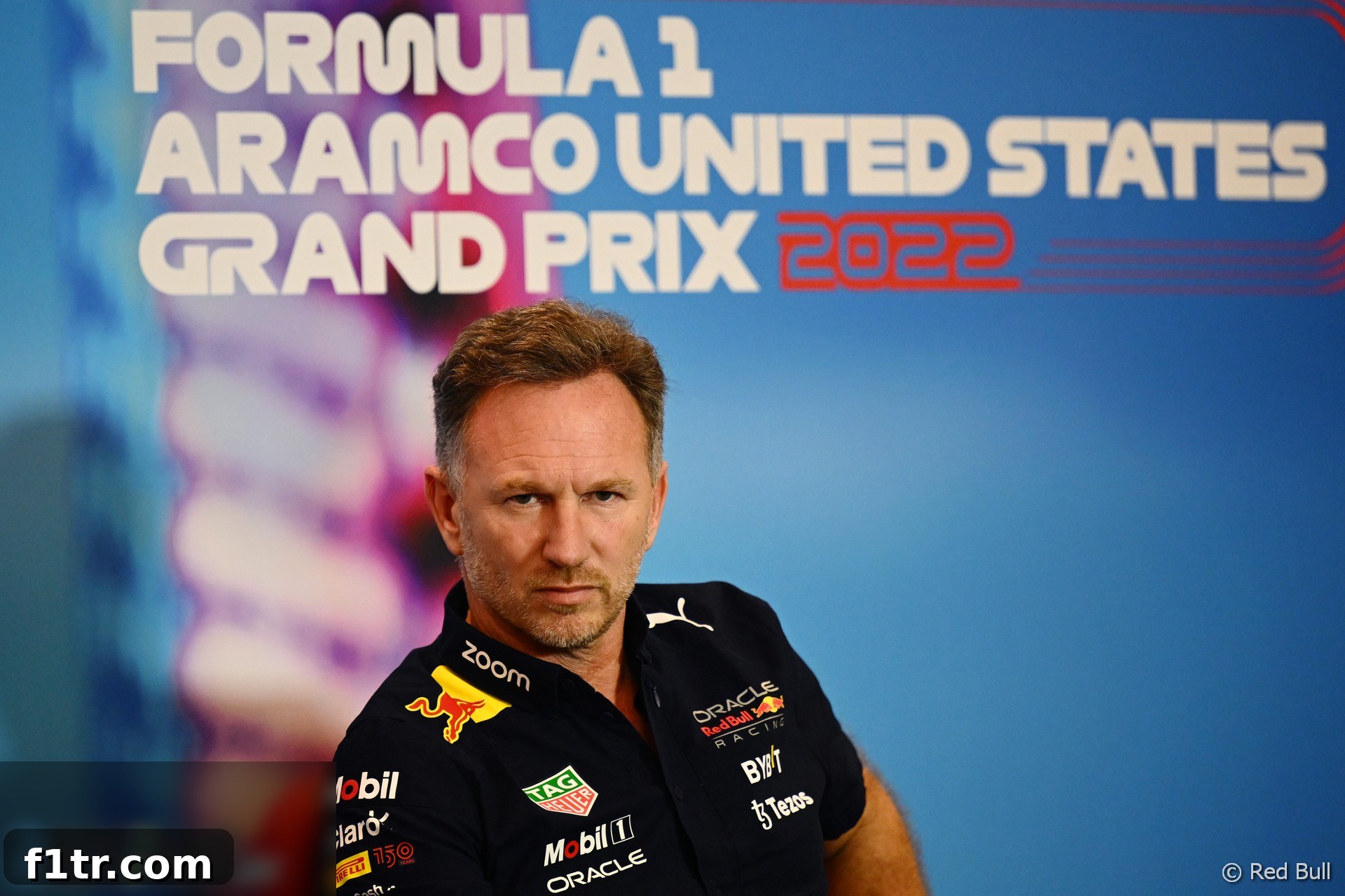
Red Bull Racing Team Principal Christian Horner has unequivocally stated that his team gained absolutely no competitive advantage, either in the 2021 Formula 1 season or any subsequent years, by virtue of exceeding the sport’s stringent budget cap. This assertion comes amid a high-stakes dispute with the FIA, Formula 1’s governing body, regarding alleged financial irregularities during the inaugural year of the cost cap regulations. The controversy has ignited significant debate across the paddock, raising crucial questions about the enforcement and interpretation of F1’s financial framework.
Advert | Become a Supporter & go ad-free
The initial spark for this widespread discussion occurred last week when the FIA announced its findings, confirming that Red Bull Racing had indeed failed to adhere to the $145 million spending limit imposed for the 2021 season. This marked the very first year of the budget cap’s implementation, a groundbreaking measure designed to curb escalating expenditures, promote greater financial sustainability, and foster a more level competitive playing field across the Formula 1 grid. The FIA classified Red Bull’s infraction as a “minor overspend,” a category specifically defined by the intricate regulations as an excess of up to 5% of the total cap. In raw monetary terms, such a “minor” breach could potentially amount to a substantial $7.25 million, an amount that could theoretically fund significant car development or operational improvements.
Red Bull’s Defense: Challenging the Magnitude and Interpretation of the F1 Budget Cap
However, Christian Horner has strongly suggested that the actual sum under contention is considerably less than the potential $7.25 million maximum for a minor breach. His comments highlight a fundamental disagreement not just about the exact figures involved, but, more significantly, about the interpretation of the complex and relatively new financial regulations governing Formula 1. This difference in perspective, stemming from intricate accounting practices and the definition of “relevant costs,” forms the core of the ongoing discussions and negotiations between Red Bull Racing and the FIA.
Scrutinizing the Rules: The “5% Window” and Subjective Penalties
Beyond just the specific figures, Horner also used the opportunity to scrutinize the existing framework of the budget cap regulations themselves, particularly questioning aspects he perceives as ambiguous or flawed. He specifically called into question the broad nature of the 5% overspend window, arguing that its wide margin warrants re-evaluation for future seasons. “The 5% window I think is part of the regulations that potentially need to be looked at,” he stated, indicating a perceived inherent flaw in the current system that allows for too much variability.
Furthermore, Horner voiced his concerns regarding the “ranging suite of penalties” prescribed for minor breaches, describing them as “totally subjective.” Under the present rules, possible sanctions for a “minor” breach can vary widely, from a financial fine to a reduction in Red Bull’s future cost cap allocation, or even a deduction of championship points. The lack of clear, prescriptive, and consistently applied penalties, according to Horner, contributes significantly to ambiguity, creates an environment of uncertainty, and potentially leads to perceived unfairness in the enforcement process for all teams.
Allegations of a “Concerted Campaign” and a Modest Discrepancy
Adding another layer to the already heated debate, Christian Horner publicly suggested that the widespread narrative surrounding Red Bull’s alleged overspend has been actively fueled by a “concerted campaign” from rival teams. He believes this campaign is strategically aimed at pushing for a “draconian penalty” to be levied against his team, potentially to undermine their competitive position. Crucially, Horner reiterated his view on the true scale of the transgression, positioning it far below the maximum potential. “For what at the end of the day, we’re talking probably what is in contention with the FIA of a couple of hundred thousand dollars,” he claimed.
This figure, if substantiated, stands in stark contrast to the maximum 5% threshold, significantly altering the perception of the breach. It would reframe Red Bull’s alleged infraction as a marginal accounting discrepancy or a difference in interpretation rather than a deliberate, substantial overspend designed to gain an unfair performance edge. Horner promised further forthcoming explanations to publicly clarify Red Bull’s distinct interpretation of their financial submission and the specific items under dispute.
Red Bull’s Firm Denial: “Zero Benefit” from Any Overspend
A central and consistently emphasized argument from Red Bull Racing is the unequivocal denial that any overspend, regardless of its final determined amount, provided them with a performance benefit. While rival teams have vociferously voiced concerns that any financial advantage gained in 2021 would inevitably trickle down and benefit Red Bull in subsequent seasons, affecting their car development for 2022, 2023, and beyond, Horner firmly rejected this notion, asserting they had “absolutely not” benefited from any alleged overspending.
“We’ve got to look at what are the relevant costs and what are the relevant costs within the cap and what’s outside of the cap,” Horner explained, delving into the crux of the interpretation debate. “And that’s where the interpretation comes from. Our view is that our relevant costs are within the cap.” This statement underscores the immense complexity inherent in defining, categorizing, and accounting for every single expenditure within the strictures of the 50-page cost cap regulations. Red Bull maintains that their internal calculations, which they stress were thoroughly vetted and aligned with advice from external, professional accounting third parties, positioned them well within the prescribed spending limit for 2021. The ongoing discussions with the FIA, therefore, primarily revolve around reconciling these differing interpretations of what constitutes a “relevant cost” and identifying any “mitigating potential circumstances” that might have led to the discrepancy.
Advert | Become a RaceFans supporter andgo ad-free
Horner emphatically declared that Red Bull received “zero benefit from a development perspective or an operational perspective either for 2021 or for 2022 from the way that we operated it within the cap. Our submission was significantly below the cap.” This bold and direct claim aims to directly refute the critical notion that any overspend, however minor, translated into an unfair competitive edge, whether through accelerated car development, enhanced operational efficiency, or the recruitment of additional personnel. The team’s stance is that their adherence to the cap was genuine and effective.
The Red Bull team principal further elaborated on the inherent intricacies of achieving full compliance, especially in the nascent stages of such groundbreaking and comprehensive financial regulations. “We expected certain things to be potentially challenged or clarified, as is the process in the brand new set of regulations,” he commented, acknowledging that some back-and-forth was anticipated. He stressed that Red Bull’s interpretation was robust and meticulously prepared, grounded in the expert analysis of “external, professional accounting, third parties’ interpretation of those rules of a 50-page document to police this.” Given this thorough and professionally advised approach, Horner concluded with absolute certainty: “So we absolutely and categorically don’t feel that we’ve had any advantage either in 2021 or 2022 or ’23 or ’24 or some teams talk about ’26, it is totally fictitious.” This unequivocal statement is designed to dismiss the long-term competitive advantages suggested by some rival teams as mere speculation and lacking factual basis.
FIA Communication Timeline: Delays and the Guiding Role of the Governing Body
Another point of contention and concern raised by Christian Horner relates to the communication timeline from the FIA regarding their budget cap submissions. He revealed that Red Bull received no indication of any issues or concerns regarding their initial budget submission until relatively recently, creating a sense of surprise when the breach was announced. “We made an interim submission in 2021,” he explained. “There was no feedback and no suggestion that we were doing anything that was contrary to any regulations.” This lack of early warning, in his view, implies an initial acceptance or at least no clear rejection of their accounting.
He continued, highlighting a significant delay: “Then of course the submission made in March, again we didn’t hear anything from that submission in March until about September. So it’s a significant period of time.” This perceived lack of timely feedback from the governing body, according to Horner, raises critical questions about the FIA’s internal processes and, crucially, its responsibility in guiding teams towards effective compliance with a brand new and inherently complex set of regulations. He pointed out that “there’s also within the regulations for the FIA to guide, to have effective compliance,” suggesting that a more proactive and transparent advisory role from the FIA throughout the compliance period might have prevented the current dispute from escalating.
Towards a Resolution: Meeting with FIA President Ben Sulayem
Amidst the escalating tensions and public scrutiny, Christian Horner took a crucial step by holding a direct meeting with FIA President Mohammed Ben Sulayem yesterday. This high-level engagement signals a concerted effort from both parties to de-escalate the situation, find common ground, and work towards an amicable resolution outside of potentially drawn-out and damaging legal processes. Horner expressed a measured sense of optimism following the meeting, suggesting that a conclusion to the contentious financial row might be nearing.
“We are in a process with the FIA,” Horner confirmed, indicating that negotiations are actively underway. “We’re hoping to get closure on that and at that point in time then all the facts will be laid on the table and we’ll be able to talk very openly about the cap and why we feel that our costs are fully in line.” This statement indicates Red Bull’s readiness to publicly present their detailed accounting and thorough justification once a resolution is reached, aiming to clarify their position to the wider Formula 1 community and address any lingering doubts or accusations of wrongdoing. The transparency promised could be key to rebuilding trust and understanding.
Concluding his remarks on the matter, Horner added, “They’re diligently trying to do their job and hopefully in the near future we’ll have a resolution.” This acknowledgement of the FIA’s efforts suggests a mutual desire to put the matter to rest promptly and allow the focus to return to the sporting aspect of Formula 1. The swift and equitable resolution of this budget cap saga is eagerly awaited by all teams, fans, and pundits alike, as it will undoubtedly set a significant and crucial precedent for the future enforcement and interpretation of financial regulations in the sport. The outcome will shape not only Red Bull’s immediate future but also the long-term competitive landscape and financial integrity of Formula 1 for years to come.
Advert | Become a RaceFans supporter andgo ad-free
2022 United States Grand Prix Articles
For more in-depth coverage and related stories, explore these articles focused on the 2022 United States Grand Prix, providing further insights and perspectives on the season’s events and controversies:
- Steiner annoyed by lack of apology from race director over COTA protest error
- How many victory chances did Hamilton have in his first winless F1 season?
- Income from new title sponsor will bring Haas up to cost cap level – Steiner
- Mexico’s first home win or Verstappen’s record 14th? Six Mexican GP talking points
- Mercedes doubt tyre strategy cost Hamilton chance to beat Verstappen to win
Browse all 2022 United States Grand Prix articles