F1 Testing: Are Tyre Allocations Holding Back Team Development?
Formula 1 teams are voicing concerns over the stringent tyre allocations provided for pre-season and in-season testing, arguing that the current limits significantly hinder their ability to conduct comprehensive development work and optimize car performance.
Advert | Become a Supporter & go ad-free
The Critical Role of Tyres in Formula 1 Testing
In the high-stakes world of Formula 1, testing is an indispensable phase where teams fine-tune their intricate machinery, validate extensive off-season development, and prepare their drivers for the grueling season ahead. Every lap logged, every data point gathered, contributes to a clearer understanding of the car’s capabilities and areas for improvement. Central to this process are the tyres, the sole point of contact between the car and the track, profoundly influencing performance, handling, and driver feedback. Yet, despite their pivotal role, teams find themselves navigating a tightrope walk due to a restricted allocation of 110 tyre sets for the entire testing period, encompassing both the crucial eight days of pre-season running and any subsequent in-season tests.
This limited allocation forces strategists and engineers into difficult decisions, prioritizing certain test objectives over others. The challenge is amplified by the remarkable reliability of modern F1 power units, now in their sixth year under the V6 hybrid turbo regulations. These advanced engines are so robust that cars can cover immense mileages with unprecedented efficiency. For instance, top teams like Mercedes-AMG are consistently clocking more than two full race distances per day during testing. While this reliability is a testament to engineering prowess, it simultaneously highlights the bottleneck created by finite tyre supplies. Teams are physically capable of running far more laps, but a dwindling stock of fresh rubber often cuts short their ambitious test plans.
Teams Scramble for Tyres as Reliability Soars
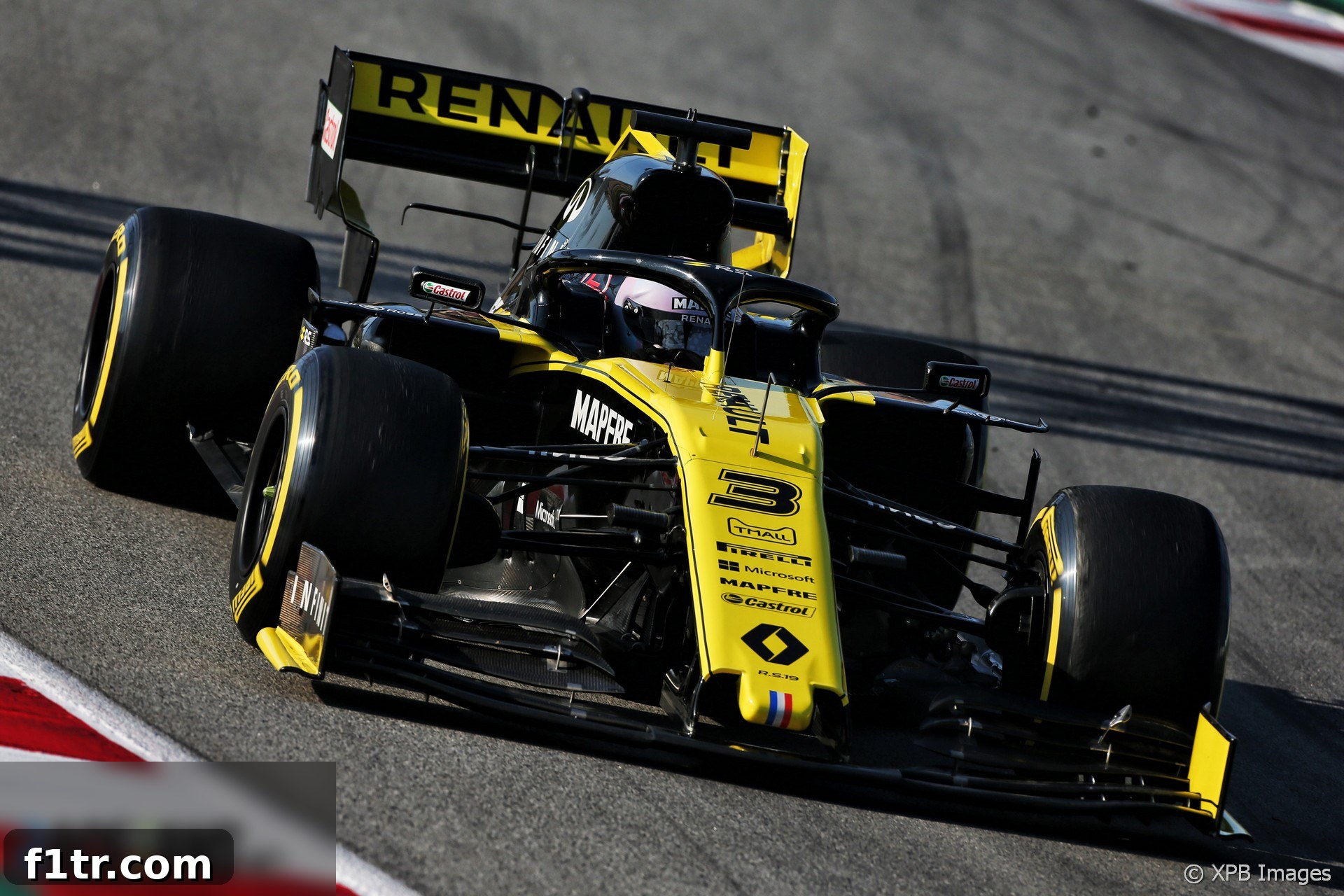
Renault’s Perspective: The Daily Dilemma
The sentiment across the paddock is clear: the current tyre allowance is barely sufficient. Nick Chester, Technical Director at Renault, articulated this widespread concern when questioned by RaceFans. He confirmed, “I think now that the cars are getting pretty reliable and can cover big mileage you find that by the end of the afternoon you’re running out of tyre sets.” This scenario is not just an inconvenience; it forces teams to compromise on the quality and depth of their testing. As Chester explained, teams resort to “recycling” used tyres, attempting to extract every last bit of performance and data from them. However, the efficacy of such practices diminishes rapidly. “But you get to a point where you’re pretty much out of tyres by the end of the day,” he added, underscoring the inevitability of hitting the limit.
The implications of this tyre scarcity are profound. Running on worn tyres inherently yields less representative data. Engineers struggle to accurately assess car setup changes, aerodynamic tweaks, or new component performance when the variable of tyre degradation becomes too dominant. This can lead to less precise conclusions, potentially delaying development or even sending teams down incorrect setup paths. For a sport where marginal gains dictate success, this limitation can have significant ramifications for a team’s championship aspirations.
Chester sees a clear solution for the future. Increasing the number of sets available specifically for pre-season testing is a logical step. “It’s not something we’ve discussed with Pirelli yet but we could have more sets. For next year if we brought more sets [to] winter testing that would allow us to do a little bit more. We’ll do a little bit more representative running.” This desire for “more representative running” speaks volumes about the current constraints. Teams want to simulate race conditions, push the car to its limits on fresh rubber, and truly understand how it behaves under optimal circumstances, something currently curtailed by the limited supply.
Williams’ Uphill Battle: Prioritization Under Pressure
Even teams that have faced their own unique challenges during testing are feeling the pinch of tyre limitations. Williams, for instance, had a particularly difficult start to their pre-season, failing to run their new car until the third day of testing. Despite their reduced track time, Chief Technical Officer Paddy Lowe revealed that tyre management remained a major point of contention and debate within the team. “Within the team one of the biggest points of debate every night and even within the day – and we don’t always agree on it – is what should we do,” Lowe explained. This internal struggle highlights the agonizing choices teams must make when resources are finite.
Lowe’s description paints a vivid picture of the impossible balancing act faced by F1 engineers. He stressed that there is “never, by a factor of two or three, there’s never enough time or tyres to do everything that everybody wants to do.” This stark reality forces teams to make difficult compromises across several critical domains:
- Reliability: While power units are reliable, new chassis, gearbox components, and intricate systems still require rigorous stress testing over long runs. Ensuring the car can endure a full race distance without mechanical failure is paramount, and this often consumes valuable tyre life.
- Measurement and Development Tools: Modern F1 relies heavily on sophisticated data acquisition. Teams need to gather vast amounts of precise data to correlate with their simulation tools (CFD, wind tunnels) back at the factory. This validation process requires consistent, high-quality runs on fresh tyres to provide accurate feedback, enabling engineers to refine their understanding and improve future development.
- Aerodynamics: Aerodynamics is arguably the most critical performance differentiator in F1. Testing aero packages, understanding airflow characteristics, and optimizing downforce levels requires specific test procedures, often involving sensor arrays and steady-state runs. Tyre degradation directly affects ride height and car balance, making it challenging to get clean aero data on worn rubber. Multiple runs with fresh tyres are essential to build comprehensive aero maps.
- Setup: Fine-tuning the car’s setup – suspension geometry, differential settings, brake bias, wing angles – is an iterative process. Each change needs to be evaluated with consistent tyre performance. Limited tyres restrict the number of setup iterations and the ability to explore the car’s full handling envelope.
- Driver Preparation: Getting drivers comfortable with the new car, understanding tyre behavior across different compounds, and conducting race simulations are vital. Long runs are crucial for drivers to build confidence, provide detailed feedback, and practice race procedures. Tyre limits directly reduce opportunities for these crucial long-run simulations.
Lowe concluded by stating the obvious: “It’s very difficult, it’s impossible actually, to cover all of those things in the time available.” For a team like Williams, already playing catch-up, these tyre restrictions exacerbate their recovery efforts, making every decision even more impactful.
Advert | Become a RaceFans supporter andgo ad-free
The Wider Impact: Compromising Performance and Data Quality
The collective frustration voiced by F1 teams underscores a critical tension in the sport: balancing cost control and competitive fairness with the relentless pursuit of technological advancement. The allocation of 110 tyre sets was likely conceived with intentions of reigning in expenditure and preventing wealthier teams from simply out-testing their rivals. However, as the sport evolves with increasingly reliable and complex machinery, these regulations, while well-intentioned, now appear to be inadvertently compromising the quality and depth of essential development work.
Limited tyre sets mean teams often have to cut short their long-run simulations, which are vital for understanding tyre degradation, fuel consumption, and overall race pace. Instead, they might prioritize short, qualifying-style runs to gather peak performance data, or focus purely on aerodynamic correlation. This trade-off inevitably means a less complete picture of the car’s performance envelope, potentially leading to surprises or sub-optimal strategies once the racing season begins.
Furthermore, the ability to test a comprehensive range of Pirelli’s tyre compounds is also restricted. Pirelli supplies several different compounds for each season, and teams need to understand how their car interacts with each one under various track conditions. A limited allocation makes it challenging to dedicate sufficient running time to every compound, meaning teams might arrive at races with an incomplete understanding of their car’s performance on certain rubber. This lack of holistic testing can directly impact race weekend strategy, tyre management, and ultimately, on-track performance.
Seeking Solutions: A Dialogue with Pirelli and the FIA
The call for an increased tyre allocation, particularly for winter testing, is gaining traction. While Nick Chester mentioned that discussions with Pirelli hadn’t formally taken place, it’s a topic that is likely to feature prominently in future technical working group meetings involving teams, the FIA, and the tyre supplier. Any change to the regulations would require careful consideration to ensure it doesn’t inadvertently lead to an unchecked increase in testing costs or create new competitive imbalances.
One potential solution could be to differentiate tyre allocations between pre-season testing and in-season testing, or perhaps introduce ‘test-specific’ tyre compounds that are not necessarily race-spec but allow for extensive mechanical and aerodynamic validation without impacting the race tyre supply. The goal would be to provide teams with enough resources to thoroughly develop their cars and ensure driver preparedness, without spiraling costs or creating a free-for-all testing environment reminiscent of earlier F1 eras.
Ultimately, the challenge lies in striking the right balance. Formula 1 prides itself on being the pinnacle of motorsport and engineering, where innovation is key. For teams to continue pushing boundaries, comprehensive testing is non-negotiable. The current tyre allocation, while aiming for efficiency and cost control, is increasingly perceived as a bottleneck that limits critical development and restricts the ability of teams to fully unlock the potential of their technologically advanced machines.
2019 F1 season
- Crying in the Melbourne car park at 2019 grand prix was my career low – Ocon
- McLaren Racing reports reduced £71 million loss in 2019
- Kvyat: Hockenheim podium last year was “my biggest achievement” so far
- How the FIA’s new encrypted fuel flow meter targets Ferrari’s suspected ‘aliasing’ trick
- “He smashed my office door”: 23 must-see moments from ‘Drive to Survive’ season two
Browse all 2019 F1 season articles