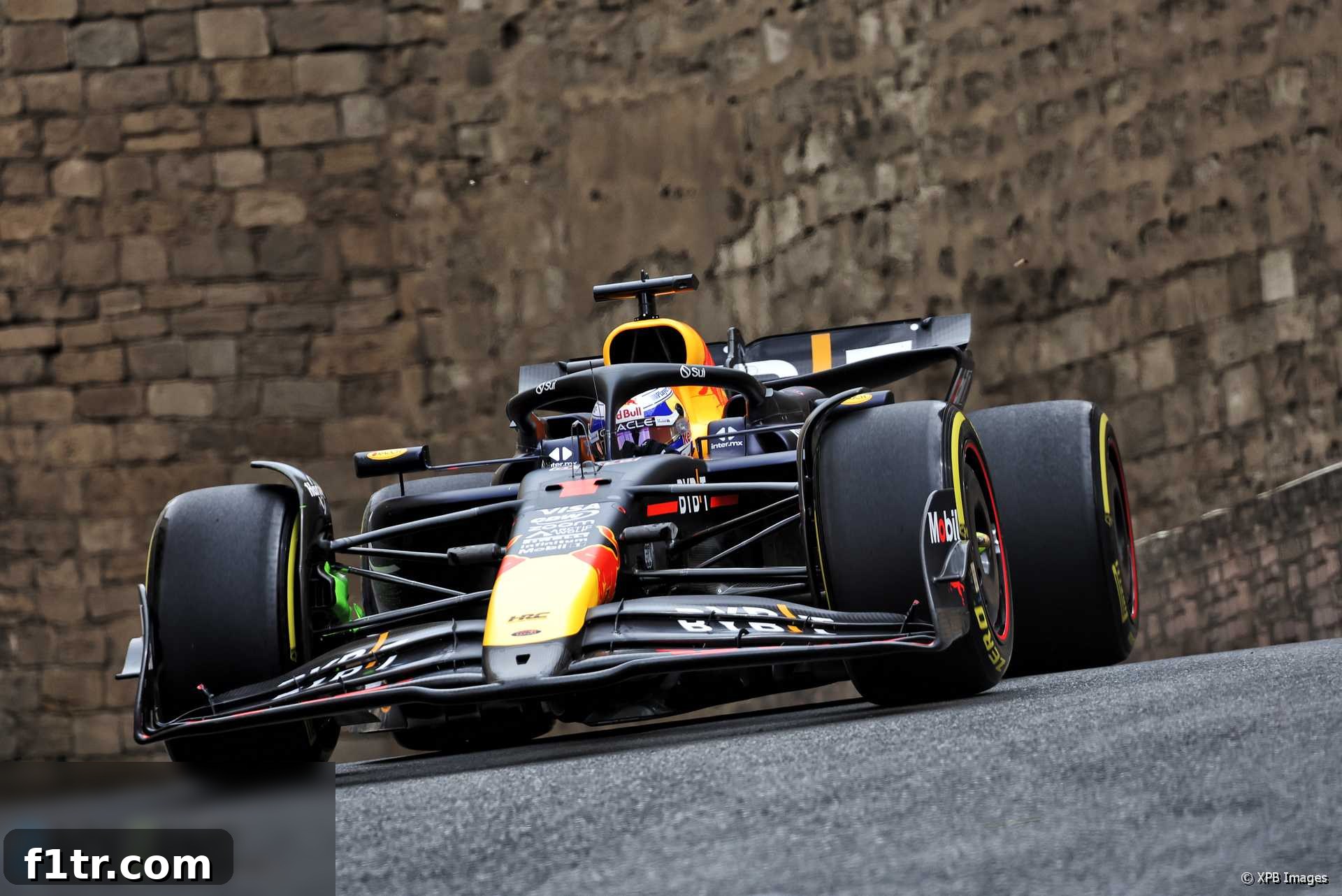
Max Verstappen Leads Chaotic Azerbaijan Grand Prix Opening Practice Amidst Multiple Red Flags
The highly anticipated opening practice session for the Azerbaijan Grand Prix at the challenging Baku City Circuit delivered its customary blend of high-speed thrills and unpredictable drama. Red Bull Racing’s Max Verstappen emerged as the fastest driver, setting a benchmark time three-tenths of a second clear of Mercedes’ Lewis Hamilton. However, the session was far from straightforward, punctuated by three red flags and significant incidents involving Ferrari’s Charles Leclerc and Williams rookie Franco Colapinto.
The unique street circuit of Baku, known for its incredibly long straight and tight, technical castle section, presented immediate challenges to drivers and teams alike. Conditions were tricky from the outset, with drivers reporting notably low grip on the dusty surface. The session served as a crucial learning curve, particularly for the two rookies making their debut on this unforgiving track. Williams’ Franco Colapinto experienced his first taste of the Baku City Circuit, while Oliver Bearman, representing Haas, prepared for his inaugural Friday practice session for a Formula 1 Grand Prix weekend he would actively race in.
Early Laps and Initial Pace Challenges on the Baku Street Circuit
As the green light signalled the start of FP1, drivers wasted no time in heading out onto the circuit. Most opted for the medium compound tyres for their initial runs, aiming to gauge track conditions and begin dialling in their car setups. McLaren’s Oscar Piastri was among the first to report the tricky conditions, highlighting the very low grip levels inherent to a street circuit in its early stages of a race weekend. It was Lewis Hamilton who set the first competitive benchmark, posting a 1’47.618, demonstrating early confidence in his Mercedes.
The session’s flow was first interrupted by a red flag for debris on the track. This is a common occurrence on street circuits, where the close proximity of walls can easily scatter carbon fibre remnants or other materials from minor brushes. Marshals were swift to clear the track, and the session resumed without significant delay, allowing drivers to continue their vital data collection. Upon resumption, Charles Leclerc, utilizing the same set of medium tyres from his earlier run, quickly found an impressive rhythm. He leapfrogged to the top of the timing sheets with a 1’46.608, a strong statement of intent from the Ferrari driver, with Verstappen closely trailing him by just under half a tenth.
Two Major Crashes Bring Out Repeated Red Flags
The promising start for Leclerc, however, was short-lived. On his 11th lap, pushing hard to extract every ounce of performance, the Monegasque driver entered the demanding approach to Turn 15. Running slightly wide onto the dusty outer limits of the track, he lost traction, locked up his tyres, and inevitably speared into the unforgiving barriers. The impact caused significant damage to the front of his Ferrari, bringing a premature and frustrating end to his practice session. The incident triggered the second red flag of the hour, allowing for the retrieval of his stricken car and debris clearance. This was a critical blow to Ferrari’s data gathering, especially as Leclerc is often a strong performer in Baku, and losing track time in FP1 can have lasting repercussions on qualifying and race performance.
Following the lengthy delay to clear Leclerc’s Ferrari and ensure the track was safe, practice eventually resumed. With time ticking down, many drivers switched their focus to the softer compound tyres, anticipating a surge in lap times as they sought to exploit the grippier rubber. Lewis Hamilton once again showcased strong pace, improving significantly to post a 1’45.859, a time that temporarily placed him at the top. However, this lead was fleeting, as mere seconds later, the session was halted for a third time. Rookie Franco Colapinto, navigating the challenging Turn 4, lost control of his Williams and crashed into the wall. Thankfully, the young Argentine driver appeared unharmed, but his car sustained considerable damage, further disrupting the session and robbing him of valuable learning laps on a circuit he had never driven before. This second major incident underscored the unforgiving nature of the Baku City Circuit and the steep learning curve for those new to its demands.
Verstappen’s Late Charge and the Final Classification
With only 11 minutes remaining on the clock after Colapinto’s incident, practice resumed for its final frantic segment. Drivers scrambled to maximize their remaining track time, with many attempting flying laps on soft tyres. Max Verstappen immediately showed his intent, getting within half a tenth of Hamilton’s leading time on older tyres. As the chequered flag fell, signalling the end of the hour-long session, it was Verstappen who delivered a decisive final blow. Despite being on six-lap-old soft tyres, the reigning world champion dug deep and unleashed his fastest lap of the session, eclipsing Hamilton’s benchmark by three-tenths of a second. This commanding performance cemented his position as the quickest driver in the opening practice, a clear indicator of Red Bull’s potent pace even in a highly disrupted session.
Behind the top two, the timing sheets painted a fascinating picture of the early pecking order. Sergio Perez, Verstappen’s Red Bull teammate, secured third place, just half a tenth adrift of Hamilton, further emphasizing Red Bull’s strength. McLaren’s Lando Norris impressed in fourth, notably setting his best lap on the medium compound tyres, suggesting there was even more pace to unlock. Ferrari’s Carlos Sainz Jnr, Oscar Piastri, and Fernando Alonso all demonstrated competitive pace, placing within a second of Verstappen’s blistering time. George Russell rounded out the top eight for Mercedes, indicating both Silver Arrows cars were in a strong position early on. Charles Leclerc, despite his crash, remarkably held onto ninth place thanks to his earlier rapid lap, highlighting the potential pace of the Ferrari before his incident. Daniel Ricciardo completed the top ten for RB, just ahead of the Haas pair of Oliver Bearman and Nico Hulkenberg, with the latter reporting a DRS fault that likely compromised his best effort.
The session was less fortunate for Alpine’s Esteban Ocon, who failed to set a timed lap after reporting a significant lack of power on his out-lap. This technical setback will undoubtedly be a concern for Alpine as they head into the crucial later sessions of the weekend, needing to quickly diagnose and rectify the issue to avoid further loss of track time.
The first practice session for the Azerbaijan Grand Prix provided a dramatic and insightful prelude to what promises to be an enthralling weekend of racing. With the track expected to rubber in and drivers gaining more confidence, the true pecking order will become clearer in FP2 and the all-important qualifying session. For now, Max Verstappen has laid down a formidable marker, but the challenges of Baku, as demonstrated by the multiple red flags and driver incidents, are ever-present and could still spring surprises.
2024 Azerbaijan Grand Prix First Practice Result
Times to follow.
2024 Azerbaijan Grand Prix Related Articles
- Verstappen: “Important” for FIA to clarify legality of McLaren’s ‘mini DRS’ wing
- Hamilton explains suspension set-up change behind “miserable” Baku weekend
- Piastri needs “crazy” results to become title contender despite Baku win
- FIA taking new look at flexing bodywork amid intrigue over McLaren’s rear wing
- Norris knew Verstappen broke VSC rules in Baku because he did the same in Melbourne
Browse all 2024 Azerbaijan Grand Prix articles